Thanks to Canada's truck drivers, housing prices have been out of the headlines for the past month, and discussions about the rapid rise in housing prices have been put aside for the time being. In January 2022, the average house price in Canada was 748,000, an increase of 21% over the same period last year, and the price increase was 129,000. If you take into account the decrease in mortgage principal, the homeowner's net worth may have increased by as much as 150,000 in the past year. If a family has 6 properties, the net worth of the home has increased by approximately 900,000 in the past year. At a time when various sequelae of the epidemic have emerged, for middle-class families with multiple apartments to receive this generous gift, it can definitely be regarded as a victory for the middle class, which has effectively reduced the area shadowed by the epidemic. Two years ago, when the epidemic broke out, the state-owned mortgage loan company CMHC predicted that housing prices would fall by 18%. So some people have been on guard for housing prices for two years. Now these sentinels have gone to personal social platforms to give the government ideas on how to suppress housing prices. They have a dream that the government can help them bring housing prices back to two years ago. Some people have confidently predicted that housing prices will fall by 20% after interest rates are raised. There are also some kind people who remind potential customers who have not yet acquired the property to pay attention to the risks, especially the risks caused by interest rate hikes. You can buy your own home, but be cautious when investing in properties, blah blah blah.
There is a pair of philosophical words, should be and shi ru. Should be, it means what you think the world should be like; shi ru, it means what the world actually is. When there is a huge gap between what a person thinks they are and who they actually are, that person willcognitive dissonance, manifested in actions by making up reasons to explain this contradiction in order to find one's own psychological balance, rather than re-understanding the world objectively. For example, George W. Bush is still tough to this day, saying that Iraq has weapons of mass destruction. The way CMHC dealt with cognitive dissonance was to change the CEO. People who have been wrong about Canadian housing prices in the past two years have given themselves the explanation that raising interest rates will cause the housing bubble to burst.

Two years ago, I read a press release from CMHC predicting that housing prices would fall by 18%. There was a hypothetical condition in the original article. They said that if the government did not provide assistance, there would be an 18% decline in housing prices. But all news outlets omitted this assumption when retweeting the news. CMHC made mistakes. In order to show that they were serious about the forecast, they tightened the underwriting standards for loan default insurance. However, all competitors did not follow suit because their peers did not recognize this forecast at all. After CMHC changed its CEO, it changed the underwriting policy back to the pre-epidemic standards. "What if the government doesn't bail out?" This is a key assumption. What if the government bails out? CMHC did not predict how much housing prices would rise in the case of government assistance, because no one could have predicted that the Trudeau government would implement assistance so recklessly. Without any means test, everyone can receive $2,000 per month upon application for up to 19 months. Middle-class families overestimated Trudeau's ability to govern, and Trudeau overestimated the moral level of the party. This is how currency flooding occurred. Fortunately, the marginal consumption propensity of the group receiving relief is relatively high, and most of the money they received for free was spent. Real estate investors who know how to accumulate became the final winners, and their family assets became rich in two years. In fact, no one could have imagined that stupid bailout measures and the greed of the hands-on parties could allow middle-class families who dared to invest in real estate to get such generous returns.
Payments have stopped and interest rates are about to be raised. Where will the skyrocketing housing prices in the past two years go? When predicting real estate trends, there are certain types of people you should not listen to. As mentioned above, how to identify empty-handed people and good-hearted people. These people are still in the state of cognitive dissonance. Their remarks are market noise and cannot be used as a basis for judging housing price trends. There is also a group of people whose judgments are of no value. They show you the latest transaction price of any house type in a certain place all day long. These people are people running behind the curve, just like stock commentators. They use yesterday's historical data to show off and talk about hindsight, because yesterday's transaction price cannot determine the transaction price of another house tomorrow. In stock investment, everyone should have reached a consensus. People who analyze the K-line are either fools or liars. People who analyze the K-line of housing prices cannot be trusted. Regarding housing prices, my personal opinion is,In the short term,1-3Housing prices are still rising steadily every year. In the long run, housing prices in metropolitan areas such as Greater Toronto will become increasingly unattainable.

01 Looking at finance in the short term
Housing prices depend on population in the long term, land in the medium term, and finance in the short term. This is a real estate macro theory first proposed by Ren Zeping. This phenomenon is common in both developed and developing countries.
The number of new immigrants to Canada in 2021 exceeded that of the United States for the first time, reaching 410,000. You must know that the population of the United States is 10 times that of Canada. In other words, the proportion of new immigrants in Canada last year was 10 times that of the United States. This shows Canada's determination and courage to introduce new immigrants. As long as you are a human being, you need a safe place to live. Whether you rent or buy, it is a very beneficial support for the real estate market.
Land supply is usually determined by each province. Ontario and BC not only have the largest influx of people, but they are also the two provinces with the slowest land approvals. In Canada, housing land is not a scarce resource, but housing construction approvals are slow and NIMBYism is serious, resulting in housing supply failing to keep up with demand, artificially causing a shortage of real estate supply.
Some people say that housing prices will depend on government suppression policies in the short term. They view Canada's economic policy as a cross between Adam Smith and Keynes. People who say this either have no common sense in life or have never studied economics. The Canadian government is not willing to invest in specific projects to boost GDP. Biden has already invested in infrastructure construction, but Trudeau seems not to have noticed. More importantly, Keynesianism can only be used when demand is insufficient. In the United States and Canada, demand is too strong and supply cannot keep up. Canada's federal economic policy is immigration policy, and there is no other economic policy. Each province also has no specific economic policy. In 2016, British Columbia's suppression of housing prices was a political gamble, and the gamble won. In 2017, Ontario's suppression of housing prices was also a political gamble, and the gamble failed. Betting on votes by suppressing housing prices is obviously a dangerous game, because the success rate is only 50%. The best policy is to stay away from gambling. For example, in the Quebec provincial election, all parties did not mention housing prices.

Financial policy has a relatively direct impact on the short-term supply and demand of the real estate market, and is also the main cause of market fluctuations.Financial policy includes two contents: 1. Mortgage policy 2. Interest rate changes. Whether it is adjusting the mortgage policy B20 or adjusting interest rates, the impact of financial policies on the real estate market will not exceed 3 months. Usually the impact of the policy will be digested within 2 months. That is, 2 months after the policy is implemented, market transaction activity and housing prices will return to before the change, whether it is relaxing B20 or tightening, whether it is raising or cutting interest rates. It is said that "looking at finance in the short term" only lasts so long. But discussions and predictions before the policy is about to change have been going on for 6-10 months.
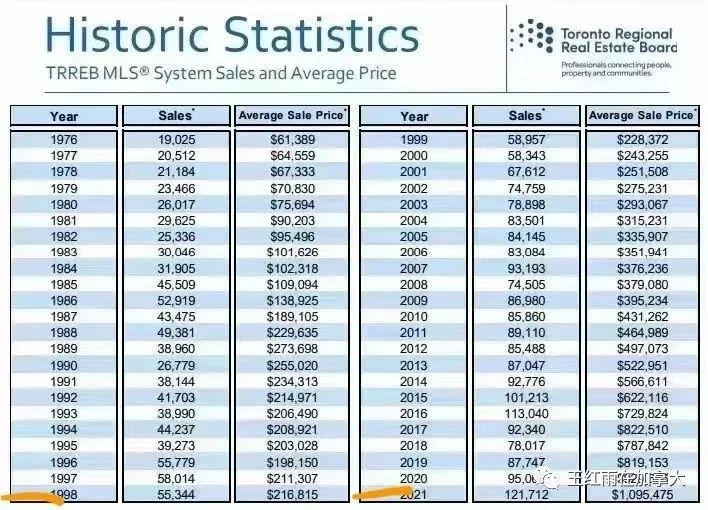
Based on my observations of the Canadian real estate market over the past 13 years, Mr. Ren Zeping’s housing price theory of “looking at population in the long term, land in the medium term, and finance in the short term” can be localized in Canada as:"Look at population and land in the long term, elections in the short term, and finance in terms of fluctuations."Canada's immigration policy is formulated by the federal government. It has a big mouth. It targets 430,000 new immigrants this year. Policymakers completely ignore the issue of where these people will live after they arrive. The provincial government ignores the federal immigration policy and stubbornly adheres to the existing land approval system. Not only does the administrative cost increase year by year, but the efficiency is getting worse and worse. It also regards housing construction as a big fat meat, and various methods of robbing wealth emerge in an endless stream. Some extreme cities, such as Toronto, require builders to provide welfare housing for low-income people. NIMBYism is a product of the negative externalities of democracy. Neighbors want to maintain the status quo and do not welcome the development of land in their own backyards. These neighbors are the vote base of politicians and cannot afford to offend. Members do not dare to blatantly support real estate development in their own districts. In short, no provincial government in Canada actively promotes housing construction. Therefore, Canada's land supply is not a mid-term issue, but a long-term issue. Administrative intervention in housing prices occurs from time to time. Governor Wynne of Ontario is a typical example in 2017. She suppressed housing prices and at the same time turned her party from being in power to being in opposition. The result of the violent intervention in housing prices was a sharp drop in transaction volume in the real estate market. Real estate practitioners suffered the most, and housing prices also remained depressed for a year. Judging from the Toronto housing price data in the past 25 years, only from 2017 to 2018 did housing prices fall, and the remaining 24 years have increased year by year. The chance that housing prices will be suppressed is 4%. Those on the sidelines who hope that the government will suppress housing prices and take the opportunity to buy a house themselves need to understand that the chance of doing so is only 4%. The impact of elections on real estate and housing prices can be considered a mid-term impact compared to the impact of financial policies, but the possibility of reckless individuals appearing in elections is completely unpredictable. Financial policy is usually the cause of short-term fluctuations, but because the impact is too short, we can completely ignore financial factors when judging the trend of the real estate market or housing prices.Because fluctuations do not affect trends, anyone who analyzes housing price trends from the perspective of interest rate hikes is short-sighted.

02 Long-term house price trends in a low interest rate environment
Judging from the housing price trends in the Greater Toronto Area over the past 25 years,Canada's housing prices are a long-term upward trend that alternates between fast and slow bulls. A decline in housing prices for more than one year is a small probability event. future25In 2019, low interest rates will reinforce this long-term upward trend in home prices.
The impact of the epidemic on interest rates will be long-term, because the government has too much overdraft, and the central bank's policy of lowering long-term interest rates has a long-term effect, making it difficult to realize the idea of shrinking the balance sheet. The result of the Canadian government's overdraft in the future is that it must either raise taxes or maintain inflation, otherwise the debt cannot be repaid. Raising taxes will inevitably lead to a loss of votes, and the votes gained by spending money will be severely offset, so maintaining inflation for a long time is the best option. Long-term high inflation and low interest rates are typical sequelae of war, and the economic impacts of global epidemics and world wars are very similar. For the Bank of Canada, the option of raising interest rates is a must-select, but the extent and frequency of interest rate increases will depend on the situation, mainly depending on the debt situation of the government and enterprises. If interest rates are raised too fast or too much, the economy can easily fall into deflation, that is, overproduction, insufficient demand, falling prices, and a relative increase in debt burden. Deflation is unbearable for politicians and ordinary people, so the central bank does not easily dare to raise interest rates too fast or too hard. High inflation and low interest rates mean that real interest rates are negative, which is most beneficial to debtors. The government is now the largest debtor. The debt of the United States and Canada has exceeded 100% of GDP. The average debt ratio of ordinary households is also very high, but middle-class households with multiple houses have the highest debt ratio and are also the biggest beneficiaries.As long as real interest rates are negative, it will be difficult for house prices to fall.
Currently, Canada's inflation rate is 5.1%, the average cost of government bonds is 1.85%, and the real interest rate is negative 3.25%. The government is enjoying the benefits of this negative interest rate. Currently, the floating interest rate of investment housing mortgage loans is 1.7%, and the actual negative interest rate is 3.4%. Before the epidemic, the actual interest rate of mortgage loans was positive 1.6%, which has recovered from negative 3.4% to positive 1.6%. Even if the inflation rate decreases and mortgage loan interest rates increase, it will take a long time to fill this gap. So the conclusion is,short term, future1-3In 2018, under the incentive of negative interest rates, the trend of actively applying for loans to buy investment houses will not change, and the trend of rising housing prices will not change.

The rise in house prices is very similar to the rise in wages. Once it goes up, it is difficult to come down. It is very rigid. The sharp rise in housing prices in a short period of time has caused great difficulties for new immigrants and newly formed families to purchase houses. According to Canada's latest immigration plan, 431,000 immigrants are planned in 2021, 447,000 in 2023, and 451,000 in 2024. According to past data, each family has an average of 1.7 people. Canada needs 250,000 to 260,000 new properties every year to accommodate new immigrants, and this does not include the newly formed families of local old immigrants. In the Greater Toronto Area, 40,000 to 50,000 to 50,000 new homes are pre-sold each year, but only 40,000 units can be built. About 48% of new immigrants have poured into Ontario. Obviously, even if old debts are not taken into account, the contradiction between housing supply and demand in the Greater Toronto Area will still be sharp in the next three years. Three years from now, non-CONDO real estate prices will be out of reach. According to Peter, the director of OFSI, in an exclusive interview, this situation is irreversible. In the future, Toronto will be "Manhattanized", that is, most people will live in the sky. Teachers and firefighters who provide basic services to the urban area may need to live in the sky in the suburbs, commute into the city every day, and return to the suburbs to spend the night after work. When I was working in the United States, I lived in a dormitory for expatriates of the Bank of China, which is located on Manhattan Island. However, most local employees, regardless of their position, could not afford to live in a house on Manhattan Island. It was difficult to rent a house, let alone buy one. Most of them lived in New Jersey and Flushing, and they commuted into Manhattan every day. Canada's urbanization rate is 81.56%, which is definitely in the late stage of urbanization, that is, the urbanization of large cities, and the population is highly concentrated in central cities. Most Chinese have never experienced post-urbanization and are not very able to understand the problem of high housing prices in megacities. Few of them immigrated to Canada after living in Manhattan for several years. Therefore, the "Manhattanization" Peter mentioned can only be understood by those who have lived in Manhattan. The world-class metropolitan area attracts elites from all over the world to settle down due to the agglomeration effect.The competition for real estate is a competition among the top talents around the world. The social Darwin phenomenon is very prominent and the fittest survive. Even locals who serve the local community cannot afford to live locally. Talented people living in Manhattan use their lifetime total income to compare the cost of living. When I was working in New York, I heard that the former general manager was transferred from London and had worked in many overseas branches. His daughter happened to be working in Manhattan. The father and daughter used their savings over the years as a down payment and took out a loan to buy a 400 to 500 square foot apartment for their daughter to live in. This was before 2004. It should be even more difficult to find a room in Manhattan now. In fact, some metropolitan areas have already experienced "hyper-Manhattanization." For example, Seoul already has rental loans. If you can't afford the rent, you have to take out a loan to pay the rent. If you broaden your horizons, you can understand the housing prices in Toronto. If the city we live in is like Detroit, where housing prices keep falling and people keep fleeing, would you still want to live there?In the long term, the Greater Toronto Area’sCONDOProperty prices will become unaffordable for ordinary people unless parents start investing in real estate now.

03 Real estate investor portrait
Since the outbreak of the epidemic, housing prices in the Greater Toronto Area have soared by nearly 45%, taking housing prices to a new level. For ordinary investors, if the budget remains the same, the area of affordable investment houses will become smaller and smaller, or they will change from townhouses to CONDOs. The jump in house prices also has some positive externalities, that is, some blue-collar real estate speculators have been kicked out of the market. Fewer people dare to buy a dilapidated house of one meter, renovate, and speculate. In the past, blue-collar investors only needed 200,000 or 300,000 to buy such a dilapidated house, but now they need one meter. If you apply for a loan of 80% of the house price, real estate investors in the Greater Toronto Area will have to face negative cash flow from real estate investment. Investors who cannot afford the negative cash flow will not only be unable to obtain loans, but also have a problem holding the property for a long time. White-collar real estate investors have entered the market. The portraits of these people basically look like this:Love your job, your family’s annual income is14More than RMB 10,000, and the balance of the home loan is less than the annual income2times, you have the ability to bear negative cash flow; you already own some properties, and due to the skyrocketing housing prices, you can add cash from the existing properties to repay the home loan, continue to accelerate the repayment of the home loan, continue to buy more investment properties, and keep refinancing and feel good; buy high-quality properties in high-quality communities, so you can recruit high-quality tenants and reduce the possibility of repairing your own house and filing a lawsuit; the more investment properties you hold, the lower the vacancy rate.
Most white-collar real estate investors are what OSFI chief Peter said are people in a closed loop, that is, they keep adding mortgages to existing properties to buy more properties. According to Peter, the government has neither the intention nor the ability to break this closed loop. I think families with a household income of more than 140,000 can make good use of this closed-loop effect to improve their real estate investment capabilities, so I have opened a small window to help such families diagnose how to better manage debt, roll stones down the mountain in a closed loop, and roll snowballs on long snow slopes. Recently, Housing Minister Hu Sen also came to encourage real estate investors and made it clear that he would not harm small real estate investors. He used the phrase small time landlord, which translated into real estate policy means that if a family holds 10 residential houses for investment, banks can approve mortgage loans. According to the general borrowing formula I summarized, after the owner-occupied house has paid off the loan, each investment house can be borrowed 5 times the annual income. 10 investment houses means that the upper limit of the total mortgage loan amount of the bank to real estate investors is 50 times the annual income. To obtain such high leverage, you do need to be very disciplined in managing your debt. Due to lack of financial intelligence, most Chinese families cannot even reach 20 times the total loan amount, and they are in great need of guidance and help to improve their borrowing capacity. Hussen believes that real estate investors have done nothing. They are suppliers of the rental market and should not be harmed by the policy. Canada's real estate investment policy is stable and continuous. Any suggestion that investors take advantage of the situation is not well-intentioned.

The current difficulty faced by white-collar real estate investors is that it is difficult to close a transaction because the liquidity of the second-hand housing market is very poor, and they are in a state of rush for housing during the outbreak of the housing crisis. My personal suggestions are: 1. Don’t give up any opportunity to make a bid. The brave one wins; 2. Give up your disdain for investing in CONDOs, because according to the above-mentioned “Manhattanization” trend analysis, as an international metropolis in Greater Toronto, housing for small families in the future will mainly be concentrated in CONDOs with an area of about 700 square feet. Investors with stronger abilities can now invest in condos with an area slightly larger than 700 square feet. Real estate to avoid fierce competition; 3. Don’t take buying a house too seriously. When buying a house, put 20% of the down payment to maintain and increase the value, which is more important than buying a perfect property; 4. No matter how hot the market is, it is impossible to grab offers 12 months a year. There must be times of market fatigue. When the time to sell a house is extended, some people will say that the market inflection point has arrived, and this time is the best buying point throughout the year.
Someone asked me what I thought about real estate investment classes. I am currently following "Country Love Story 14". In it, Liu Datou saw that the villagers wanted to improve their speech skills, so he organized a speech training class. When he saw that the villagers wanted to participate in a cooking competition, he organized a chef training class. He always wanted to sit on the wind and fly. Unless you want to become a lifelong tenant or landlord and make a living by collecting rent, there is no need to attend a real estate investment class. Someone asked me if I want to open a mortgage learning class. I believe that loan ability is determined by income. People who want to learn loan skills should go to a vocational training school.
The deadline for RRSP deposits in 2021 is approaching, and various small advertisements have come out again. I rarely buy financial investment products, and I don’t know much about tax shields like RRSP. Two years ago, I didn’t know that the RRSP limit could be deferred. I always thought that if I didn’t buy some assets before the RRSP deposit deadline, my qualification would be invalid. For readers who want to invest in real estate, it is necessary to improve their borrowing ability, and borrowing ability is closely related to the balance of the home loan. When it comes to the question of whether to use deposits to repay the home loan in advance or hide it in a tax shield, the answer I found from successful closed-loop real estate investors is to give priority to repaying the home loan and defer the RRSP limit to the year of highest income.

Conclusion
The more choices people have, the less they know what to do. This is a paradox of choice. When funds are limited, how to choose investments requires comparing opportunity costs.In Canada, second-hand housing investment is the investment with the lowest opportunity cost.
After the currency boom, house prices played a role in absorbing cash, and the result was that house prices skyrocketed. The rigidity of house prices is very similar to the rigidity of wages. Once it rises, it is difficult to come back down. Canada’s immigration policy is right. 2022 should be an inflection point in global population growth. Because China’s population will reach its peak this year, future population growth will be negative, so a global war for people is inevitable. If Canada takes the lead in the battle to grab people, it will gain an advantage in the international division of labor by virtue of economies of scale. Otherwise, even providing for the existing population will be a problem. The influx of population brings investment opportunities to old immigrants.Buy first"Sit back and enjoy the asset moat effect brought about by the appreciation of real estate. As long as you don't sell it, others can't buy it. For a high-quality asset, the simplest strategy is to "buy, buy, buy", like a brave man who can only get in but not get out. Just look at the two most famous old men in the world, Buffett and Munger, and you will know the investment effect.
If you think of Greater Toronto as an international city that the world's elite aspires to, and then compare it with other international cities today, you can understand why there is a lack of reversal in the story of housing prices. Stay away from cognitive dissonance people, but take note of their names and see when they announce that their mantra of a 20% drop in house prices has worked. Dalio wrote a sentence in "Principles", which translated into Northeastern dialect is: People who rely on crystal balls to eat will end up eating glass stubble on the ground, don't compete with them.
Urbanization itself is a track for economic development, especially the service industry, which relies heavily on population agglomeration. The post-urbanization stage means that the country's population is gathering in a few large urban areas. We are in Toronto, so we don't have to look far for real estate investment. We just need to seize the closed loop of happiness. Raising interest rates will give the market a breathing space, so real estate investors should invest and cherish it.