The Bank of Canada's abrupt rate hike not only completely ignored its promise two years ago to "not raise interest rates until 2024," but was also interpreted by many as a "government step in" to suppress housing prices. The purpose of the central bank's interest rate hike is to curb inflation and economic overheating because the current employment situation in Canada is too hot. Jobs have returned to 113% of pre-epidemic levels, and the unemployment rate of 5.3% is the lowest since unemployment statistics were available in 1976. Both the government and the central bank are a bit over-expanded, thinking that raising interest rates does not matter as it will not immediately drag the economy into recession.
In March last year, Canada's CPI consumer price index was 2.2%, the central bank interest rate was 0.25%, and the difference was a negative interest rate of 1.95%; in March this year, the CIP consumer price index was 6.7%, and the central bank interest rate rose to 1% on April 13 this year, and the difference was a negative interest rate of 5.7%. Due to high inflation, real interest rates have become even more negative, that is, borrowers are paying off existing debts in a currency that has depreciated a lot, which is actually beneficial to the borrower. Raising interest rates leads to an increase in nominal interest rates. Interest is calculated based on nominal interest rates, so homeowners' interest payments increase, and even some borrowers' monthly payments increase immediately. Even if real interest rates are negative, which is beneficial to borrowers, the greater negative cash flow caused by higher nominal interest rates, as well as the financial and psychological burden of increased interest payments, still make homeowners' balls turn green. People who are not afraid of big things have been shouting that the homeowner can't bear it anymore and will be forced to sell the house. Taking advantage of this group of house slaves who are eager to sell, everyone unites and waits and watches collectively, forcing the homeowner to reduce the price by 30%, otherwise we will not buy it.
Toronto's real estate market has been booming for the past 25 years. Buyers have long been watching the sellers' faces. When buyers have the opportunity to give the sellers some color, they are very excited. They can imagine that the sellers can't bear it anymore and have to sell at half price, otherwise they will not be able to survive. Buyers who have been short-term for a long time have actually been waiting for such an opportunity, but when the opportunity came, they really didn't dare to buy it. Ye Gong's character of being a dragon was suddenly confirmed. The buyer's prisoner's dilemma is being played out on social media all day long: I don't dare to buy, but I'm afraid that other buyers won't be able to hold on and buy first, so I have to relentlessly attack people who don't believe that housing prices can drop by 30%, and look for support from people who calmly persuade buyers to "wait a little longer." People who don't buy a house on social media are more tired than those who do.

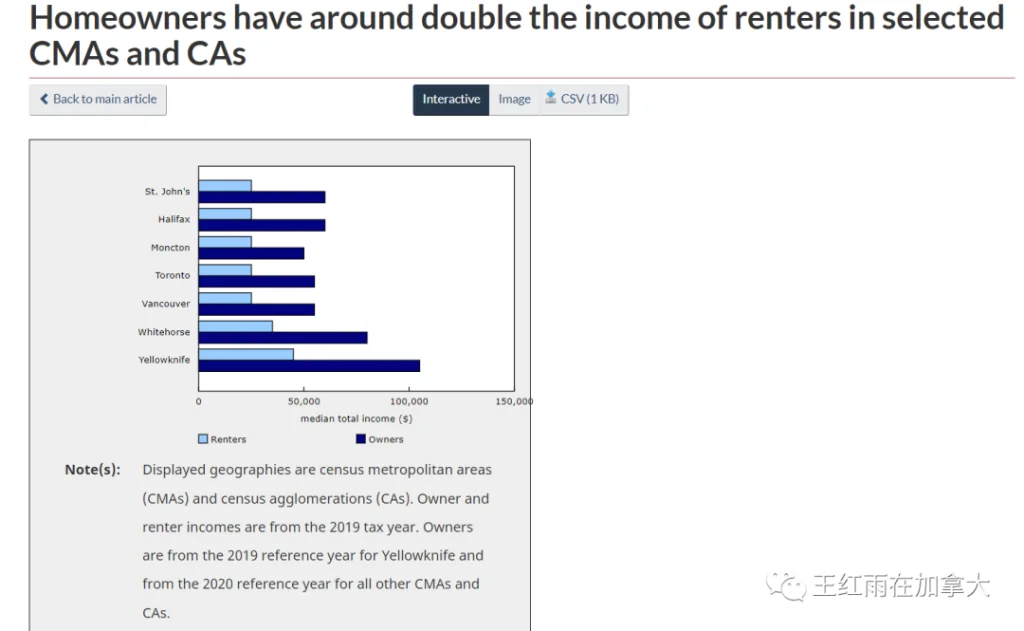
Anyone who is really involved in real estate investment knows that it will take a long time to cut off mortgage payments due to interest rate increases, and it will also require very accidental accidents. The people who can be fooled now are speculators and homeowners with asymmetric information, not mature real estate investors. Long-term property investors know that selling is not the best way to solve payment difficulties or negative cash flow, especially when buyers are emboldening each other to lower the price.The liquidity of real estate is greatly affected by changes in market psychology, so liquidity cannot rely on the buying and selling market, but on banks.At the current housing price level, few people can afford to buy a house without a loan. The financialization of real estate is spontaneous and historically formed. When a property has both residential properties and financial properties, there are two ways to realize it: 1. Saleproperty rights, sell the house for cash; 2. Change thedebt, increase your debt balance, withdraw cash from the property as a reserve for monthly payments, or as a down payment for your next investment.Both property rights and claims are liquid.Homeowners need to maintain a high enough and stable income in order to obtain approval from banks for mortgages. Banks are open every day, and banks will not be short on real estate for no reason. Instead, they will confirm the market price of the house based on the professional valuation of the appraiser.The ability to remortgage determines the liquidity of the property. The stronger the ability to remortgage, the better the liquidity of the property. The bank can help you increase the loan balance and cash out the property rights. The cash withdrawn can be used as a cash reserve for repayment and can also be used as a down payment for the next property. The ability to remortgage is determined by the income level. The higher the income and the less the owner-housing debt, the stronger the ability to remortgage to invest in housing.The Toronto real estate market is a long-term market. Opportunities for additional mortgages are available every year. It depends on whether the income of the homeowner can support the additional mortgage. When seeing an interest rate increase, they conclude based on linear thinking that the homeowners can no longer afford it. This is a simple speculation made by people who have never bought a house or taken out a loan. In Canada, the income of households that own houses is twice that of households that do not own houses. If high-income families cannot bear the debt, can low-income families be expected to bear the debt? What I have observed is that those who own houses and have high incomes are constantly interacting with banks and frequently withdrawing cash from their properties. They can advance and retreat or defend; those who have never bought a house and low-income families always firmly believe that housing prices will one day drop to a level that matches their income. (Don’t worry about my income. Asking too much is offensive.) There will always be a day when sellers cannot afford the mortgage and must sell their houses, and they sell their houses at a low price. In the current market, many people are thinking: "This is the final struggle. Let's unite together and tomorrow, Intenaxon will be realized." In fact, they don't know that the homeowner will get the mortgage approval today and will change the sale to rent tomorrow. The moment when Intenon will be realized has always been two words - "tomorrow". Why does "tomorrow" never come? The reason is only three words - "wait a little longer".
01white collar real estate investor
I subdivide real estate investors into two categories:White collar real estate investors and blue collar real estate investors.
White collar real estate investors,I was forced to invest in real estate in order to balance my lifetime income.They firmly believe in Robert Kiyosaki’s words: “don’t deposit, invest”. Obviously, you can still invest without depositing money, just by borrowing money to invest. The loan with the lowest interest rate is a mortgage loan. To borrow a low-interest loan, you need to buy a house and mortgage it to the bank. The bank will advance 5 times the pre-tax annual income and agree to pay it back in 30 years, provided that there is a stable income and the purpose of the loan is to purchase residential housing. The purpose of white-collar real estate investors is to obtain low-interest loans, not to serve tenants. Because the lowest-interest loans require collateral, they need to buy a house. When they buy a house, they purchase a mortgage that meets the needs of the bank. At the same time, they need to consider how to reduce the management costs of the property. For example, buying an investment house in an area with high-quality properties and high-quality tenants, because real estate investment is not their full-time job, but just a hobby, a tool used to divide work time and investment time.Borrowing capacity depends on the investor's ability to bear negative cash flows, the largest negative cash flow is the self-housing loan. Therefore, for families with stable income, the lower the monthly payment of the self-housing loan, the stronger the ability to borrow money for investment properties, and the stronger the ability to cash out from the property and accelerate the repayment of the self-housing loan. This positive cycle is called a "happy closed loop." For white-collar real estate investors,The negative cash flow of investment houses is the installment payment of the down payment and is a leverage amplifier; the negative cash flow of self-owned houses is bad debt and needs to be eliminated as soon as possible.The purpose of their investment is to balance their lifetime income. Now that their income is high and taxes are high, they need as little net rental income as possible. After retirement, when their active income decreases, they can release the positive cash flow from investment properties. White-collar real estate investors in a happy closed loop have an advantage in the free market. Even if the supply of housing is insufficient and housing prices rise, they are still in a condescending state. Because housing prices have been rising for a long time, the word "wait a little longer" is not in their dictionary. Before owning 10 investment houses, they had only one investment strategy: buy early, buy, buy, buy. White-collar real estate investors are responsible for negative cash flow, but they do not pursue the maximum loan amount for each house. The maximum loan amount for each house is 5 times the annual income, leaving room for additional mortgages in the future, and at the same time, it is also to be able to borrow mortgage loans for 10 investment houses, and ultimately realize the total debt is close to 50 times the annual income. They trust the bank's risk assessment, rather than being blindly confident and thinking they can afford it. When the bank says NO, they will work hard to reorganize their debt. White-collar real estate investors are not good at maintaining properties and have no interest in going to court with tenants. Their efforts have only one direction: reducing owner-occupied housing debt and maintaining stable income. White-collar real estate investors choose a minimalist investment path, striving to improve their own ability to deal with negative cash flow, rather than looking to outside sources.
There are fewer and fewer blue-collar real estate investors, but they are very active. The purpose of their real estate investment is to increase their current income. Negative cash flow has zero tolerance for blue-collar investors because they rely on positive cash flow to support their families. They would rather repair the house by themselves than hire a professional master; they would rather play around and sublet without paying attention to the government than meet the bank's requirements for the legality of collateral; they would rather borrow 6-7 times their income for each house and shoulder the loan sharking, rather than leaving some room for future mortgages; they would rather sign up to learn the skills of dealing with tenants and obtaining loans under unusual circumstances than asking for their own abilities and talents.
White-collar real estate investors and blue-collar real estate investors have little in common. Even in the same real estate investment community, they don’t talk much about speculation. As home prices rise, the balance of history is tilting in favor of white-collar real estate investors. Real estate investment methods that rely on the ability to repair houses and sublease are being squeezed out of the market by big cities.
02Negative cash flow and liquidity management in an interest rate environment
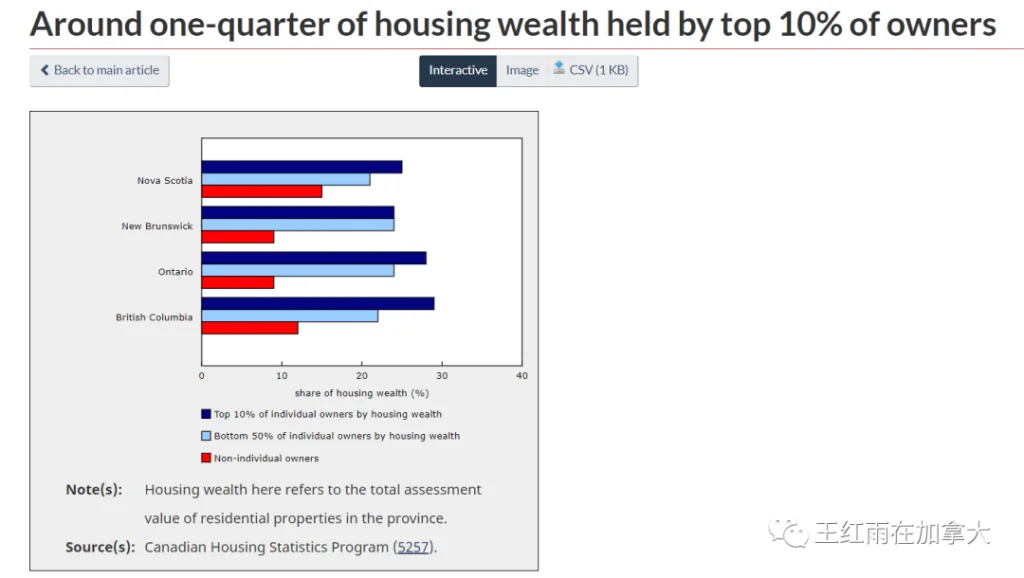
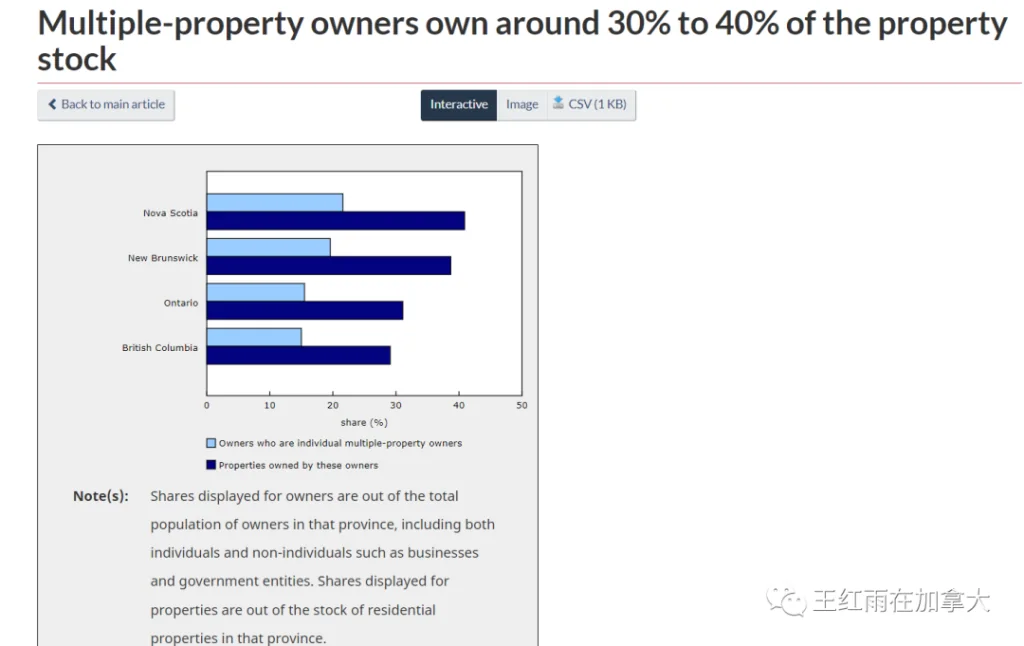
Long-term work practice has made me realize that the people under the car can never understand what the people on the car are thinking and doing. The tools used by the people in the car and those under the car are different, just like the two groups of people in the Electric Age and the Stone Age. Because the tools in their hands are different, the world in their eyes is also different. Due to limited ability and time, I can only do my best to care for and help the people in the car. Under today's housing prices in Canada, within the framework of established lending rules, real estate will accelerate to a small number of white-collar real estate investor families. Currently, 15% of Ontario homeowners own multiple suites, and the number of properties held by these homeowners accounts for 31% of the number of houses. I think this concentration will become higher and higher, not lower and lower. It will become increasingly difficult to own your own property, whether it is for self-occupation or renting. Even if the supply of new houses matches the number of new immigrants, this trend will not change, because even if the supply increases, white-collar real estate investor families with strong borrowing capacity will get it first and then rent out the houses. This paragraph, this article, and even future articles are all for multi-suite investors. Readers who don’t like these contents don’t need to bother to comment, just ignore them silently.
Although white-collar real estate investors are responsible for negative cash flow, in the face of rising interest rates, it is still necessary to further sort out the skills and common sense of negative cash flow management. In fact, there is no need to worry about liquidity issues. As long as you maintain a steady growth in income, you can cash out at the bank at any time to supplement liquidity.
Borrowers who chose floating interest rates found that some banks saw their monthly payments increase immediately after the central bank raised interest rates. If it is a home loan, the increase in monthly payments will crowd out living expenses and destroy the original family budget. It is recommended that such families transfer their loans to other banks whose monthly payments will remain unchanged after interest rate increases.
For most banks, the floating rate loan contract stipulates that the monthly payment remains unchanged after the interest rate increases, but the ratio of interest and principal changes during the monthly payment, and the repayment period amortization is automatically extended. Interest rates rose to "Trigger interest rate” will require the borrower to increase the monthly payment. When the interest rate reaches a certain point, if the interest expense calculated based on this interest rate is greater than the monthly payment, the critical point will be triggered for the bank to require an increase in the monthly payment.The formula for calculating the trigger interest rate is roughly this: monthly payment divided by principal divided by12. If the borrower feels that it is approaching the trigger interest rate, in order to avoid increasing the monthly payment, it can accelerate the repayment of the principal every month or irregularly. According to the loan contract, the voluntary repayment funds will be immediately deducted from the principal, thereby reducing interest expenses. At the same time, the trigger interest rate can be increased to avoid affecting the family budget. If it is an investment property, it is not recommended to actively accelerate the repayment; if it is a self-occupied house, you can repay as much as you can accelerate. For investment properties, if you choose a floating interest rate with constant monthly payments in the past two years, your cash flow will not be affected, but the interest expenses will increase and the principal decline will slow down. However, due to the decrease in net rental income, you will also receive compensation from taxes, and the overall income will not be affected significantly.
Households that chose a 5-year fixed rate between February 20018 and February 2020 perfectly missed the honeymoon years of low interest rates in the past two years. Because fixed interest rates use the spread method to calculate penalties, the lower the interest rate when exiting the lending contract in default, the higher the penalty. This situation has changed recently. Last week, the bank raised the interest rates of various tranches, so the amount of default penalty calculated according to the spread method has been significantly reduced. It is recommended that borrowers who have been stuck with high interest rates for many years consult the original borrowing bank to see what the current penalty amount is, and re-evaluate whether it is worth breaching the original loan contract and exiting the original loan contract. If it is an investment property and it is worth defaulting on, you can add a mortgage to the investment property and withdraw cash as a reserve or as a down payment for your next investment.
After the 420 policy in 2017, house prices fell too fast, and many ongoing transactions were affected. Some buyers did not immediately apply for a loan and do a house price appraisal after signing the contract. As a result, the bank's valuation was lower than the purchase price, and the buyers were short of down payments. Therefore, some weak buyers chose to withdraw from the transaction, allowing the sellers to sell the property again at a low price in the market. The more anxious they were to sell, the lower the house price was pushed, forming a downward spiral in which house prices fell rapidly. In the 135 days from April to July 2017, the stampede caused 988 transactions to fail in Toronto, resulting in a loss of $135 million. These losses were ultimately borne by buyers who voluntarily exited the transaction. House prices fell by 18%. This was an unprecedented rate and decline in developed countries. Never forgetting the past is the lesson of the future. After the market reversed in March this year, buyers no longer rashly broke appointments. So far, stampedes have not occurred on a large scale, only sporadic buyer defaults. House prices have not fallen as sharply as they did five years ago, leaving plenty of time for families who plan to add mortgages to their properties now. Families preparing for additional mortgage loans need to seize the time to file taxes and organize application materials, and they need to pay close attention to market changes. Note that banks determine housing prices based on objective assessments, rather than pricing based on bearish sentiment. Families who need to increase mortgages to improve liquidity should not wait and see. The time window is very important. Before June 1, the floating interest rate is still below 3%, and the calculated monthly payment is lower. Because it is impossible to predict the trend of interest rates, locking in housing prices and monthly payments is very necessary to hold real estate for a long time. It is recommended that real estate investors implement active debt management at this moment rather than passively wait and see.
When some people talk about real estate, they deliberately give a seemingly correct conclusion: real estate has poor liquidity. Then without any explanation, it seems that even fools know this is the truth.In Canada, the liquidity of debt is very high. As long as the income is supported and house prices rise, you can come to the bank's gas station to replenish cash, so there is no need for ownership to be highly liquid.The cash provided by additional mortgages can support years of negative cash flow, a fact that some people have maliciously ignored.Liquidity, depends on the number of buyers, this is the truth that all fools know. When the stock market crashes, are stocks liquid? The movie "Margin Call" staged a scene of firesale before the liquidity of the bond market dried up, an escape-style selling, with quick legs and slow legs. At that time, the bond market liquidity, which was dozens of times larger than the stock market, also disappeared. The earlier Long-Term Capital Management company LTCM died suddenly because Emperor Yeltsin announced a default on national debt, which led to the depletion of liquidity in the bond market. LTCM was too slow and leveraged too high, so it died directly.The liquidity of real estate in Canada does not depend on how many buyers there are in the buying and selling market, because many buyers have extremely volatile psychology. If they expect the liquidity of the buying and selling market, investors must be prepared to lower their prices. Fortunately, buyers don’t need much, as long as they have a bank and a big buyer with mortgage debt. If you maintain a good enough income, the bank can guarantee the liquidity of your real estate. As for whether the house price supports additional mortgages, I think this is obvious to all.

03It is the bank’s prerogative to lend money to whom
In Canada, the distribution of debt is extremely uneven, with 40% of high-income households holding 70% of the debt. It is obvious that banks prefer high-income households when granting loans. The lending power in the hands of banks is not elected by the people. It is invalid to protest that banks favor high-income people and discriminate against low-income people. The United States once tried to make everyone equal in lending policy. As a result, low-income people almost brought down the American financial system. The so-called "subprime mortgage crisis" is a crisis of inferior loans. Wall Street is just an amplifier. The underlying problem lies in the quality of mortgage loans. The income discrimination policy of commercial banks has been tested and is a policy of universal justice.
It is generally believed that the Bank of Canada's additional currency issuance of 300 to 400 billion during the epidemic was the cause of the surge in asset prices and inflation. This statement is both correct and incorrect. The additional currency issued by the central bank is base currency and cannot reach the hands of thousands of households. Only broad money issued through credit by commercial banks can reach households' accounts. Take mortgage extension as an example. Families have to apply to commercial banks and cannot apply to the central bank. The additional issuance of currency is divided into two stages: the central bank issues additional base currency, and commercial banks issue additional currency in circulation through credit. The amount of additional issuance by commercial banks is far greater than the amount of additional issuance by the central bank. Dalio's short video "How the Economic Machine Works" mentioned the gap between the two. For every 100 yuan of currency in circulation, the base currency is 3 yuan, and the currency created by commercial banks through credit is 97 yuan. Bank of England Governor Mervyn King also confirmed in a recent report that "the private commercial banking system prints 95% of broad money." Although commercial banks do not have the right to print money, they can create broad money through credit, and they have great capabilities and power. Of course, the more base money created by the central bank, the more broad money will be derivatively created by commercial banks.
Commercial banks have such great power, who will restrict them? What restricts commercial banks is the central bank and bank regulatory authorities. It is OSFI, the Office of the Superintendent of Financial Institutions of Canada, that intervenes in commercial bank mortgage policies. The current B20 mortgage approval principle and the stress test interest rate of 5.25% were formulated by OSFI. This standard was formulated with reference to the Basel Accord, a loose alliance of central banks of various countries. Mr. Ma was knocked down for violating the Basel Agreement, but he has still not come back, which shows the power of this agreement. OSFI recently announced OSFI’s Annual Risk Outlook –Fiscal Year 2022-23 on its website. The result of the risk re-examination on the housing loan part is that the Housing market downturn needs to be paid attention to. This report clearly proposes to supplement and modify the current B20 and implement it after soliciting public opinions. Judging from the content of this risk assessment report, the possibility of tightening B20 is beyond doubt. We will interpret it after the draft is released. We need to remind all readers: the income requirements will not decrease, but will only increase; everyone should borrow and cherish it, and do not follow the trend and wait and see. Families who can get loans now should not miss the opportunity.

In the society we live in, people are universally distinguished by various classifiers. Banks are an important classifier. A more important classifier than banks are schools, whose thresholds divide the population into educated and uneducated. These large and small classifiers label each person differently. The classification label used by banks is "can afford to repay the loan." To obtain this label, you need to prove your repayment ability and prove that you are worthy of this label. We generally believe that we live in a consumer society, and class status is divided by consumption ability. Rich people have the strongest consumption ability, and poor people have the worst consumption ability. This view stems from the pursuit of GDP growth and the pursuit of maximizing consumption power. Classifiers commonly used in society distinguish people according to consumption power.distributive justicebecame universally recognized as justice. But this is not how banks differentiate between people.The design of the bank classifier is based on contribution justice, that is, distinguishing groups of people according to their contributions to society. To take an extreme example, according to the current Canadian mortgage policy, a down payment of 5% is enough for a property under 500,000 yuan, which means the down payment can be as low as 25,000 yuan. Why? It is based on the applicant’s contribution to society. If an applicant wants to pay a down payment of 25,000 for a loan of 500,000 yuan, the minimum annual income is 120,000 yuan. If such an applicant compares with others in terms of spending power, his skills may not be as good as others, but when he comes to the bank, he is classified as a VIP by the bank and enjoys the lowest interest rate. This is the principle of contribution justice implemented by the Bank of Canada, which can also be understood as the principle of income supremacy.
I always felt sincerely that immigration was worth it. I am not very familiar with other industries, but I have observed and thought about the banking industry for a long time. Commercial banks in Canada have no restrictions on credit scale, no credit culture that favors state-owned enterprises, and no visible hand to limit loans. The mortgage policy and credit culture here break the political correctness of distributive justice, advocate contribution justice, and provide extra courtesy to families who work hard and file taxes honestly, so that T4 income earners can not only obtain more loans, but also feel the glory of contributing to society.

04The C of Income and WorkUnshakable position
"Fundamental human needs are the needs of those with whom we live. The dignity of work consists in exercising our ability to respond to these needs" - Michael Sandel.
It would be offensive to other workers to think of work as just a trick to get a loan. Someone asked me if if I open a company, transfer deposits to my company, and then transfer money from the company to myself, can it be counted as income. Over the past 12+ years of my career as a mortgage lender, I have come across this harmless yet highly insulting question many times.Work itself is an ethical issue. In the society we live in together, what should everyone do for each other?. In 1981, Pope Paul II said in the encyclical "On Work Humanity": "Work gives people a sense of personal fulfillment, and makes people indeed become more like a person in a sense; work makes people connect their deepest human identity with membership of the country, and want to use their work to promote the public good and develop hand in hand with their fellow citizens." 1968 U.S. presidential candidate Kenney Di said, "Unemployment means having nothing to do, and it means that the unemployed have no relationship with other people. Without a job, they are of no use to their compatriots. In fact, they have become invisible people in Erikson's writing. "For people who actively do not work, whether they are the second generation of rich people or those who rely on non-residents to continuously remit their living expenses, how to overcome the sense of separation from society is a mystery that is difficult for me to understand.Every person in the full sense should be both a consumer and a producer. He needs help from others and can also contribute to others.People who only consume and do not produce may not encounter any problems in daily life, but when it comes to applying for a loan, they will encounter the embarrassing situation of banks requiring proof of employment. When accepting loan applications, banks classify people based on the standard of contribution justice and require tax payment certificates that prove their ability to repay. This is undoubtedly offensive to people who are accustomed to distributive justice. Banks don't accept the way of showing off your wealth in consumption. You drive a luxury car, fly first class, and stay in a six-star hotel. Who cares? Show us your tax filing records and see if you can pass the B20 and stress test.
The epidemic has given Canada’s work ethics a baptism. When the lockdown began, many people went to receive CERB and enjoyed the epidemic vacation very happily. CERB was issued for 19 months. During this period, someone called me and asked me. After receiving relief for such a long time, this money should be regarded as an income support loan application. I often need to find some psychology books to read, mainly to heal myself. Seeing the logic of some compatriots, I can only force myself to seek medical advice to avoid going insane. When the CERB is at its highest, it will give out 2,000 per month, and it will be given as long as you reach out. This allows many people to try retirement life, because the pension from social security is at this level. When the relief fund was cut off, most of the people who had been lying flat turned over and walked upright again. Although the relief money was unearned, it was too little. After this epidemic, many people have understood the essence of welfare relief: it can only maintain a state of survival. So the scene at the beginning of the article happened. The lying man regained his work ethic, worked actively and struggled hard.

In this era of rampant materialism and giving too much glory to super consumers, it is difficult to hear the call to restore the dignity of producers. Fortunately, commercial banks, which hold important decision-making power, have restored the reputation and status of producers. Every loan is a bottom-up micro-decision. People do not need to vote on who to lend to. Commercial banks only need to find people who have outstanding contributions and pay taxes honestly based on meritocracy to be approved for loans. Through credit, additional money is issued to such families as a reward.
Some Chinese immigrants find it difficult to understand Canada's credit granting culture and do not understand why banks have to look at work income to decide whether to lend. From the bank's perspective, income and work reflect whether a person is needed. If a person is not needed, there will be no stable source of income and it will be difficult to guarantee the repayment of the loan. Professor Xue Zhaofeng once concludedThree elements of work: interest, value and ability.Do what you are interested in, a job, and the top experts who do it best are those crazy people who love this job extremely; doing valuable work not only brings rewards to yourself, but also serves others. Work that is not needed has no value; doing work that is within your ability, and work that is beyond your ability will be very depressing, and you always want to jump out of the rat race. I think I have found my calling in Canada. I am not only passionate about it, but also competent. More importantly, I have created value for my family and customers. Although I was working in the banking industry at home, I had no sense of mission or satisfaction.
The bank's requirements for applicants' income are in line with the principle of meritocracy, just like college entrance examination admissions, as long as they cross the score line. However, the score lines are different in various regions, mainly because housing prices in various cities are different. A family with the same income can get a loan to buy a detached house in a small town, but may only be able to buy a CONDO in a big city. Cities with high housing prices also have high scores. This is not because banks have inconsistent standards, but because housing prices vary greatly. If the housing prices in your city can pass the bank's stress test today, they may not be able to do so next year. The so-called being priced out means that the loan you can get plus the down payment is no longer able to buy a house in the city where you want to live. Some naive people always feel that their income is pretty good, and it is the house price's fault that they cannot afford a house. The house price will drop to a level that their income can afford. People who think this way need the help of Dionysus, the god of wine, and never wake up. Once they wake up, they will be very sad. When others are squeezing out all the funds from the cracks in the wall to buy a house, you are drunk. Can you blame others?

Conclusion:
Some people use a microscope to look at the current market, analyze the rise and fall, predict interest rates, and observe what others are doing; some people use a rearview mirror to look at the future, analyzing where 2017 will be similar and different from today, and how many types of houses were sold last month. People who did not buy a house in 2017 had 100 reasons why they thought house prices were high. But in 2018, when house prices dropped, they found another 100 reasons why they thought house prices could still fall. Fast forward to 2022, and I’m still looking for reasons not to buy it. People who don't buy are looking for risks; people who buy are looking for ways to resolve risks. There is no certainty in this world, no emergencies, no unresolved matters. If you wait for the outcome of the Russia-Ukraine war and the end of interest rate hikes before buying a house, then you may be waiting for more and greater uncertainties. The issue of real estate liquidity has been stigmatized and demonized for a long time, and has even affected current real estate transactions. I feel that I am a beneficiary of Canadian meritocracy and have the responsibility and obligation to help readers distinguish between what is fact and what is confusion and slander. No matter how the real estate market changes or interest rates rise or fall, we can just grasp the following 7 certain facts and trends to make judgments:
Canada’s housing prices are on a long-term upward trend
2. Canadian real estate liquidity depends on the borrower’s income
3. A borrower’s loan capacity depends on income and the amount of owner-occupied housing debt.
4. Work and income occupy a central place in Canadian life
5. Housing prices are determined by high-income families, not by average income.
The Six Monks have more food than food. Loan policies will only become tighter and loans will become more and more difficult.
7. Real estate continues to be concentrated in a small number of families
Universal principles cannot solve the specific problems of specific families. As long as every family honestly faces the above 7 facts and trends, they will find their own way to solve the problem. I sincerely hope that every Chinese family can find the meaning of living in Canada and become consuming and contributing members of society. Integrating into the mainstream does not mean to stop eating Chinese food and learn to eat Western food, but to understand the mainstream culture, respect the mainstream public order and good customs, and conform to the mainstream principle of excellence. Otherwise, you will have a victim mentality. Every snow slope in Canada is very long. As long as you are in the right direction, patient and sensible, you can accumulate small kindnesses into big kindnesses. There is no great kindness. Accumulation of small fortunes can turn into big fortunes, which will bring blessings to your children and grandchildren.