"Real estate prices will definitely come down, it's just sooner or later. The housing market has cycles, and the current stage is undoubtedly a high point in housing prices. It's just a matter of how long the high point can last." Under a video of my lecture on YouTube, a netizen left such a comment. This kind of voice has been heard since I immigrated to Canada in 2008, but housing prices completely ignore such judgments, just like a tornado does not care whether your house is solid or not, it still roars past.
“The trading volume has fallen, and housing prices will fall soon after.” This is how a stock commentary artist chants a spell on housing prices.
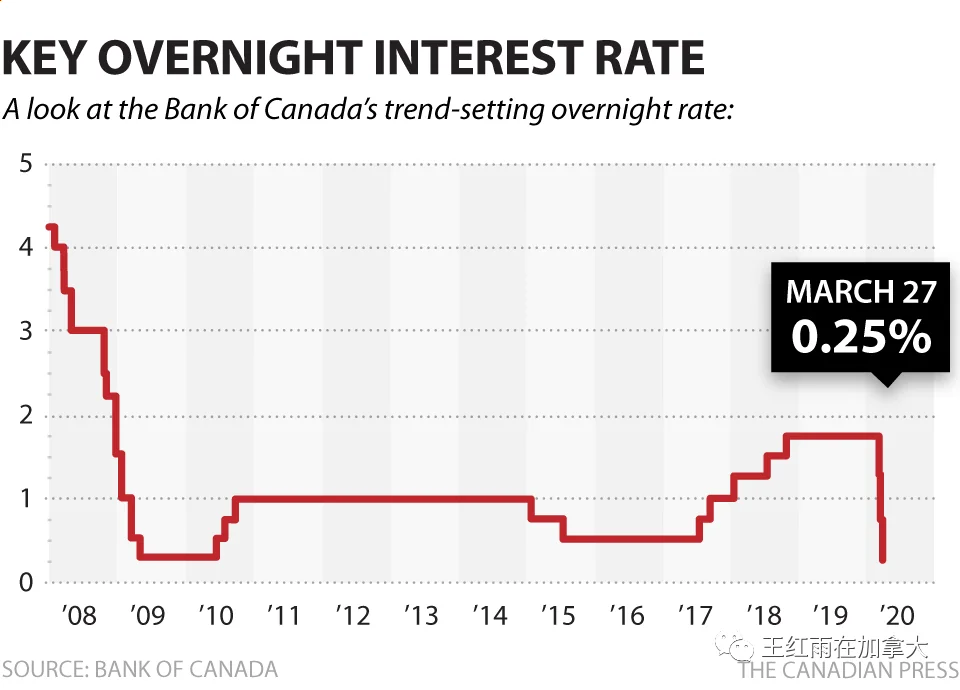
“When interest rates rise, house prices will definitely fall sharply.” From July 2017 to the end of 2018, the Bank of Canada increased the overnight interest rate from 0.25% to 1.75% in one go, but what people saw was that CONDO prices continued to rise.
“House prices have risen too high, and the government will definitely take action.” In 2017, the Ontario government introduced the non-resident real estate speculation tax NRST to suppress housing prices. In 2018, the bank regulatory authorities introduced a high-voltage testing policy. However, during and after the epidemic, housing prices broke through the barriers like a wild horse.
Why do people stubbornly believe that house prices will definitely fall? Isn’t it said that real estate has a cycle? How can it only rise but not fall? There are four reasons: 1. If the population did not grow, the real estate market should have shown rising and falling prices with the ups and downs of the economic cycle. Unfortunately, Canada is a country of immigrants, and the net population growth has long exceeded the number of newly built houses. This contradiction is particularly prominent in metropolitan areas; 2. Housing prices are driven by debt and currency. In the 12 years since 2009, Canada has only expanded its balance sheet through QE and issued additional currency, without shrinking. The government has reduced currency issuance. At the same time, Canadian commercial banks have conservative loan approval policies. Mortgage debt is very healthy. There has never been a large-scale debt default and a sharp drop in housing prices. 3. Investment channels are narrow, and real estate has become an investment tool. 4. Some families use their own abilities to evaluate other people’s ability to buy houses. They have always misjudged the trend of housing prices and deceived themselves, leading to repeated mistakes in buying houses, making housing prices unattainable.
01 Population, employment and house prices
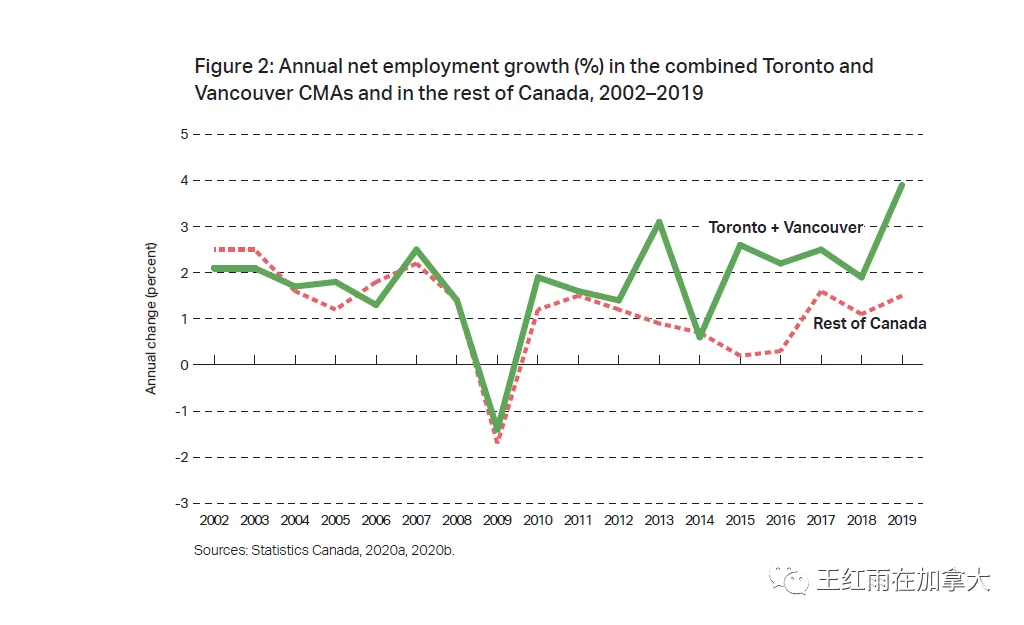
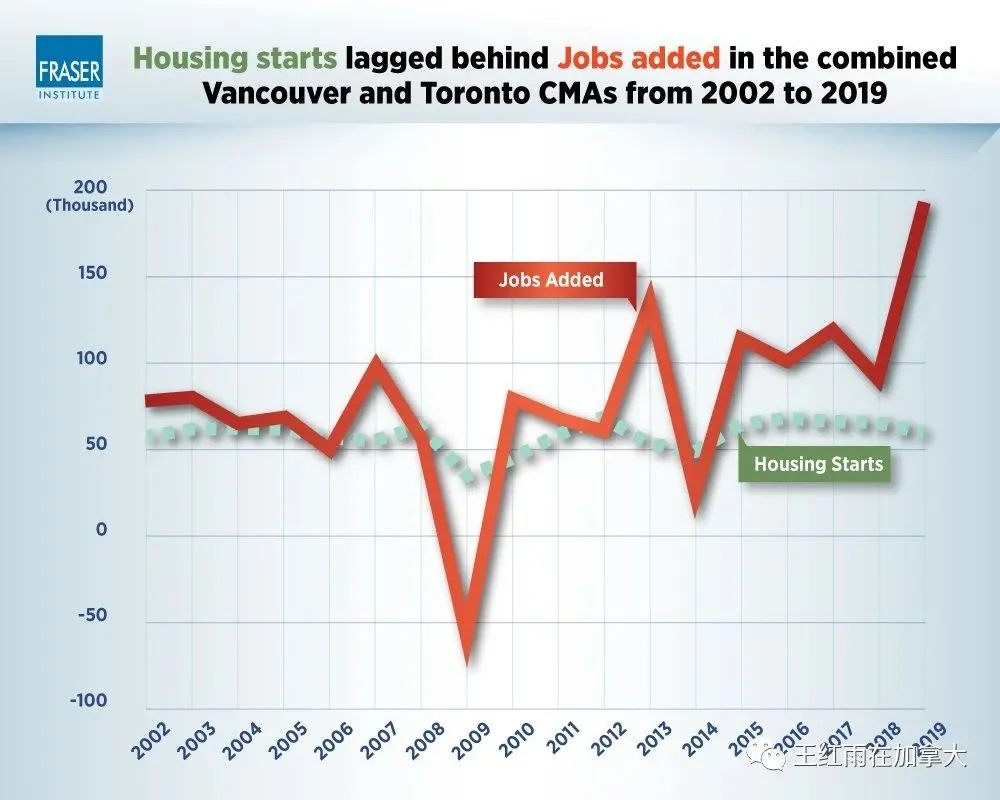
The Fraser Institute conducted a study on the population, employment and housing situation in Canada’s large cities in the past 20 years from 2001 to 2019. The report is called Job Creation and Housing Starts in Canada’s Largest Metropolitan Areas. This report specifically conducted a special study on Toronto and Vancouver, and concluded as follows: The annual employment growth rate in Toronto and Vancouver is 4%, and the annual population growth rate is 1.8%. The employment growth rate is twice the population growth rate. Job opportunities have attracted people to settle in these two metropolitan areas. While 200,000 new jobs are created every year, the new real estate construction in these two cities is only more than 50,000 each year, which has not kept up with the pace of employment growth.The rapid rise in housing prices in Toronto and Vancouver is actually caused by the abundance of job opportunities.
Someone asked a university professor which city would be the easiest to find a job after graduation. The professor said, "Go to the city with the most expensive housing prices and rents." Although it is an Internet joke, it can show that it is the same all over the world. In cities with many employment opportunities, housing prices are the most unaffordable. There are various employment opportunities in big cities. If one of the couple majors in geophysics and wants to find a professional job, no matter what the other person majors in, the whole family will probably have to come to the big city to find a job. This is why the job opportunities in big cities lead to a high concentration of the population, and housing cannot keep up with the growth of employment opportunities.
In the past five years, the growth rate of job opportunities in the Canadian Prairies has slowed down significantly. At the same time, the supply of new homes in Vancouver has increased, and housing prices have risen slower than in Toronto. Therefore, many people in the Oil City have chosen to settle in Vancouver. One of my clients works in Calgary, but chooses to settle in Vancouver. In the Greater Toronto Area, housing prices in surrounding cities have skyrocketed since the epidemic. Many people have completely lost the opportunity to buy houses in Toronto and even surrounding areas. Therefore, after the epidemic, some people chose to move out of Ontario.The housing price itself is a screening of residents’ comprehensive abilities., as house prices continue to rise, they must either keep up or be forced out. When it comes to housing prices, there is indeed a social Darwin phenomenon - survival of the fittest.
Housing prices not only have an elimination effect, but also help people achieve a wealth transition. Skilled immigrants who bought houses ten years ago do not find it difficult to change houses now, and many families have even started to invest in real estate. Latecomers drive up housing prices year after year, and have a very significant advantage. As long as they buy early, they can seize the opportunity and expand their advantages in both work and investment time lines. After landing, some new immigrants do not work or buy a house, but choose to study. If house prices increase by 60,000 yuan every year, the opportunity cost will be 240,000 yuan after 4 years. This does not include tuition and living expenses. The total cost of choosing to live in a metropolitan city and study full-time is very huge and cannot be afforded by ordinary families.
If a family chooses to settle in a metropolitan city mainly for employment, then the opportunity cost of rising housing prices must be considered within the scope of financial decisions. In the past six years, GTA house prices have increased by an average of 80,000 per year. If you decide to postpone buying a house for a year, you need to consider whether this financial decision is really wise.
02 Currency Issuance and Prime Mortgage Debt
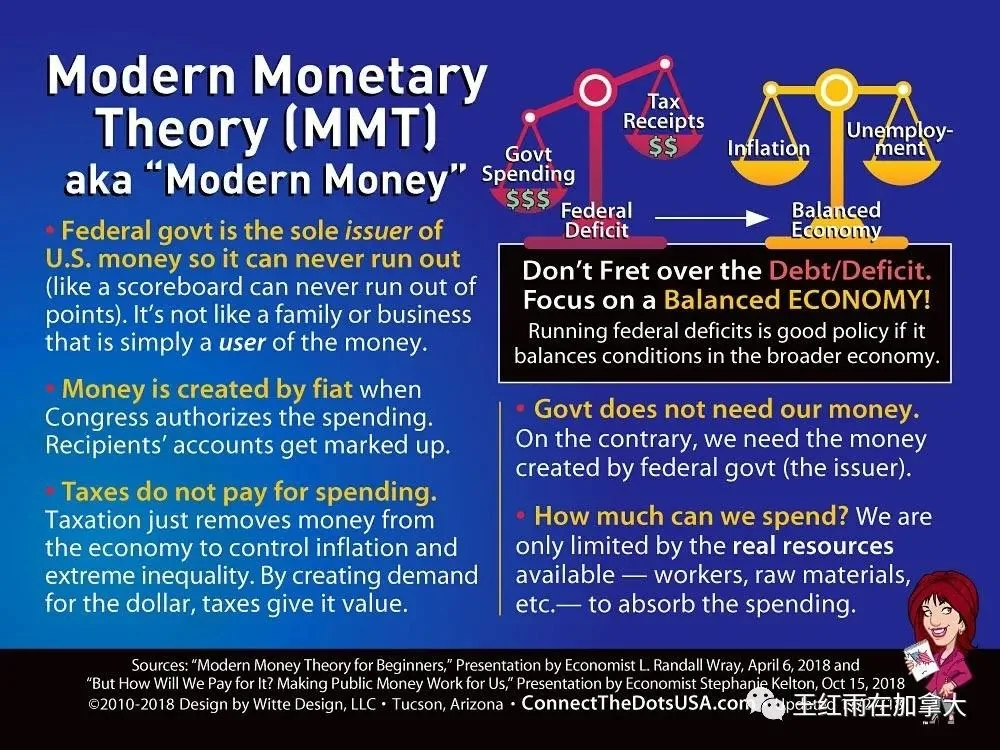
Twenty-one years ago, the Japanese invented a monetary policy in which the central bank purchased bonds on a large scale to suppress long-term interest rates, and named it quantitative easing, or QE for short. This invention has kept the Bank of Japan’s interest rate below 1%. Twelve years ago, the Federal Reserve took over the Japanese invention and started QE. As the little brother of the big brother of the United States, Canada followed closely behind. It was originally planned to end QE together with the United States and start deleveraging in 2017. As a result, the Americans withdrew midway in 2018. Canada persisted until the beginning of 2019, but could no longer hold on. When the epidemic broke out, the two countries plummeted back to the old path of QE. The scale of QE this time is even more fierce. Not only that, the United States and Canada also implementedMMT, that is, functional fiscal policy. Buying bonds in large quantities through QE can only release cash in the financial market, but the government has no money to spend, and it cannot count on QE to spread money during the epidemic, so the government directly overdrafts from the central bank's account for disaster relief. This practice of the Ministry of Finance directly overdrafting from the central bank is called MMT, Morden Monetary Theory, which translates to "Modern Monetary Theory", but in fact this is a fiscal policy. Krugman calls MMT a "functional fiscal policy." The money the government overdrafted from the central bank during the epidemic will either be repaid by increasing taxes, or converted into national debt and left to future generations to repay. Note that since the epidemic, two money printing machines have been opened, one is QE and the other is MMT. This is indeed vicious money printing. However, there has been no hyperinflation so far, which shows that most of the money has flowed into assets, either financial assets or real estate. In short, not much is used for consumption and production. If house prices are not pushed up, commodity prices will be pushed up. It is clear which one the government will choose.
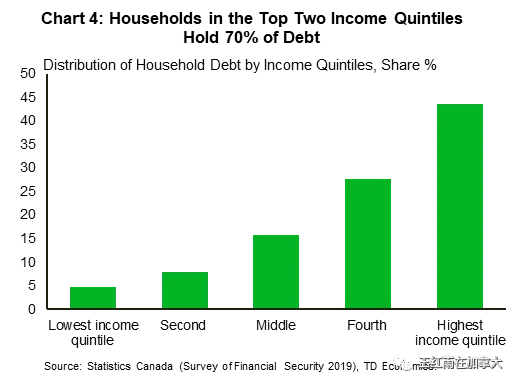
The debt problem of Canadian residents has always been criticized. It seems that Canadians have over-borrowed and it is difficult to repay, and it is all real estate debt. When housing prices fall, these people will go bankrupt. One calculation says that Canadians' monthly debt-to-disposable income ratio is 170%. Looking at this number, people's first feeling is, it's really high. The second feeling is, how is this possible? The truth is this: the 40% of people with high incomes borrow 70% of the debt, and the 60% of people with low incomes borrow 30% of the debt. On average, the income is not enough to repay the debt. The true situation of debt has been distorted by media editors, so it is difficult to understand.
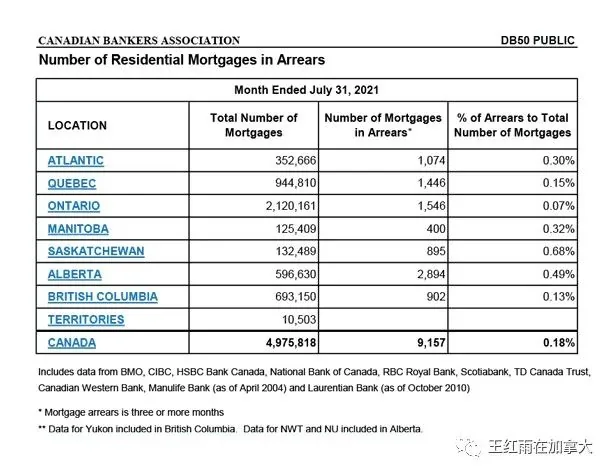
Let’s take a look at the quality of mortgage loans. The Canadian Bankers Association publishes the mortgage default rate every month. The latest data is the mortgage default rate in July 2021. The national average is 0.18%, that is, 1.8 out of 1,000 loans are overdue for three months and have not been repaid, while Ontario's loan default rate is 0.07%, that is, 7 out of 10,000 mortgages are overdue for three months. The mortgage default rate in the United States in the second quarter of this year was 2.5%, 14 times that of Canada. In the past 20 years, the highest default rate for Canadian mortgage loans was 0.45%, which occurred in November 2009, at the height of the subprime mortgage crisis. It can be seen how conservative Canadian commercial banks are. People who have been looking forward to a real estate crash all day may be disappointed when they see these data.
03 Canadian version of Romance of the Three Kingdoms
Ray Dalio once publicly criticized the QE policy as a weapon of mass destruction that widens the gap between rich and poor. In the process of releasing cash by purchasing large amounts of bonds through the open market, the central bank proactively became the largest buyer in the financial market, making huge profits for those who originally held bonds. After arbitraging in the bond market, these people then bought stocks, thereby pushing up stock prices and making another profit. Those who did not have bonds in their hands became the losers. Obviously, people who hold a large number of financial assets have become winners in the QE environment, whether they hold stocks or bonds. After bond prices were pushed up, bond yields were correspondingly depressed. At the same time, stock market prices were pushed up to new heights by the cash released by the central bank. Nowadays, many investors are afraid to enter the market with cash in hand, because the financial market is already in a state of extreme depression.As long as bond yields rise, there is a possibility that both the bond market and the stock market will be destroyed.,And this situation is this year4The moon has already appeared once, and it will only be a matter of time before it appears again.The rich in Canada have become richer after the epidemic, or to be precise after QE, and have become QE beneficiaries.
The Canadian government’s generosity after the outbreak is obvious to all. Throughout the epidemic, the government's subsidy payments were twice the amount of reductions in wage expenditures in the private sector. The money was obtained from an overdraft of the government's account at the central bank, that is, in the form of MMT. Who did the money go to? Anyway, my colleagues and I, who have stayed at work during the epidemic, have not received a penny. So far, 19 months after the outbreak, there are still 1.6 million beneficiaries of the MMT policy, while the number of job losses caused by the epidemic is only 3 million. According to statistics, the number of Canadian jobs in September has returned to before the outbreak. There must be people who have been eating their wages, and these people are the beneficiaries of MMT.
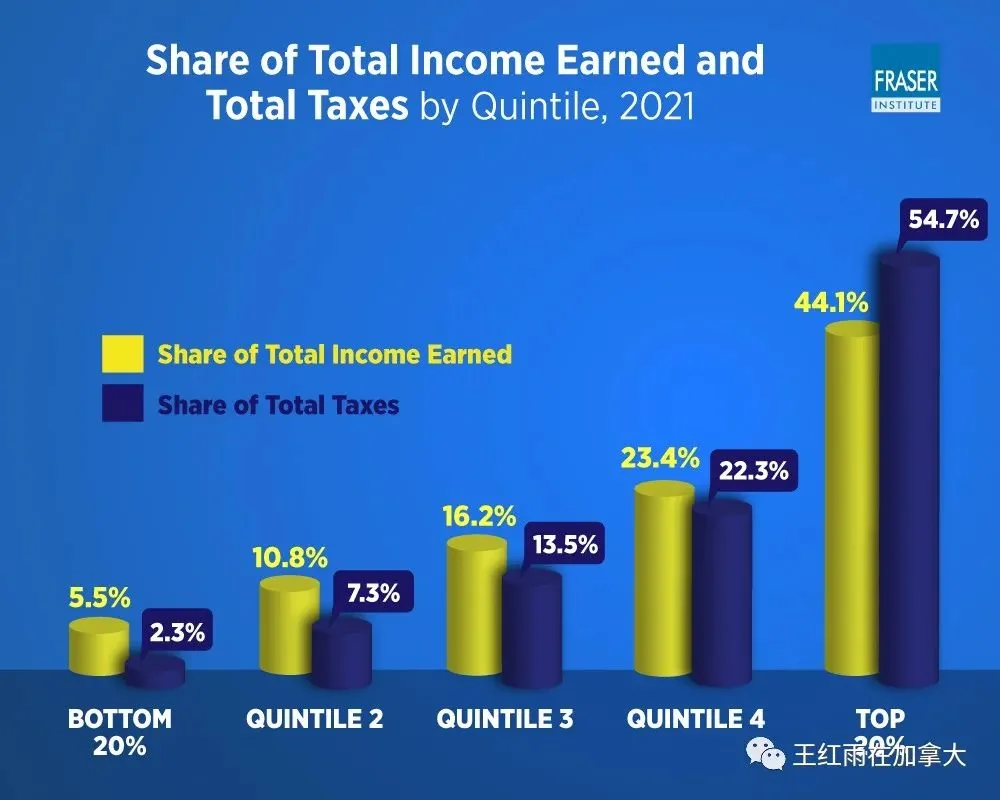
There are also some people who constitute the third party in Canada's Three Kingdoms. For example, I am neither a beneficiary of QE nor a beneficiary of MMT. In order to prevent wealth from being washed away by the currency flood, I can only save myself by investing on my own. If the Canadian population is divided into five parts according to income, the high-income 40% of the population has an income share of 67.5%, and the tax payment rate is as high as 77%; the low-income 60% of the population has an income share of 32.5%, and the tax payment rate is only 23%. Canada's progressive tax system makes hard-working people seem to suffer a lot, but fortunately, the mortgage policy favors high-income people. 40% of high-income people account for 70% of the debt, which can finally bring some psychological balance to high-income families. This Thanksgiving, a group of friends said that we should be most grateful for Canada’s low interest rates. I completely agree.
Canada’s three-country hegemony will continue. The NDP is still clamoring to extend epidemic benefits; the Bank of Canada is still buying 2 billion bonds every week; high-income families’ real estate investment cannot stop. Don’t envy anyone else. We are all working hard for the future of our own families.
04 Self-deception in the noise
Daniel Kahneman is known as the father of behavioral psychology. His main research field is the psychology of human misjudgment. Recently, his new book "Noise" has attracted widespread attention. In his book, Kahneman divides people's decisions into two categories: single decisions and repeated decisions. Whether to join the army or whom to marry are very rare decisions that are classified as single decisions. If you buy a house for a lifetime, it is certainly a single decision. One big difference between people who make single decisions and people who make repeated decisions is that they cannot distinguish between noise and information. In the Internet era, with the explosion of information, people do not lack information, but lack the ability to filter information. The opinion mentioned at the beginning of the article that housing prices must fall is noise or information. It is different for people who make single decisions and those who make repeated decisions. People who have bought multiple apartments will know at a glance what noise is and what information is. So a phenomenon occurred that I observed:The more afraid people are of buying a house, the less likely they will be able to buy a house; the more often people buy houses, the more confident they will be.

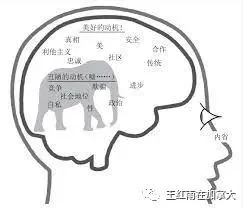
Kevin Himler revealed a phenomenon in his book "The Elephant in the Brain":He who deceives others deceives himself in order to deceive others.Human beings have a natural tendency to deliberately conceal their true motives. For example, if they feel that the house price is too high and cannot afford it, they tell others that the house price will definitely drop. Those who deceive others must first deceive themselves before they can deceive others, otherwise they will not be able to tell others the truth. The “elephant” here refers to the true motive. People have an instinct to deliberately avoid the elephant in their minds when expressing externally. When internal information conflicts with external facts, people initiate self-deception mode. For example, it is difficult to get a loan to buy a house in the GTA with an annual family income of 40,000. This annual income of 40,000 is internal information. Others do not know it, only you know it. The external information is that the average house price in GTA has risen to 1 million, and the bank stress test interest rate is 5.25%.The maximum loan amount for owner-occupied housing is based on annual income5times, the investment housing loan amount is the annual income5Double the balance of owner-occupied housing, etc. When a person's internal information seriously conflicts with external facts, the person begins to deceive himself. Although it is an instinct of self-protection, it takes the form of deceiving others, telling others that house prices will fall.
Noise can comfort those who deceive themselves. At the same time, those who deceive themselves will also make noise to deceive others. Happy are the self-deceivers in the noise, don't disturb them.
Conclusion:
The “high-income families” mentioned above refer to families with an annual family income of more than 139,000, accounting for 40% of the total number of Canadian families. These families paid 77% of the taxes and borrowed 70% of the debt. Most of them did not benefit from the monetary policy of QE and the fiscal policy of MMT. However, the families among them who invested in real estate gained their due wealth from low interest rates and first-comer advantage. The status of real estate in our lives is still important and indispensable, and it has even returned to the wealth and class attributes it represented more than a hundred years ago. People who regard real estate as dirt are also treated as such by real estate. Misjudgments and curses on housing prices cannot change the fact that we live in Canada, a country of immigrants, where private property rights are sacred and inviolable, banks support real estate investment, and government taxes encourage real estate investors. Housing prices will not make any changes to personal likes and dislikes, but will only follow the laws of the economy and the market. In the Canadian version of the Romance of the Three Kingdoms, each of the three groups of people gets what they deserve, and the essence of social relations in capitalist countries is to create and accumulate wealth through individual struggle to achieve common prosperity of society. Entrepreneurs use capital and innovation to create jobs and accumulate personal wealth; real estate investors use their borrowing power and first-mover advantage to provide rentable living places for latecomers while accumulating personal wealth. If high-income families just complain about paying too much tax, or even be affected by the noise from low-income people, and worry about interest rate hikes and government suppression of housing prices, and worry about gains and losses, they will miss the first-mover advantage and pay huge opportunity costs. When it comes to real estate investment, Chinese immigrants are a little late to wake up, but they are catching up. I can see everyone's efforts, and I am happy for my friends who have achieved results. The noise will not stop. We need to have a calm and objective mind, the perseverance to postpone gratification, and the action to create a better retirement life for ourselves.Preserve and grow your wealth in this real negative interest rate environment.