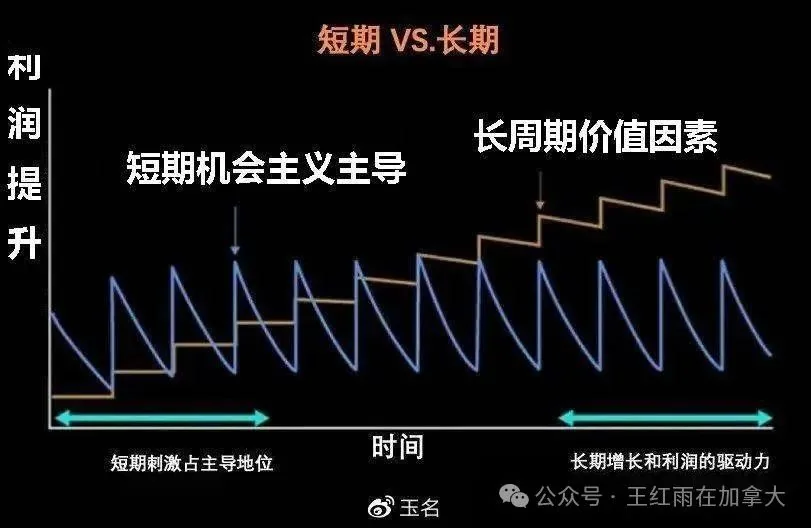
At an event I attended recently, an audience member asked me whether I should focus more on the long-term appreciation of real estate or the cash flow generated by the real estate when investing. This viewer believes that cash flow is easy to control and predict, while asset appreciation is very uncertain. The word "focus" actually asks which priority is higher, or in other words, how to choose when you can't have your cake and eat it too. This kind of multiple-choice question can only be based on your owntargetTo be sure, there is no unified answer. Without knowing an investor’s investmenttargetUnder the circumstances, it is impossible to determine whether asset appreciation or cash flow is more important. For me, asset appreciation is more important. "You can't have both fish and bear's paws." This sentence comes from "Mencius". The answer to choosing between bear's paws and fish has been known thousands of years ago: you can't have both, you can only choose. People who want to have both may get nothing. As for the statement that "cash flow is easier to control and predict", I don't agree. Cash flow is not easier to control and predict than asset appreciation. Take condos in downtown Toronto as an example. After the outbreak of the epidemic, the rent of investment properties dropped sharply. Many existing tenants offered to move without lowering the rent. Some tenants even moved out before their leases expired. Many condos were vacant and could not be rented out for a long time. These phenomena led to an immediate deterioration in the cash flow of landlords. After the interest rate increase, many landlords' monthly loan payments increased, and their cash flow also immediately deteriorated. From these two examples, it is not difficult to conclude that cash flow is not easy to control and predict. my point isIf you want to invest in real estate, you have to face the uncertainty of value appreciation and the challenge of fluctuating cash flow., the real estate may not appreciate in value in three years, or it may increase by 20% in one year, and the cash flow may be positive when you buy it, but turn negative after encountering a negative impact. It is the fate of landlords to bear uncertainty, just like entrepreneurs. Once the income is certain, competition will swallow up the certain income.Real estate investors, like entrepreneurs, need to be comfortable with uncertainty, because only uncertainty is the source of profits.Of course, real estate investors bear much less uncertainty than entrepreneurs, so the number of landlords is far greater than the number of entrepreneurs. Increasing the certainty of investment returns by controlling risk is the job of all investors, whether investing in stocks or real estate.

Some suggestions on improving cash flow will expose investors to greater investment risks. For example, it is recommended to sublet a property with a rent of 3,000 yuan to five students at a rent of 1,000 per student. Although the cash flow has improved, the certainty of investment returns has become lower, because the government may crack down on illegal subletting, or fires may occur due to the large number of tenants, turning real estate investment into a disaster. Everyone has his or her own margin of safety. A so-called breakthrough that exceeds the margin of safety may bring unexpected benefits or even a disaster. Challenging yourself in a high-risk field is more likely to bring disaster than good.
01 Assets are related to the upper limit of wealth
"Bear's paw" represents scarcity and long-term benefits; while "fish" represents things that can be easily obtained in front of you. If you are pursuing short-term achievements, you may choose "fish"; if you have long-term plans, you may be more inclined to "bear paw", even if you need to give up some current small profits.

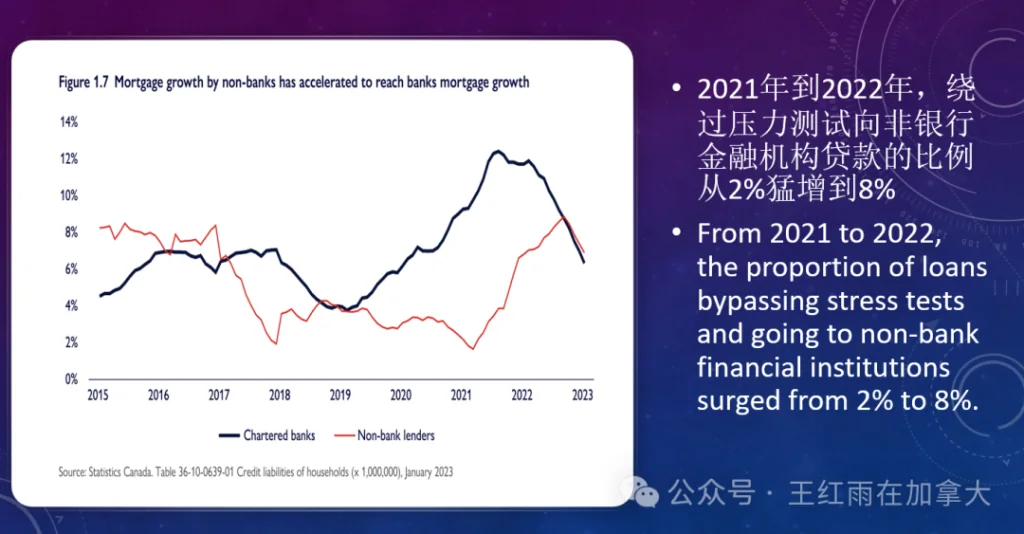
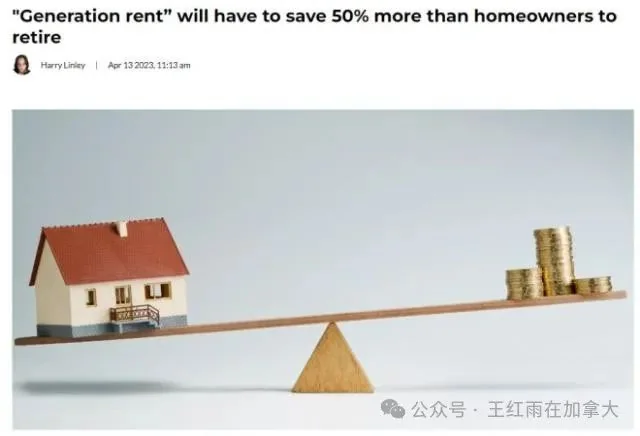
Taking renting or buying a house as an example, we can intuitively see the consequences of choosing between fish and bear's paw. According to the current housing prices in the Greater Toronto Area, the cost of renting a house is much lower than the cost of owning a property. Buying a house is an active choice to endure hardship; renting a house is an active choice to enjoy yourself in a timely manner. Thirty years later, the family that bought the house owns the house and has no mortgage, and a lot of wealth is stored in the house;Renting a house becomes easier for families30 years, but will face the consequences of still having to pay rent after retirement and having no real estate wealth.Many renting families who can afford to buy a house always come to one conclusion when considering buying a house:Wait until the house price drops to what they think is the ideal price. Although the price of bear paws fluctuates, it has never been cheaper than fish, because bear paws are becoming increasingly scarce, and the families who bought bear paws early are all families who have experienced the hardship of buying a house. Why should they sell their properties at a reduced price? Every choice has an opportunity cost, and giving up an option means missing out on its benefits. What price are you willing to pay for bear paws? Can you get over the sense of loss that comes with not eating "fish" now? This is a question that all renting families struggle with. There are "smart people" who try to have their cake and eat it too, for example, buying a house with a high interest rate and subletting the room. This practice is very popular from 2021 to 2022. The proportion of loans from non-bank financial institutions that bypasses bank stress tests has skyrocketed by 400% during this period, from 2% to 8%. At the craziest time, 8 out of 100 mortgages were obtained by bypassing stress tests. After the central bank sharply raises interest rates, these households that have stretched their financial situation to the limit will find it difficult to withstand greater negative impacts. As a result, they may be forced to sell their homes when the housing market downturns. In 2022, house prices will fall by 18% in one year. Among those who sell their houses at low prices, I am afraid that the above-mentioned people who both want and want it are indispensable. Modern economics also has a clear answer to the question of fish and bear's paws. "Small Island Economics" tells a story at the beginning to explain what capital is: A man who needs to catch fish every day to survive endures hunger and spends two days making a fish net, and then becomes a capitalist, because this fish net is capital, and being hungry for two days is the price of obtaining capital. Real estate is a long-term asset and a form of capital that is as scarce as bear paws. In fact, everyone knows that house prices will continue to rise in the long run, but buying a house requires sacrificing short-term immediate benefits and making up your mind to do the difficult but right thing. In view of the scarcity of real estate, mortgage policies have been tightening, especially in terms of the authenticity of income documents, and efforts to crack down on counterfeiting have been intensified. Otherwise, no one would go to non-bank financial institutions to borrow loan sharks at high interest rates.
Insisting on investing in real estate and being a landlord when housing prices are high and interest rates are high, in the eyes of those who have the ability to buy a house but choose to rent, is actually suffering immediate losses, suffering, and bearing the fluctuations in cash flow and uncertainty in value appreciation. In Canada, immigration policy is determined by the government, and the main basis for immigration policy is the degree of aging; housing supply capacity is determined by the market, which is not only affected by demand, but also by cost. The long-term mismatch between population and housing has led to a serious housing crisis. For newly formed families and new immigrants, the housing issue is a "crisis" and for real estate investors, it is an "opportunity." Since the interest rate hike, a large number of developers have gone bankrupt and canceled new housing projects, which has ensured that real estate investors will make considerable profits in the next 2-3 years. The recent stimulus mortgage policies introduced by the federal government are likely to greatly advance the dividend period for real estate investors. As long as you hold the property long enough, good returns on real estate investment are certain in the Greater Toronto Area. Even more certain than the return of holding a certain technology stock for a long time.
Stocks are not scarce assets, nor are houses, but stocks and real estate with high potential for future appreciation are scarce assets, as scarce as bear paws. It is not easy to own scarce assets and hold them for a long time. It requires not only the ability to acquire them, but also the cognitive ability to carry them. Since the interest rate hike, and until today, those who have hurriedly sold their properties in the Greater Toronto Area are bound to become the gods of wealth.The ability to hold high-quality and scarce assets for a long time determines the upper limit of a family's wealth. Families with a ceiling that is too low will need more resources and energy to cope with future uncertainties, and may even face a precarious retirement life.

02 Cash flow is related to the lower limit of survival
In Greater Toronto, Canada’s top city for real estate investment, the higher the leverage, the greater the negative cash flow. If you want positive cash flow, just increase your down payment.Negative cash flow is the installment of the down payment.This phenomenon was summed up by me and has been explained many times. However, many people do not understand the full meaning of this sentence: you do have the ability to pay more down payment, and actively choose to pay down payment in installments just to increase the leverage ratio. For example, if you have a down payment of 20%, a monthly negative cash flow of 500 yuan, and a 35% down payment with a positive cash flow of 20 yuan, you are indeed able to pay the 35% down payment now, but in order to increase the leverage, you actively choose to pay 20%, not because you only have a 20% down payment. Actively choosing to pay only 20% and using the remaining 15% as redundancy in case of emergencies is the most important guarantee for safely holding a negative cash flow property.
When choosing a property, some people deliberately look for properties with a down payment of only 20% and positive cash flow. There are also experts who promise to be able to find such a property. If such a property does exist, its corresponding location and tenant group will be discounted. If you really buy such a property and encounter a sharp interest rate hike or an epidemic, the positive cash flow may turn into negative cash flow. The real estate market is an efficient market with full competition. People who want to pick up the slack are more likely to fall into the pit than those who want to pick up the bargain. If real estate investors need to rely on the positive cash flow generated by rental properties to make a living, I personally suggest that it is best to do other jobs, because the positive cash flow from renting is pitiful, and it is not more reliable than working income, nor much better than eating deposit interest.
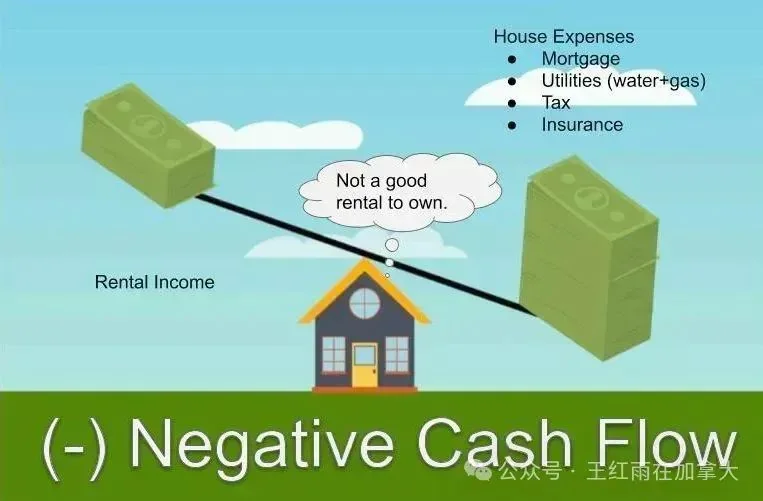
The quality of real estate investment can only be measured by the after-tax income after selling the property. If we measure it by whether there is positive cash flow from rent, we will come to an absurd conclusion: for the same house, a down payment of 20% will have a negative cash flow, so it is not an investment worth making; a down payment of 35% will have a positive cash flow, so it is a good and worthy investment. In fact, the opposite is true. Real estate investments with positive rental cash flow have higher income taxes and lower after-tax returns.Positive cash flow from rentals will weaken the after-tax return on real estate investment.
Investing in stocks is generally considered a mainstream investment; investing in real estate is considered an alternative investment. People who invest in stocks focus on the fluctuations of stock prices all day long, and rarely care about the dividend income of stocks. In other words, people who invest in stocks generally do not care about the positive cash flow brought by stocks, but a large number of people who invest in real estate focus on rental income. Could it be that the difference between alternative investments and mainstream investments is where investors look? Speaking of dividend returns, the stocks of Canada's big banks are definitely cash cows. The dividend returns are between 4% and 7%, which is high and stable. Well above the rental return rate of Toronto properties.If you pursue rental returns, real estate is not worth investing in. There are too many alternative investments that are more worry-free and labor-saving, with higher and more stable returns.It is recommended that real estate investors pursuing rental returns change tracks as soon as possible.
Since the interest rate hike, positive cash flow has turned into negative cash flow, even causing family financial problems, which has sounded the alarm to all real estate investors or friends who plan to invest in real estate.For families whose job income is not high enough and who hope to use rental income to supplement their active income, it is dangerous to choose real estate investment: the rental income turns from positive to negative, which means that the active income that was originally enough to survive may not be enough to support themselves, and the family's financial situation will be more difficult than if they did not invest in real estate. When your fishing ability still needs to be improved, don’t expect too much.Some families can get a bear's paw by giving up a few fish, while other families may have to sell the pot if they give up a few fish. Cash flow is the lifeline for a company or family. It does not have to be profitable, but it cannot cut off cash flow. If a family does not have an after-tax cash flow of 3,000 yuan per month, it will lead to a credit default and cannot pay utility bills. Then the lower limit of the family's cash flow is 3,000 yuan. The higher the lower limit of cash flow accounts for the proportion of active income, the higher the financial risk and the less suitable it is for investing in real estate. Family A has a monthly after-tax income of 5,000 yuan, a minimum cash flow of 3,000 yuan, and a minimum cash flow to income ratio of 60%; family B has a monthly after-tax income of 3,300 yuan, a minimum cash flow of 3,000 yuan, and a minimum cash flow to income ratio of 91%. Household B's minimum cash flow accounts for too high a proportion of active income, and it is not suitable to invest in real estate, because the negative cash flow from rent may further increase this proportion, thereby harming the family's financial security.Cash flow is related to the lower limit of survival.A family cannot invest regardless of financial security. It must know what the bottom line of cash flow is, which is a matter of life and death, and act within its capabilities.

03 Jump out of the comfort zone or stay in the comfort zone?
Suggestions to improve cash flow have been a hot topic in the media since interest rate hikes caused some households' cash flow to deteriorate. Everything I've seen so far about improving cash flow from real estate investments makes me uncomfortable. This includes building additional properties, extending the property to the sky or underground; subletting it to students; using the property as a family hotel, etc. These suggestions for improving cash flow are destroying property values and putting the cart before the horse in terms of the purpose and means of real estate investment: cash flow, not value appreciation. In order to seize the life-saving fish in front of me and destroy the value of the bear's paw, I don't know if it is just a gimmick of self-media people, or if there are really people who have done this kind of thing at the expense of others.
Is there no need to pay cash for building an addition to a property? This doesn't solve the cash flow problem either. If you have savings, you can use them as capital reserves. Investing in a house means actively increasing the down payment, lowering the leverage ratio and lowering the return on investment. Even if cash flow can be improved, the tax bureau will take away most of the profits. What do investors want? A real estate investor renovated his basement and applied for government permission. The property tax went up the second month after completion.
Illegal subletting is an incubator for fires and vicious criminal cases. It's a fluke that nothing goes wrong. Illegal subletting is the most important way to improve rents. Using small profits to challenge the law is a waste of money.
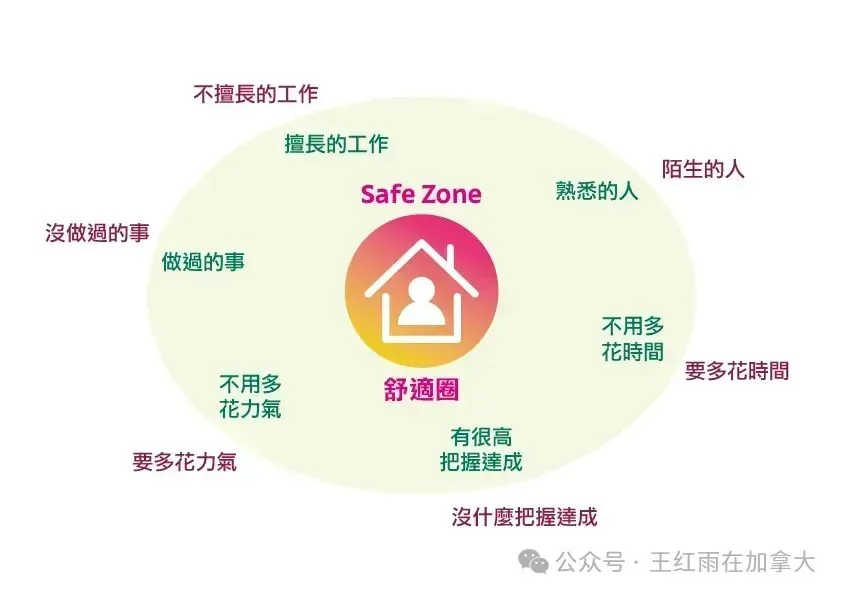
The main reason why real estate investment is favored by middle-class families is that real estate investment is a part-time job, and the certainty of investment returns is very high, and the overall return is even higher than active income. Real estate investment has a loan threshold as a moat, competition among investors is not fierce, and the proportion of speculators is much smaller than that of stock investment. The area of obtaining active income is an area that middle-class families are good at, or in their comfort zone. A person can only make money within his comfort zone. Through learning and practice, this comfort zone can gradually expand, like the growth rings of a tree, quietly and continuously expanding year by year. It is much safer to stay in your comfort zone, engage in what you are good at, and invest in assets you are familiar with than to rush out of your comfort zone and become a leek across the circle. I don't think it is necessary to "step out of the comfort zone", but expanding the comfort zone is something I do every day. If I continue to learn, practice, and summarize, the comfort zone will become bigger and bigger. I will not break into the fields of renovation, decoration, running family hotels, illegal subletting, etc., because I have never learned this knowledge and don't want to try it. The most important thing is that these fields make me uncomfortable.
I value comfort zone more than asset appreciation and cash flow. Ayn Rand said, "Money will not obey a brain that is not worthy of it."I knew my brain wasn't worth the money in certain fields, so I just didn't think about it. I am very satisfied to be able to invest in assets that I am familiar with in a field that I am familiar with. I believe that most middle-class families have the same idea as me.
Conclusion
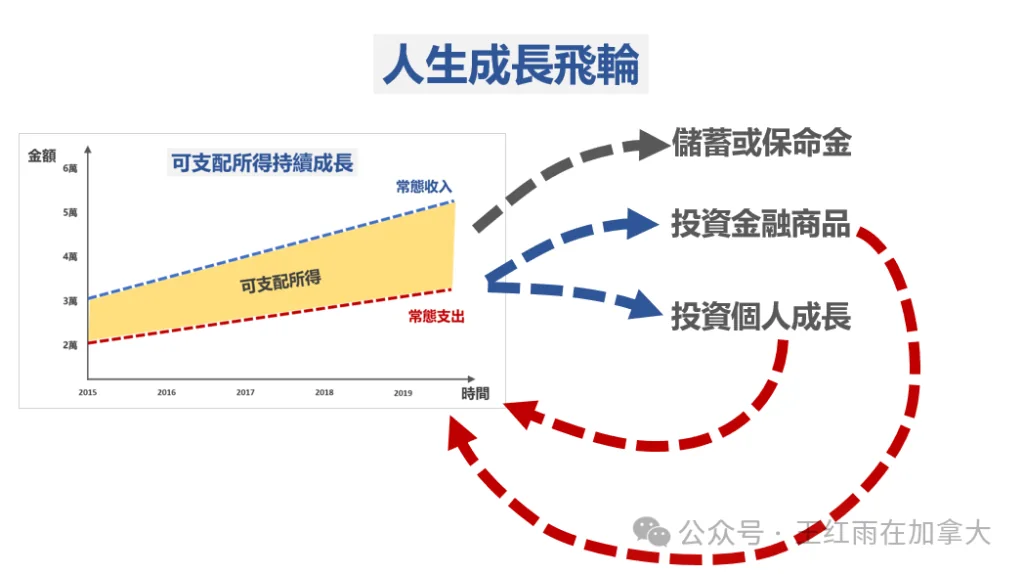
The moon in the sky can be seen for free, and not a single sixpence on the ground is picked up for free. The essence of money is a credit contract, which carries the unique spiritual phenomenon of human society: in a society with fair rules, people who can make money are often strong and trustworthy people; a society that is generally out of poverty is usually a society that is generally diligent, honest, and rational. Investing is using money to make money. An investor's potential depends not only on his ability to earn money, but also on his cognitive ability to carry money. For those who are struggling with positive cash flow from rent, the correct direction of efforts should be to increase active income and reduce the proportion of minimum cash flow to active income, rather than seeking to break the circle. Wealth created through production, intelligence, and hard work is worth pursuing; those who condemn wealth condemn achievement and productivity. The money and wealth a person owns is an IOU issued to him by the society. The more wealth a person has, the more he has contributed to society, and the more society owes him. For example, a landlord bears the uncertainty of rent and monthly payments, provides a place for tenants, and the wealth accumulated in the property is an IOU issued by the society to the landlord.
Through hard work, reduce the proportion of minimum cash flow in active income, stay in your morally comfortable circle of competence, and watch your assets appreciate. Wouldn't you be happy?