On July 12, 2023, the Bank of Canada raised interest rates again. The central bank's overnight interest rate has reached as high as 5%. The bank's prime rate has been accordingly increased to 7.2%. The mortgage loan interest rate available to mortgage borrowers is around 6%. In this interest rate environment, floating rate borrowers, borrowers renewing their fixed rate mortgages after maturity, and borrowers currently applying for mortgages are all facing tremendous repayment pressure. As a result, many people have raised questions such as whether it is better to rent or buy a house, whether to increase the mortgage when the mortgage is due for renewal and continue to invest in real estate, or whether to change to their own home at this time. These three issues all depend on a family's long-term plan and have little to do with the current interest rate level. I have shown you a comparison chart between changes in interest rates and changes in housing prices before. Housing prices fluctuate all the way to the northeast, while interest rates fluctuate horizontally like an electrocardiogram. The level of interest rates does not affect the long-term trend of housing prices. If you look closely at these data, the conclusion is also very clear:Interest rates do not affect the long-term trend of housing prices, but they will affect the short-term fluctuations in housing prices.In the short term, due to rising interest rates, the borrowing capacity of some households has declined, which will lead to difficulties in long-term plans. This is caused by objective conditions. Some households with no problem with their borrowing capacity have given up their long-term plans due to the fear of rising interest rates and the herding effect. This is the result of subjective factors. Since the interest rate hike on June 7, the Chinese community in Canada has subjectively given up on the idea of buying a house more obviously than other ethnic groups. Should they change their houses, should they continue to invest in real estate, and should they end renting and buy a house? The answers to these three questions in the Chinese community are all NO.
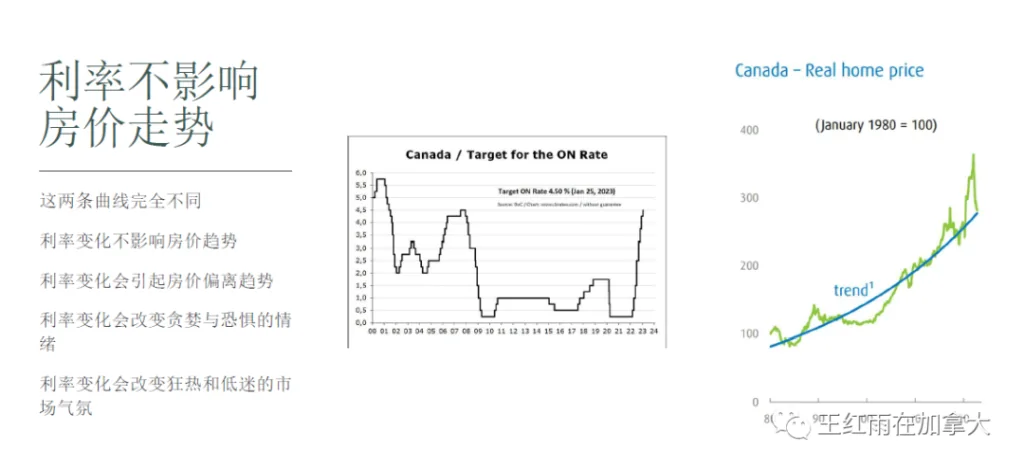
Fear is an innate emotion. Getting rid of fear and making decisions that are beneficial to long-term goals requires learning. The ability to overcome fear is not inherent in genes. For families currently unable to find their way around due to fear, the standard approach is to "wait a little longer." In fact, "waiting" does not mean inaction, but an action called "procrastination". Procrastination is not without consequences, but has serious consequences. Now you can clearly see how difficult it is to make rational decisions. The level of interest rates is obviously irrelevant to the long-term housing price trend, but it actually changes people's actions at the moment. French economist Maurice Allais discovered through experiments that“People are influenced by irrelevant options and make irrational decisions. People are influenced by irrelevant alternatives and make irrational decision.”This phenomenon was discovered by Alais in the 1970s. In the past 50 years, people's rational decision-making has not improved at all. What is equally stubborn is that when it comes to houses, the truth of "buy when prices rise, not when prices fall" has always been unbreakable. As long as house prices don't rise, you won't buy them. As long as they rise, you'll grab them.
Real estate transaction information is too abundant in the Chinese community, which makes the Chinese community particularly sensitive to various information related to real estate. Interest rates, number of listings, transaction volume, etc., short-term factors that have nothing to do with long-term house buying and investment plans, constantly encourage people to make irrational decisions. "Whether others will buy or not" becomes the basis for their own decision-making. Everyone regards themselves as real estate traders, always paying close attention to the changes in the transaction screen and K-line, thereby determining the "best time to sell." Economic factors and financial factors can only affect short-term market changes, while the supply of new homes and population changes are the factors that determine the long-term trend of housing prices.
01 Basic facts about the current Canadian economy
Canada's GDP growth rate in the first quarter of 2023 was 3.1%, while the United States' GDP growth rate was 1.1% during the same period. Canada's economic growth rate ranked first among the G7 countries. Indeed, we should be able to feel such a high economic growth rate, but why don’t we feel it? Because GDP is a total number, not per capita. In the past year, Canada's population increased by 2%, so if calculated on a per capita basis, per capita GDP increased by only 1.1%. The same as the United States, due to the inequality between rich and poor, not everyone can feel the increase in output. Regardless of whether we look at it in total or per capita terms, Canadians are not lying flat. This is a fact. Due to the significant increase in the cost of living, people who used to live on welfare during the epidemic are now getting out of bed and working. This is the result of inflationary stimulation. "When the inflation rate is high, the unemployment rate is low." This is a rule discovered by New Zealand statistician Phillips in 1958. The relationship between inflation and unemployment is named the Phillips Curve. Some people say that the Phillips Curve is outdated, but the actual situation in Canada proves that the Phillips Curve is still applicable. We can also see with the naked eye that when inflation is high, people will go hungry if they lie flat, so the labor participation rate and employment rate have increased.When everyone has a strong desire to survive, recession is less likely to occur.Since the second half of last year, some people have predicted that a recession will occur in the first half of this year. The first half has passed, and the economy is still overheated. Bears have no choice but to continue to be bearish. If they persist in being bearish, they will one day usher in a recession.
The number of job vacancies remains high, which has become a reason for the central bank to continue to raise interest rates. Some people interpret this phenomenon as the central bank is too bad, that is, it wants to use interest rate hikes to crush companies and make them fire employees, or at least stop hiring. The increase in jobs is the result of adjustments to the supply chain, because in order to cut off some supply chains, some work has to be done by oneself. This is actually a pain of growth and is a good thing in the long run. Henry Hazlitt explained the employment issue very thoroughly in "Economics in One Lesson". He believed thatThe essence of the employment problem is an output problem. Increased output driven by excess demand, which in turn stimulates employment, is the most valuable asset of a prosperous country.If there is an output gap between demand and output, it will lead to a tight labor market, and Canada currently has an output gap. On the contrary, as Keynes proposed, the government hires people to dig a hole and then hire people to bury it. The employment created is nonsense, short-sighted, and irresponsible. It is evil to use full power of the military industry to achieve 100% employment like Hitler, and will eventually perish. In the past 156 years, Canada has only had more than 400,000 new immigrants at the end of the year once. The situation of more than 400,000 new immigrants for two consecutive years is unprecedented. It has a huge impact on Canada's existing social resources. At present, the admission criteria for new immigrants in Canada are based on work ability rather than asset level. The consumption of new immigrants after landing is rigid. No matter how interest rates are raised, a certain amount of consumption must be guaranteed. Moreover, because new immigrants do not have much savings, they need to join the labor force quickly. We have already seen this fact:Consumption is hard to curb and the job market is active. The central bank has two working goals: currency stability and employment promotion. During the epidemic, in order to maintain employment, a large amount of money was released. Therefore, the job market after the epidemic was very tight. College students who graduated last year and this year could easily find jobs. After inflation, in order to restore the stability of the currency value, interest rates were increased in a furious manner. The desire for quick success and quick profit was obvious. From a well-intentioned point of view, the central bank also wants to work, but this aggressive work style is difficult to resist. It is an indisputable fact that the employment situation has improved. News headlines about layoffs are flying all over the place, but the content is puzzling. BMO Bank has 47,000 employees, and it actually made news when it laid off 100 people. After major IT companies discovered that CHATGPT was the direction, they cut off other projects with no future and at the same time recruited more people who understand CHATGPT. However, the news only reported layoffs, but employment statistics do not lie. After cars ran all over the place, coachmen were laid off. This was the result of progress and development, not the result of economic recession.
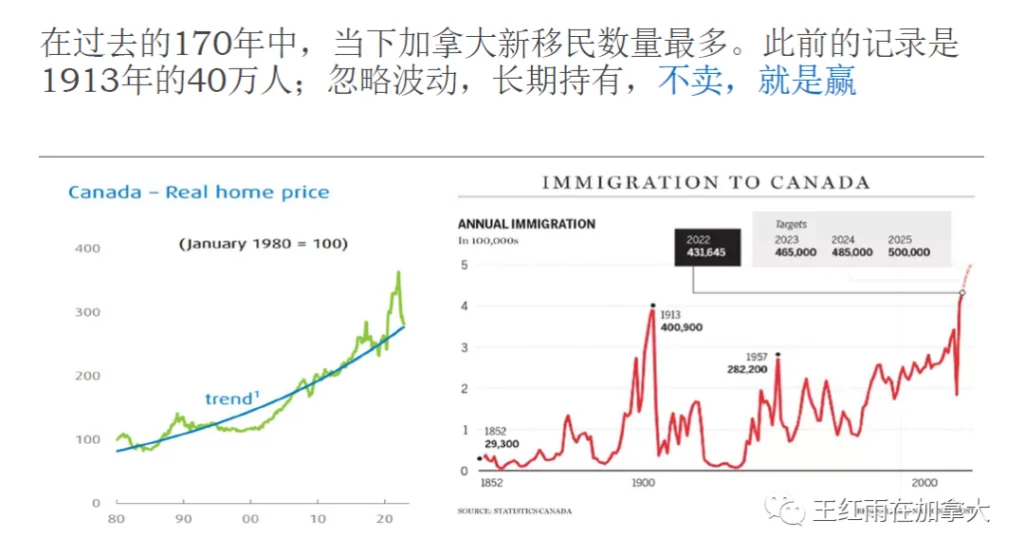
During the epidemic, housing prices soared by 46% in an environment of ultra-low interest rates, and then shrank by 18% amid the surge in interest rate hikes. After the interest rate hike was suspended in February this year, housing prices in some areas experienced a V-shaped reversal. After the interest rate hike in June, housing prices returned to calm. In the drastic changes in the economic and financial environment, we have a clear view of the changes in housing prices in the short term: the explosive interest rate hikes did not trigger a wave of supply cuts, and there was no large-scale sell-off. This is a fact. After the central bank announced the suspension of interest rate hikes, although interest rates remained high, it was also true that both transaction volume and housing prices showed a V-shaped reversal in some areas. These facts reflect:Second-hand houses are a scarce resource in Canada. Real estate is regarded as the cornerstone of family assets in Canada. Second-hand houses are not only really expensive, but also precious. Once lost, they are difficult to get back. No one dares to cut off their mortgage payments easily.The ultra-low mortgage loan repayment rate is a fact.
Raising taxes and interest rates has only one final result: raising housing costs. The foreign property purchase tax and the vacancy tax are said to increase tax revenue and subsidize the housing expenses of some people, but the actual result is to increase housing costs and push up rents. Taxes are government revenue and household costs. Such a simple thing is said to be a measure that can reduce housing costs. Only people with no common sense in economics would believe it. The biggest victims of interest rate hikes are real estate developers. For pre-sold properties during the epidemic, the financial budget was based on low interest rates. If construction started now, the developers would lose their shirts. For budgets made under high interest rates, the pre-sale prices were unattainable. No matter how fancy the marketing methods were, buyers would shrink back as soon as the price list was exposed. If pre-sales do not reach 70%, construction loans will not be obtained and construction will never start; if the developer’s budgeted profit does not reach 15%, construction loans will not be obtained. These two problems are unsolvable in a high interest rate environment. Five years from now, when new homes are in short supply, second-hand homes will be even more expensive. It is a fact that rents are soaring and developers cannot sell off-the-plan properties.
Today's facts determine the future trend of the real estate market and housing prices. The Canadian economy has not fallen into recession, and high interest rates have reduced the effect of policies due to the desire of new immigrants to survive; house prices have not been cut in half, and multi-suite investors have not sold their houses overnight; after the government has made all efforts to reduce housing costs, rents have increased instead of falling. Real estate developers have been hit by high interest rates and cannot move when they need new homes most. Based on these facts, you can judge the trend of house prices.

02 The Pain of High Interest Rates
Most people have a clear understanding of the long-term prospects of the real estate market and housing prices, and know the direction of their efforts, but they don't know what to do about the current difficulties. Among the multiple mortgage loans of multi-house investors, the monthly payments of some loans have increased significantly, which not only increases the repayment burden, but also makes it more difficult to increase mortgages and buy more investment properties. The high monthly payment of existing mortgages is an insurmountable obstacle for families with unfinished properties to be settled. At any time, no matter the interest rate is high or low, families who sign forward purchase contracts for off-plan properties need to have very strong risk resistance, either with high net worth financial assets or ultra-high borrowing capacity, otherwise it will be difficult to cope with a predicament similar to today's. In the real estate market, the riskiest is the unfinished property transaction with forward delivery. The balance payment is the ransom of the down payment. The buyer who cannot pay the ransom will lose real money in the down payment. Buyers who originally wanted to transfer their properties before they are delivered have now found that there are too many people walking on this road, it is too crowded, and the competition is too fierce. It is almost as difficult to transfer the property unscathed as it is to obtain a loan. The biggest pain that high interest rates bring to home buyers is the psychological torture for off-the-plan buyers. Some of the buyers who signed the off-the-plan contract with great expectations a few years ago are now finding themselves increasingly desperate.
Owner-housing is a consumer product, owner-housing debt is consumer debt, and owner-housing loan interest is the price of advanced consumption, which is equivalent to rent. Investment housing is an asset, and investment housing debt is the leverage that supports the asset. Loan interest on investment housing is tax-deductible, and the portion of rental income equal to the interest expense is tax-free. In a high-interest-rate environment, households with high self-housing loans are seeing real housing costs increase; households with no debt for self-housing but more debt for investment properties enjoy more tax benefits. The financial advantages and disadvantages of holders of the two kinds of debt are clear at a glance. Not everyone has a net loss in a high interest rate environment. How can I have no loans for my own home but have a lot of loans for my investment property? See the article on this public account "House Slave Stands Up and Sings | How to Pay Off Your Home Loan in One Night". This article was written on September 28, 2020. In the past three years, families who have followed the guidance of this article and successfully transferred their home debt to investment properties are in a relatively superior position in an environment of rising interest rates. Many people are discussing how to deal with high interest rates on self-media. I have not seen a better solution than the one I proposed three years ago. Most of the current problems are the result of not working hard in the past. If the house slave does not turn over when he can, it will be even harder to turn around in the high interest rate environment. It’s not too late to make amends. The method of paying off owner-occupied housing debt at once is still effective, but it is more difficult. Families with high owner-occupied housing debt need to work harder to improve their debt management capabilities.
When will interest rate hikes stop? This is no longer an economic issue, but more like a political issue. The central bank said whether to raise interest rates depends on economic indicators. However, the most important economic indicator, the consumer price index (CPI), has been declining. Simply looking at economic indicators, interest rates should not be raised in June and July. When the central bank's interest rate was 4.5%, it was already a restrictive interest rate. Many economic activities were suppressed by high interest rates, and inflation also dropped significantly. The reason for raising interest rates should be that the central bank sees that fiscal spending is still lavish and has no intention of stopping. Even if consumers stop spending money, the government is still issuing relief funds and supporting military operations. Relief funds are issued to help a small group of people whose consumption is higher than their income, and war is the largest consumption in the world. Both expenditures are paid for by taxpayers, and for inflation, government spending is to put out the fire. The Bank of Canada has no independence. On the one hand, it uses high interest rates to restrict businesses and households, and on the other hand, it continues to support the government's large expenditures. This game of mutual gambling can only be stopped by the Prime Minister of Canada. Vote-oriented economic policies will only change when continued interest rate increases affect the vote. The key factor in deciding when to stop raising interest rates is the direction of the votes that spills out of the congressional debate. The interest rate hike may only be halted if the prime minister's approval rating falters under strong criticism from the opposition parties. After painstaking analysis of economic factors, it is impossible to determine the end of interest rate increases, and the timetable for interest rate cuts is even less clear. Since this year, I have always believed that it is of some practical significance to start discussing the possibility of cutting interest rates in November this year. It would be unrealistic any earlier, because the actual level of inflation will not be known until the end of the year, and cutting interest rates too early will make efforts to curb inflation in vain. This is something no one wants to see.
Canadians' pain from interest rate hikes and high interest rates mainly comes from the insecurity caused by the central bank's elusiveness and the substantial increase in interest payments in the cost of living.

03 Canada’s Real Estate Market in a High Interest Rate Environment
Whether to raise interest rates is the central bank's decision and part of the country's short-term economic policy; whether to buy a house is the family's decision and part of the family's long-term plan. Under political pressure, the government's economic measures are all aimed at short-term problems, always benefiting some families and hurting others, and middle-class families are the group that is always ignored and hurt. If middle-class families sit there all day long wondering about policy directions, long-term plans will never be implemented. When it comes to buying a house, the cost of "waiting and seeing" is huge. If you have been waiting and watching since the outbreak of the epidemic and have been waiting until today, the losses will be quite heavy. The result of waiting and watching is not only that housing prices have risen sharply and borrowing capacity has dropped significantly, but also the cost of living has increased due to rising interest rates. Regarding the trend of Canadian real estate, if you want to see how far into the future, you need to understand how far into the past.
From the post-war period to 1989, Canada provided about 20,000 units of government-subsidized housing every year, which we now call affordable housing. In the 1990s, the whole picture changed. The government vigorously reduced the deficit and reduced the rate of affordable housing by 90%. Only 2,000 to 3,000 government-subsidized low-rent housing units were provided every year. Over the past 30 years or so, the Canadian government has basically withdrawn from the real estate market, and the free market has fully taken over the housing issue. Private enterprises have built houses and sold them to families. Buying a house has become a merit competition, and whoever can get a loan can buy it. There are currently 14 million houses in Canada, and the number of government-owned houses is about 430,000, accounting for 3%. The proportion of public housing in Germany is as high as 30%, and in Sweden it is 20%. On the housing issue, Canada is a standard free market capitalist country. It is too late to change to the German-style welfare housing allocation model. Even if the policy changes tomorrow, the transformation will not be successful in 30 years. The federal and provincial governments have completely let themselves go on the issue of affordable housing. They only engage in verbal wars and seldom participate in the specific work of building houses. The work of providing low-rent housing has been entirely delegated to the municipal government. There are currently 86,000 families waiting for low-rent housing in Toronto, and the families at the end of the queue are expected to move in after 12 years. I went to the mayor about housing issues, and the result was just one simple word: Wait.
More than 95% of families have to rely on the market for housing problems because they cannot count on the mayor. The market has actually been damaged beyond recognition because Ontario has implemented rent control since 1975. Due to its long history, this policy that is in line with public opinion is expected to exist forever, and no one dares to touch the vested interests of this policy. Some people have lived in the same rental house for 20 years. The rent for a house of more than 1,000 square feet is less than 1,000 yuan. The tenants are fully vested interests. Even if the family size is reduced by half and they no longer need to rent such a large space, they will not move out. If there are not enough houses, latecomers will have to pay for these vested interests, so we see that a one-bedroom condo unit in Toronto now costs 2,500 yuan a month to rent. The more new immigrants there are, the more competition among tenants there will be, and rents will be pushed up quickly. Administrative orders cannot prevent market rents from rising; administrative orders cannot prevent the eviction of defaulting tenants in accordance with the law. Landlords of middle-class families need to take up legal weapons to fight for their own interests in this harsh environment. Rent control should only apply to small-area housing. For example, properties with a living area of more than 1,000 square feet should not be included in the scope of rent control. Otherwise, a small number of people who rent large-area housing will never move, and the tight supply of living space will only get worse.
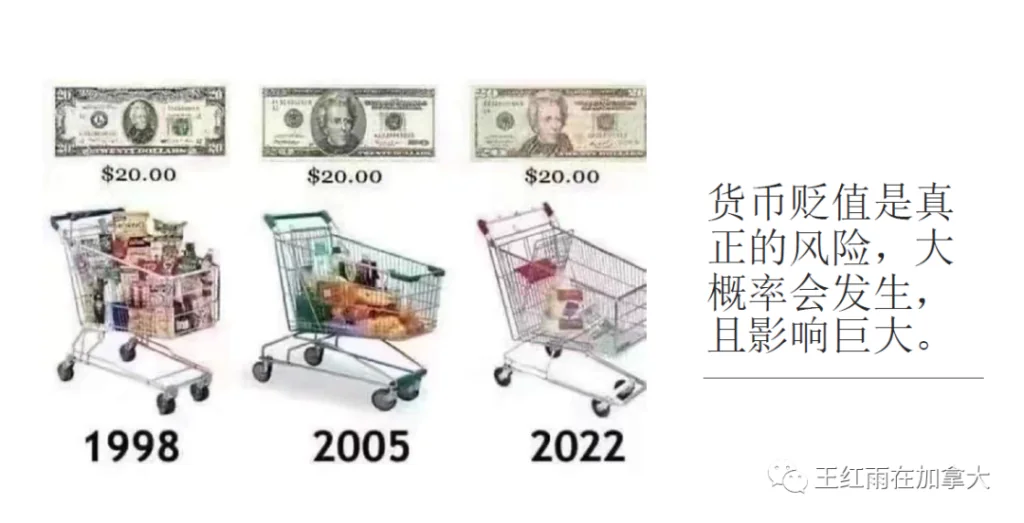
Competitive families can improve their living conditions through their own efforts, and even hold multiple suites as investment tools to resist currency depreciation. Uncompetitive households, if they can afford it, can rely on government help to realize their basic right to home ownership. Families with marginal competitiveness have the most difficulty. If they take a step forward, they can rely on the market to solve their housing problems, but they often miss the opportunity because they wait and see. If they take a step back, they find that they cannot rely on the government and can only compete with newcomers in the city on the rental market, or they may stay in a house that has been rented for a long time and cannot move out.
The housing crisis is the result of many problems including high house prices, high rents, strict scrutiny of tenants, and tense relationships between tenants and landlords. There are two underlying causes of the housing crisis: the growth rate of new immigrants in big cities exceeds the supply of new housing, resulting in a contradiction between supply and demand; the supply of rental housing is tight due to rent control, the rental housing lacks maintenance, and the conflict of interests between tenants and landlords becomes more and more intense.
The housing issue was discussed during the federal election, and the discussion remains the same after the election; it is still a hot topic during provincial and municipal elections. Is there really no solution to the housing problem? Isn’t the four-bedroom policy for students in one house a good idea? It is a good policy to use private funds to demolish one's own house and build four more, which can make money and help the municipal government solve problems. Just like the reason why people were indifferent after the three-child policy was released, lack of money to support them is the key problem; when housing construction control is released but there is no building funds, the result will be the same as the three-child policy.
The housing problems accumulated over the past 30 to 50 years cannot be completely solved in the next 30 years, but they will definitely remain the main topic in various elections in the future. "Affordable housing" has always been a slogan in the elections.
Interest rate hikes and high interest rates will not last long. Both Bernanke and the former Bank of Canada governor predicted that the neutral interest rate would be around 2%. The neutral interest rate refers to an interest rate that neither suppresses nor stimulates the economy. The current restrictive interest rate will lead to economic recession after supply catches up with demand. But now supply still fails to meet demand and there are still many vacancies, so restrictive interest rates will remain for a period of time until Trudeau politically instructs the central bank to cut interest rates based on the principle of obeying votes.
In the government's dazzling economic policy changes, which are switching from left to right, focusing on one thing and losing another, if middle-class families do not have a clear idea and firm eyes, it is easy to get lost, miss out, and regret. Most people cannot control their emotions. They are either fearful or greedy, and it is difficult to stay calm. After the interest rate hike on July 12, the emotional pendulum will swing back from extreme fear. The first person to overcome his fear will be first come, first served in the real estate market.
Conclusion:
Don't follow the news interpreters' gaze on short-term economic factors, because some short-term factors have no impact on the economy, but are described by interpreters as turning points in the historical process. For example, the collapse of Silicon Valley Bank is a small case of big fish eating small fish in American commercial banks. From 20,000 banks in the United States, there are now more than 4,000 banks left. In Canada, there are only 5 major banks left, and there are still many small fish on the table. Where did the historical turning point come from? Normal people would not care about their own rent, but would care about Silicon Valley Bank. The minimum deposit amount for depositors in that bank is US$250,000. Some news commentators are not even qualified to deposit, so how can they know the reasons for their bankruptcies.
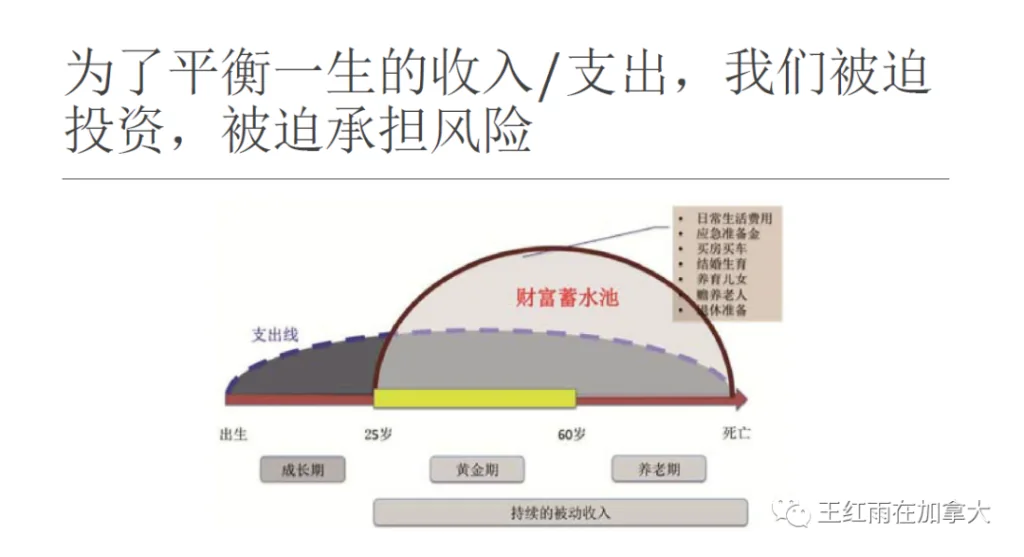
The above article has analyzed so many short-term economic factors. The purpose is to keep everyone away from the news, stay away from short-term economic factors, and look at the long-term and yourself. Being too close to information can lead to information overload and disorientation. The closest thing to us now is the issue of high interest rates. I have only one suggestion for you:Ignore high interest rates, return to your long-term goals and long-term planning, and return to improving your debt management capabilities.High interest rates will inevitably lead to higher housing prices and higher rents. The reason is simple: costs have increased. Active management of debt is the most important task in family finances. If you want to complete the transfer of owner-occupied housing debt to investment housing debt as soon as possible, the best time is during the period of low interest rates and when it is easy to obtain loans. The whole year of 2021 is a good time for debt transfer. Many of my clients have seized this precious time window and completed debt optimization before the arrival of high interest rates. In a high interest rate environment, it becomes more difficult to restructure debt, but we should not give up our efforts to optimize debt, because if we complete it early, we will benefit early.
My official account does not have a news interpretation function. Readers who are addicted to news interpretation can move to Xiaohongshu to view other people’s channels. Many previous articles have introduced in detail the methods and means of debt management, but without the pressure of high interest rates, many people do not understand the significance of active debt management. History is not necessarily the best teacher, but it must be the most patient teacher. If you can't learn it, I will teach you again. If you don't understand, I will give you some color. Families trapped in debt today not only need reflection, but also action.