As long as people live, they have to bear risks. There are risks in investing, and there are risks in not investing. Those who know the risks but still invest are brave people. They are the people who, as Romain Rolland said, "have recognized the truth of life and still love it." A Canadian senior who has been a mortgage broker for 28 years said in an interview that Canada has changed. When he was young, there were not so many people talking about real estate, and there were not so many people holding multiple houses. He is confused by the situation today. Real estate investment is a very risky investment in any country or city. However, in recent years, real estate investment in Canada has been in the ascendant. Investors have slowly transitioned from "rich people" to working-class people. This phenomenon of more and more people taking the initiative to take the risks of real estate investment deserves our serious consideration. People who have never participated in real estate investment are always worried that investors who hold multiple properties will have too much debt. However, no matter whether it is a desperate increase in interest rates or the lockdown during the epidemic, there has never been a situation where investors in multiple properties have sold off their properties due to financial difficulties. This "weird" phenomenon is also very thought-provoking. What are the risks of real estate investment that some people regard as high-risk? What magic did investors use to manage these risks and achieve generous investment returns?
Managing risks is equal to managing the future, Risk management is a very complex topic. In my 31-year career, I have been a mortgage expert selling mortgages for 13 years, and I have been an internal auditor for 8 years, specializing in evaluating bank risks and internal controls. By examining the bank's risk system and closely observing the risk control practices of real estate investors, I feel somewhat confident in openly discussing the topic of risk management, so I accepted the invitation from Landlord.com to talk about my views on risk identification, risk management, and risk taking. This article is an abbreviated version of the offline event speech delivered by Dangdang.com on February 25.

01 There are risks even if you don’t invest
There are risks in not investing. The risks are: first, the people are still there but the money is gone; second, it is easier to go bankrupt.
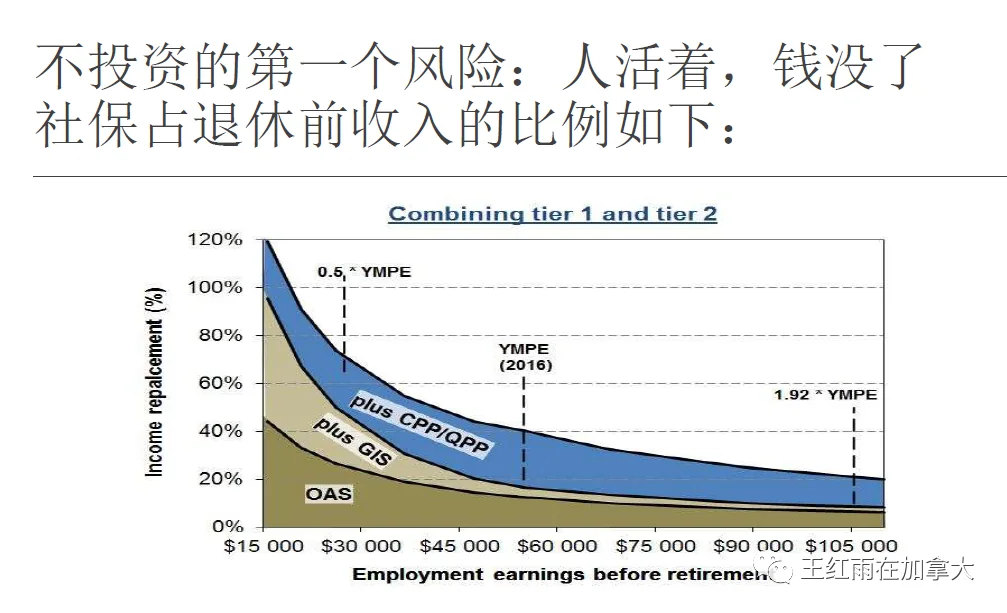
The social security in Canada's pension system is a model for many countries to follow, and it is also the "fat" in the eyes of many potential immigrants. But unfortunately, the amount of social security that one person can receive is only 20,000 per year. If the couple is living in the pension system, they can still barely survive. If one party dies, it will be difficult to sustain a pineapple bun a day. Mankiw mentioned in his economics textbook that when everyone's annual income exceeds 20,000, they may have savings. Therefore, pensions in various countries basically do not allow recipients to have any savings, as long as they can maintain vital signs. In 1980, 9% of Canada's population was over 65 years old. By 2022, this proportion increased to 19%, and aging is becoming more and more serious. Because the social security that the elderly receive is pay-as-you-go from the income of those currently working, the more people receiving pensions, the greater the pressure on working people. This year, Canada increased the CPP contribution ratio, from 5.7% of income in 2022 to 5.95% in 2023. In addition to social security, corporate annuities are also the main source of people's income after retirement. The number of people enjoying DB corporate annuities is approximately 4.4 million, accounting for 11% of the Canadian population. The other 89% of people do not have stable and reliable corporate pensions. As a result, personal investing has become increasingly important. If there is no enterprise annuity, the annual income before retirement is 100,000, and the social security income after retirement is only 20% of the income before retirement, which is a hard landing.
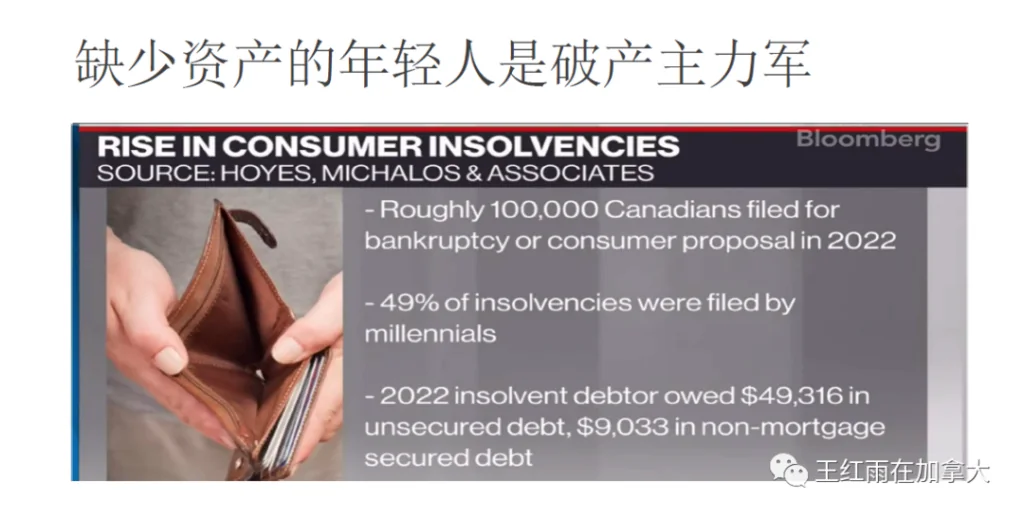
Personal bankruptcy in Canada refers to filing for bankruptcy protection when insolvent. The purpose is to temporarily get rid of debt collection and temporarily preserve personal assets. However, it will cause serious damage to the credit record. The bankruptcy record will be retained on the credit record report for 7 years, during which it will be difficult to be approved for any credit.Assets are a buffer against debt solvency, and it is difficult for people with assets to go bankrupt, especially those who own real estate; on the contrary, those who have no investments and no assets can easily go bankrupt if they are overdrafted. Currently, the bankruptcy rate of Canadian homeowners is 1%, that is, 1 out of 100 bankrupt people is a homeowner, and the remaining 99 people do not own property. 49% of bankrupts are born in the 1980s and 1990s. They are the main force of the bankruptcies, mainly because they over-borrowed and consumed before establishing an asset portfolio.
02 High risks faced by real estate investment
The extreme risks faced by real estate investment are beyond the reach of ordinary families. Once they occur, investors will wish they had not invested in real estate in the first place. For example, if an investment house is burned down due to illegal subletting, the truth was not disclosed to the insurance company when taking out the insurance, causing the insurance company to refuse to pay the claim. At the same time, if the tenant is injured or killed in the fire, the landlord bears criminal responsibility and loses his job. He needs to sell other properties immediately to compensate the victims and maintain his own household expenses. What’s more, as has happened frequently recently, property rights have been stolen and properties have been sold by criminals, which is also an extreme risk.
Extreme risk refers to several extremely unlikely situations happening to a family at the same time.A single risk is unlikely to cause extreme results, as we have seen, during the epidemic, rents fell sharply, and the vast majority of homeowners survived; after eight consecutive interest rate increases, most homeowners survived. In addition, in addition to the extreme risks caused by the superposition of multiple contingencies, real estate investors taking the initiative to take risks are also a type of extreme risk. If you don't buy title insurance, you won't be able to bear such a huge loss if your property is stolen. If you don't buy title insurance, the homeowner will be taking risks. When I bought my first house in Canada in 2007, because I was still working in the United States and didn't live there, I specifically told my lawyer to buy title insurance when the property was settled. At present, 500 million emails and text messages are sent out every day around the world by scammers to steal personal information. The probability of identity theft and property rights theft is much higher than when I bought a house. It is hard for me to imagine that someone does not buy title insurance when buying a house. Scams only bite eggs with cracks, and owners who do not buy title insurance are safe prey. By renting an investment property to more than one family, if the landlord knowingly knows that the insurance company is unwilling to insure the property and deliberately conceals the truth, he is also putting himself at risk. Picking up coins in front of a road roller is gambling with your life and fortune.
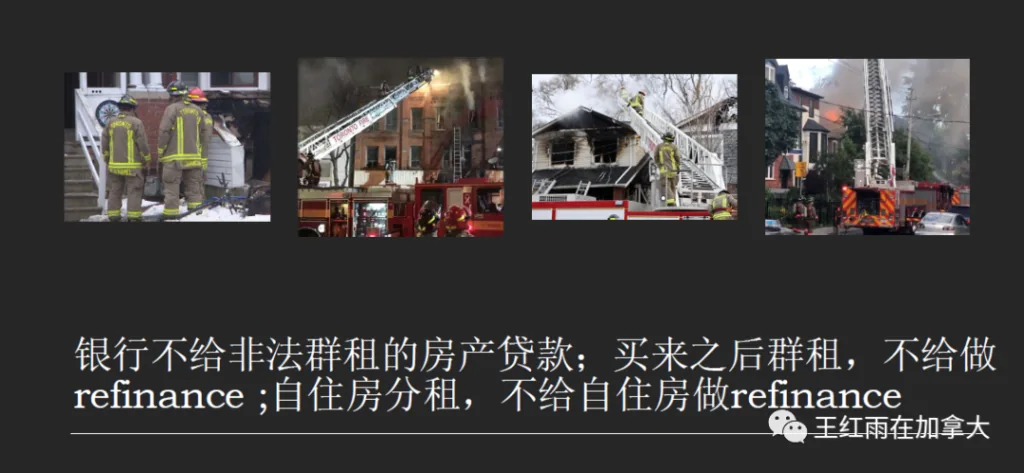
Buying a house with a loan means investing in partnership with a bank. Investors should stay away from properties that the bank refuses to accept.As a partner, banks have a bottom line. For example, they will not provide loans to properties rented by illegal groups, and they will not provide loans to student dormitory-style properties. This is how banks avoid extreme risks. When buying a house, the purpose of the property must meet the residential requirements. After the bank lends money, some investors engage in illegal group renting. This is a dangerous behavior of walking a tightrope, and the risks and returns are completely asymmetrical. BMO Bank has a history of 206 years and has accumulated more risk management knowledge than any real estate investor. The risk management experience of banks should be a valuable asset for real estate investors. To take risks without telling the bank, the major shareholder of the real estate, is to take a nap on the rails, deceive oneself and others, and deceive others.
03 Identifiable and manageable risks
People who have not been involved in the game look at real estate investment as if they are facing a formidable enemy, staring into the abyss in their eyes and not daring to take a step forward. In their eyes, any economic variable can cause the real estate market to collapse, but the reality is that there are legends of collapse every year, but it is rare to encounter it once in a lifetime.Organisms can turn obstacles into fertilizer, real estate investors can turn risks into opportunities, and difficulties into motivation, becoming more courageous with every setback.Real estate investors continue to explore and summarize real estate investment experience in practice, identify risks, manage risks, and gradually acquire the wisdom and courage to take risks. These experiences are even more valuable than the material wealth they obtain. . Real estate investment commentators who stay out of the situation cannot understand why so many unfavorable factors have not destroyed the will of real estate investors. They cannot understand why real estate investors are rushing forward in the face of strong winds and waves. It is rare to see real estate investors selling properties in a hurry. The reason is simple. Most of the adverse factors in real estate investment can be foreseen and overcome.The real estate investment journey is a process of constantly overcoming difficulties, taking risks, and creating wealth. Brave people enjoy the process so much that they don’t give up easily. The basic qualities that real estate investors need to possess are: correctly identify risks, give up risks that cannot be taken, manage controllable risks, and take risks that can bring returns. Among them, correctly identifying risks is the most important.
Interest rate change risks, rent change risks, income change risks, house price fluctuation risks, debt affordability risks, unemployment risks, currency depreciation risks, and asymmetric risks can all be controlled and managed.
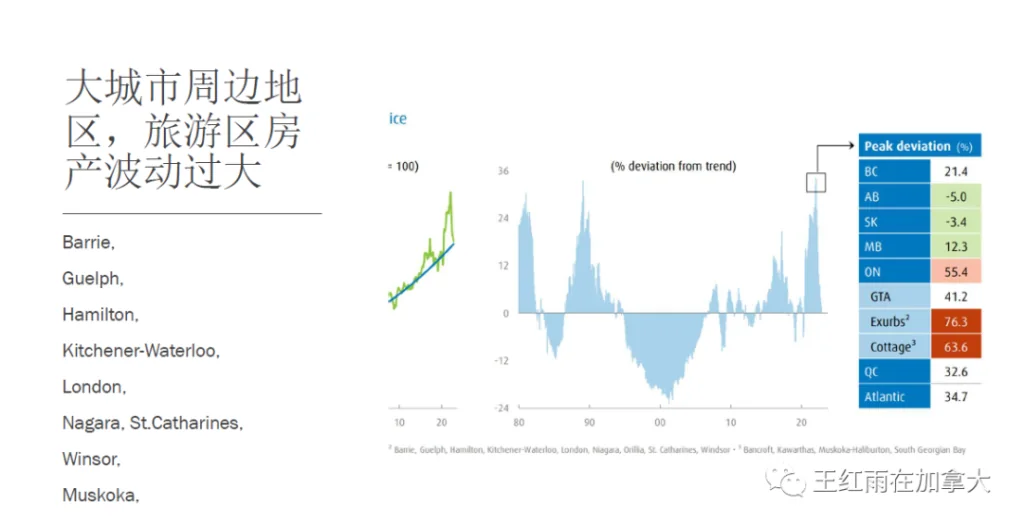
Interest rate changes never affect the long-term trend of housing prices. Changes in interest rates can cause housing prices to deviate from the trend. When interest rates are low, housing prices deviate upwards from the trend line; when interest rates are high, housing prices deviate downwards from the trend line. Changes in interest rates can alter sentiments of greed and fear. Changes in interest rates can alter market sentiments, both frenzied and depressed.When interest rates are ultra-low, it will lead to the risk of housing bubbles, and investors need to try to avoid buying properties in areas where the bubble is too large.Taking the Greater Toronto Area as an example, during the period of ultra-low interest rates in 2021, housing prices in surrounding suburbs, tourist areas, vacation rentals, etc. deviated most from the overall trend. These areas include Barrie, Guelph, Hamilton, Kitchener-Waterloo, London, Nagara, St. Catharines, Winsor, Muskoka, etc. Principles for choosing floating interest rates: When investing in housing, choose a bank whose monthly payment remains unchanged when interest rates rise. If you own a home, try to choose a fixed interest rate. Banks with larger prepayment limits should be the first choice. When the interest rate is triggered, if the bank only recommends increasing the monthly payment, ignore this suggestion. As long as it is not mandatory to increase the monthly payment, do not increase the monthly payment. The above is the basic content of managing interest rate risk. It is not complicated. Just remember these key points.
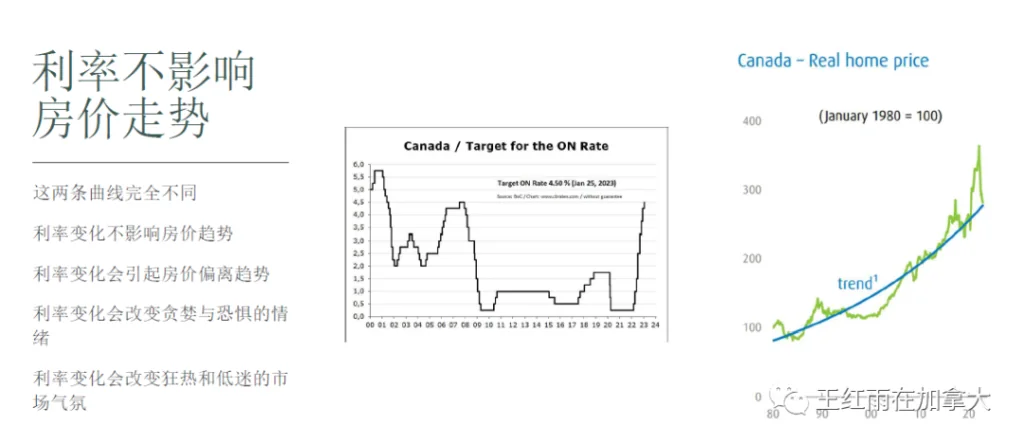
Regarding the market risk of housing price fluctuations, there are four historical experiences: 1. When oil prices were high, Calgary’s housing market risk was high. In 2007 and 2015, the real estate bubble burst, and prices returned to the original price after 6 years respectively; 2. Interest rate increases + government regulation have a negative impact on Toronto and Vancouver. House prices have a big impact: In 2017 and 2018, house prices recovered in about 3 years; 3. The economic environment outside Canada has little impact on house prices: the subprime mortgage crisis, house prices recovered 1.6 years later; 4. The economic recession had the greatest impact on house prices: Ontario in 1989, house prices recovered 11.6 years later. In addition to learning lessons from history, it is also important to observe and sense the market temperature. For example,When transaction volume increases and house prices soar, the market temperature is too hot, so it is best not to buy a house.People who bought houses when the market was at a fever pitch in 2016 suffered a lot during the settlements in 2018 and 2019, but many people healed and forgot about the pain. In 2021, when the market temperature is at its hottest, people will buy houses again. When this batch of houses are delivered this year or next year, many buyers will face the dilemma of having the appraisal price lower than the purchase price.
Risks such as rent changes, income changes, debt affordability risks, and unemployment risks are mainly assessed and controlled by banks. Bank mortgage policies are relatively stable, but they have been developing from conservative to extremely conservative, with no signs of relaxation in sight. At the heart of debt and rent management is income. With a high income, you can withstand more negative cash flow, buy good properties, and rent to good tenants, so you don't have to ignore other risks in pursuit of high rents; with a high income, you can absorb more off-site cash flow, and you can take on more debt and buy more properties.
Asymmetric risk: Advice given by agents who are not involved in risk sharing requires great caution. For example, with iatrogenic injuries, you may live longer without seeing a doctor. The interests of many intermediaries are inconsistent with the interests of investors. Some agents hide tail risks, only talk about the advantages, and avoid talking about potential losses. The hidden risks are borne by investors. Taleb wrote a book "Asymmetric Risk" whose English title is Skin In the Game, which literally means risk sharing or getting involved. It talks about the agent risk problem in modern society.Investors need to make their own investment decisions and ask an intermediary to complete the decision, rather than asking an intermediary to make decisions, because the intermediary does not bear the consequences of the investment. Agents only take commissions and will not receive additional rewards because of the huge gains made by clients with successful investments. It is also unfair for agents to bear losses due to investment failures. It is not objective to attribute investment success to yourself and blame your agents for investment failure.Agents are often wrongly accused. For example, some people say that real estate agents push up housing prices. Haha, if this is true, housing prices will rise every day without a day off.
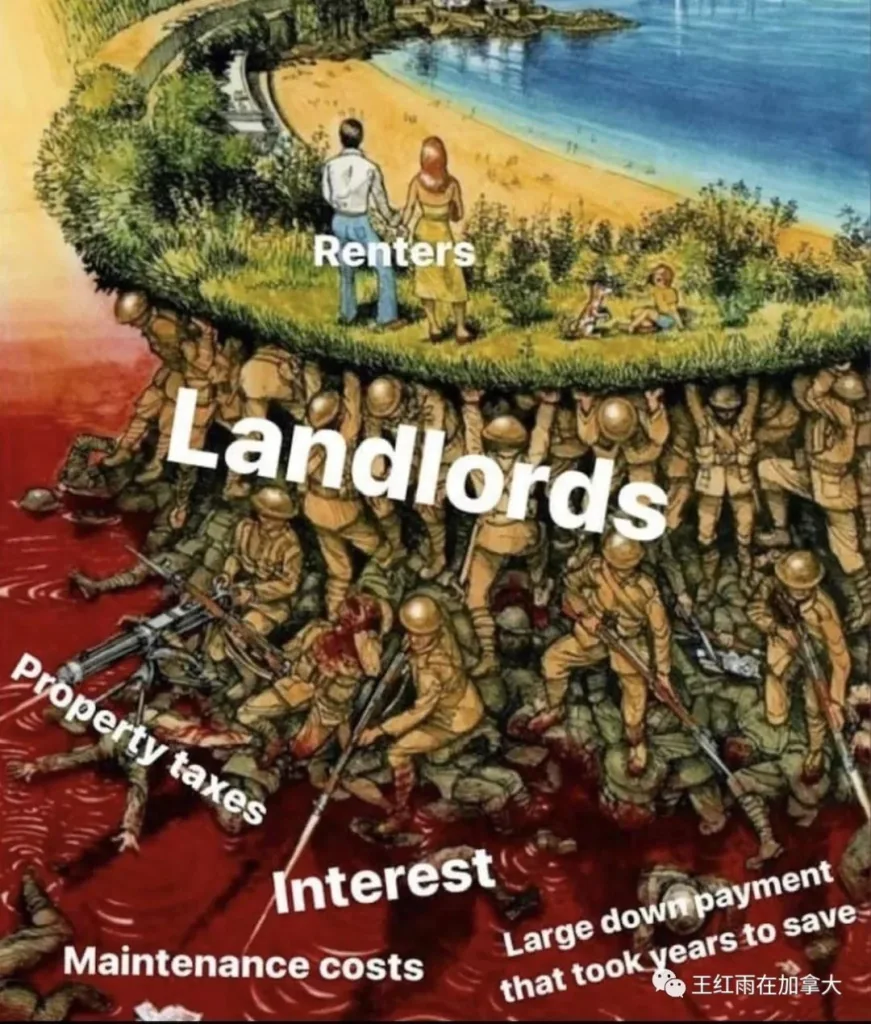
Investors dare to take the above risks, but renting families dare not take them.Landlords are the protectors of tenants from the above risks.As a result, investors get the rewards that those who took the risk deserve. While dealing with the above controllable risks, investors have honed their will and quality, improved their financial intelligence, and responded to Nietzsche's words, "What doesn't kill me makes me stronger." The same goes for the real estate market.When a single risk occurs, housing prices will fluctuate and market temperature will change, but the trend of housing prices will remain unchanged., the housing market crash has remained in the conversation.
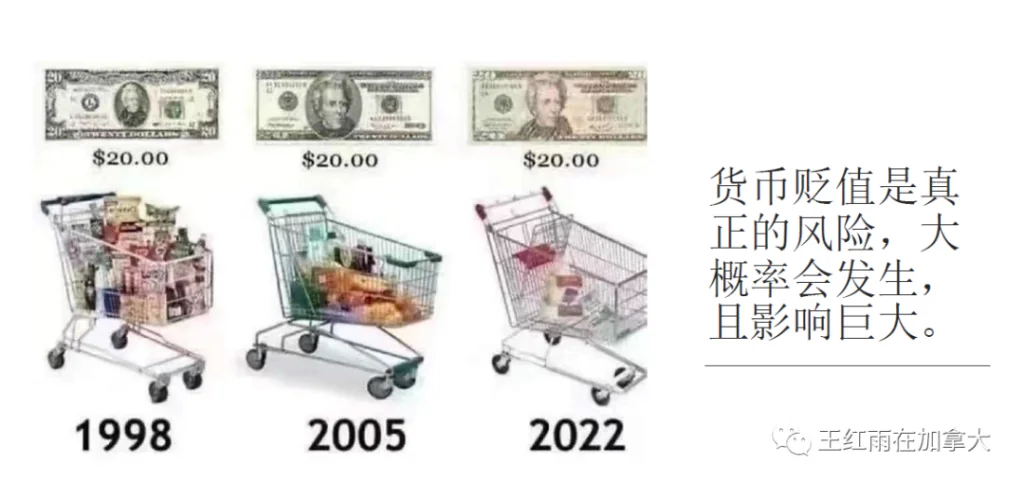
What modern people cannot afford the most is the risk of currency devaluation. Don’t fantasize about returning to the gold standard era, because no country will give up the privilege of printing money at will. Paper money can only be printed more and more, the food you can buy for 20 yuan will become less and less, and shopping carts will not deceive people. The 20,000 income from social security after retirement will make it impossible for anyone who relies solely on social security to live a decent life. The 40 years between the ages of 25 and 65 for those with income are the time to take risks and work hard to balance consumption throughout their lives, so as to get rid of the dilemma of having to eat bread to survive after retirement.
04 The ultimate prevention measure against risks
"I've never met a rich prophet." - Taleb, "The Fat Tail Effect." No one can get rich by making accurate predictions. People who do not take the initiative to take risks will have difficulty becoming rich. Risks and returns are equal. "Rational investment" is also correct nonsense, because no one can correctly explain what is rational enough, how to do it, and how to be rational in advance except after the fact. The so-called rationality of modern people began with Max Weber. At that time, rationality corresponded to disenchantment. Weber set off a rational revolution of believing in science and not superstition in religion. However, rationality in this philosophical sense harmed many investors.Investment is not a science at all. People who treat investment as a science will lose their money no matter how knowledgeable or rational they are.Long-term Capital Management LTCM was founded by Wall Street star Meriwether. The company’s shareholders include Robert Norton, who won the Nobel Prize for formulating the option pricing model. Their investments are quite scientific and rational. They used extremely high mathematical skills to calculate that the sovereign debt defaults of countries such as Goose Fei The approximate probability is one in 10,000, which means it will happen once in 10,000 years, but Yeltsin defaulted in 1998, let alone 10,000 years, even ten years, which did not give these investment scientists any face. LTCM was born in 1994 and died in 2000. When it comes to investment issues, only by staying away from masters of prediction and masters of rationality can you live longer. I personally believe that rational investment has only one meaning: survival first. Don’t stand under dangerous walls, don’t sleep under dead trees, walk on the road without walking on tightropes, and remain in awe of black swan events.
Some extremely accidental events happen to one person at the same time, which is a black swan event for that person. Usually families with high debt are very vulnerable in the face of black swans. Black swan risks are unpredictable. I’m sure the author of articles like “10 Possible Black Swans in 2023” has not read Taleb’s book, because none of the things that can be predicted are black swans.Every family’s black swan is different: Unemployment + serious illness + tenant arrears with rent; fire in investment house + tenant casualty + concealing the truth from the insurance company, etc. These are all extreme events, but they did happen to the same family at the same time. Your black swan may be someone else's white swan. The 1001st day is a black swan event for turkeys, but not for butchers; the 911 incident is a black swan for the victims, but not for terrorists; a sudden sharp rise in interest rates, and a sudden sharp decrease in rents are all black swans for real estate investors, but not for tenants.To take black swan risks, we can only learn from nature - maintain redundancy. In layman's terms, the landlord's family must have a surplus of food.We are born with two eyes, two kidneys, and two lung lobes. These may seem unoptimized and wasteful, but they are nature’s protection for humans and are defensive weapons that help humans deal with accidents. Real estate investment is a risky investment, and redundancy is not optional, it is a must.Cash+ Highly liquid financial assets + Available HELOC, no less than one year’s pre-tax annual income, this is the redundancy that real estate investors need to maintain.It is recommended that before retirement, try to get as many HELOCs on your property as possible to prevent unexpected events.
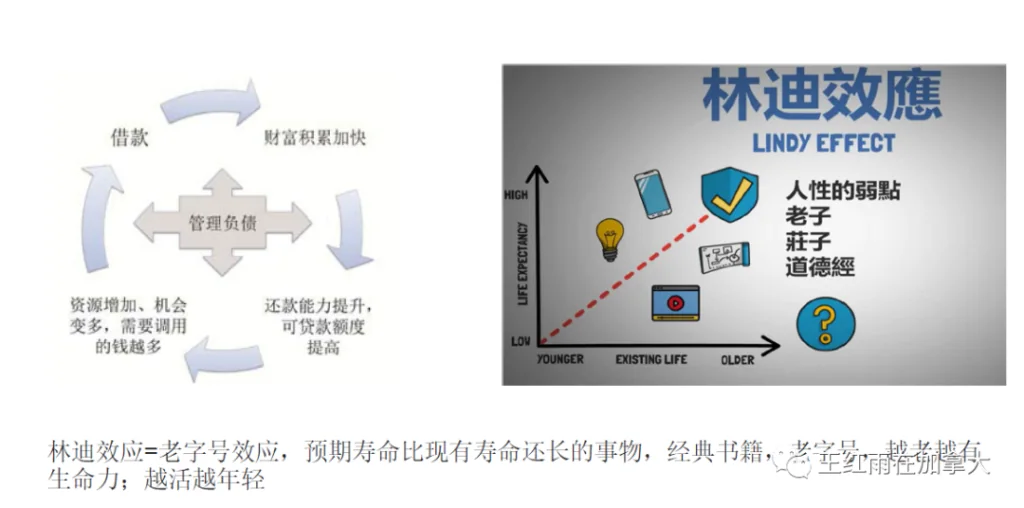
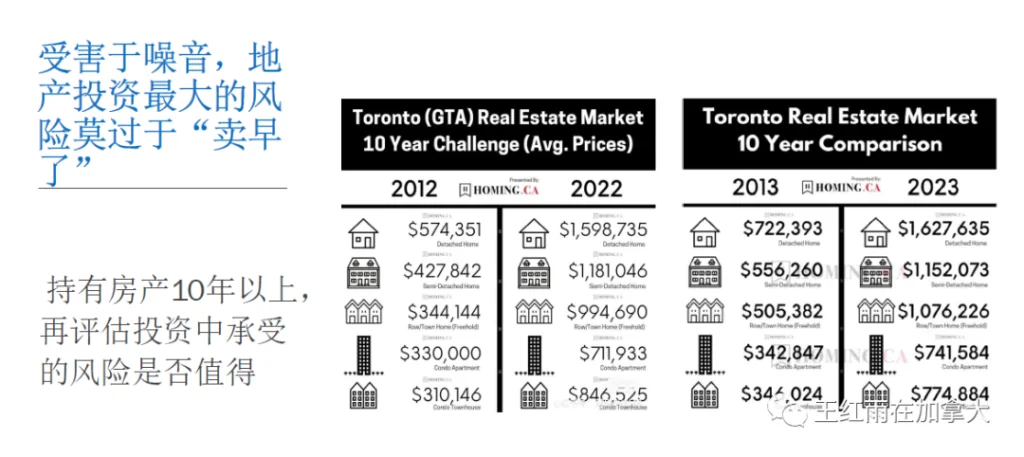
Long-term real estate investors, multi-property investors, have their own disaster-reducing tool - the Lindy Effect, so there is no need to be overly nervous.The more houses you have, the more redundancy you need to prepare.. Home prices in the Greater Toronto Area have doubled every ten years. For a property bought for 1 million in 2013, the house price rose to 2 million in 2023. I borrowed 800,000 that year, and the balance dropped to 540,000 ten years later. The loan balance in 2023 is 27% of the house price. In areas where house prices increase more, the ratio of loan to value, LTV, is lower. In 2022, the loan to house price ratio LTV in the Greater Toronto Area is 53%, and this ratio was 63% in 2012; in Greater Vancouver, the loan to house price ratio LTV is 50% in 2022, and this ratio was 59% in 2012. Multi-suite investors have built up their real estate investment portfolios through years of accumulation.The long-term rise in housing prices, coupled with the forced deleveraging of mortgage loans, determines that the longer the investment property is held, the more investment properties there are and the lower the risk.The Lindy Effect, which I translated into Chinese as the "time-honored effect", is the characteristic of things that become younger as they live longer. For example, Laozi's "Tao Te Ching" has been circulated for 2,500 years, and its life expectancy will be circulated for at least another 2,500 years.

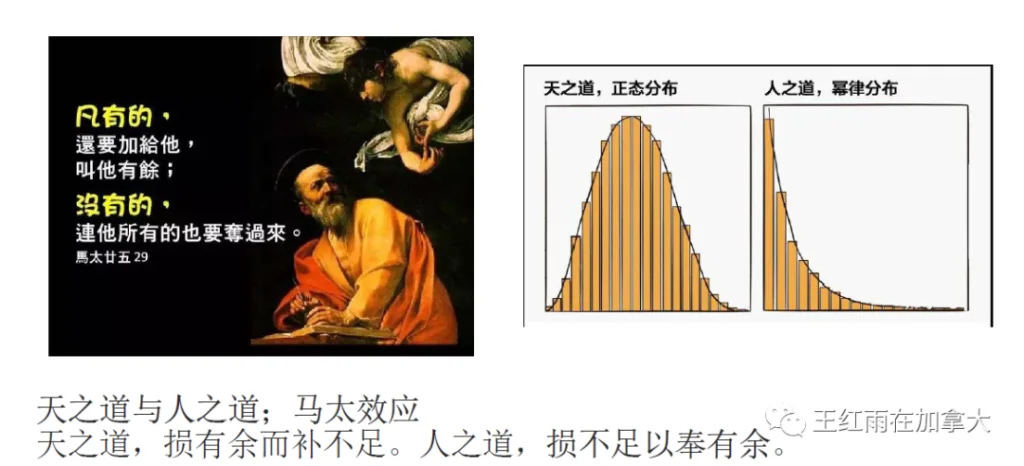
Housing prices have been extending to the northeast for a long time, leaving more and more middle-class families behind. Is there really no risk of the housing price bubble bursting? I saw such a message on the Internet, "Toronto's housing prices are seriously deviating from incomes, and it is a city with a very high bubble. Economic laws will eventually adjust it back to normal. It is only a matter of time." This is the voice of representatives of the public who believe that the housing price bubble can burst. The current median annual household income in the Greater Toronto Area is 85,000, while the average house price is 1.09 million. It is obvious that the average income cannot afford the average house price. The borrowing capacity for an annual income of 85,000 is 430,000. If the down payment is 20%, the affordable house price should be 540,000. According to this message online, house prices in the Greater Toronto Area will drop to 540,000 sooner or later. It is people with such expectations that support the rental market and push rents higher and higher. After human beings break away from natural and independent life, they have social life. From then on, there is no longer egalitarianism in the state of nature. The phenomenon of human society generally exhibits a power law distribution characteristic rather than a normal distribution. Human natural attributes, such as height, weight, blood pressure, heart rate, intelligence level, blood sugar, and cholesterol, belong to average distribution and normal distribution. This is the providence of the Creator and the way of heaven.Human social phenomena, such as income, debt, wealth, popularity, population of big cities, best-sellers, language, belong to extreme unequal distribution, power law distribution, is the way of man.Human inequality arises from private property rights and is not unique to capitalism. 2,500 years ago, Laozi summarized the difference between the way of heaven and the way of man in the Tao Te Ching:The way of heaven is to make up for the deficiency when there is more than enough damage; the way of man is to make up for the excess when there is not enough damage.The Bible also has the same conclusion in the Gospel of Matthew. The master gave three servants 100 yuan each before leaving. When he returned a year later, the 100 yuan in the first servant's hand became 500 yuan, the second servant's hand became 300 yuan, and the third servant still had 100 yuan in his hand. The master took back the 100 yuan from the third servant's hand and rewarded it to the first servant. This is what people often call the Matthew effect:To those who are rich, more will be given to them so that they may have an abundance; but to those who are poor, even what they have will be taken away from them.Canada’s debt distribution is a typical power law distribution, with the top 40% of households borrowing 70% of the debt. The debt is borne by high-income households. These households continue to prove to banks that they have the ability to repay, so banks will lend them more mortgages to support the continued investment of multi-home investors. The limit of a family's borrowing capacity is 50 times its annual income. The so-called "leverage limit" is difficult to occur in real life. There is no need to worry about too much debt for investors with multiple houses, and do not have too much hope for the collapse of the real estate market.
Conclusion:
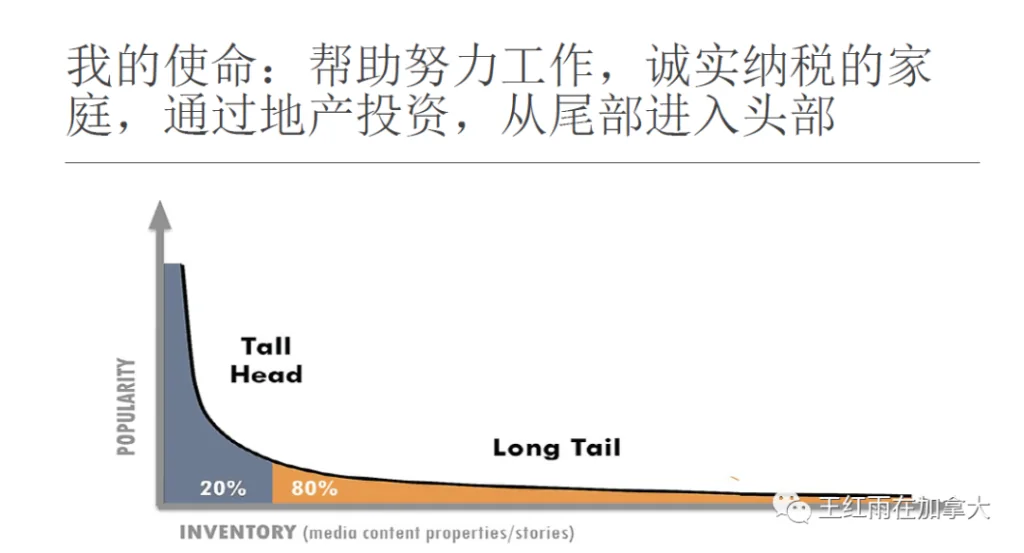
Through risk identification, we identify visible and invisible risks, and pass on risks with large losses and low probability of occurrence by buying insurance. For risks with small losses and high likelihood of occurrence, preventive measures should be taken to try to reduce the possibility of occurrence. For risks with large losses and high probability of occurrence, avoid and stay away from them by not participating. When the loss is small, the probability of occurrence is low, and the possible profit is higher than the possible loss, choose to bear the risk at your own risk. Among them, actively and honestly accepting the bank's risk assessment is the most important means of risk identification and risk management. Landlords are a respectable group because they take risks that tenants are unwilling to take, so I have made it my mission to help these landlords. In a society with a power-law distribution of wealth, the top 20% are where risk takers belong.
Here’s some cliche advice for you fellow honorable risk takers:
1. A gentleman does not stand under dangerous walls, do not sleep under dead trees, do not take a nap on the railroad tracks, walk on the road without walking on a tightrope, and do not pick up coins in front of a road roller;
2. Just because you can’t see it doesn’t mean it doesn’t exist. Let those who kill others make you stronger; do things that have the Lindy effect and let the probability of death decrease over time;
3. Don’t live in a two-dimensional book, enter a three-dimensional life and take risks; see the world clearly, live among power-law distributed people, and don’t fantasize about an egalitarian world;
4. Put yourself in a redundant environment and let what doesn’t kill you make you stronger, while maintaining awe of extreme events;Passive achievements gain more credit;
5. There is no rational investment and correct prediction, and there is no gain without taking risks;
6. During the epidemic, rents fell, monthly loan payments increased after interest rates were raised, and mortgage policies continued to tighten. These small financial losses and setbacks will create mature investors. The scarred heroes are lonely brave ones; human beings, as organisms, can turn obstacles into fertilizer;
7. Don’t listen to too many lectures, don’t go to the doctor when you’re not sick, and stay away from iatrogenic injuries; if you ask too many people, you won’t be able to buy a house; if you are too knowledgeable, you can’t do anything; when you think about it, you will find that you are also mediocre, and you must learn to accept mediocrity, but dare to act;
8. Don’t rush to evaluate your investment results. Do the evaluation after holding the property for 10 years. Don’t get off the bus easily; it’s easy to get off the bus, but difficult to get on.