One of the hot topics in the Toronto real estate market in 2024 is the surge in the number of new CONDO handovers. The previous year with the highest housing delivery volume was 2020, with approximately 22,000 new homes delivered. Last year, approximately 20,000 new homes were delivered in 2023, and 2024 will set a new high for delivery volume, with approximately 26,000 homes. During the epidemic, housing prices skyrocketed, and the most talked about issue was insufficient supply. Just two years later, however, Toronto was experiencing a supply glut. At an offline event, an investor asked eagerly whether the current decline in rents and the surge in the number of properties for sale caused by the oversupply of condos in Toronto is temporary or long-term? I responded quickly by saying "temporarily." With this article, I would like to expand on this conclusion and some of my views on the current situation and future of real estate investment in Toronto.

01 The surplus of commercial housing is temporary
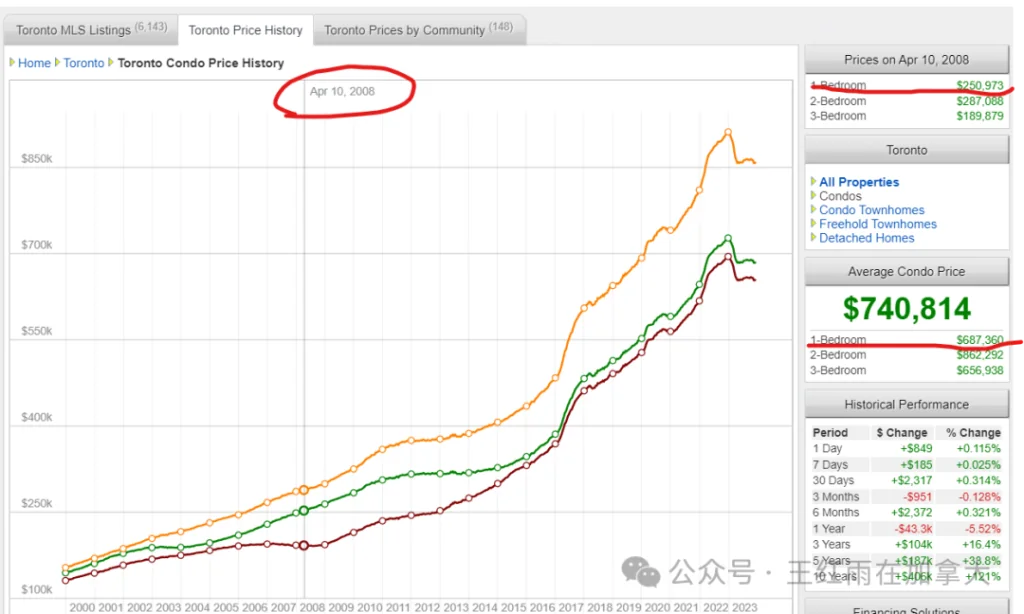
As early as 10 years ago in 2014, there was a large CONDO project named King West, located at 65, 75, and 85 East Liberty Street. The pre-sale dates for the three buildings in this project were far apart, but they were delivered in the same month. At that time, I handled more than 40 loan applications for this project. Including other business, the number of loans delivered that month was close to 70. It was the most unforgettable month in my career. Therefore, I still have fresh memories of the centralized delivery of CONDOs 10 years ago. In 2014, just like today, we encountered a situation where a large number of new real estate projects were delivered at the same time. At that time, banks judged that the Toronto CONDO market was "oversupplied" and house prices and rents would continue to fall. Therefore, they tightened their lending policies and the proportion of CONDO loans could not exceed 75% of the house price. In 2015, the CONDO market quickly digested the inventory, and the ratio of bank loans to CONDO sales was adjusted back to the previous 80%. CONDO prices rose across the board in 2016, and the increase continued until the outbreak of the epidemic. Judging from historical data, Toronto CONDO prices increased by as much as 123% in the 10 years from 2013 to 2023, and were not affected by the concentrated delivery of off-the-plan properties in 2014. According to my observation, when rents in the CONDO market fall and housing prices stagnate, developers will rush to complete construction and deliver the properties, completely ignoring the possible stampede of buyers. Taking the King West project as an example, 1,100 new homes were delivered at the same location at the same time. You can imagine how difficult it is for buyers to resale and rent.Centralized handover of off-the-plan properties, TorontoA characteristic of the CONDO market is that this kind of "hard landing" will happen from time to time. It is very difficult for buyers who catch up with the delivery of the property during this period to rent, transfer or resell it except for self-occupation.In the past six years, I have advised investors not to buy off-the-plan properties despite a hail of bullets, because I just don’t want to see investors suffer a hard landing in off-the-plan properties. Judging from historical experience, developers will not negotiate with each other to slow down the number of homes delivered, because developers locked in profits during pre-sales a few years ago. When the market is not ideal, developers have a particularly strong desire to survive and rush to hand over property rights to buyers. However,This kind of hard landing also has the advantage that it is short and will not last.3-4 years, buyers who caught up with the hard landing will never forget this experience and stay away from the off-the-plan property market from now on, while others will quickly forget and history will keep repeating itself.
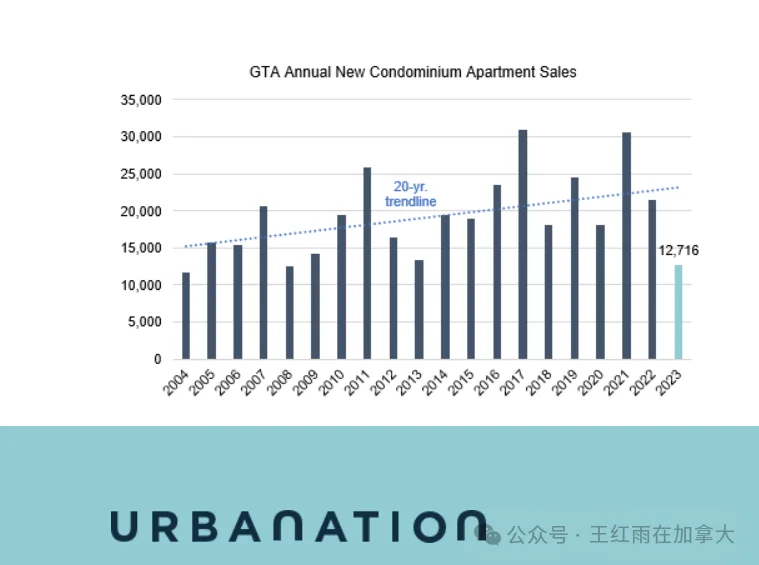
Currently, there are as many as 22,000 unsold units of various new homes that have been launched by developers. The average number of off-the-plan properties sold each year in the past 20 years was 25,000, while only 13,000 were sold in 2023. 40 projects ready for sale have been decided to be shelved. Last year, only five new CONDO projects started in Toronto. All this public information shows that after the centralized delivery of CONDO this year, there will be no oversupply situation in the next few years.Toronto'sIn the CONDO market, there is a cyclical situation of "more than enough every month, but not enough every year", that is, the overall supply is in short supply, but there is oversupply in a certain period of time.This is what I said at the beginning: a "temporary" oversupply.
02 Rental market puzzle
Market rents in Toronto have dropped by 7% from their high point in the third quarter of 2023 to the current first quarter of 2024. The main reason is that the rent has increased by 15% in the past two years, which is much higher than the increase in income, and there is a lack of motivation for rents to continue to rise. The decline in rents this year reflects two prominent contradictions: 1. The income growth rate is lower than the rent growth rate, and there is insufficient motivation for rents to continue to rise; 2. The large number of new CONDOs delivered this year means there is a temporary oversupply. Properties built after November 15, 2018 are called "new houses" and are not subject to rent control; properties completed before are called "old houses" and are subject to rent control, and the annual rent increase is limited by the government. After the "old house" is rented out, the landlord can only adjust the rent every year in accordance with government regulations. Only after the tenant moves out and recruits new tenants can he rent according to the market rent level. This situation is called "vacancy decontrol". Toronto's rental market is currently divided into two markets that compete with each other, one is the "old housing" market with rent control, and the other is the "new housing" market without rent control. experiencedTenants prefer "old houses" with rent control, unless the tenant only wants to rent for a year and then move out, he doesn't care whether there is rent control or not. A large number of "new houses" are flooding into the market without rent control. If they want to attract tenants, they need to significantly reduce their prices to compete with "old houses". The above is the largest piece of the puzzle in Toronto’s rental market. Its main feature is that income growth is lower than rent growth. At the same time, competition among landlords has intensified, resulting in weak rent growth or even a decline.

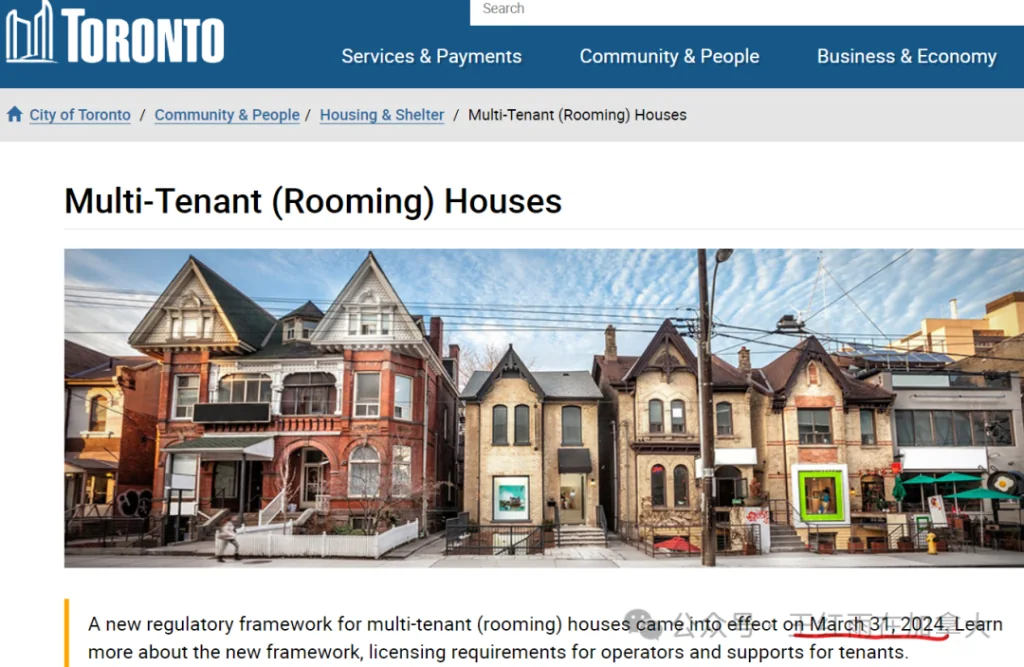
Another rental market that attracts attention is the rooming market. Canada's population will increase by 1.25 million in 2023, which is the largest population increase in Canada's history. The housing affordability of the new population varies. Some new residents have particularly weak affordability and need sub-let properties with extremely low rents. Rooming houses are high-risk properties that are prone to criminal cases and fires. The management of rooming houses in Toronto has always been in a gray area where the people do not take action and the officials do not investigate. As the housing crisis intensified, after years of indecision, the city government proposed a plan to legalize rooming houses at the end of March this year, officially bringing rooming houses into the scope of legal management. Landlords can apply for permission to legalize rooming houses, and there is a one-year buffer period, that is, legalization procedures need to be completed by next year, by the end of March 2025. This approach is a good policy that benefits the country and the people. We all hope that this policy can be effectively implemented so that residents can have homes and live safely and legally. Other cities around Toronto have not yet introduced similar laws, and rooming houses are still in a gray area. There are no official statistics on the second fastest-growing piece of the rental market, the rooming house market, but this piece of the puzzle will become clearer after rooming houses are converted from the underground economy to legal rentals.
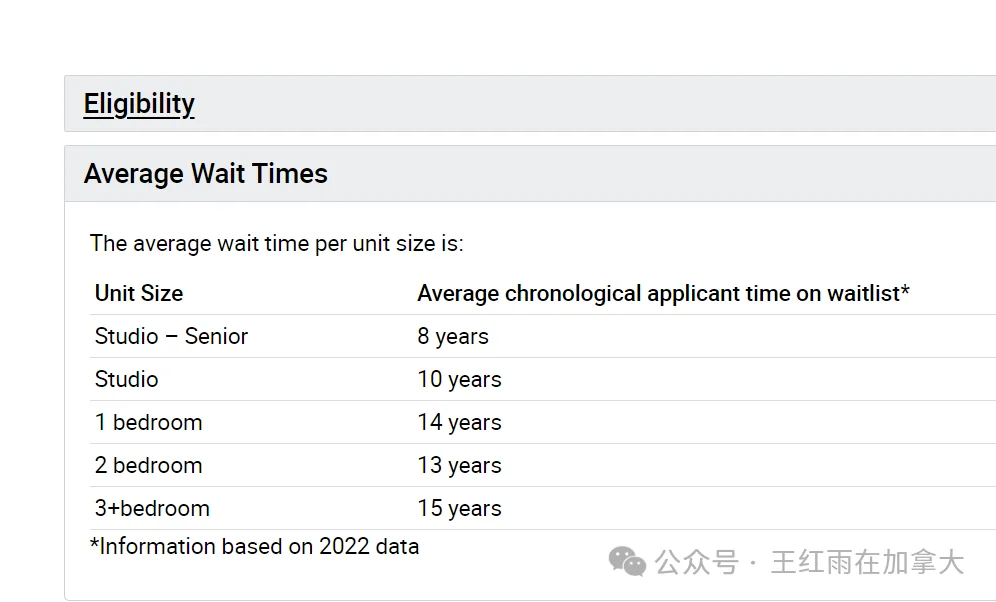
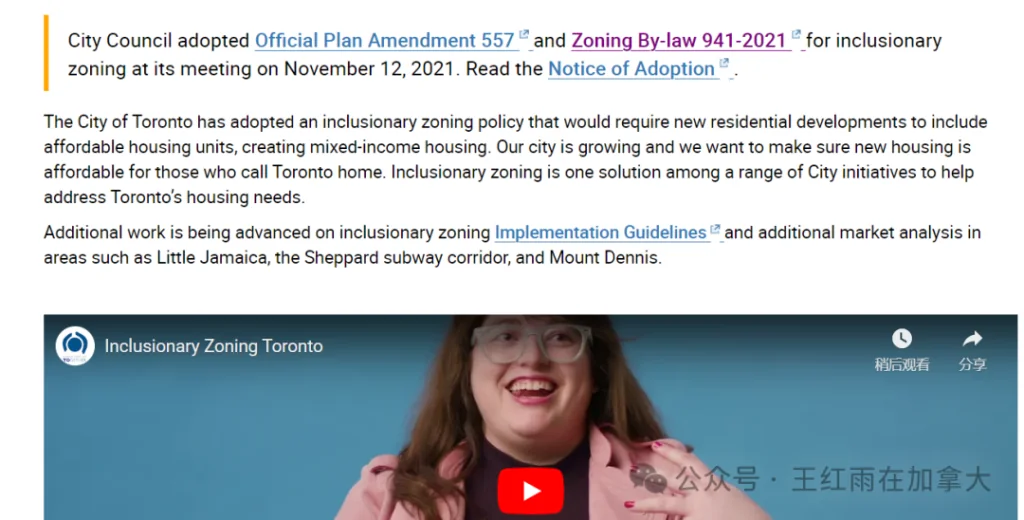
The third piece of the rental market puzzle is "affordable housing," that is, the low-rent housing market provided by the government. This is a welfare rental market for low-income families that requires application and queuing to obtain. The applicant's income is low enough to meet the criteria. Currently, the low-income standards in Toronto are: 1. Annual income is less than 62,000, with 1-2 family members; 2. Annual income is no more than 71,500, with 2-4 family members; 3. Annual income is no more than 79,000, with 3-6 family members; 4. Annual income is no more than 82,500, with 8-10 family members. Only those who meet the above income standards and whose household assets are below a certain level can apply for low-rent housing provided by the government. The current queue situation is that it takes 14 years to apply for a one-bedroom low-rent house, 13 years to apply for a two-bedroom low-rent house, and 15 years to apply for a three-bedroom low-rent house. Welfare housing distribution is not unfamiliar to many Chinese. It was like this in China before 1998. In the last article, I have introduced to you the current housing plan of the Canadian federal government. One of the important contents is the construction of such low-rent housing. The Toronto city government has launched a plan to vigorously build low-rent housing starting from November 12, 2021. The city government designates an area. As long as new commercial housing is built in this area, low-rent housing units must be provided in the new building. The cost is passed directly to the developer, who then passes it on to the buyers of the building. Currently, the proportion of sand mixed in commercial housing is 2%. The Toronto city government has passed legislation to increase the proportion of sand to 10% and continue to increase the proportion. The goal is to increase the proportion of sand to 22% in 2030. In addition to the above two methods of building new low-rent housing, the federal government has also launched a loan program to encourage existing homeowners to take a minimum loan of 1 million to transform their detached houses into low-rent apartments with more than 5 units.The name of the project is Apartment Construction Loan Program, which will begin accepting applications in November 2023. This loan program has a clear requirement, that is, the small apartments built with this low-interest loan must be rented out at a low price and cannot be changed in use within 10 years. Obviously, the federal government and the Toronto city government are vigorously promoting the non-marketization of real estate and low rents to shorten the waiting time for low-income families for low-rent housing. At present, this jigsaw puzzle in the rental market has not yet had an impact on the rental of commercial housing.
The fourth piece of the rental market puzzle is rental apartments, that is, institutionally owned multi-unit rental properties. After November 2018, as the Ontario government abolished rent controls on “new housing”, developers became interested in building rental apartments. The federal government's latest housing plan accelerates the depreciation of such properties and waives consumption tax, further providing financial incentives for developers to build new rental apartments. Judging from the number of new housing starts, the construction of rental apartments has been increasing in the past two years, and in the near future, they will compete with small landlords holding commercial housing in the market. The 2024 federal budget proposes that when institutional investors sell properties, 66.7% of capital gains will be included in taxable income. Previously, only 50% of capital gains were included in taxable income. I wonder how the institutional investors who have been building multi-unit housing in the past five years feel now.
Commercial housing held by multi-suite investors mainly faces competition from two aspects: government low-rent housing and multi-unit apartments held by institutions. The legalization of subletting will not necessarily create head-on competition with multi-suite investors, because the cost of legalization is relatively high, and landlords of subletting houses may give up. Although the government's low-rent housing plan is grand and magnificent, it is likely to backfire. That is, it not only crowds out market resources, but also encourages more people to queue up, resulting in a reduction in the supply of commercial housing, rising housing prices, and a longer, rather than shorter, waiting queue. Often when we see government programs, we think of good intentions doing bad things. Friedman had this passage in his speech when he won the Nobel Prize in Economics: If you feel that there is a shortage of any commodity and call on the government to solve it, the result may be counterproductive. If you ask the government to manage the Sahara Desert, there will soon be a shortage of sand. The main competitors for multi-suite investors in the future should be institutional investors holding multi-unit condominiums.
03 Is it not suitable to invest in real estate when interest rates are high?
The current interest rate level is similar to that in 2008. In April 2008, the three-year fixed interest rate was 7.2%. Now it is about 5.3%. In 2008, the market price of a one-bedroom CONDO in downtown Toronto was 250,000, and the market rent was 1,372. The current market price of a one-bedroom CONDO is 680,000, and the rent is 2,450. In the past 16 years, house prices have increased by 174%, and rents have increased by 80%. Back then, if you bought a one-bedroom CONDO when interest rates were high, with a down payment of 50,000, you could lock in the house price at that time and wait for house prices and rents to rise. At that time, we did not know what the return on the 50,000 yuan investment would be. We only knew that the investment cost was very high. The situation we face today is the same, so there is no basis for saying that it is not suitable to invest in real estate when interest rates are high. From 2008 to now, interest rates have experienced two rounds of sharp declines, and the average interest rate in 16 years should be well below 7%. Today we are going to invest in a one-bedroom condo in Toronto, with a minimum down payment of 140,000. We can calculate the cost of this investment, but we don’t know what the income will be, let alone the direction of interest rates, so we can’t judge whether this investment is worth it. If you have 140,000 in cash and are considering investing now, you need to consider whether to invest in real estate, stocks, or insurance. What needs to be compared is the opportunity cost. What you ultimately invest in depends on which asset has the smallest opportunity cost.
One thing that distinguishes real estate investment from other investments is the ability to borrow money. Even if you think that the opportunity cost of investing in real estate is minimal, if you want to invest 140,000 cash in real estate, you still need to approve a mortgage loan from the bank. There are thresholds for real estate investment. Only if you meet the loan conditions can you lock in today's house price with 140,000 yuan and share the loan and other expenses with the tenant. Therefore, today's borrowing capacity is the key to whether you can invest in real estate. There is a principle in the bank's loan approval policy, which can also be said to be a blind spot, that is, your income level today, the bank believes that it can last for 30 years. In other words, if you can apply for a mortgage loan today, you can lock in your income for the next 30 years, even if you are 64 years old today. The ability to invest in real estate is time-sensitive. The housing price at this time and the income at this time determine the investment ability, and it will not wait until it expires.People generally mistakenly believe that the level of housing prices and interest rates determine the timing of real estate investment. In fact, this is not the case. It is one's own income that determines the timing of real estate investment.
Currently, the yield on 5-year Canadian government bonds is around 3.7%. That is, if the Canadian government issues a 5-year Treasury bond, it will need to pay a return of 3.7% to investors every year. Unless Canada's GDP grows by 3.7% per year, the Canadian Treasury cannot afford this rate of return. How does the government use the bond proceeds to pay investors? There are two ways, one is to raise taxes, and the other is to print money. The Liberal government is raising taxes by increasing carbon taxes and raising the proportion of capital gains taxable, but the resistance is loud. Therefore, printing money will be the most feasible solution. Many people feel that housing prices in Canada are rising much faster than wages. There is a housing bubble in Canada that will burst sooner or later and housing prices will be cut in half. This thinking ignores the important factor of currency depreciation. Every time housing prices rise sharply, it is caused by the over-issuance of money. After the subprime mortgage crisis, the over-issuance of money led to sharp rises in house prices. During the epidemic, the over-issuance of money and the sharp rise in house prices were all because during the period of over-issuance of money, households with the ability to borrow money deposited money into their houses.If the over-issuance of money cannot be stopped, the rise in housing prices cannot be stopped. The rise in housing prices has little to do with rising incomes, but is directly related to excessive currency issuance.In my public account article 6 years ago, "Is Real Estate the Watershed of Family Wealth?" "The article quoted some data from South Korea, "South Korean real estate experienced four rising periods after World War II. From 1965 to 1968, house prices rose by 38.2%; from 1975 to 1979, by 33.4%; from 1988 to 1990, by 16.3%; from 2002 to 2008, by 22.8%." These four increases in house prices were all due to excessive currency issuance. These four increases alone solidified South Korea's real estate class. Housing prices don’t need to rise every day, but you must always hold on to Noah’s Ark that can float on the flood of money. In Canada, Noah’s Ark is real estate.
I recently saw a sentence on the Internet: "The current housing prices and rents have far exceeded the income level. In the rental market, near Toronto, renting to one household has negative cash flow, and such investment is meaningless." This is a misunderstanding of real estate investment. Analyze Buffett’s investment philosophy. Every year, Buffett's shareholder meeting is a pilgrimage for investors, but the Berkshire shareholders attending the meeting have never received dividends from Buffett. In other words, if you invest in Buffett's Berkshire, it means no cash flow. Whether it is worth investing in is not based solely on cash flow. Berkshire shares that do not pay out a penny of dividends have a very low turnover rate, and there are more people who want to buy than want to sell. In Toronto, if the loan is 80%, the down payment is 20%, and the house is rented to a family, it is normal to have negative cash flow. It is also normal for 5 investment houses to have an annual gross rental income of 150,000 and a negative net rental income of 10,000. Berkshire does not pay dividends because it prevents investors from paying taxes on investment income early. The same goes for real estate investment. Negative cash flow can balance a lifetime of income because it can reduce current taxable income. This is not because Buffett's followers or Toronto real estate investors are stupid, but to obtain more after-tax investment returns. In such a high interest rate environment, Ontario's rental policy has also caused trouble for many landlords, but there has been no real estate sales, which shows that real estate investment, this kind of investment with a threshold, has gathered a group of investors who accept Buffett's investment philosophy. They are rational, far-sighted, have the ability to withstand negative cash flow, and have a clear understanding of monetary policy. By the way, Buffett said at this year's shareholder meeting that he is not worried about the total amount of U.S. Treasury bonds, but reminded investors to pay attention to currency depreciation. The yield on the 10-year U.S. Treasury bond is 4%, and it is impossible for the United States to maintain GDP growth of 4% every year. Paying interest on the Treasury bond requires a large amount of money printing, which will inevitably lead to currency depreciation. The 63 companies that Buffett wholly owns or partially owns are all Noah's Ark in the flood of cash. As the water rises,The ship is high, and only by holding on to these assets can it avoid being submerged. The flood will only get bigger and bigger. When the flood recedes, it means deflation. In countries experiencing deflation, although prices have dropped, living standards have dropped faster than prices. The vast majority of investors who hold multiple properties do not seek to settle down. Once the property is sold, the opportunity cost of reinvesting is greater than holding the property for a long time, so they will not easily sell their homes before retirement.
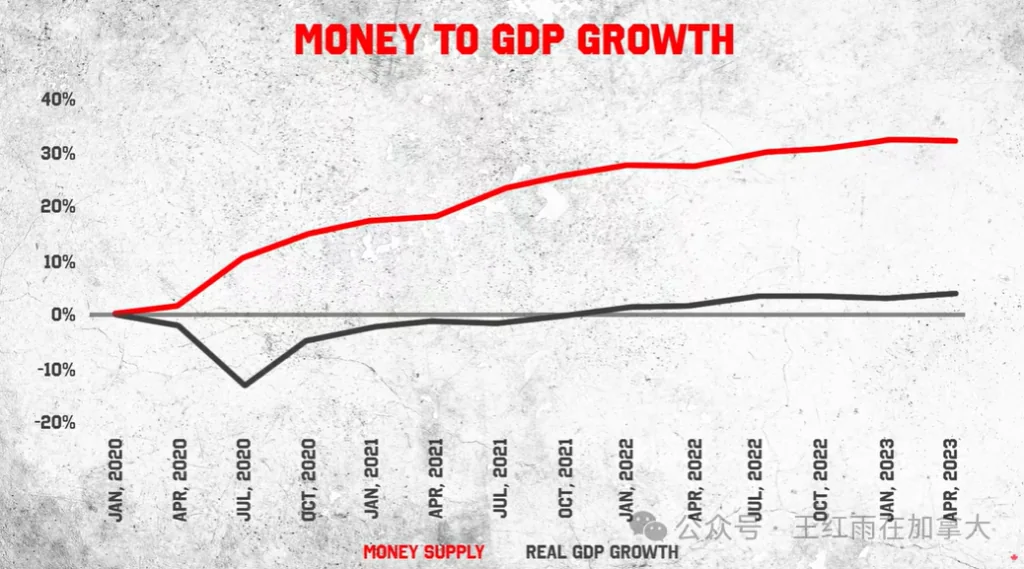
During periods of high interest rates, the government's cost of issuing new debt is also high. If the yield on national debt is higher than GDP, money needs to be printed to repay the debt. A currency flood is waiting for us not far away. This has been true for the past 20 years, and it will be true for the next 20 years. So I don't believe that Canadian real estate prices will stagnate for 20 years. Interest rates are not the decisive factor in investing in real estate. The logic behind it is complex but not difficult to understand.
04 Several economic concepts involved in this article
Various policies introduced by the Canadian federal government and the Toronto city government are all policies to encourage low rents and artificially interfere with the market supply and demand relationship. With the efforts of the government, market resources will be stimulated by policies to build multi-unit rental housing and low-rent housing. At the same time, the number of new commercial housing will be reduced. This kind of macro-control behavior is called the "crowding-out effect" in economics, which will lead to the scarcity of another commodity through the market transmission mechanism. There are more low-rent houses, but fewer commercial houses, because resources are limited. In areas where the government squeezes resources, the contradiction between supply and demand in the market will be greater. Specifically, in Toronto, while low-rent housing increases, the number of commercial housing available for sale will decrease, leading to an increase in housing prices.
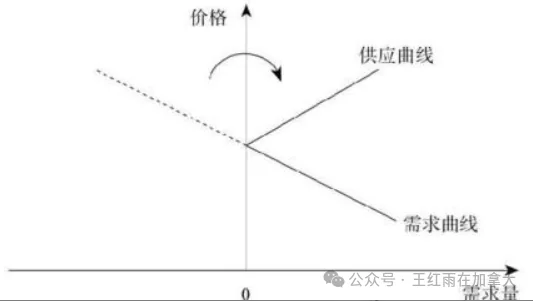
Since 2023, the sub-leasing situation in Toronto has worsened, and a relatively rare demand curve in economics has emerged. Specifically, when the price is high enough, demand will transform into supply, and the demand curve transforms into a supply curve at the focus with the vertical axis. For example, on a rainy day, you don't want to drive out and want to call an UBER. When you open the app, you find that the price is 50 Canadian dollars per kilometer, so you decide to cancel the errands you want to go out for, and then drive your own car to become an UBER driver. This is a special demand-to-supply curve that only occurs when prices are high enough. Rents in Toronto have skyrocketed, and some families who were already living in overcrowded apartments decided to rent out a room to someone who needed it more. This rare demand-to-supply curve has appeared in the Toronto rental market, which shows that the rent increase is large enough to transform demand into supply. Toronto is still a destination for new residents coming to Canada to pursue a better life.
Some people suggest that real estate investors sell their “old homes” and buy “new homes” without rent control restrictions. This may not be a good suggestion. Landlords are in a competitive relationship with each other, while landlords and tenants are in a cooperative relationship. The relationship between landlords is called a "non-cooperative game" in economics. That is, landlords do not cooperate but compete with each other. When landlords and tenants cooperate, an equilibrium can be achieved. In economics, this equilibrium is called "Nash equilibrium", or "non-cooperative game equilibrium". It is claimed that "new houses" are not restricted by tenants, so people with higher rents need to study game theory in depth or gain practical experience. Tenants prefer properties with rent control. Therefore, "new houses" are not preferred by tenants. This can be confirmed both from theoretical deduction and practical experience. There is also a non-cooperative game between developers, which is why there is a phenomenon of new houses being handed over in droves. To reach the Nash equilibrium in a short time, buyers need to pay a price.
Economics is divided into two schools on whether to emphasize ideals, one is positive economics, and the other is normative economics. From a philosophical perspective, positive economics studies what is and has nothing to do with ideals; from a philosophical perspective, normative economics studies what should be and has strong idealism. Empirical economics studies what economic activities actually are; normative economics studies what economic activities should be like. In the eyes of Prime Minister Trump and Mayor Zou, there is only normative economics, that is, Canadians should have a house to live in, and the rent should not exceed one-third of their income. As for how to achieve this ideal state, just follow the plan they designed. Let us boldly assume that if they continue to be re-elected for 20 years, Canada will be like this in 20 years: the housing situation in Germany is the same today, that is, the home ownership rate is 52%, and 48% of families live in low-rent housing provided by the government. Unlike Germany, some Canadian families receive a universal basic wage, do not have to go to work, and can smoke biochemicals when they are mentally empty. There is right and wrong in positive economics because it can be tested by facts; there is no right or wrong in normative economics, it only talks about ideals and cannot be tested. A person can believe in both positive economics and normative economics at the same time, and it is not inconsistent at all. David Ricardo is an example of this. Ricardo believed that the income of landowners was too high and suggested that the government increase taxes on landowners. At the same time, he bought a large amount of land himself. We can also work with Prime Minister Trump and Mayor Zou to imagine a bright future for Canadian housing and buy real estate at the same time. Although the home ownership rate in Germany is only 52%, house prices are still rising because people who are struggling to buy a house hope to have real estate wealth. The current homeownership rate in Canada is 66.7%, and there is still a lot of room for decline. Reducing the homeownership rate of Canadians is an unstated but inevitable result of the Trudeau government's housing plan. Fortunately, we know the situation in Germany, even if the home ownership rate is reduced, it will not lead to a decrease in house prices.

Conclusion:
The Toronto real estate market seems complicated and difficult to understand, but after analyzing it according to the economic thinking model, we can still clarify the clues. Starting from the most basic supply and demand relationship in economics, the consequences of idealists' intervention in the market, and simple principles such as market games, it can be seen that the market will still dominate housing prices and rents, and there will be no fundamental changes in Toronto in the next 20 years compared with the past 20 years. Government-supported low-rent housing is not a competitor for multiple real estate investors. The rent for a one-bedroom condo in Toronto is 2,450 yuan, while families queuing up to apply for low-rent housing can only afford a rent of 1,500 yuan. The multi-unit apartments being built by institutional investors are direct competitors to multi-suite investors, but the enthusiasm of institutional investors will be dissuaded by the new capital gains tax scope. In the past, 50% of the capital gains of institutional investors were included in tax income. After the passage of the new fiscal bill, this proportion rose to 66.7%. Individual investors enjoy the policy of including 50% of capital gains of RMB 250,000 into taxable income. Compared with institutional investors, family investors have greater after-tax returns. The current off-plan property sales market in Toronto is very bleak. One of the important reasons is that the Toronto municipal government's sand-mixing policy has greatly increased construction costs, causing new homes to be priced too high. The cities surrounding Toronto have benefited from this, and many developers have moved from District 416 to District 905. The supply of new CONDOs in District 416 will decrease significantly in the next few years. For multi-suite investors, after surviving this year’s hard landing of new homes, there is light ahead. Real estate investors, like the shareholders who hold Buffett's company stocks, should be a group of people who do not rely on cash flow. Investors in Buffett's company can't deduct capital losses and can only defer taxes, while Toronto real estate investors can not only defer taxes but also deduct taxes on negative net rental income. Most real estate investors are rational value investors and clearly understand that currency depreciation is inevitable, even though it is sometimes very difficult.Still hold assets that resist currency depreciation in the long term to resist inflation.
Economist Frank Knight said that without uncertainty, there is no profit. Investment guru Howard Marks said that our review of history and predictions of the future are all to determine where we are today and provide a basis for today's decisions. People who are capable of real estate investment now but are hesitant or have lost confidence in real estate investment due to the current high interest rates can ask themselves, if you could time travel back to 2008 when interest rates were high, would you invest in Toronto real estate?