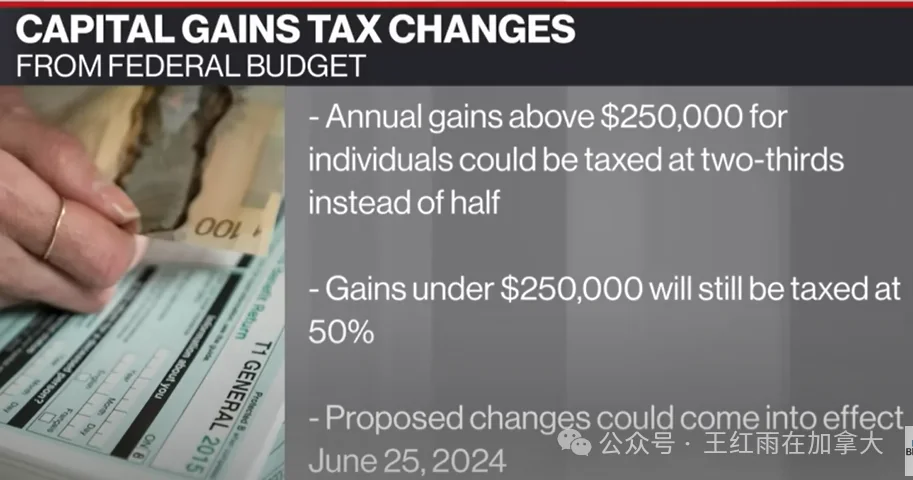
The Canadian federal government's budget on April 16 was like throwing a boulder into calm waters, causing huge ripples. The taxable portion of capital gains will increase. The taxable proportion of capital gains of companies and trusts has been increased from 50% to 66.7%; the first 250,000 of individual capital gains are included in personal taxable income at 50%, and the portion exceeding 250,000 is included in 66.7% of personal taxable income. This change will target companies that have dragged capital into companies and trusts. It should not be easy for an individual to gain more than 250,000 in capital gains in a year without selling a house. However, in Canada, all assets are considered sold when a person dies, and capital gains can easily exceed 250,000. The heirs of the estates of people who died during Trudeau’s term are the main victims of this policy. It’s very clear who the Trudeau government raises taxes on. As for real estate investors, the direct impact is not significant.
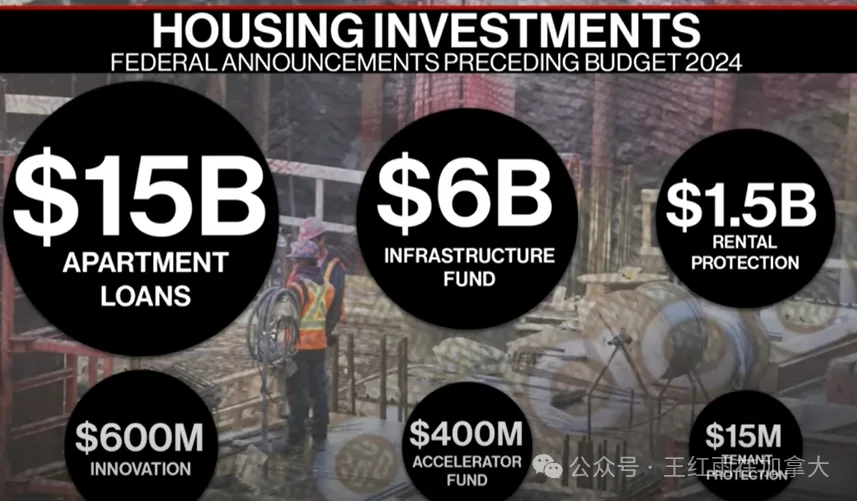
From April 4 to 16, the Canadian federal government frequently promulgated new housing policies, which were eventually compiled into a 28-page document, "Addressing the Housing Crisis: Canada's Housing Plan," hereafter referred to as the "Housing Plan." This is an action plan for the government to roll up its sleeves and participate in solving the housing crisis. Its legislative basis is Canada's National Housing Strategy Act passed on June 1, 2019. After being elected in October 2015, the current Canadian Prime Minister Trudeau has been committed to writing "housing rights are the basic rights of Canadians" into law. In November 2017, he proposed the Canadian National Housing Strategy. This motion was approved by Congress on June 1, 2019. Since then, Canadians have another basic right - the right to housing. At the same time, solving the housing problem has naturally become a task of the government. The welfare and decommodification of housing, like free medical care, has gradually become a burden on taxpayers. The housing problem of Canadians has also made great strides in the direction of breaking away from the market mechanism. After the Liberal Party government's careful manipulation over the past five years, today's housing crisis has finally emerged. The Trudeau government has always felt that it has not done enough and needs to work harder. It is best to be re-elected and continue to make the housing issue even more inseparable from the government's involvement. Looking at the 28-page housing plan, I subjectively believe that all policies are beneficial to real estate investors. If this plan is implemented seriously, the financial security of property investors' families will be secure.
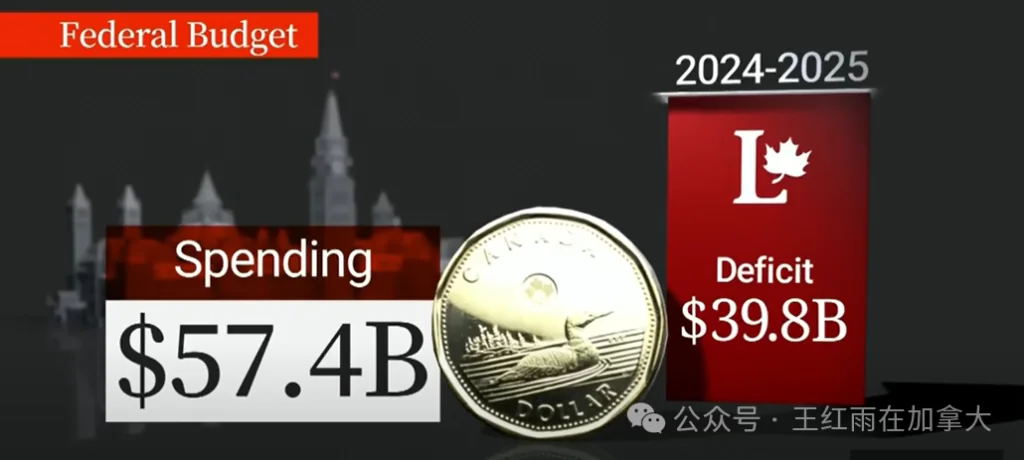
01 Increasing the taxable proportion of capital gains is beneficial to real estate investment
The cornerstone of capitalism is capital. Raising taxes on capital gains is tantamount to killing the goose that lays the goose that lays the eggs. Peter Schiff, an Austrian economist who once predicted the subprime mortgage crisis, explained "capital" in "Small Island Economics" this way: Two people live on a small island and go to the sea to catch fish every day. The fish they catch every day is only enough for themselves. One of them did not catch fish for two days and was hungry for two days. He made a fishing net and started fishing with the net from then on. The fish he caught could not be eaten by himself, so he could sell it or hire another person to fish for him. This fishing net is capital. Böhm-Bawerk called this kind of work of spinning nets instead of catching fish "circular production". The success of capitalism comes from a large amount of roundabout production. What the Trudeau government is doing now is to increase taxes on you when you sell your fishing nets for a profit. Trudeau hopes that Canadians will catch fish with their bare hands and only make ends meet every day. When the weather makes it impossible to go to sea, they will have to ask the government for help. Significantly increasing the tax rate on capital gains would undermine the very foundations of capitalism. Therefore, this budget has aroused strong reactions from all walks of life. Trudeau calmly said that anyone who opposes my budget is opposed to equality. What he wants is fairness for everyone to catch fish with their bare hands. Hayek famously said, "Human beings are always faced with a choice: to find equality in poverty, or to find freedom in inequality." First-generation immigrants, who have tasted what equality in poverty feels like, don’t need Trudeau to tell us again.
When explaining the impact of this change, the Ministry of Finance gave an example. A person with an annual income of 400,000 yuan in Ontario sold an investment house and made a profit of 300,000 yuan. After the new policy, the new tax rate was 4,461 yuan. It may not seem like a lot, but the person in this example seems a bit stupid. Why would he sell a rental house in a year when he earns 400,000? Normal people will sell investment properties when their income is at their lowest, for example, during the year of maternity leave or after retirement. The situation where you cannot choose when to sell your property, as I said at the beginning of the article, means that when a person dies, all assets are deemed to be sold. This situation is exactly what Trudeau wants. On the day the new policy was released, I posted a message in a circle of friends, suggesting that everyone buy some additional life insurance, otherwise the beneficiaries of the inheritance may not be able to receive the inheritance because they cannot pay taxes. On February 13, 2019, I wrote an article in the public account, "How much insurance do we need to buy?" Using the taxable amount of capital gains after the death of a father with assets of 3.2 million as an example, I calculated that the taxable amount is 667,000, so the old father needs to buy at least 670,000 life insurance during his lifetime, otherwise the heirs may not be able to inherit the inheritance because they do not have this cash. According to the new capital gains tax range, the heir needs to pay about 750,000 in taxes on behalf of the old father to inherit the inheritance. After the New Deal, the old father will need to buy 80,000 more life insurance during his lifetime.
There are three tools for tax avoidance, known as the three Ds: Deduct, Defer, and Divide, the most powerful of which is "deferral." If you have a fishing net in your hand, and I heard that the tax due after selling the fishing net increases, should you sell the fishing net before the tax increases, or should you hold on to your fishing net, catch as many fish as possible, and sell the net as late as possible? I definitely chose not to sell my nets and fish harder. Before the implementation of the new fiscal plan, real estate investors will not sell off their properties, and after the implementation of the policy, fewer investors will sell their investment properties. That is, the number of properties for sale on the market will decrease, resulting in a continued increase in the contradiction between supply and demand, which is conducive to rising housing prices. During the general election in September 2021 during the epidemic, the housing issue was already a hot topic of discussion. The Conservative Party at the time proposed in its election platform that in order to stabilize housing prices, investors needed to be encouraged to sell properties, and therefore proposed reducing capital gains taxes for real estate investors. Trudeau criticized the Conservative Party's proposal as "favoring the rich." Voters also believed that the rich should not be favored, so he was re-elected, and the housing problem continues to worsen to this day.What is politically correct is usually wrong economically, because the majority of people want to eat a free lunch, but cannot do so economically and can only stay in the slogans of politicians.
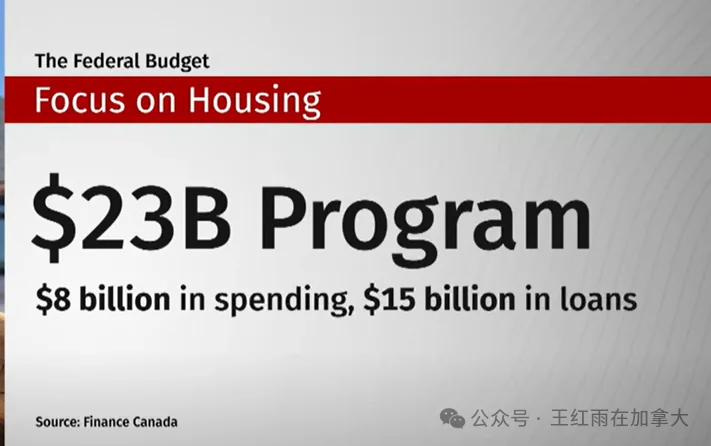
02 Increase supply, but only in affordable housing and rental-only housing
Understanding the content and direction of Canada's latest "housing plan" requires some background.
First, let’s explain what “affordable housing” is. If your rent is more than one-third of your income, congratulations, you can apply for affordable housing. Taking the standards announced by the City of Toronto as an example, if a family has two people and an annual income of less than 58,000, your family is eligible to apply for one-bedroom affordable housing. The affordable housing provided by the government has a rent that is less than one-third of your annual income. Everyone wants to take advantage of such a good thing, so they have to queue up. Currently in the City of Toronto, if a qualified applicant is included in the waiting list today, the waiting time is 14 years, and his or her dream can come true in 2038. According to the Trudeau government's plan, the government will vigorously build this kind of affordable housing, hoping to shorten the waiting time. There is an old law in economic principles, Say's law, that is, supply creates demand. The more affordable housing available, the greater the demand, so wait times should not change. We all know that economic principles have no influence on government decisions. As Thomas Sowell said, "The first lesson of economics is scarcity, and we do not have enough resources to fully satisfy everyone's wishes. The first lesson of political science is to ignore the first lesson of economics." In the "housing plan", if developers build affordable housing, the loan interest rate will be significantly discounted. The information I have shows that if a developer builds commercial housing, the construction loan interest rate is over 9.5%, and if it is building affordable housing, the construction loan interest rate is about 4.5%. This gap in interest rates is subsidized by the government. According to my understanding of the "Housing Plan", the government will use taxpayers' money to subsidize this part of the interest. This subsidy is the most expensive item in the entire plan. While the current housing minister, Sean Fraser, excitedly promoted the housing plan, he did not forget to disparage his rival, Conservative Party leader Pierre Poilievre. In a carefully crafted video,Sean complained that when Borridge was housing minister in the Conservative government, the number of affordable homes built was zero. Anyone who doesn't want to eat a free lunch understands that Bollich's policy is better. Without building welfare housing, the supply of commercial housing can be expanded, so there will be no housing crisis.
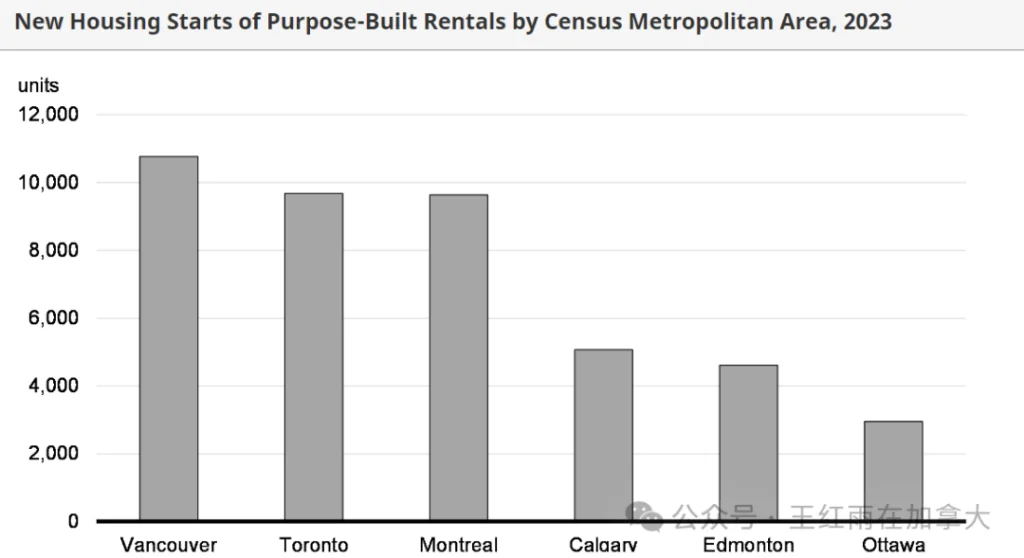
Let’s explain what “Purpose-built rentals” are. This kind of property is not for sale after it is built, but can only be used for rent. It may be an apartment or a townhouse other than an apartment. Its owners are institutions, not individuals. They are usually financed and built by developers, sold to the government or institutional investors, and ultimately owned by large landlords. Institutional landlords can hire professional property management companies, or they can financialize the property's rent-collecting rights and sell them to real estate trust funds (REITs). The Trudeau government's housing plan has given many benefits to developers of this type of housing, such as reducing the consumption tax (GST), increasing the depreciation ratio, accelerating the profitability of such properties, etc.
The housing plan also states that in order to reduce the cost of building houses, the government will lease land to developers for building houses. It can be seen from this that this part of the newly built properties cannot be sold to families because they have no land property rights.
The supply of new houses mentioned above are not for sale to families and cannot be purchased in the market. Simply put, there is no content in the "Housing Plan" to increase the supply of commercial housing. To sum up, we can think that,The Trudeau government's supply-side reforms are not to increase commercial housing, but to increase affordable housing and housing exclusively for rental.The government uses "incentives" to encourage developers to withdraw from the construction of commercial housing and build housing planned by the government. This has an obvious "crowding-out effect" in economics. According to statistics from CMHC, the number of new homes started in Canada each year is around 250,000, and the number completed is unknown. According to Canadian census data, there were 14.14 million housing units in Canada in 2016 and 15.6 million housing units in 2021. Canada conducts a census every five years. The difference in the number of properties in five years should be the number of newly built houses. It can be seen that Canada can build about 250,000 to 290,000 houses every year. This number should be Canada’s current housing construction capacity.If the Canadian government steps in to squeeze out resources, the number of commercial housing built will decrease, and the price of commercial housing, which is driven by the market, will continue to rise after the National Advancement and Private Retirement. From the supply side, the housing plan just announced is beneficial to real estate investors.
03 Stimulating demand will intensify market competition
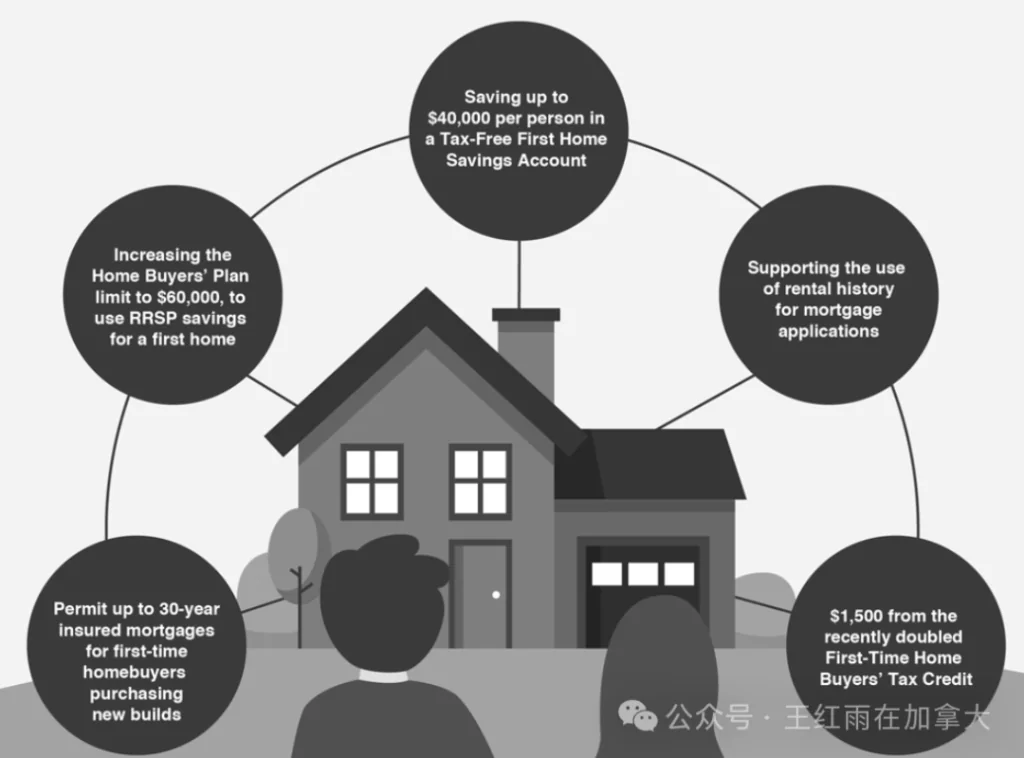
The "housing plan" includes many measures to stimulate demand. For example, for first-time homebuyers, if the down payment is less than 20% and the house price is less than 1 million, when buying a new house, the maximum mortgage repayment period will be extended from 25 years to 30 years; the amount of down payment that can be advanced from the retirement account will be increased from 35,000 to 60,000, and the latest time for the money to be repaid will be extended from 2 years to 5 years. The supply of new commercial housing has tended to stagnate due to high interest rates and the above-mentioned crowding-out effect, but the inventory of new housing is still relatively large, especially in Toronto. Due to delays due to the epidemic, many new homes were handed over last year and this year, and short-term oversupply has put pressure on the market. The above-mentioned policies to encourage the purchase of new houses will effectively stimulate the demand for low-priced houses. Many people don’t understand why when buying a second-hand house with a down payment of less than 20%, the maximum mortgage repayment period is still 25 years. Only when buying a new house can the mortgage repayment period be 30 years. Let’s start with Trudeau’s little abacus. When calculating GDP, if a new house is sold for 600,000, then 600,000 will be included in GDP. If a second-hand house worth RMB 600,000 is sold, only the commission from this transaction, about RMB 24,000, will be included in GPD. Encouraging the purchase of new houses will make the GDP figures look better. Therefore, the "housing plan" focuses on encouraging the purchase of new houses, while maintaining the old policy for the purchase of second-hand houses. Economist James Buchanan won the Nobel Prize in Economics in 1986 for his contribution to public choice theory. He believed that there are no policy choices for the public interest. All policy choices are made based on the private interests of politicians, for political performance and re-election. This conclusion is particularly applicable in Canada.
As early as 2019, the federal government's new housing stimulus policy subsidized 10% of the down payment, but the upper limit of the loan amount was 480,000. It is difficult to buy a suitable house in big cities with this upper limit, so this policy has no place in big cities. This invalid policy was announced to be abolished on March 24 this year. In their place are the policies described above that extend repayment periods and increase retirement account advances. Compared with the 2019 policy, the new policies of the "Housing Plan" can stimulate the demand for new homes to a greater extent. In Toronto, the lack of takers for off-the-plan property transfers has also suppressed the price of second-hand housing. The new policy will be beneficial to the transfer of off-the-plan properties completed after August 1, thereby gradually reducing the pressure on the second-hand housing market.
For new homes in the commercial housing market, the supply side is currently severely suppressed. No one is interested in the properties pre-sold by developers, and many of the properties that have been pre-sold are delaying the start of construction because construction loan interest rates are too high. It is hoped that the demand side will be stimulated by new policies and become active, which will help absorb existing inventories. At the same time, it laid the foundation for a shortage of new homes four years later. From a demand side perspective, the Housing Plan is beneficial to real estate investors.
04 The second-hand housing market will recover
The deficit in this federal budget is as high as 40 billion, which is usually the level of an election year. For the Canadian federal government, which is already heavily in debt, it faces two choices: either continue to print money, or raise taxes. If we continue to print money, it will inevitably reignite the fire of inflation and keep interest rates at high levels, which will accelerate the resignation of the Trudeau government. Therefore, the federal government chose to raise taxes to please the central bank, hoping that the central bank would find a reason to cut interest rates and cut interest rates as soon as possible. Judging from the current situation, the Bank of Canada has a high probability of cutting interest rates in June.
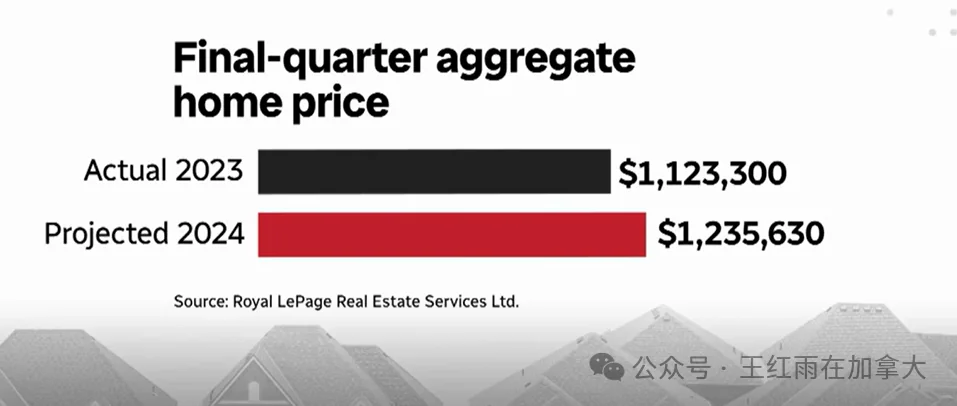
The price of consumer goods depends on utility, and the price of assets depends on discounting future income streams. When the discount rate decreases, the current price of the asset increases.That is, when the central bank opens the channel to cut interest rates, all asset prices generally rise, including house prices. Canada's major real estate departments all predict rising housing prices in 2024, and the basis for their predictions is that the Bank of Canada will cut interest rates this year. CREA, the national real estate association, predicts that national home prices in Canada will rise by 4.9% this year. CMHC predicts that Toronto’s second-hand housing prices will range from 1.135 million to 1.2 million in 2024, which is an increase from the 1.127 million in 2023. CMHC also predicts a decline in new housing starts in Toronto this year and a further decline in the vacancy rate in the rental market. After the interest rate cut channel is opened, the second-hand housing market will resume transaction volume and push up housing prices at the same time. The interest rate cuts resulting from this year's Budget will benefit property investors.
There are not many elements in the "Housing Plan" that involve the second-hand housing market, but one item has already begun to affect the market balance. The full name of this content is "further incentivizing density to existing homes." Simply put, it is to encourage families with independent houses to transform their houses into properties that can accommodate four families. The government proposes to provide 40,000 yuan in renovation loans. This proposal was summarily rejected by the Ontario Premier on the grounds that only local governments knew which communities were suitable for such high-density transformation. The federal government encourages municipalities to bypass provincial governments and apply directly for funding from the federal government. As everyone is waiting to see the effect of this policy, the number of listed houses for sale has declined. People have no interest in converting their homes into multi-unit residences, but they do want to sell their homes at a high price to someone with ideas for remodeling. Detached houses are a scarce resource, and the inventory for sale on the market has been declining in recent years. The new policy has made this imbalance between supply and demand even more tilted. Homeowners’ reluctance to sell will lead to increased competition among buyers, helping to drive up home prices. This policy may not necessarily increase residential density, but it can push up housing prices, which is beneficial to real estate investors.
Conclusion:
It is recommended that everyone carefully prepare an estate plan. The changes in the scope of capital gains included in this budget will have a great impact on the heirs of the landlord who holds multiple investment properties and unfortunately dies suddenly.
Politicians are no more moral than butchers and winemakers; everyone makes decisions out of self-interest. This year's budget exposed the Trudeau government's desperate nature in its final term. Crackdown on entrepreneurs who produce fishing nets is encouraging fishing with bare hands. Fishing with fishing nets is obviously more productive, and cracking down on circuitous producers is reducing production efficiency. Anyone with a little common sense in economics knows that the Trudeau government will not last long. Many real estate investors have experienced hard times when condo rents fell sharply during the epidemic and interest rates skyrocketed in the past two years.Real estate investors hold properties based on their strength, not on the protection of policies.Henry Ford said 100 years ago that if you want to know what life is like for people who are protected by the government, just look at the lives of American Indians. Politicians are not unaware that the policies they formulate are harmful to the economy, but in order to get votes from those who want to eat free lunches, they often use the strategy of trying to spread the pie. As small investors in real estate, middle-class families must make long-term plans for themselves. They cannot rely on policies or stop making money in order to avoid taxes. A recent property report from Royal Bank shows that since 2010, real estate assets in the hands of Canadian homeowners have grown four times faster than investments in insurance and pension funds. Since 2010, homeowners’ real estate assets have grown four times faster than life insurance and pension savings.
Real estate investors need to strengthen their study of basic economics knowledge, otherwise they may not even be able to understand economic policies. According to my understanding, the final results of this year's budget and "housing plan" will all be beneficial to real estate investors. Real estate investors should strengthen their confidence in real estate investment, hold properties firmly for a long time, and treat their tenants well, because the vast majority of tenants are people who work hard to make a living and are victims of the current housing policy. As the beneficiary, landlords should protect the interests of tenants with the greatest goodwill. Only when there is a win-win situation for both landlords and tenants can real estate investment be the friend of time and achieve the greatest returns.
Henry Wang April 19, 2024