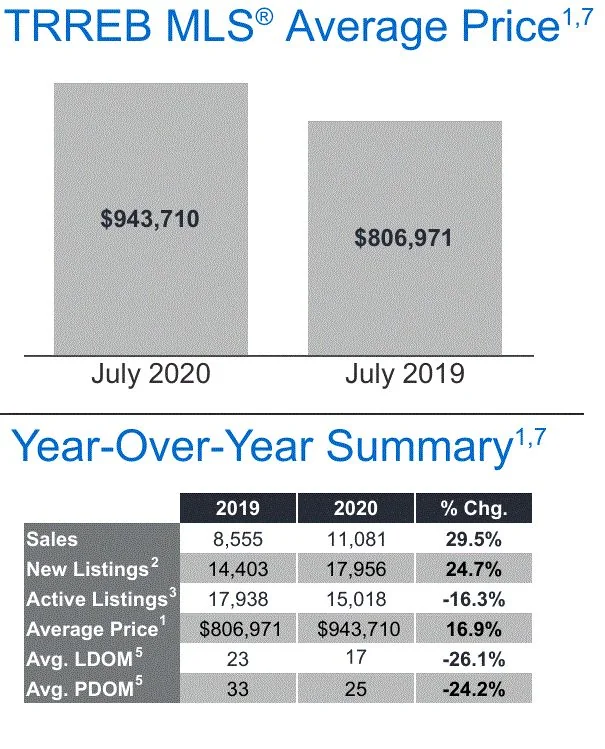
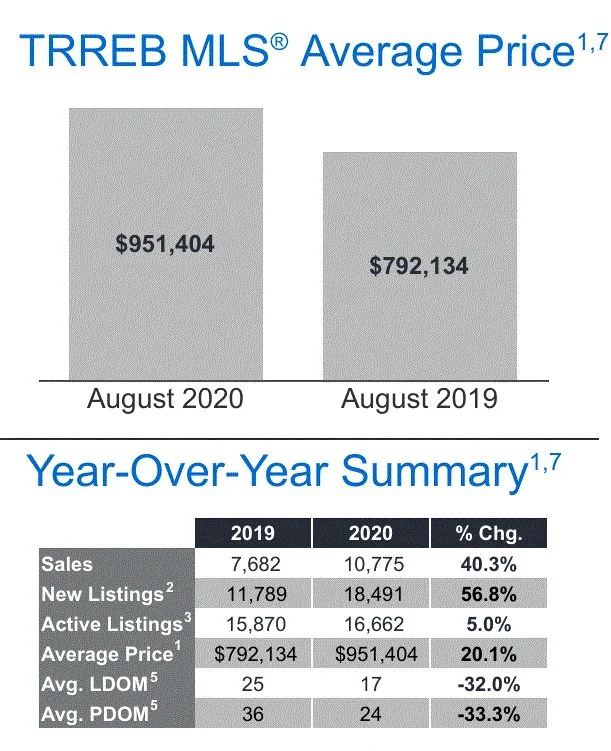
In July 2020, the price of second-hand housing transactions in Toronto increased by 16.9% compared with the same period last year. Everyone was surprised. Is this a celebration of the success of the fight against the epidemic? The following August, the price of second-hand housing transactions in Toronto increased by 20.1% compared with the same period last year, and the increase continued to expand, completely defying the epidemic. I checked some local media analysis, and the reasons for the rise in housing prices despite the epidemic have been attributed to: rising construction costs; speculation by new immigrants and non-residents; low interest rates; baby boomers are unwilling to sell their houses; the number of new homes completed is lower than the number of new immigrants settling; real estate investors are active; attracting more companies to settle in Toronto. It can be seen that many of the reasons are commonplace and they apply whether there is an epidemic or not. Therefore, they cannot explain the real and deep-seated reasons why housing prices still rebound even when the epidemic is not under control.
01 Misunderstandings about housing price changes have been exposed during the epidemic
Ontario launched the non-resident real estate speculation tax NRST on April 20, 2017. The reason was that non-residents were speculating in real estate in Canada, and the hardest hit area was the Greater Toronto Area. The federal government immediately allocated 500,000 to the Bureau of Statistics to conduct a special survey. The results came out in November 2017. They came out quietly because the results disappointed the government. Just like the United States did not find weapons of mass destruction in Iraq, the number of non-residents owning properties in the Greater Toronto Area accounted for only 3.4%. If only 3.4 out of 100 houses are in the name of Waiguoren, how could these Waiguoren raise the price of the remaining 96.6 houses? From then on, no one mentioned the idea of non-residents speculating to increase housing prices anymore, but the non-resident real estate speculation tax NRST is still there. The epidemic has once again proved that Most of the non-residents who work and study in Toronto for a short period of time rent houses, and they are relatively concentrated in downtown Toronto, which is close to schools or jobs. down town。 Judging from the plunge in rents in the area over the past few months, non-residents have been blocked from entering Canada, which has dealt a heavy blow to the rental market. Real estate prices in the lower town have not plummeted like rents, which also shows that Non-residents have little impact on housing prices but have a large impact on rents.
I recently listened to a very exciting interview with economist Sherry Cooper on Landlord.com. When the host asked her how to interpret the strong rebound in housing prices during the epidemic, she still believed that it was the hot money brought in by new immigrants that pushed up housing prices. Other than this point, I agree 100% with her on other issues. The federal investment immigration program was stopped in 2014. Most people who came to Canada with money on their backs and nothing to do were blocked. Only a few provinces still accept investment immigrants intermittently. The current composition of new immigrants is very healthy. Most of them are experienced immigrants who have graduated from Canada. These new immigrants are younger and more able to bring vitality and income tax to Canada, rather than just buying a house like investment immigrants. What’s even healthier is that starting from the end of 2018, banks have comprehensively tightened the new immigration policy for mortgage loans. New immigrants also have to look at their income. The requirements for supporting documents for overseas income are more and more stringent. It is impossible to easily obtain mortgage approval with only a 35% down payment. During the epidemic, the number of new immigrants landing has dropped sharply. If it is new immigrants who are driving up housing prices, then housing prices will at least halve, rather than rise. It can be seen that conventional reasons are too easy to be accepted and remembered, and even economists are not exempt from them.
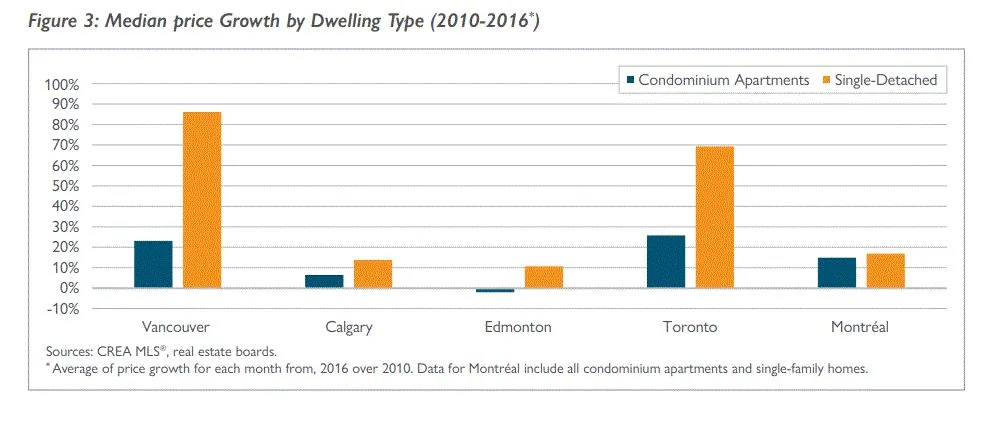
High employment rates are often considered an important factor in pushing up housing prices. The higher the unemployment rate, the lower housing prices. After the outbreak of the epidemic, the unemployment rate in Ontario has been in double digits, but housing prices have still risen, indicating that the relationship between employment rate and housing prices is not a causal relationship, but a correlative relationship. If the unemployed are low-income earners, young people, and low-end service workers, the rise in unemployment will not affect housing prices, not even rents. As early as May 2018, CMHC’s report Examining Escalating House Prices in LargeCanadian Metropolitan Centers ruthlessly revealed a fact: Housing prices in metropolitan areas have nothing to do with low-income earners; housing prices are driven by high-income earners. This epidemic has once again strongly proved this point of view: Rising unemployment cannot directly affect housing prices because those most vulnerable to unemployment have no ability to affect housing prices. People who worry about housing prices when they see the unemployment rate rising are pessimists who don't understand things. Talk show actor He Guangzhi explained this economic phenomenon in a joke: "People like me with a monthly salary of 1,500 dollars have no pressure to buy a house in Shanghai."
The epidemic has proved that the driving force of housing prices is not non-residents, new immigrants, or people who are easily unemployed.
02 Can drive up house prices around the clock drivers Which ones are there?
Net population inflow is the most important factor in determining the long-term trend of housing prices. English-speaking, capitalist countries, especially countries that do not exclude Chinese people, let us count on our fingers, how many are left? As long as Canada does not change its established immigration policy, it will always be an important destination for Chinese students and immigrants. For other countries and races, Canada is arguably the most inclusive. Population inflow is vital to Canada. Only by continuing to attract high-quality new immigrants can the country remain dynamic. At the federal level, it has been discovered that investment immigration does more harm than good to Canada and has been stopped. However, the total number of immigrants has not changed, still at 300,000 per year. Through such continuous trial and error, Canada is actively looking for high-quality new immigrants who are more conducive to Canada's long-term development. The epidemic has led to fewer new immigrants landing, which is a temporary phenomenon. The national policy to attract new immigrants has not changed. The day they land is not that important.
Toronto's land supply system is the most typical land supply system in the Commonwealth, with strict district management and slow approval times, exactly like Hong Kong. Therefore, the supply of new housing can never keep up with the rate of population inflow. There are currently three cities in the world with green belt policies, London, Seoul and Toronto. Green belt advocates and opponents are in fierce conflict, and each has its own organization to carry out political lobbying and social propaganda. In Toronto, those who support the green belt have the upper hand. These people are vested interests. In the name of environmental protection, they actually restrict land granting because the more houses are built, the greater the supply of housing, and the greater the possibility that existing homeowners’ housing prices will fall. Neighborism in the United States and Canada is very serious, not in my backyard, and has ruined many new projects. One of the "Real Estate Investment Guides" in Rich Dad's series of books mentioned many times the huge black hole of real estate development in the United States: Developers buy land and cannot build houses casually. They must obtain the consent of neighbors. But neighbors do not agree in most cases. The reason is that more people lead to traffic congestion, and more houses lead to lower housing prices, which is detrimental to vested interests. You can build houses as you like, but, NOT in my back yard. Nimbyism, many Chinese people have never heard of it, is actually the abbreviation of "Don't break ground in my backyard." Those who recklessly engage in real estate development in North America would never have imagined that they would die at the hands of their neighbors. They can only blame themselves for underestimating the power of the masses in North America and not having time to read the well-written Rich Dad series. There are many reasons for the slowdown in housing construction in Toronto. In fact, there are two biggest reasons: 1. The land approval procedures are too cumbersome to speed up; 2. The golden period of real estate development has passed, and big capital does not bother to enter this field. Therefore, there is no listed real estate development company in Canada, and Canada’s Hengbiwan cannot be found. The limited supply of new homes effectively guarantees the preservation and appreciation of second-hand homes.
Strict mortgage policies are the prerequisite for ensuring the quality of borrowers and loans. High-quality mortgages are the cornerstone of long-term, stable and healthy development of real estate. Securitization of real estate assets was rampant in the United States, but Canadian banks did not follow suit. Therefore, the subprime mortgage crisis had little impact on the Canadian economy and real estate. My own work experience proves that the Canadian commercial banks' discrimination in terms of income is just and necessary. Without sufficient income support, banks will not lend money. Many people covet the low interest rates on mortgage loans and try every possible means to get them, but in the end their efforts prove to be in vain. Interest rates can no longer reflect the level of impatience and are completely controlled by the Federal Reserve.Robert Shiller has a casual remark in his new book that thoroughly explains the nature of the Federal Reserve: The Federal Reserve is a union of the U.S. banking industry, and all Fed chairs are copies of Morgan in 1907. The function of the Federal Reserve is to maintain capitalism that is conducive to the operation of financial capital. When the economic situation threatens the U.S. capitalist system, the Federal Reserve will do anything, including injecting water into the U.S. dollar and desperately printing money, even if it destroys the credibility of the U.S. dollar. As long as U.S. capitalism can survive, the opiate of low interest rates will continue to be smoked until it recovers or turns into a skeleton. Mortgage interest rates are the lowest interest rates that ordinary people can get. In the global low interest rate environment, mortgage loan interest rates have reached unprecedented low levels. In order to obtain low interest rate funds, people need to buy a house, otherwise they cannot get a low interest rate mortgage loan. For self-occupied buyers, the current interest rate means that for every 100,000 dollars borrowed, the monthly payment is only 370 dollars. For a mortgage of 500,000 dollars, the monthly payment is as low as 1,850 dollars. Renting a house at this price can only rent a basement. Low interest rates are a decisive driver of housing prices.
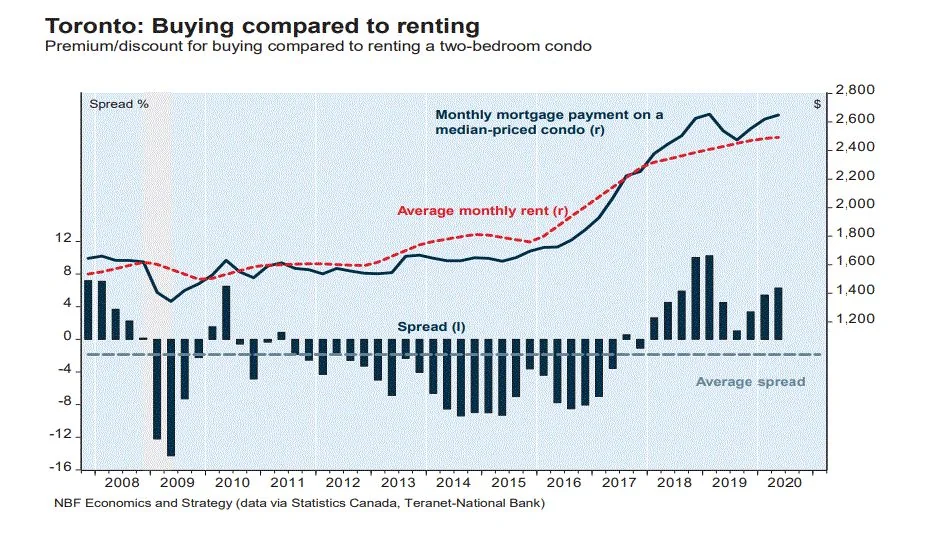
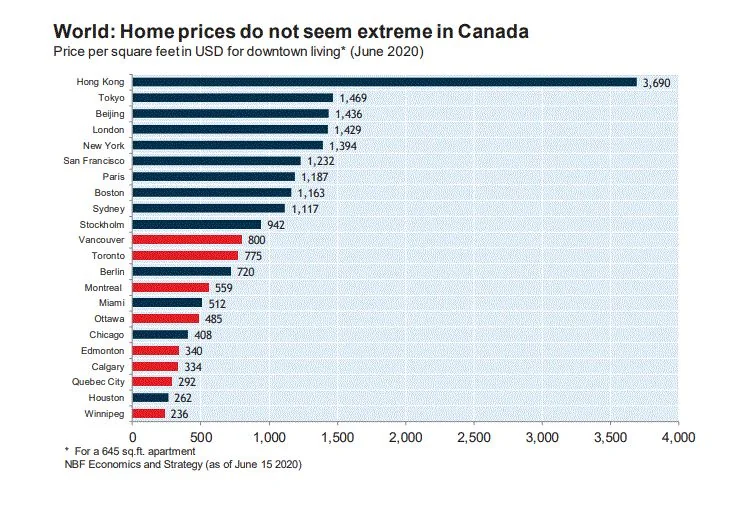
Look at population in the long term, land in the medium term, and finance in the short term. From the short to the long term, the Canadian real estate market will develop healthily and housing prices will rise steadily. This long-term trend cannot be changed by the epidemic. There is no basis for saying that Toronto's housing prices are bubble. As an international metropolis, Toronto's housing prices are US$775 per square foot, nearly half of Beijing, Tokyo, and London, and even far lower than Sydney's US$1,117 per square foot. There is still huge room for growth in Toronto's housing prices.
03 Looking at Canada’s politics and economy through the epidemic
Politics and economics are always hand in hand. After experiencing the epidemic, we can see more clearly the connection between politics and economics in Canada.
A Canadian investment guru, Gary Slovsky, completed his lifelong investment experience, "Investing in the Jungle", at the age of 79, and published it in 2005. He described the political and economic relationship in Canada this way: Canada is a country rich in resources. Ordinary people only care about the peace and prosperity of their own families and are indifferent to other things, including politics. This creates a political environment for buying votes in Canada. Political parties on the stage will spend money to buy votes at all costs as long as they have the opportunity. The money to buy votes comes from levying taxes from high-income earners. The advantage of tax and vote buying is to subsidize low-income people who have the right to vote in order to be re-elected. As a result, people are getting lazy and more and more dependent on the government for money. More and more people are striving for downstream, and more and more voters support money distribution. Therefore, the political correctness of buying votes will be imitated by all political parties in Canada, forming a positive feedback that will become more and more intense. Every party on the stage will increase its efforts to distribute money. During the epidemic, the Trudeau government's fancy money distribution was quite popular, doubling the number of people who worked and turned them into hands-on people. At the same time, it once again confirmed what Garry Slovsky said 15 years ago. However, don’t forget that issuing money can only be achieved through fiscal policy, not monetary policy.

Many people cannot distinguish between fiscal policy and monetary policy. fiscal policy There are two methods: 1. Direct transfer payments, collecting taxes from the rich and giving them to those who lend a hand, such as Trudeau’s current approach; 2. Government construction projects, infrastructure construction, and government spending to stimulate employment, that is, the famous Keynesianism, for example, Roosevelt’s 1933 relief-for-work program. monetary policy It means that the central bank releases water to commercial banks or capital markets to allow commercial banks to maintain liquidity and pass this liquidity to industrial and commercial enterprises and consumers through loans. The simple difference is, The money sent out through fiscal policy does not need to be repaid, it is given for free; the money sent out through monetary policy is lent and must be repaid. To get the money from fiscal policy, you must prove that you are in trouble and need relief; to get the money from monetary policy, you must prove that you have the ability to repay. So there are two types of smart people and one type of stupid people in Canada: those who can get relief either really need help, or they are struggling to meet the conditions for relief; those who can borrow money work hard to buy a house, otherwise they can't get a low-interest loan; and the last type work hard to make money and save it for others to borrow. Readers can take your seat now.
The epidemic has magnified the political and economic characteristics of Canada. People who could not see clearly before can no longer be confused. People who neither strive for the upper reaches nor strive for the lower reaches have a very hard life in Canada. Of course, they ask for it.
This paragraph is not off topic. I hope everyone can clearly understand the basic political and economic relations in Canada, understand what they should and should not do, and why some people take loans to buy houses whenever they have the opportunity. The house is the carrier of low interest rates and the collateral for the loan; the house can be rented out, so the loan will be repaid. This is the lowest cost and least risky feasible measure to use monetary policy. Many people are shouting in the circle of friends that the central bank is printing money and inflation will occur. Is the money printed by the central bank distributed to you through wages? No, then how could inflation happen? In fact, central banks of various countries have begun printing money on a large scale since 2010, but few countries have experienced large-scale inflation. The reason is that those who benefited from the money printing policy, that is, those who can borrow money, have a low marginal propensity to consume. They did not use borrowed money to consume, but purchased assets. Therefore, asset prices generally increased, stock prices and housing prices rose, and the legendary hyperinflation never appeared. Monetary policy is a tool to help those who can borrow money get rich first. Of course, those who do not borrow money cannot enjoy it. Fiscal policy needs to strive for the lower reaches, or encounter real difficulties. Those who cannot benefit from either policy face a gray rhino problem: asset depreciation.
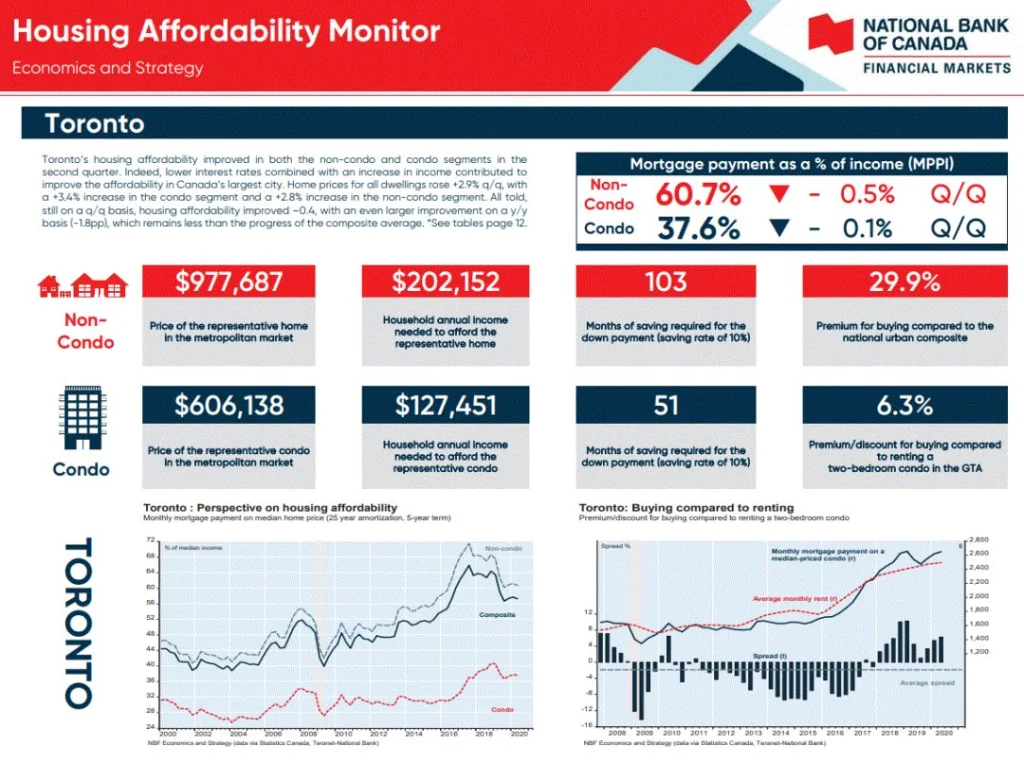
Houses have become a tangled core issue: buying them for investment can benefit from monetary policy, but they need to be operated, and those who are afraid of trouble need to make their own choices; with more people buying houses and limited supply, house prices will rise, and a rising tide lifts all boats, effectively dealing with the flood of money. , but non-residents can't come in for a while, and the rent can't go up, how do you choose? People who are addicted to tax avoidance find that the expenses in real estate investment are tax-deductible, but to get a mortgage, they need to prove their income. The higher the income, the higher the tax. How to choose? Many people have been struggling with trade-offs for 10 years, during which time the prices of all Toronto properties have doubled. There is a cost to being entangled. Do you want to be entangled for another ten years?
04 I see three things driving home prices up drivers
The well-known reasons for rising house prices will not be repeated. Let me talk about three reasons I discovered that are driving up housing prices despite the epidemic. The first is that almost all Canadians believe that real estate is a good long-term investment; the second is the power of mortgage extensions; and the third is the power of mortgage assistants.

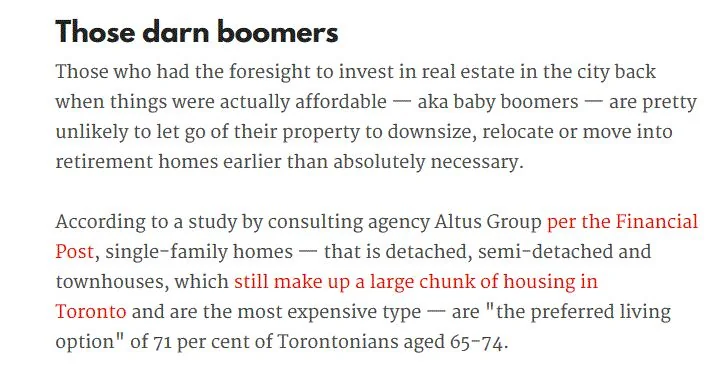
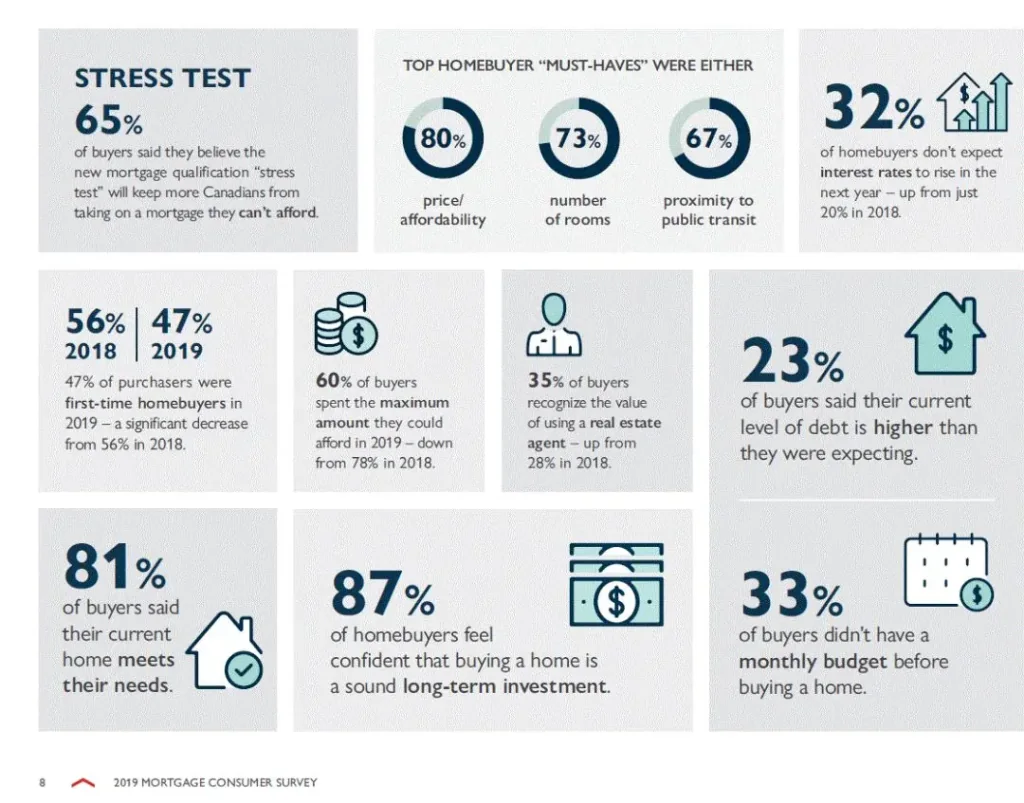
As early as 2014, a consumer survey report conducted by GENWORTH disclosed important information. Among those who plan to buy a house, 90% of Canadians believe that buying a house is a good long-term investment. In 2018, CHMC also included this topic in a consumer survey report, and the result was that more than 80% of buyers feel confident that buying a home is a sound long term investment. This data is more specific in the 2019 CMHC consumer survey report. 87% of buyers feel confident that buying a home is a sound long term investment. My article on the public account "What factors do Canadians consider when buying a house?" This figure was disclosed in an article, but it did not attract everyone's attention. Robert Shiller disclosed Americans' views on this issue in his new book "Narrative Economics". At the highest point, 43% of Americans believed that buying a house was a good investment, and at the lowest point, only 32% of Americans believed that buying a house was a good investment. According to Professor Schiller’s research, narrative is a very important economic factor. If people around you talk about XXX being a good investment all day long, you will think so too and even participate in it. Chongkou Shuojin's assets are people's favorites. Canadians’ narrative about real estate has completely brainwashed the entire population. 80%-90% of Canadians believe that buying a home is a good investment, and a good long-term investment. How long is this long term? 71% of baby boomers, today's generation aged 65 to 74, believe living in a detached property is best, with these expensive properties still occupied by seniors. Nursing homes have been hardest hit by the epidemic, and those who sold their homes and moved to nursing homes have suffered greatly. After witnessing what happened in nursing homes during the epidemic, those elderly people who have not yet sold their properties will never move out of their existing homes easily. Therefore, during and after the epidemic, the supply of independent properties in the second-hand housing market will be seriously insufficient, and the lack of supply will inevitably push up the prices of independent properties.

Borrowers who can increase the mortgage can withdraw cash from the house as a down payment for the next investment house, and use the full amount from the bank to buy the investment house. At the beginning of the epidemic, everyone went to stock up on toilet paper. I reminded a few friends in the financial and business community who were more hesitant: the epidemic had just broken out, house prices did not fall in March, and most industries were still working normally. You should immediately make additional mortgages for investment properties. If the epidemic is serious, use cash as a reserve. After the epidemic is over, if you don’t need so much cash, you can use it as a down payment to invest in your next house. Several friends who listened to my advice have now rented out their new investment properties. Many people are full of doubts. The epidemic has not ended, the economy has not improved significantly, and foreigners cannot come in. Where will the money to buy a house come from? Economists cannot discover this secret, and anyone who is not involved in the game cannot discover this driver: Canadian families with income can add cash from existing properties and apply for loans to buy more properties.

Toronto is an international city, different from ordinary cities. The average home ownership rate in Ontario is 68%, while in Toronto it is only 56%, indicating that the proportion of people renting exceeds the national and provincial levels. I have 6 episodes of videos on Youtube "In order to balance our lifetime income, we are forced to invest" Generally speaking, real estate investors have two strategic partners: banks and tenants. Tenants are mortgage helpers. They not only support mortgage payments, but also support mortgage applications. When banks calculate the repayment ability of a mortgage applicant, they will use the rent to directly offset all debts of the house, thus greatly improving the borrower's repayment ability. As a landlord, you should not haggle with your tenants. Tenants are the main force in approving and shouldering mortgage loans. You must treat your tenants well. They silently help the landlord apply for a loan extension or a new investment mortgage without appearing in person. Seeing this, please ask the landlord to silently say to the tenant, "Thank you for your hard work. There will be no rent increase next year."

Conclusion:
Are you afraid of a second epidemic? Afraid of being laid off? In addition to rushing to buy toilet paper, you should also take out cash from real estate as a reserve. In Canada, houses are recognized as high-quality assets and worthy of long-term investment. This narrative has been verified time and time again. The sudden outbreak of the epidemic has not only not weakened this confidence in holding real estate for a long time, but has been strengthened. Instead of looking for reasons for the rise in house prices, it is better to use the mortgage strategy to strengthen your ability to resist risks and prepare for further investment.