Summer has begun in 2023. This year, Toronto’s real estate market, like the weather, has been torn between the coolness of late spring and the occasional scorching heat. The pain points and hot spots in the real estate market this year are very obvious.
The pain point is that OSFI, the commercial bank regulatory authority, suddenly intervened in the market in May and limited the number of mortgage loans that commercial banks can issue to investment houses. I issued an early warning in my public account article on October 31 last year. At that time, I said that "the trend of "common prosperity" is blowing around the world, and regulatory authorities may limit the number of mortgage loans that a person can obtain." Obtaining multiple mortgage loans based on one's ability is unfair to some people, so we need to push the regulatory authorities to correct this "unfair" phenomenon. People who buy multiple properties should not be allowed to take advantage of mortgage loans. Instead, investors in multiple properties should be allowed to apply for commercial loans. I don’t have the magic ability to predict the future, but I know that some people who can’t win in competition will definitely find ways to change the rules. After years of lobbying, regulatory authorities finally accepted their suggestions and required commercial banks to process applications from multi-home investors as commercial loans rather than residential mortgages. At present, most banks are still trying to delay implementation, and a few banks have already started implementation. Ding Yuanying said this when introducing the stock market to Rui Xiaodan: "You have to keep an eye on the banker's black hand and the Yamen's sharp knife; take off the chopsticks when there is meat in the wolf's mouth, and get out before the Yamen draws the knife." Investors, whether in real estate or in real estate, When it comes to stocks, no matter which country you are in, you should pay close attention to the sharp swords of the Yamen, because there must be people who have not become rich who feel that something is unfair and go to the Yamen to complain. The Yamen will probably draw their swords to help them in order to achieve the good wish of "common prosperity". The biggest pain point in the real estate market this year is that buyers of off-the-plan properties who may hand over their properties at any time will not only find it difficult to get loans, but also to transfer them, especially after being targeted by the government. This year's off-the-plan property transfer market has entered a quiet period of "secret and no mourning" since January. The market price of more than one new property is the same as the purchase price 4 or 5 years ago. It is almost impossible to transfer at a profit, and the number of buyers has dropped sharply.I described this situation in my article on January 1st of this year. After the Yamen pull out the sword in May, the number of Panxiamen will at least be halved again. The off-plan property transfer market is a hidden corner. The transaction volume and transaction price are neither new home transaction data nor second-hand home transaction data. No one can see the whole picture. It is a completely opaque market. However, the shadow of this market can be cast on the second-hand home market. This year’s second-hand home sales in Toronto’s CONDO apartments The tepid market situation reflects from the side the brutality in the CONDO transfer market where flesh-cutting and even throat-cutting are taking place. People who want to transfer to uncompleted properties kill each other, and the buyer can pick up a good leak, thus attracting some funds that should have entered the second-hand CONDO market to buy low-priced properties in the off-the-plan transfer market.

The hot topic is that second-hand properties with a living area of 1,000 to 1,900 square feet are hot this year. There are currently 2,970 CONDO apartment buildings in downtown Toronto, and this year is expected to reach the 3,000 milestone. For families living in apartment buildings, whether they rent or buy a house, most families have a living area of less than 1,000 square feet. Toronto apartment buildings are mostly small units, with only 10% of units in each building having 3 or more bedrooms. Most people's requirements for living are endless, and families living in CONDO are only subject to conditions and temporarily live in properties with smaller living space. It can be said that 90% of the residents in these CONDOs are potential buyers of properties with a living area of more than 1,000 square feet, and they are all in a state of swinging between eagerly looking and hesitant.After experiencing interest rate cuts to the bottom and rising interest rates to the top of the mountain, the market has clearly told potential buyers that1.1 million is the average house price in the Greater Toronto Area. This price is already very solid. Whether you can afford it depends entirely on the ability of the family among all potential buyers.The average-priced properties correspond to properties with a living area of 1,200 to 2,000 square feet, which is currently the most competitive market segment. More than one real estate investor told me that with two children at home, they would not be able to buy a house in Toronto on their own when they grow up. Qian Lang had to at least buy a townhouse or semi-detached house as a townhouse, otherwise he would feel really uneasy. House-swapping families and relatively capable real estate investors meet in this market segment. In Greater Vancouver, there are many communities of townhouses. In the Greater Toronto Area, townhouses are usually just a few houses in a community closest to the bus station. Therefore, properties such as townhouses are particularly rare in the Greater Toronto Area. It’s a big leap from living in a CONDO to living in a detached house, and you need to transition to a townhouse in the middle. Families who have lived in CONDOs for a long time are eager to improve their living conditions, and the price of townhouses at the next level is steadily rising higher and higher. If you don't get one as soon as possible, you are likely to be trapped in the building for the rest of your life. To sum up, the hot spot in the real estate market in the Greater Toronto Area this year is townhouse properties.
In addition to pure speculators, the largest number of off-the-plan buyers should be families with five-year plans. Seven years ago, the buyer who believed the developer's promise to hand over the house in three years signed the contract according to his family plan, because his child would go to college near the new building in three years. Seven years later, the child had graduated from college, and the original pre-approval for the mortgage loan for the off-the-plan property had expired long ago. He was unable to obtain a loan under the current conditions. At this moment, the developer received a notice: hand over the house immediately. If the five-year plan had worked, the Soviet Union would have been the world's most powerful country long ago, and it would not have been so short-lived. We look back today. Five years ago, in 2018, who could have predicted what would happen today? People keep asking me the same question: When will my child go to school or when will he graduate? Should I buy an off-the-plan property now? There is only one correct answer to this question: buy a second-hand house now, or buy nothing if the conditions are not mature. Planning is to use current certainty to reduce future uncertainty based on goals, rather than creating new uncertainty now for the future. Someone invited me to give a training course on real estate investment. I thought I didn’t have the ability, so I didn’t dare to agree. Real estate investment cannot be learned by reading a textbook. If it could, someone would have written the textbook long ago.Plans cannot change as quickly as they should. The plan should include content that must be acted upon now, otherwise the plan will be a waste of paper used to postpone action. Judging from the pain points and hot spots in this year's real estate market, I believe that real estate investment does not require learning or planning, only action; in financial plans and investment plans, there must be a step that must be done now, and not doing it means that there is no plan. Those who do not do what is certain in front of them and are busy worrying about the stars and the sea should improve their current capabilities instead of thinking wildly and adding more uncertainty to the future.

01 How to learn real estate investment
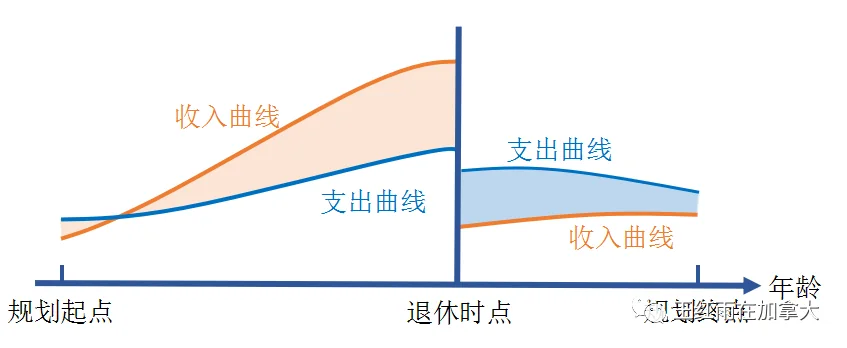
Investment is to convert cash obtained through active income into certain assets. When there is no active income, the passive income generated by the assets is used to support consumption.In the process of converting from active income to passive income, assets play a vital role. The properties of the assets, the safety of the assets, and the ability and certainty of the assets to generate passive cash flow in the future determine the quality of our life after we no longer have active income.
When we were in school, we learned how to earn active income, not passive income. Only after we have gained enough active income do we realize that we need to learn how to turn active income into passive income, and then we have the motivation to learn investing. In the process of increasing active income, we not only have a certain understanding of the social environment in which we live, but also gain a certain advantage in peer competition, otherwise there would be no need to learn investment. Learning to invest is not about increasing active income;Therefore, people with low active income do not need to learn investment for the time being., but should improve their irreplaceability in the social division of labor and focus on increasing active income. We see that many people who work hard to learn to invest but have less and less assets have one thing in common: the money earned by luck is almost spent by hard work. This is because some people’s active income relies on luck and popularity rather than hard work and talent. Once the wind stops, they will have nowhere to go. Investment cannot save such people. Many people in the Chinese community invest in Canada after making money in China, but they do not understand the social environment in Canada and have never obtained active income in Canada. If they want to learn investment and obtain passive income, they need to first learn how to integrate into Canadian society instead of taking investment courses. According to my observation, those who are most thirsty for knowledge about investment and financial management are the least in need of learning this knowledge. Instead, they should work hard to understand the social environment in Canada, and even work hard to increase their active income in Canada.
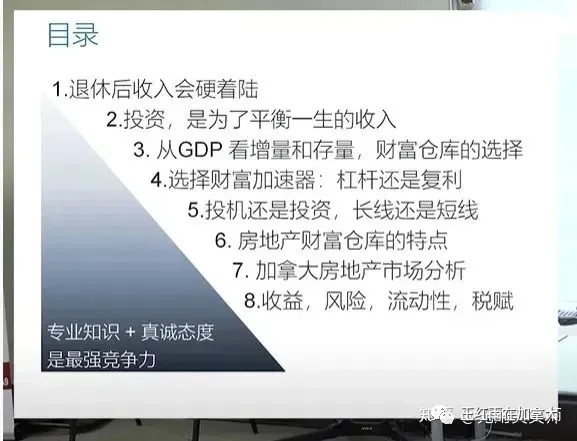
People who need to learn investment knowledge should be people with good active income and relatively wealthy positive cash flow. These people need to store the current excess cash flow and release it after retirement. Therefore, my understanding of investment is: "Investing is about balancing lifetime income". Families with active income and positive cash flow are usually the best in the competition among their peers. In the process of obtaining active income, they have a deeper understanding of society and themselves, but they still lack the skills to balance their lifetime income. These top students in school and society seem to have a fascination with book knowledge. When learning to invest, they also habitually believe that there must be some way to make investment foolproof by answering questions. As a result, many investment and financial management classes, fee-based groups or clubs have emerged in society. Actually,Static stock knowledge is of little help to investment.Because investment requires comprehensive and dynamic knowledge, those with high incomes also need to understand the meaning of the concept of "knowledge" from the beginning. Friedrich Hayek's definition and understanding of "knowledge" are very forward-looking. He believes that knowledge is information and experience that is dispersed in society and cannot be fully mastered by a single person, including personal experience, skills, intuition, observation and partial information. This knowledge is distributed among different people and organizations throughout society. No central agency or individual can fully understand and master this dispersed knowledge; he believes that knowledge is tacit and we cannot accurately Accurately express and transmit all knowledge. The knowledge gained by individuals through experience and practice is often difficult to express in words, and is difficult to record and express in a formal way. He believes that knowledge is process-based and is obtained through the gradual development and learning of individuals in practical actions. It is not derived through abstract reasoning or logic, but is formed through the interaction between individuals and the environment. I always use Hayek's definition of knowledge to examine myself, whether I am qualified to open a forum to pass on knowledge. To this day, I feel ashamed that I am too far away from the true nature of knowledge and dare not be arrogant. So are there no rules to follow in real estate investment or other investments? In the words of Ding Yuanying, "What is an objective law? In the final analysis, it is one sentence: everything changes with time, place and conditions." Regarding real estate investment knowledge, I suggest that you do not learn the so-called knowledge written in books or even PPT without practice, but to get involved in the game and not be afraid of paying tuition in practice. To look for rules and knowledge without practice is to seek fish from a tree.
Regarding learning, many educators have a lot to say. Regarding adult learning, Nobel laureate in economics North’s explanation of the nature of “learning” is very comprehensive and practical. In the book "Understanding the Development Process of Economic Change", Douglas North believes that learning is a process of adaptation and adjustment. Through learning, individuals and organizations can acquire and apply new knowledge and information to adapt to the changing environment; the key to learning is to change people's beliefs and behavior patterns; learning has Process can be realized through practice and experience accumulation, or it can be promoted through social and institutional changes; learning is often realized through communication and cooperation between individuals, not just an intra-individual process; people learn and innovate together through interaction and sharing knowledge, thereby promoting economic change and development. This definition of "learning" is most suitable for adults to learn investment knowledge. There are many people with qualifications as securities analysts, but how many of them can make good investments? Almost none of the world-class investment gurus that everyone can name does not have the qualification certificate of a securities analyst. Therefore, give up studying in books as soon as possible and learn to swim in the water instead of reading swimming textbooks by the pool.
Some people do come to me to learn about real estate investment. Since I have nothing to say, the best clients are people who dare to buy investment properties without knowing anything. In the past five years, the best clients have all been self-taught. The earliest batch have experienced ups and downs in the market since they bought investment properties in 2018. They have all experienced many battles and have a strong family background. The worst learners wait five years in vain for someone to teach them foolproof investing techniques. The best way to learn about real estate is to start getting pre-approved for a loan. If you are not approved, find the reason. The reason for failure is what you should learn; if you are approved, buy it and learn while buying. There is no best time to buy. The best time is when the loan can be approved.In real estate investment, daring to act is the only way to success, so you are your own best teacher.
02 Review 5 years of real estate investment knowledge
I started writing this official account on January 1, 2018, and have recorded the changes in the real estate market in the past five and a half years. Investors who have been buying and selling in the past five years have been unlocking various knowledge on their own. It is recommended that readers without practical experience start reading from the first article, review and re-walk the road of the past five years. If I were to sum up what I have learned from the market in the past five years, the general situation is as follows:
The new B20 was implemented on January 1, 2018, and the ghost of stress testing was born. Since then, the difficulty of lending has reached a new level, that is, no matter what your interest rate is, you must pass a unified high interest rate threshold. The sequelae of the rush to buy houses from the end of 2016 to the beginning of 2017 broke out in 2018. The appraised price when the houses were handed over was lower than the market price. Buyers had to pay a huge down payment to hand over the house, and the balance became a ransom for the down payment. Interest rates will be raised throughout 2018, and interest rates are linked to borrowing capacity through stress testing. The higher the interest rate, the lower the borrowing capacity. This year ended the policy of not looking at income for new immigrants. From now on, new immigrants are also required to provide proof of income. I call 2018 the first year of real estate investment for skilled immigrants. Under all negative conditions, a group of real estate investors with income and courage braved multiple unfavorable factors such as stress tests, high interest rates, and falling housing prices to move forward, move forward, move forward, and advance.real estate investors inThe most important knowledge point to unlock in 2018 is: when the market is pessimistic, you must buy, buy, buy.
In 2019, the negative effects of raising interest rates and shrinking balance sheets have emerged. The U.S. capital market looks like it is about to collapse at any time. The U.S. has stopped raising interest rates, and Canada is on standby, neither cutting nor raising interest rates. In the second half of the year, there are expectations of economic recession. This year, everyone adapted to the "high interest rates" and stress tests at that time. Real estate transactions became increasingly active, housing prices returned to the normal upward trend, and real estate investment confidence was restored.The most important knowledge point for investors to unlock in 2019 is that housing prices have been rising for a long time, which strengthens their determination to invest in real estate for retirement.
After the outbreak of the epidemic in 2020, interest rates fell directly to the bottom. At the same time, the unemployment rate rose to the top of the mountain. The real estate market atmosphere dropped to freezing point. Rent in downtown Toronto plummeted. The vacancy rate was high. Real estate investors experienced unprecedented psychological torture. In the second half of the year, we discovered that most of the unemployed people could not afford to buy a house at all. People who can work from home can still get a loan to buy a house. Due to low interest rates,In 2020, investors have unlocked a new skill: discounting existing properties and cashing out as down payment to buy more properties.In the era of low interest rates, the method of cashing out with additional mortgages has been widely used by investors. Driven by investors, the real estate market is gradually getting back on track, with housing prices rebounding and transaction volume recovering.The most important knowledge point unlocked by real estate investors in 2020 is: high unemployment in a certain period does not affect the long-term trend of housing prices. Young people and groups with inherently weak financial strength are most vulnerable to unemployment. These people do not have the ability to buy a house.
On May 20, 2021, the banking regulatory authorities tried to take measures to curb investment enthusiasm and adopted new stress test rules, that is, setting a lower limit of 5.25% for the stress test interest rate, and no cap on the stress test interest rate. The ignited enthusiasm for buying a house has not been extinguished. By the end of 2021, people found that housing prices had increased by 46% compared with before the outbreak. From the outbreak to the end of 2021, no non-residents were able to enter Canada, and no new immigrants came to land. Housing prices still skyrocketed despite the population freeze, just because interest rates were ultra-low. More and more people have seen clearly how big the potential demand for housing is. In the second half of 2021, there was even a strong FOMO sentiment, and many people became anxious that they would no longer be able to afford it.The most important knowledge unlocked by real estate investors in 2021 includes: house prices will only grow slowly under the pressure of multiple adverse factors. As long as one favorable factor appears, house prices will skyrocket. For example, ultra-low interest rates, a single factor can trigger a skyrocketing in house prices; multiple suites means multiple leverage, with When you have money, you can add leverage. You can discount existing properties and buy more properties without saving a down payment. The continued rise in housing prices has nothing to do with non-residents buying houses. Even if new immigrants cannot log in, the housing exchange requirements of old residents can continue to push up housing prices. Too many people's housing needs have not been met.
In 2022, interest rates will be raised by 400 points, and the entire real estate market is in a state of suffocation. All kinds of pessimism are even worse than in 2018. Transaction volume has dropped by 40%, and house prices have dropped by 18%. After entering October, market transactions entered a state of short squeeze by sellers. Sellers took the initiative to remove properties listed for sale, which stopped the decline in housing prices. The most important skill investors have unlocked this year is that banks, like homeowners, are reluctant to see house prices fall and will do everything possible to maintain borrowers' ability to repay. "Trigger interest rate" is the hottest buzzword this year. People who hope that housing prices will be halved are hoping that banks will force borrowers to increase their monthly payments and force homeowners to sell their properties at half price. During this process, the homeowner discovered that he had not carefully read the loan contract he signed that year. Bank A increased the monthly payment after raising interest rates. Bank B did not increase the monthly payment, but added part of the interest payable to the principal. He could concentrate on dealing with Bank A's increase in monthly payments. After fighting the rumors, all the homeowners have figured out their situation, and the rush to sell their houses has become less and less common. Some people complain that the government and banks promote moral hazard, giving homeowners with heavy debt burdens a chance to breathe and encouraging risk-taking, while cautious people miss the opportunity to get loans to buy houses. This kind of sour grapes complaint further illustrates that people who are not involved in the situation cannot see the loan contract. The monthly payment will not change when the interest rate is raised. In fact, it has been written in the loan contract long ago. It is not a temporary conspiracy to deliberately let the borrowers go, and moral hazard does not exist. Those who are cautious will miss the mark and feel the pain of the fall.The most important knowledge unlocked by real estate investors in 2022 is: No matter what the reason for the bubble, no matter how big the bubble is, the correction in housing prices will be around 18%. Previous historical data on housing price adjustments in Canada also prove this. When housing prices drop by 18%, sellers will quickly remove the properties listed for sale to block the room for decline.Last year, some people said that house prices would drop by 30%. They were hoping that you would sell your house in a hurry.
Ordinary undergraduate education takes 4 years, and medicine takes more than 5 years. If real estate investors are honest with themselves in the past five years, they must have learned a lot, and they should be able to graduate. A real estate investor’s transcript is their personal net worth, no title or degree required. In 5 years, paying off the home loan and acquiring 5 investment houses with mortgage loans are full marks. Any investor who seriously studies real estate investment and gets involved can get full marks. The road to real estate investment in the future will become increasingly difficult and challenging in the social atmosphere of "common prosperity". Real estate investors need to get used to and adapt to this environment. It will take 6 or 7 years to get full marks. The more restricted they are, the more it means that real estate and mortgage loans are scarce resources, and the harder they have to work to obtain them. The protagonist Gekko in the 1987 American movie "Wall Street" said, "My mission is not to create, but to possess." To obtain active income, we need to contribute to others and society, and to obtain passive income, we need to possess assets. People who actively earn high incomes will not automatically have the ability to own assets. They need to learn personally in order to achieve good results in the competition to own assets.
Go back to the previous chapter, reread Hayek's definition of knowledge and North's definition of learning, and see if the real estate investment knowledge and the process of learning real estate investment are consistent with the descriptions of the two masters.Learning how to own assets is the last job in life. The earlier you start, the sooner you finish. Only when the passive income generated by the assets can afford your retirement can you retire from this job. Living is expensive. Of all the creatures on earth, only humans need to spend money to live, and no other animals do. The quality and dignity of life depend on the results achieved in the final investment job.
03 Planning is not synonymous with procrastination
House prices are getting higher and higher, and your children may not be able to afford a house in the future. You need to plan early and buy an off-the-plan apartment first. If you want to downsize after retirement and rent out a large house, you should buy a smaller apartment now. Such a plan can easily fail because the problem of loan difficulty is postponed. Postponing the resolution of a problem often pushes the problem into an unsolvable state. I mentioned at the beginning that many families’ pain points this year are caused by failed plans. The contradiction between Canada's population growth and the increase in new housing cannot be resolved within 20 to 30 years. Therefore, from a policy level, many obstacles will be set up in the distribution of the existing market, and measures such as loan restrictions and purchase restrictions will continue to be increased. Since I started doing mortgage business in 2010, mortgage loan policies have never been relaxed. Every policy change has been in the direction of tightening and restrictions. This year, in addition to limiting the number of mortgage loans for investment properties, stricter debt calculation rules will be introduced, making it impossible for more people who can get loans to buy houses today to get loans.
The best plan is one that takes action today to eliminate future uncertainty, rather than creating more uncertainty for the future. I often encounter this situation. After formulating a plan that can be taken immediately at the request of the client, I was told, oh, it can’t be done now. If you default now, you will have to pay a penalty of 6,000 yuan. Let’s wait until the loan expires in 2 years. Interest rates are now the highest they have been in the past 15 years, and almost 99% of existing loan contracts are in default, with only a three-month interest penalty. If a plan that can eliminate future uncertainty is not even willing to pay the price of 3 months of interest, then leave the uncertainty to the future. God knows what the price will be in the future.
What is an immediate action plan? Let me give you a case analysis. Customer A has 7 properties. Nos. 1 and 2 are the main residences where his family lives and have no rental income; Nos. 3 to 7 are rental properties, 5 investment properties and 5 mortgage loans. After May 2023, regulatory authorities require banks not to provide more investment housing mortgage loans to households with more than 5 investment housing mortgage loans. If the number of investment housing mortgage loans has exceeded 5, banks cannot provide additional mortgage loans to existing investment housing mortgage loans. At this time, the No. 7 real estate loan expires, and Customer A is considering whether to renew the contract or increase the mortgage. According to the current policy, property No. 7 can be remortgaged with a mortgage loan because the number of investment housing mortgage loans does not exceed 5. Because Client A has two owner-occupied houses and two owner-occupied housing loans, so the owner-occupied housing debt is relatively high, and the loan amount for property No. 7 may be relatively low. However, if the purpose of adding property for property No. 7 is to pay off the loan balance of property No. 1 or 2, the debt of property No. 1 or 2 will not be considered. If Customer A chooses to take an additional mortgage on property No. 7, he can pay off the mortgage loan for one of the two owner-occupied houses, and the family's borrowing capacity will be improved. Property No. 6 is also about to expire. If the cash withdrawn from the additional mortgage on Property No. 6 can pay off the mortgage loan of Property No. 5, then Customer A’s mortgage loans for investment houses will become four. Therefore, when purchasing the investment house No. 8, he can still apply for a mortgage loan. If property No. 8 is an off-the-plan property, you can apply for an off-the-plan mortgage loan immediately. The above-mentioned loan plan can speed up the repayment of owner-occupied housing loans and prepare for buying more investment houses. The most important thing is that the plan can be implemented immediately. Customer A can choose to renew the mortgage loan on property No. 7 and completely ignore the above plan. This is the simplest and easiest option. I think most people will choose the easiest option at hand instead of causing trouble for themselves immediately. Planning, for many families, is a reason to put off trouble. A truly useful plan must be troublesome now and easy later.
A plan should be implementable immediately, otherwise it becomes an excuse for inaction. There are still many unfinished properties to be settled in the Greater Toronto Area this year, and the government's second round of mortgage policies continues to tighten, which may fall at any time. Instead of being anxious, it is better to apply for a mortgage loan for unfinished properties immediately. Buyers who have received a repossession notice need to apply for an off-the-plan mortgage loan now to lock in the current mortgage policy. Transfer is the last resort and the second best option.
Conclusion:
People who want to take shortcuts in the process of accumulating assets will pay the most tuition fees when investing. Think about it, is buying off-the-plan property really the easiest investment?
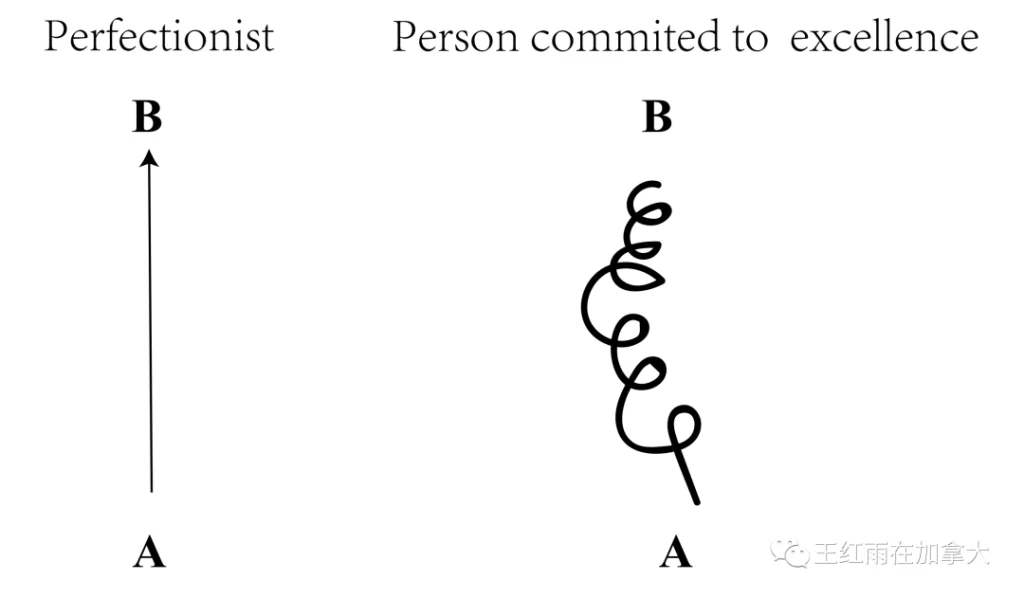
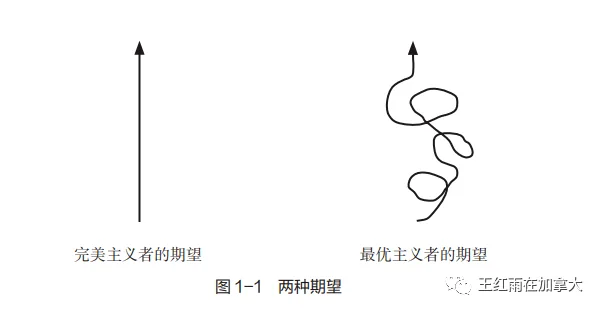
Perfectionists who never dare to practice, never pay tuition, and never make mistakes have the highest opportunity cost and have lost many opportunities in the past five years.
Those who regard investment as their last career in life and have the courage to try it will make the most progress and gains. As long as they have a down payment and can get a loan, the brave man who buys regardless of whether the market is hot or cold has gained a lot in the past five years.
People who make a plan but essentially delay solving the problem are fooling their future selves.
After the epidemic, the world has become worse. Work ethics and market order have been disrupted. The increasingly tense relationship between tenants and landlords shows that the spirit of the contract, the legal environment and the moral level are all slipping towards the bottom line. This is a global phenomenon and there is no escape. After the epidemic, no matter which country you are in, those who do not give up their efforts and face life and investment bravely will feel more tired. Middle-class families are all true heroes who have seen the truth of life and still love life. Even if it is unfair, even if there are many difficulties, we still work hard to arm ourselves with knowledge, always on the road of learning, perseverance to win from our peers, and try our best to possess more assets. If you are also such a middle-class person, please cheer for yourself and forward this article to your friends who want to encourage and encourage each other.