During the epidemic, both landlords and tenants have experienced a test. Many landlords in my circle of friends and clients have had the experience of changing tenants during the epidemic.
It is common for tenants to encounter financial difficulties, but their attitudes towards paying rent are very different: some refuse to pay rent because the court stopped evicting rent arrears during the epidemic; some tenants cannot afford the rent and offer to move out and live with family and friends; some negotiate with the landlord to appropriately lower the rent and pay it back after the epidemic.
Landlords are powerless during the epidemic when they refuse to pay rent; when they change tenants, it is common for the new tenant's rent to be lower than the original rent. Some people lamented that one should be careful when selecting tenants, and never meet someone who refuses to pay rent whenever there is difficulty. I personally think, The financial capabilities of the tenant are related to the property chosen by the landlord , if the landlord chooses a property that can be rented separately and groups the houses to several families with the weakest financial ability, they will definitely encounter big problems during the epidemic. Choosing a tenant means choosing a family that can help the landlord afford the mortgage loan. When buying an investment property, the goal is to sublet it to families with weak financial strength. When encountering a stress test like the epidemic, the disadvantages of this investment idea will be realized immediately.
In many lectures and interviews in May and June, I firmly believed that Toronto’s real estate market will see a stable housing price and a V-shaped reversal in transaction volume. May and June will be the bottom of the market. In fact, anyone who is objective and involved in the situation can make this prediction. The epidemic has made everyone realize that home is the last refuge. When everyone in the family retreats to their homes under the epidemic, only you know best whether the living conditions are good or not. Whether you want to rent a house with a larger space or buy a house, you can quickly make a clear judgment. Since July, buyers have calmed down and are planning to enter the market. The topic of whether to buy a CONDO or a HOUSE as an investment property has been raised again.
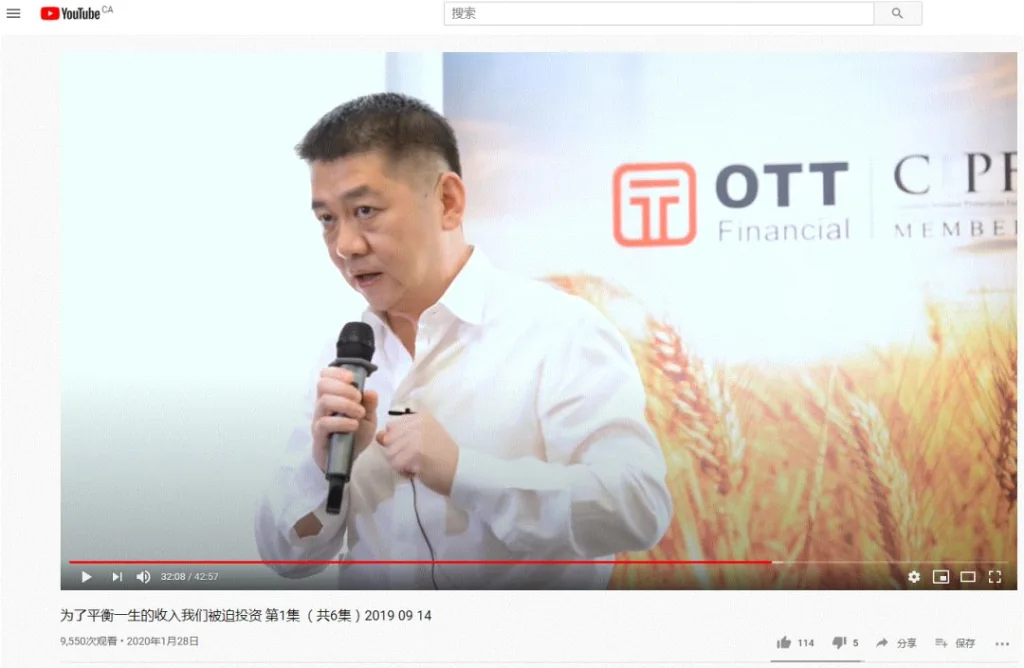
I have 6 episodes of video lectures on YouTube "We are forced to invest in order to balance our lifetime income" I expressed my opinion in: Real estate investment partners are divided into two categories: participants and service providers. Participants include yourself + bank + tenant; service providers include real estate agents, insurance consultants, legal consultants, etc. The relationship between real estate investors and service providers is a community of interests, and service fees need to be settled every time; the relationship between real estate investors and participants is a business community, which requires long-term continuous contact, running-in, and dealings to jointly complete the great investment undertaking.Tenants are participants in real estate investment and the business community of investors. They play the same role as banks in real estate investment. The most important determining factor in what kind of tenants can be selected is what kind of house the investor chooses. The tenants with the worst financial ability live in the so-called "value depression" areas. They have weak financial ability and do not care about social recognition. They will not move out even if they owe rent. Tenants who pursue a decent life cannot live under the same roof with other families. They will take the initiative to move out when they encounter financial difficulties. At most, they will cause the landlord a little trouble to change tenants instead of owing rent.
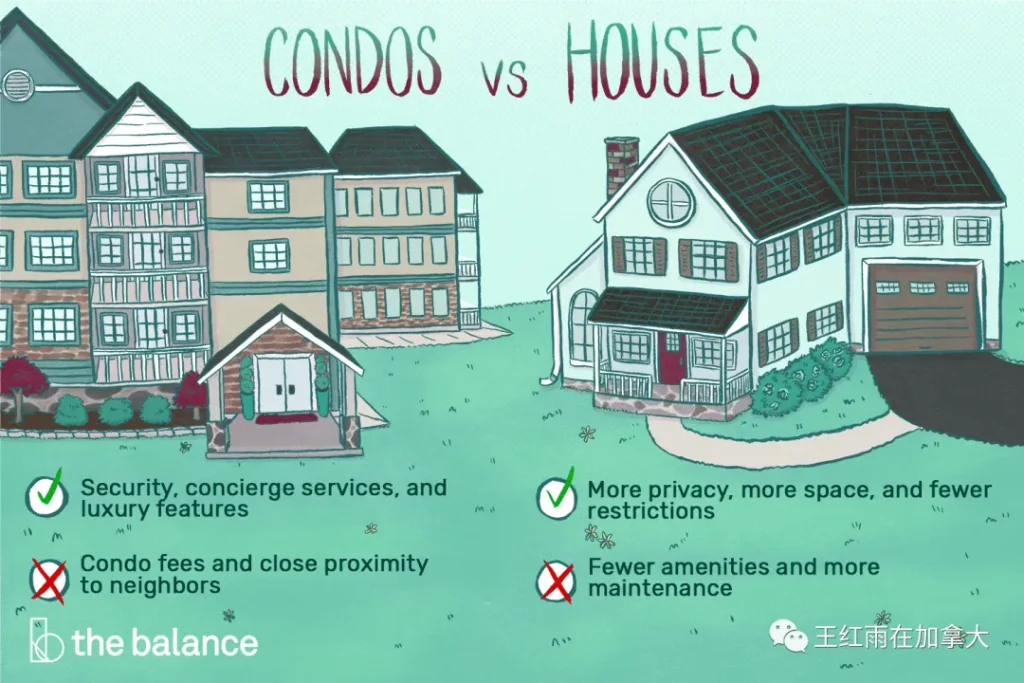
There are many factors to consider when choosing to invest in a CONDO or a HOUSE, but it is best not to consider subletting a HOUSE, because this is a dead end in real estate investment, and you will never get out.
01 CONDO Will the increase in management fees affect the increase in house prices?
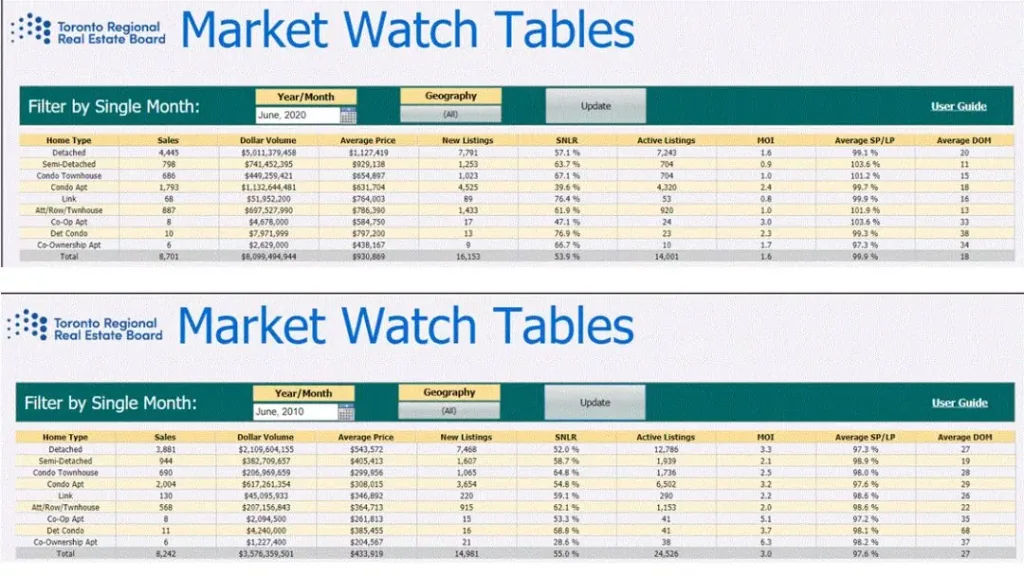
Let's take a look at the latest data from June 2020. The transaction price of a detached house in Toronto is 1.127 million, a townhouse is 786,000, and a condo is 632,000. Ten years ago in June 2010, the transaction price of a detached house in Toronto was 543,000, a townhouse was 365,000, and a condo was 308,000. The growth rates of independent HOUSE, town house TH and CONDO were 107.5%, 115.3% and 105.2% respectively. You can ask a real estate agent to compare the transaction price in any month with the transaction price 10 years ago. The conclusion will be the same: Every 10 years, the growth rate of HOUSE and CONDO is the same. No matter which type of property is invested, housing prices in Toronto double every 10 years. The rise or fall of CONDO management fees does not affect the appreciation potential of CONDO.
From 2010 to 2016, condo prices in Toronto increased by less than 4% each year, far behind other non-CONDO properties. From 2016, condo prices began to increase until 2020, when they made up for the due increase. From 2010 to 2016, many people saw that the increase in CONDO prices was much lower than that of other types of real estate, and they began to wonder: Did the CONDO management fees increase too high, affecting the increase? As we can see, it is wrong to attribute the small increase in CONDO in a certain period to management fees. In the past four years of supplementary increases, no one has complained that management fees have increased rapidly. In fact, the increase in management fees is similar to that of property taxes. Just think of CONDO management fees as property taxes.
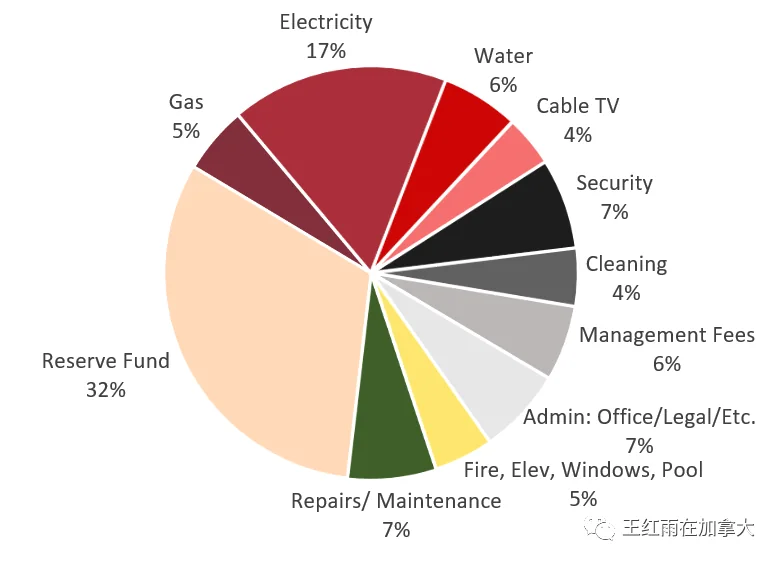
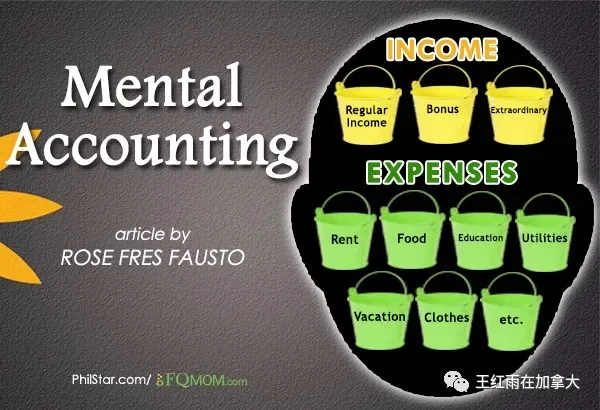
The CONDO management fee includes some living expenses. Because the management fee is paid by the landlord, it means that the landlord helps the tenant pay some living expenses, so the rent in a CONDO is higher than that in a HOUSE with the same living area. HOUSE investors, as landlords, usually only pay land taxes, water, electricity and other expenses, all of which are paid by the tenants, so the rent is lower than that of a CONDO of the same area. In other words, The management fee paid by the CONDO landlord has been compensated from the rent.CONDO investors need to bear management fees and property taxes, but because CONDO occupies a small area, property taxes are very low. Part of the management fee is regarded as property taxes, and part is paid into rent, so CONDO investors can feel more balanced. There is a definition of behavioral economics called "mental accounting", which means that people classify fees and expenses in their minds to facilitate calculation of gains and losses, which results in missing the forest for the trees. The management fee plus property tax is the cost for CONDO investors, and the rent already reflects this cost. However, many people recalculate the management fee separately in their mental accounts. This is a double-counting cost. Management fees and property taxes are actually paid by tenants through rent, and these two expenses can be deducted from rental income when filing taxes, allowing landlords to make a second tax profit.
02 Idiot, getting in the car is the most important thing
People who are serious about real estate investment will not have questions such as "Is the CONDO management fee too high affecting housing prices?" People who ask unwarranted questions are bystanders of real estate investment. Some readers left a message behind my article, "How do you avoid talking about the high interest rates on REFINANCE loans?" What's there to talk about? You will know if the interest rate is high if you go for REFINANCE. If the interest rate is so high that it's not worth it, don't do it. Most REFINANCEs also come with penalties. Interest and penalties are the cost of acquiring new funds. Whether they are high or not depends on whether the return on investment you use the money to make is high enough. Only people who do nothing in action will ask questions that activists can't even imagine. It is the same with any investment. The two groups of people who sit back and talk and those who are involved in the game live in different worlds and cannot communicate effectively. I usually delete people who have too high communication costs from my life. Also, the Reachers never thank anyone for anything they do, and don't have to answer the weird questions they ask.
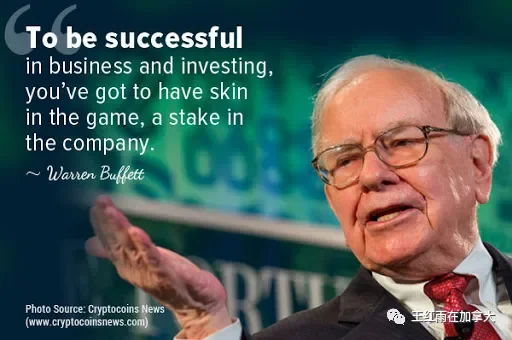
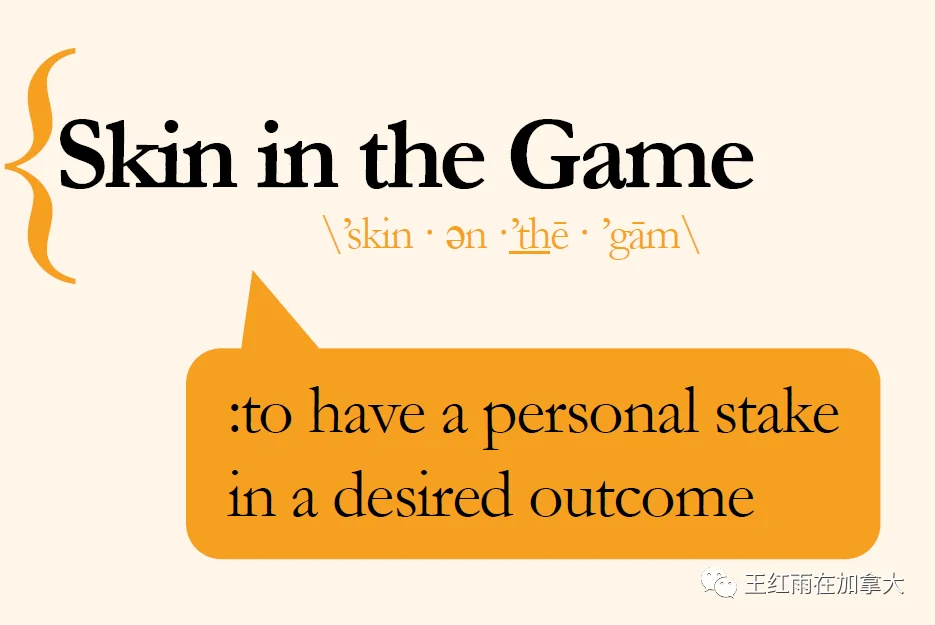
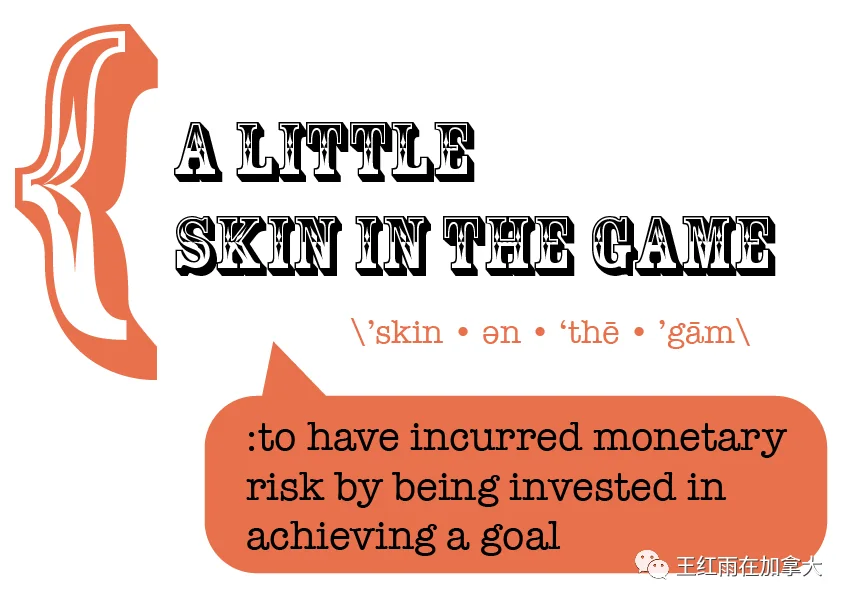
Taleb, the author of "Black Swan", wrote another book whose Chinese title is "Asymmetric Risk" and its English title is Skin in The Game , based on the content of this book, I think the Chinese title should be changed to "Entering the Game". When you use your own skin to measure the temperature in a game, you will feel the pain or the relief. People who are outside the game and do not bear any profits and losses cannot gain real knowledge and experience. Looking back on my investment history in Toronto for more than 10 years, there are countless losses and regrets, but the tuition fees are so worth it, and it allows my skin to fully appreciate the warmth and joy of investing in this game. The cost of trial and error is investment loss, and the boundaries of capabilities are expanded through trial and error. However, trial and error requires courage and action, and you need to get involved.There is a passage on the Internet that should be written by someone who has been involved in the game, "Don't envy those who are better than you. Others are just doing things you dare not do every minute, suffering hardships you don't want to endure, saying things you are embarrassed to say, and meeting people you don't have the courage to meet. Stick to what you gave up." I would like to share this summary of the practitioner's words with everyone: Don't be a "smart person" who can only be smart and talkative; destroy your "smart person" persona and become a "stupid" who dares to act, try and make mistakes, and believe that practice will lead to true knowledge.
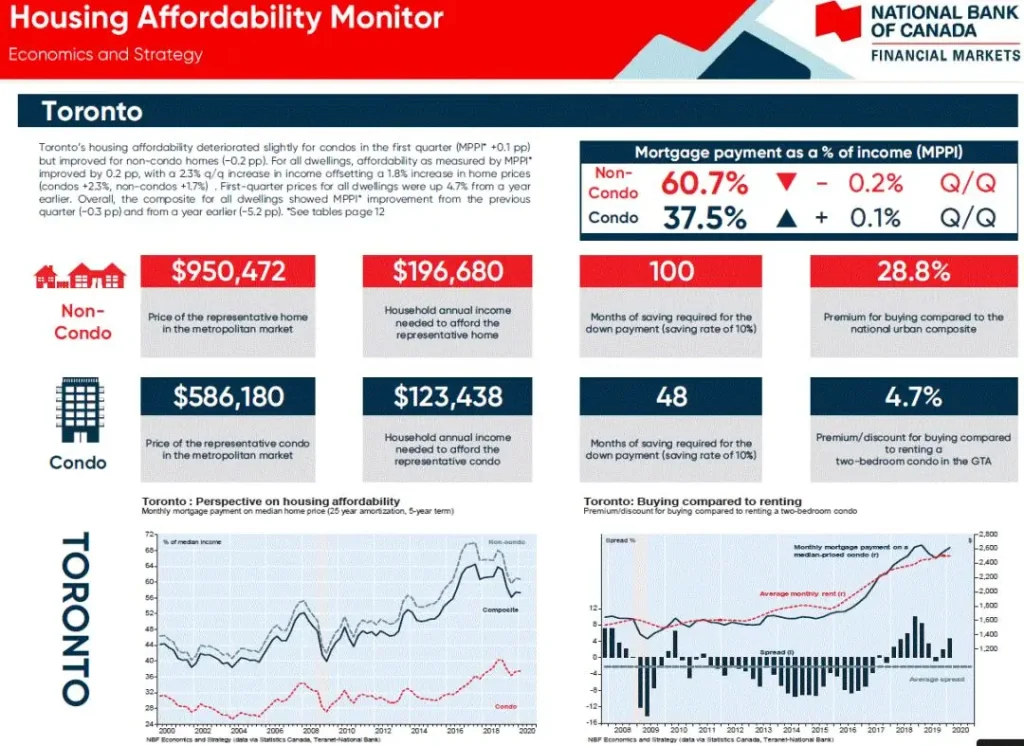
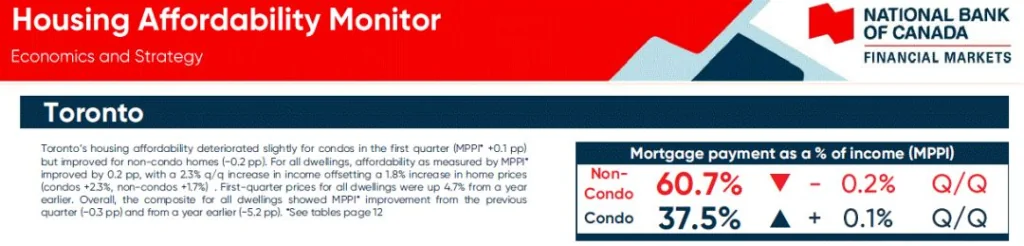
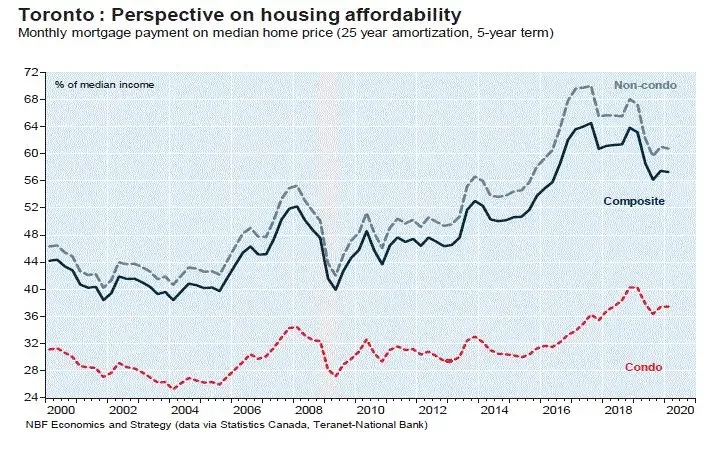
According to the National Bank's affordability calculation method, the debt service ratio of Toronto CONDO is 37%, and the debt service ratio of non-CONDO properties in Toronto is 61%. "GDSR" refers to the ratio of monthly real estate-related debt to income. The higher the debt service ratio, the heavier the debt on the house. When banks evaluate whether a borrower can obtain a loan, the GDSR is set to 39%. If it is lower than 39%, it will be approved, and if it is higher than 39%, it will be rejected. Judging from the National Bank's solvency report, the vast majority of applicants for CONDOs will be approved for loans.
The most important thing about real estate investing is taking the first step. Only by joining the game head-on can you avoid fighting against windmills and being intimidated by imaginary problems. CONDO is an entry-level property for real estate investment. Readers who want to start real estate investment are best to start by investing in CONDO.
03 When people gather wealth, the noble survive
Real estate is like red wine, not only expensive, but also depends on the country of origin - "Gold Medal Investor".
In their efforts to pursue real estate investment returns, many people forget that the biggest feature of real estate is location, location, location. The reason why location is important is because The value-added potential of a house comes from its scarcity. Why is there such a property form as CONDO? Just because a certain location is scarce and too many people want to live there, The land is limited but the sky is unlimited Only properties like CONDO exist. CONDOs built in sparsely populated areas have no investment value. Taking Toronto as an example, the investment value of CONDOs north of STEELS is greatly reduced. Please remember one thing: When investing in a CONDO, look for places with many people and avoid places that are not crowded.
Never sacrifice location for price. For the same price, choose the most crowded place to invest. Some people compare CONDO and HOUSE investments. For 600,000 dollars, you can only buy a CONDO in the city center, but you can buy a HOUSE in the outer suburbs. If you choose to buy a HOUSE, you sacrifice location because of the price. Real estate is like red wine. It is of high quality. You cannot buy cheap goods. Trying to be cheap is self-deception.
The Greater Toronto Area is about the same size as Shanghai. The Greater Toronto Area has a population of 6.2 million and Shanghai has a population of 24.3 million people. For the same area, the population of Toronto is quite scattered. If the population didn't desperately concentrate in one place, housing prices wouldn't be able to go up. Just like piles of sand dunes, the more sand there is in the same area, the higher the dunes will be; in the same area, the more people there are, the more expensive the housing prices will be. Most CONDOs are built in places with the highest population density, which naturally makes them a good choice for investors. The price per square foot of condos in Toronto is a measure of population density. Many people think that the current condo prices are too high because prices will be higher in the future. The current population density in Toronto is too low and there is still great potential for concentration.
04 CONDO Or HOUSE?
Is it better to invest in CONDO or HOUSE? I've been asked this question a thousand times. In real life, there are not many families who can afford both CONDO and HOUSE debts, and are in a dilemma of choice. Even if your borrowing capacity is strong, I personally recommend putting your eggs in two baskets. For example, the down payment is enough to buy a HOUSE as an investment property, or it can be used as the down payment for two condos. Then buying two CONDOs for rent can better spread the risk of vacancy. After all, the risk of two houses being vacant at the same time is less than half the risk of one house being vacant.

For multi-home investors, the time and energy spent managing a property can become a bottleneck. I have seen families who own 10 condos while still working full-time, but I have yet to see anyone who owns 10 investment houses and can still work full-time. It is very important to maintain an income from a full-time job. Once you become a full-time landlord, it is almost impossible to add a mortgage on a property. If the property cannot be remortgaged, it is equivalent to cutting off the source of capital, and no more capital can be withdrawn from the house for other investments. Li Xiaolai mentioned a very critical definition of "off-market earning power" in several books he wrote. Investing in stocks requires earning power outside the stock market, and investing in real estate requires earning money outside real estate. For example, during the epidemic, when tenants encountered repayment difficulties, landlords could not take drastic measures to evict them. When the landlord had rental income, the investment housing debt was a good debt. Once there was no rental income, the investment mortgage immediately turned into a bad debt, and the owner needed to use his after-tax income to make up for the rental losses. At this time, the ability to make money off-site became a life-saving straw. If the landlord voluntarily gives up his ability to make money off-site early and relies entirely on investment income to support himself, once the investment income is interrupted and he has no ability to make money off-site, he may be forced to sell the house. This forms the "fat tail effect" that Taleb often mentions, that is, something extremely unlikely does happen, thus destroying the entire investment portfolio, and the money previously earned is lost all at once. If you step into the game, you will find that the management time and energy spent by landlords on holding CONDO and HOUSE are completely different. Investing in HOUSE requires too much time and energy, which often causes investors to give up their goal of holding multiple suites. The way to hold multiple properties at the same time and still maintain the ability to make money off-site is to choose properties that require less management energy and time, such as CONDO.

Why is it said that investing in a HOUSE and then subletting it is a dead end? First of all, 99% of the communities in the Greater Toronto Area are ONE FAMILY ZONING communities, that is, one-family communities. Subletting to multiple families does not meet the zoning requirements of zoning. Only a small area in the old city of downtown Toronto has legal subleasable HOUSE. Most properties that do not meet zoning requirements do not meet fire protection requirements. Some landlords have applied for permission from the fire department. In fact, the fire hazard is still much greater than renting to a family. Truthfully disclose the fact of subletting to insurance companies, and many insurance companies refuse to insure. In this way, the fat-tail risk becomes a black swan disaster in which everything is burned without compensation. Find an insurance company that covers higher risks, and the cost of investment increases. Secondly, commercial banks refuse to add mortgages to properties that are subleased and do not meet the zoning requirements. Investors cut off the capital circulation loop. Even if they maintain their ability to make money off-site, they cannot circulate capital if the houses do not meet bank requirements. Once again, banks and tenants are participants in real estate investment. Whether the real estate investment business can proceed smoothly without taking into account the situation and requirements of the other two participants will eventually fail. If you are too willful and only care about your own interests, the final result will not be good. After buying a house, they tried every means to sub-let it. Some people saw that the cash flow was good and quit their jobs. This completely cut off the capital recycling channels and lost the ability to make money off-site. To continue investing, they can only find investment partners. In English-speaking real estate investment clubs, there are a large number of such investors who have reached a dead end and rely on others to help them continue investing. This type of joint venture has no market in the Chinese community.

05 CONDO and HOUSE's portfolio
The epidemic has had a great impact on the CONDO rental market, especially in buildings where international students are concentrated. Vacancies are common and rents continue to fall. Whether the rental market can reverse depends entirely on the progress of epidemic control and when the Canadian government lifts non-resident entry restrictions. Currently, non-residents are unable to enter Canada before July 31, so the Toronto CONDO market will continue to endure for a painful period of time.
The endogenous value of a house depends on the discounted rent. A property with a rent of 2,500 dollars, discounted in 25 years, is worth 2,500 dollars x 300 dollars per month = 750,000. If the rent drops to 2,200, the intrinsic value will drop to 2,200 dollars x 300 dollars per month = 660,000. If CONDO rents slump, housing prices will be greatly affected; if the rental market experiences a V-shaped reversal after the epidemic, housing prices will not be affected, but those who rented houses during the epidemic will benefit.

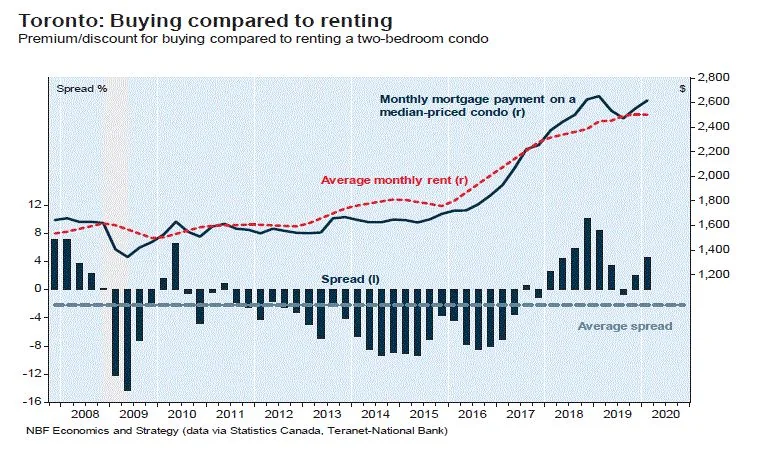
From 2010 to 2016, CONDO rents were higher than holding costs, and housing prices were severely undervalued. Therefore, investors who bought CONDOs during this period are now smiling happily, but there are also landlords who could not bear the loneliness and sold their houses in these 6 years. From 2016 to 2020, holding costs exceeded rents. Young people save money by renting. Therefore, the number of renters continues to increase, which supports CONDO investors. It also makes new CONDO investors feel that holding costs are high and difficult.
The price increase of CONDO in the past four years has strongly supported the rebound of HOUSE in the next few years. If you buy a CONDO for 400,000 and sell it for 600,000, it is very satisfying to use 200,000 as a down payment to exchange for a HOUSE. 2020 will be a watershed year. The vacancy rate in the CONDO rental market will increase, price growth will fall, rents will be lower than holding costs, and more people will rent rather than buy. People who have been unemployed for a long time due to the epidemic will postpone their first home purchase, resulting in a seller's market situation with reduced transaction volume.
Investors have two choices before them: 1. Continue to buy while the price of CONDO is stable; 2. The HOUSE market is about to pick up, speculate on hot stocks, and buy HOUSE. My personal suggestion is: 1. We must adhere to the principle of location priority; 2. Buy early and buy what you can buy; 3. Invest in properties that are easy to manage first, and then increase the difficulty after accumulating experience.
If the goal is 10 investment properties, it is recommended to buy 5 condos first and learn while practicing. Speaking of learning, I heard that there are classes where you can learn real estate investment in the classroom. This is like learning to swim on land, and it will reveal its original shape when thrown into the water. Even if you want to pay tuition, you have to leave it to the market, not the school. For long-term investment, market changes are not important. Some people look at the K-line of the real estate market to find opportunities to buy a house. I think it is better to go to the temple and burn incense. Even if you can buy at a low price, the margin of safety is only a little larger than that of your peers, but it is impossible to have an advantage over those who bought five years earlier.
Conclusion: Stock investment is a stock picking game. Real estate investment is not a game of choosing a house, but a game of borrowing money to invest. The road to money for saving money and investing is dark. The risk-free rate of return has dropped below 1%. Adding in a risk premium of 4%, the return on saving money and investing is around 5%. The comprehensive rate of return on real estate investment is around 15%. When the proportion of borrowings is larger and the proportion of self-owned funds is smaller, the rate of return increases with the leverage ratio. The most important thing is that the mortgage interest rate is close to the inflation rate, so the real interest rate is close to 0. Borrowing money for investment has become an investment skill that contemporary people must master in a low interest rate environment. A house is just a vehicle for borrowing money. In the "Rich Dad Poor Dad" series, the author Robert Kiyosaki never introduced how to choose real estate because The house is not important, the loan is important, as long as you can select a good tenant and meet the bank's basic requirements for collateral.The foundation of borrowing money for investment is to obtain a low-interest loan, and the best vehicle for such a loan is a house. Rent not only helps repay the interest, but also the principal. Real estate investors, it is not enough to just use the house as a tool to collect rent. They should also respect and protect the bank's collateral, and do not illegally renovate and sublet it, which will damage the quality of the collateral. Otherwise, the function of the house for refinancing will be damaged. When will real estate investors regard houses only as collateral, and when will they no longer have to worry about whether to invest in a CONDO or a HOUSE. Some people are confused about whether to invest in CONDO or HOUSE. They have been struggling for 10 years. In fact, they just don’t dare to get involved. There is no other way.