Historical article note: This article was originally published on 2019-03-07. Rates, policies, home prices, statistics, product names and qualification standards reflect the environment at that time and may have changed. This archive is for historical record and general education only. It is not mortgage approval, investment, legal or tax advice.
Real estate experiences fluctuations every ten years; in the long term, look at population, in the medium term, look at land, and in the short term, look at finance. This is the real estate cycle rule we summarized in our previous article. The real estate cycle shortening from 18 years to 10 years is a recent phenomenon in the past few decades, and the reason for the shortened cycle is that the government's restless hand has been constantly intervening. No matter what the government thinks, the market has its inherent rules, and the market is the sum of human behavior. The price of a house is agreed upon between the buyer and the seller, not set by the government. Including Toronto, the housing prices in all market economy countries worldwide are the final result of the government's one-sided interventions combined with market economics. This involves politics and economics, but it is not political economy. Real estate investors must clearly understand the following matters; otherwise, their minds will become confused.
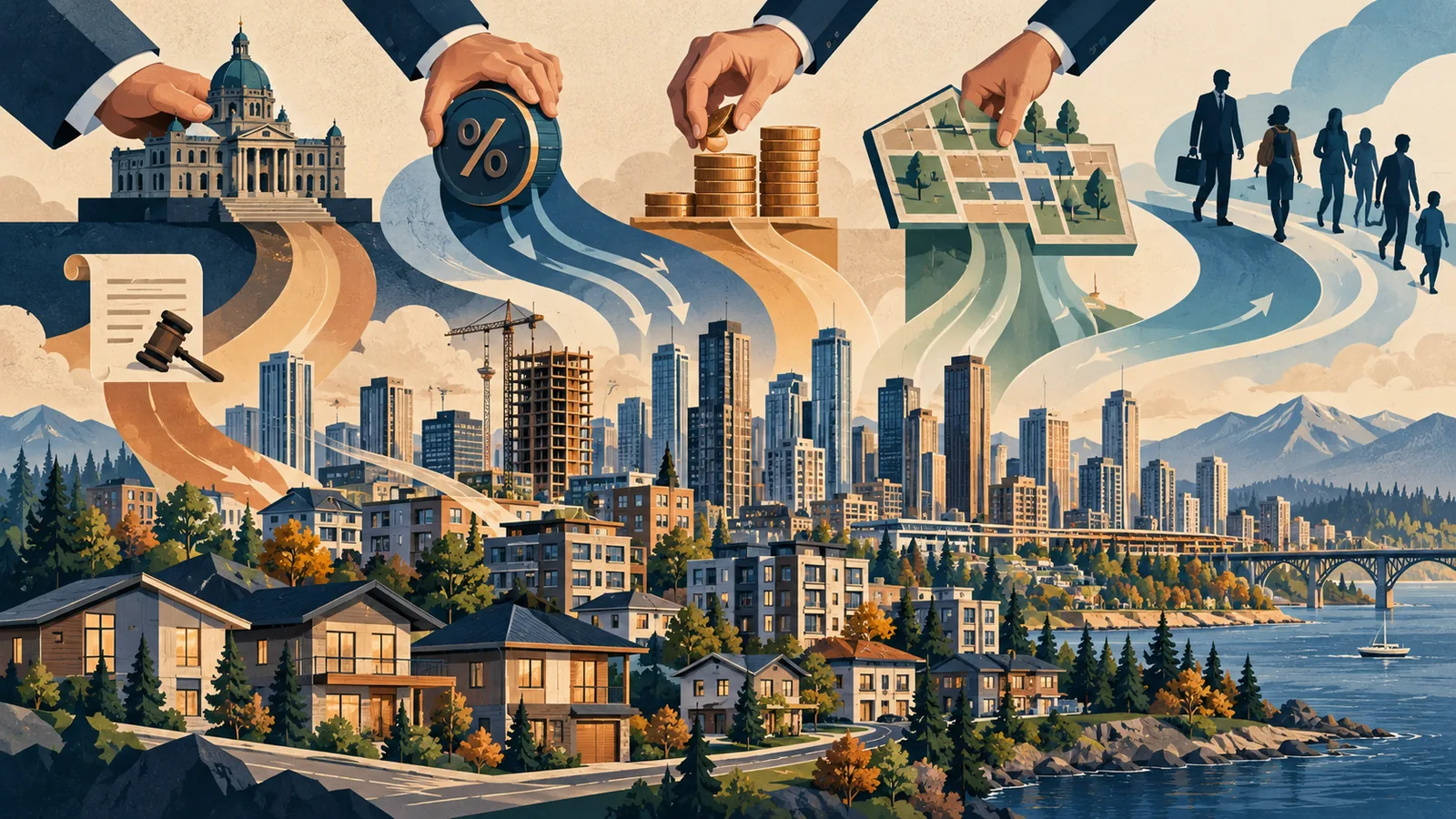
First, let's talk about the impact of politics on housing prices, and how real estate investors should adapt to political trends and profit from it. The 20 years China has experienced since the 1998 housing reform have condensed the role governments have played in the global real estate market over a thousand years. China's first real estate macro-control aimed at "stabilizing housing prices" occurred in 2005, with purchase restrictions imposed by administrative orders; By 2006, efforts began to cut back on the roots, reduce land supply, refuse loans to developers, refuse to approve real estate companies to go public, and vigorously build affordable housing. You can find out for yourself who was the great savior of the people at that time. These measures made people without homes in cities cheer and spread the word: the central government has finally stepped in, and the poor can afford to buy homes now. Similar crackdowns came round after round, roughly 7 to 8 rounds. The market not only refused to give face, but also slapped the government in the face: suppressed demand faced scarce supply, igniting housing prices like dry fire. Coupled with developers' financing costs multiplied, housing prices only made the fire worse. As for affordable housing, it was even more interesting. The central government didn't allocate 10 million affordable housing units, but insisted local governments build them. Local governments required builders to build three affordable units for every seven commercial housing units and gave these affordable housing to the government for free. As a result, the price of those seven units included the cost of three free units. Fourteen years have passed, and even a fool can see that none of these policies have lowered housing prices. Otherwise, how could housing prices in Beijing and Shanghai have risen 14 times? Political show is leaders showing affection for the people and showing off their muscles, striking fear into reactionaries. As for the economic consequences, haha. For real estate investors, when policies change, they must judge whether prices will rise or fall, and decide whether to buy or sell. After these macroeconomic policies were introduced, those with basic economic knowledge saw signals that housing prices were about to soar, overcoming all difficulties, divorcing when necessary, and using every means necessary to buy a house. Those without economic knowledge waited for prices to fall, learned about real estate through news broadcasts, posted on BBS to harshly criticize developers for their dishonesty, and said speculators died early and were reborn early... For investors, it's important to see clearly: don't care who is in power, whether elected or centralized. When the people's savior makes a foolish move, they are creating market loopholes, pleasing ignorant voters, numbing vulnerable groups, and ultimately creating opportunities for clear-eyed investors. Look at Ontario's Fair Housing Plan in April 2017. When the policy was announced, keyboard warriors on the BBS were euphoric, proudly saying the proletariat was in charge. Two years later, Toronto's lowest-end apartment property price rose another 10%+, and the proletariat remained nothing. What about the Liberal Party, which insisted on suppressing housing prices? They lost even the cover in the 2018 election.
Even in a semi-market economy, one must follow market rules, and the market is the sum of human behavior. Once policies to stabilize the real estate market are introduced, after going through the market—that is, human behavior—the consequences should be predictable. Therefore, the purpose of studying economics has always been singular: not to study how policies fulfill intentions, but to study how policies fail to fulfill intentions. The so-called economic mindset refers to the "second-order economic thinking model," that is, evaluating the consequences of consequences. For example, everyone can immediately understand: the government announces an increase in the minimum wage for workers, from 12 yuan per hour to 15 yuan per hour. The poor who have the right to vote rejoice; however, applying second-order economic thinking to consider the consequences of consequences shows this is a policy that deceives voters. The increase in wages from 12 yuan to 15 yuan has consequences of consequences: employers will reduce employees, causing unemployment to rise, some people who are only capable of making 12 yuan per hour will no longer find work, social security immediately deteriorates, and the government raises the first step of the occupational ladder, causing low-skilled, low-educated individuals to abandon the idea of climbing the ladder and dedicate themselves entirely to a life of looting, smashing, and stealing. The government's restriction on rent increases is another clear example: the more rents are restricted, the more they rise, and the faster they rise, deepening conflicts between landlords and tenants and resulting in continuous legal disputes. Mankiw, in his economics textbook, intentionally cites two examples to show how government policies fail to achieve intended effects: one is raising the minimum wage, the other is rent control, and the former Ontario Liberal government precisely made these two classic mistakes that can be found in textbooks. Is this really a coincidence? Absolutely not. Politicians perform for voters who don’t understand economics while pretending not to see the opposition from those who do understand. All political decisions contrary to economic principles are tricks to deceive uninformed people under the guise of following public opinion. Therefore, what real estate investors in Toronto most need to do is to continuously learn and remember all the basic principles of economics, to avoid being misled by political gimmicks.
The economic knowledge listed below is crucial for real estate investors in Toronto. Please keep it in mind:
Does excessive debt affect economic development? NO. The quality of debt in Canada is very high. The average mortgage debt is 210,000 dollars, an absolutely low amount; the mortgage delinquency rate is 2.4 per thousand, one-tenth of that in the United States. Canada’s subprime loans are all given to new immigrants, with down payments over 35%.
Are Toronto's housing prices too high/overvalue? It depends on how you calculate it. Toronto's housing prices are about 11 times the average annual income; New York's is 13 times; Tokyo's is 21 times; London's is 28 times; Shanghai's is 33 times; Shenzhen's is 44 times. Compared to other first-tier international cities, Toronto's housing prices are not considered too high; but compared to other Canadian cities, housing prices are excessively high, and they will remain high forever. In countries with urbanization rates over 70%, population movement is left in only one direction: the super-metropolitan clusters of big cities. Toronto and Shanghai are roughly the same size; Shanghai's population of 30 million is six times that of Toronto. With low population density, housing prices cannot be excessively high.
Is there a bubble in Toronto's real estate? The algorithm for a bubble is that the price is higher than the rent—the bigger the number, the bigger the bubble. Toronto's detached houses have bubbles, but apartment buildings don't. Apartment rents and prices rise simultaneously; the moon leaves, I leave too. It's the hardest bubble of all, disregarding all regulation and suppression. Some people feel their fate is tougher, even tougher than apartment bubbles, so they just keep waiting for the bubble to burst.
Does Canada have subprime loans? No. Canada's loans that don't consider local income basically only support new immigrants; subprime situations like in the US don't happen in Canada. Banks are economic entities and need to consider their own safety and profits, so they won't act recklessly. Both the US and China have had government interference in bank mortgage business, but Canada has not. China's macro-control policy includes a 30% discount on first-home owner-occupied loans, a 40% premium on second-home loans. As a result, when commercial banks face first-time loan applicants with no credit history and low income, they should charge a high-risk premium but are instead asked to offer discounts. Second-home buyers are all the most financially and creditworthily but are asked to raise rates by 40%. Commercial banks are confused, making things difficult for first-time borrowers and finding various excuses not to lend loans. In the end, poor people still can't afford to buy homes. The U.S. government is even more foolish. It requires banks not to discriminate against Mexican guys picking strawberries, and its policies should favor professional dancers in basement bars. Just look at the movie "The Big Short"—banks take out a loan and immediately package it as bonds to sell. Even if the loan floods the market, it has nothing to do with the banks. After all, those who buy these toxic bonds know nothing. Banks must maintain reasonable discrimination and cannot lend money to low-income borrowers. Eliminating all discrimination would throw the world into chaos.