In January 2023, at this time last year, the central bank announced the suspension of interest rate increases for the first time. Real estate transaction volume and transaction prices in the Greater Toronto Area immediately reversed, and this continued until the central bank resumed raising interest rates again in early June last year. The speed and magnitude of the reversal were surprising. This year, this reversal has already begun locally in most areas. When will it spread to the area where you are looking at houses, there is still a question mark. Friends who plan to invest in real estate this year need to plan ahead and make preparations in advance.
In 2021, the GTA second-hand housing transaction volume in the Greater Toronto Area will be 121,000 units, and in 2023, the transaction volume will be 65,000 units. Last year’s trading volume was half that of 2021 and the lowest volume since 2001. Such low volumes despite a growing population suggest that demand has been delayed. 2024 will be the year when demand begins to be released.
Real estate investors have two advantageous strategies in 2024. One is to marry the house and date the income, Marry The House, Date The Income; the other is to marry the house and date the interest rate, Marry The House, Date The Rate. Specifically, buy the house first, and then refinance the mortgage after your income increases; buy the house first, and then renew the lease after the interest rate drops.
There are two down payment solutions for home buyers in 2024. 1. Release the power of GICs; 2. Use your brain on existing investment properties, either increase the existing HELOC credit limit, or increase the mortgage or redo the loan.
The time window for self-employed people to prepare for real estate investment in 2024 is to ask a loan expert to pre-review existing debts and income in 2022 before filing personal income tax to decide how to declare income tax in 2023.
The psychological preparation for real estate investment needs to be completed within one month, and actions should be taken in the remaining 11 months of the year. In addition to practical suggestions, this article also comes with psychological guidance on real estate investment.
01 Where are the opportunities?
In the past two years, in 2023 and 2022, the transaction volume of second-hand housing in GTA was 65,000 and 75,000 respectively, while the transaction volume in 2013 and 2012 ten years ago was 87,000 and 85,000 respectively. The spring of real estate transactions has been squeezed tightly in the past two years, accumulating sufficient energy for the market rebound.Real estate investment opportunities are eagerly awaited by those who have delayed buying a house.
Before the epidemic, Canada's average number of new immigrants per year was 250,000 to 300,000. After the epidemic, it doubled. The most exaggerated number was in 2023, when new immigrants and non-residents increased by 1.25 million in total. See Figure 1. Before and after the epidemic, the number of new houses built has remained almost unchanged, at around 220,000 to 250,000 per year. Currently, there is a serious mismatch between new residents and new homes. See Figure 2. Some people say that the skyrocketing housing prices in Canada over the past 20 years will be gone forever. However, there has not been such a serious housing crisis in the past 20 years. Now housing prices are no longer soaring, but rents are. When renting is not economically worthwhile, housing prices will continue to rise. The Bank of Canada’s most recent population report shows, as shown in Figure 3, that the proportion of new immigrants who rent is as high as 70%, while the average rental population in Canada is only 35%. The main victims of the housing crisis are new residents. New immigrants who strive for self-improvement will purchase their own homes within 10 years after landing. The Central Bank's report shows that the home ownership rate for new immigrants in the 10th year after landing is 65%, which is the same as the home ownership rate in Canada as a whole. See Figure 4. Based on the above reasons, the real estate vacancy rate across Canada in 2023 reached the lowest point in the past 43 years, 4%, and rents in various cities are rushing to rise, as shown in Figure 5.The prospects of real estate investment amid demographic dividend and housing crisis.
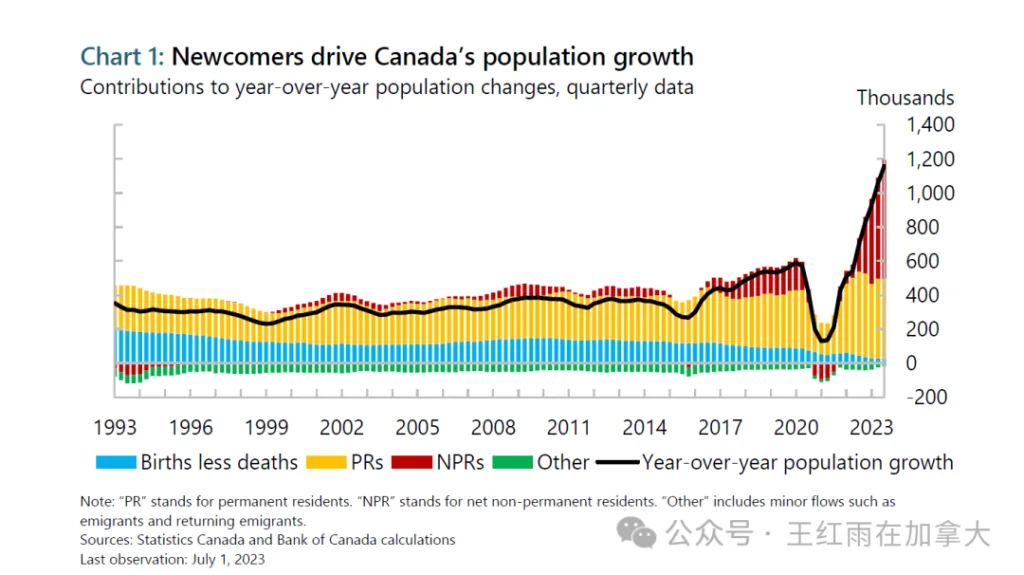
Figure 1
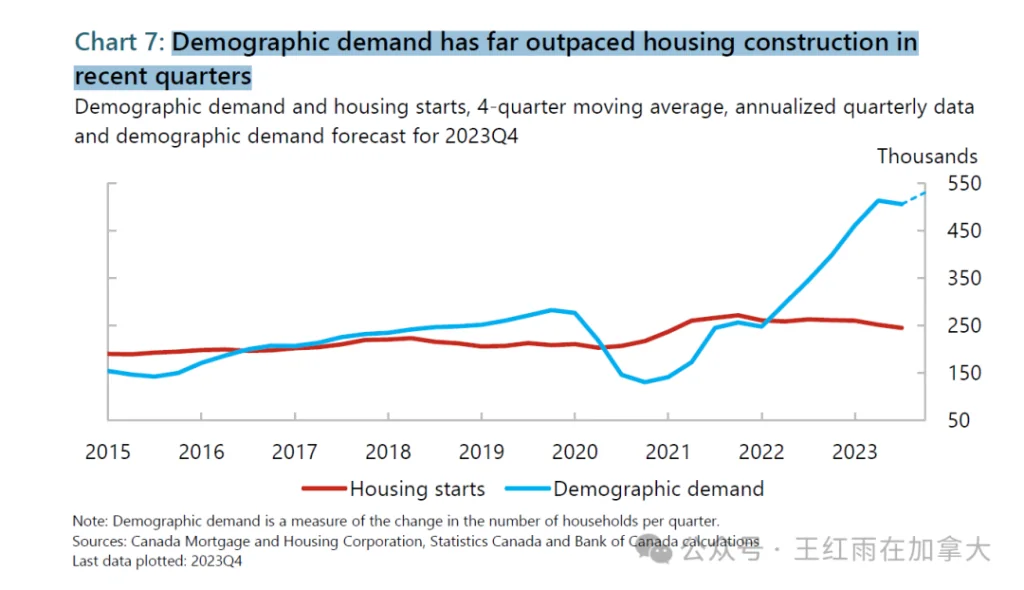
Figure 2
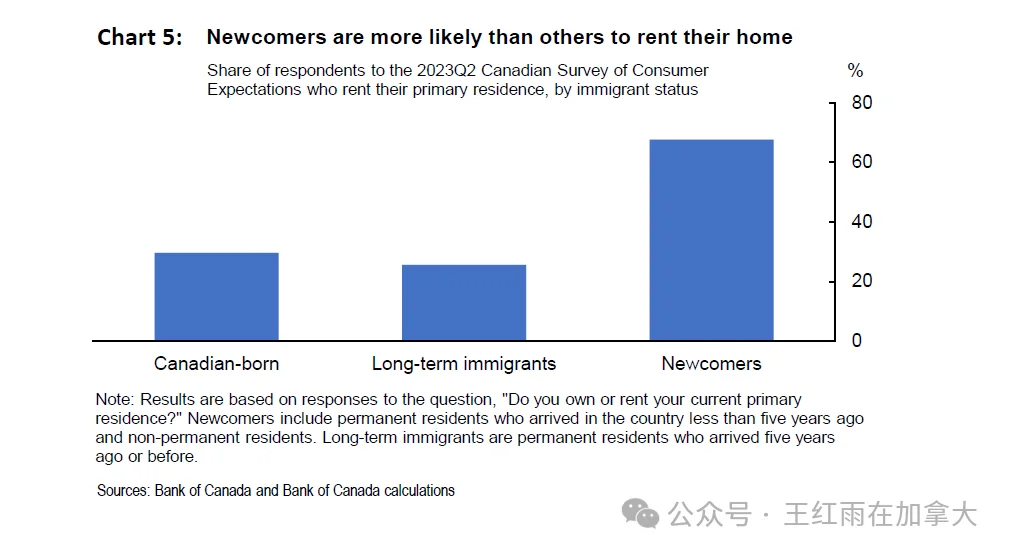
Figure 3
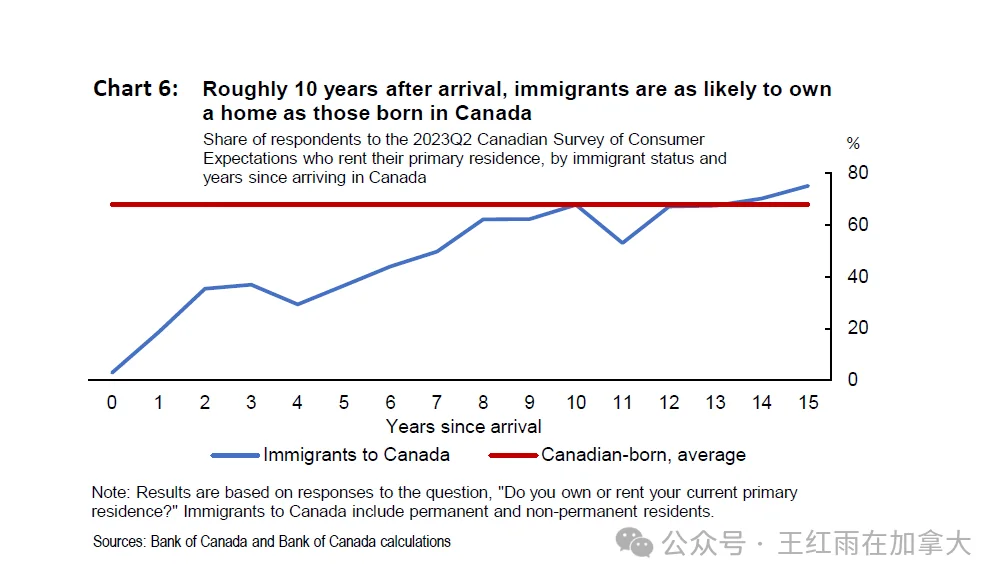
Figure 4
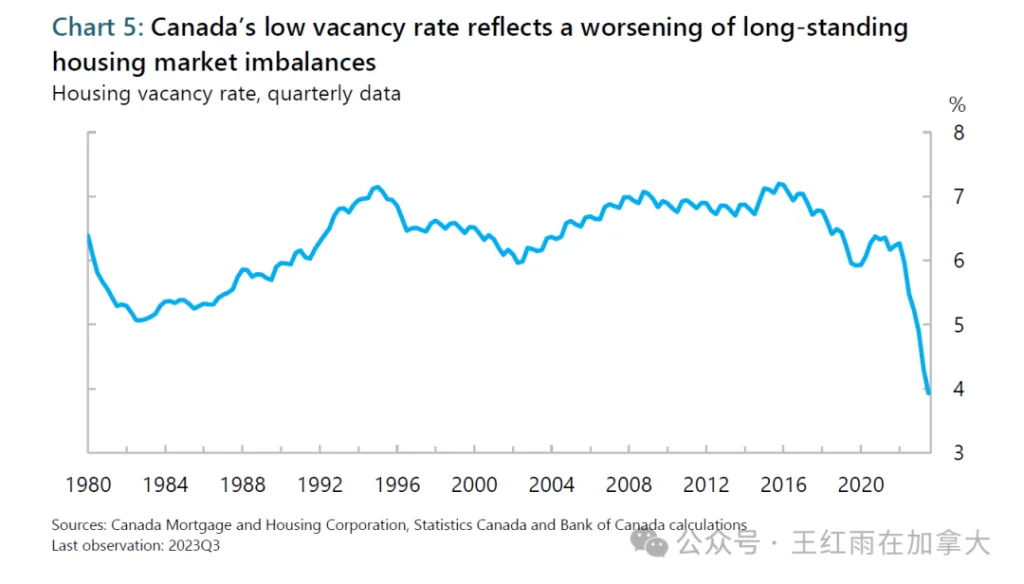
Figure 5
The source of Canada’s demographic dividend is the baby boom. As the baby boomers enter retirement age, 300,000 people leave the labor market every year. This mature labor force needs 500,000 new immigrants to replenish it. This situation will continue for 10 years. The biggest asset of the baby boomers who have exited the labor market is their home. Whether the elderly are willing to sell their large houses determines the supply of high-quality independent houses. CMHC published a report last November that provided data on seniors selling their homes. Retired people aged 65 usually do not sell their big houses. Only 21% of the people aged 75 to 79 sell their properties; 36.6% of the people aged 80 to 84 sell their properties; and only 55.3% of the people aged 85 to 89 sell their properties. See Figure 6. During the 25 years after retirement, the vast majority of Canadian seniors live in the property where they retired. As a result, single-family homes with large living areas for baby boomers are being brought to the market very slowly, and competition among buyers in a market with limited inventory will be fierce. The supply of detached houses in big cities is insufficient and things are rare and expensive. The young generation who want to buy a house can only choose small and medium-sized properties with a relatively large supply.Property investment opportunities in small and medium-sized properties in high demand.
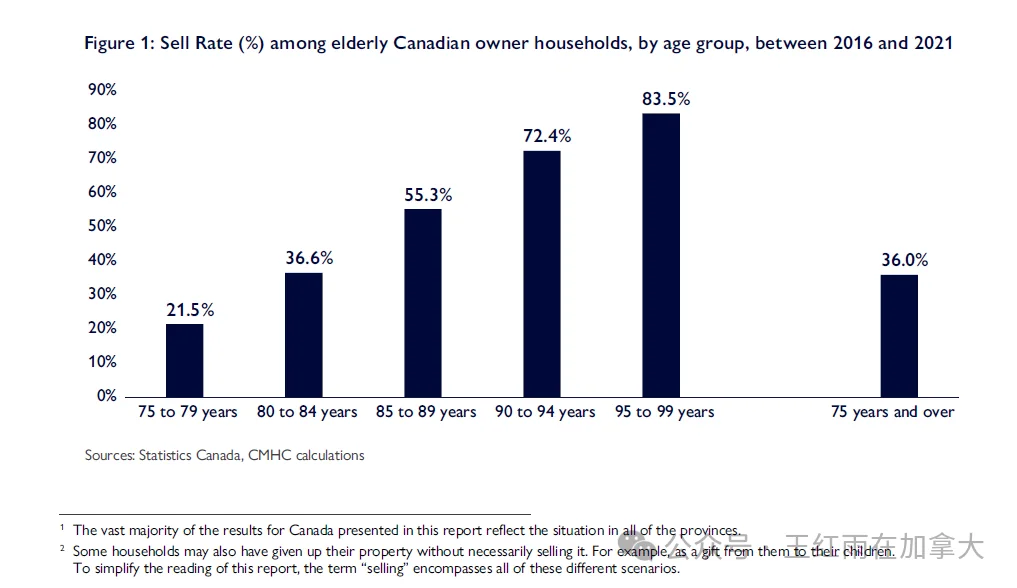
Figure 6
02 Contrarian investing or momentum investing
I stay calm when others are panicking, and I enter the market when others are fleeing. This is contrarian investing. After the market started, I used inertia to appreciate the value as soon as I bought it. This is momentum investing.
Contrarian investing is counter-intuitive and anti-human. It can be seen but difficult to do. For example, the mainstream direction in 2022 is to sell funds and stocks and buy GICs, time deposit certificates. Will you dare to sell the time deposit certificates and return to the stock market alone at that time? In 2024, unfinished properties in the Greater Toronto GTA will be handed over intensively. There will be a short-term oversupply, and the price of second-hand CONDO will be weak. Do you dare to buy a second-hand CONDO? Most investors know in their minds that it's time to act and that this is the best time, but they look at other people and don't dare to move. John Templeton, the master of contrarian investing, famously said: "Reality has many problems, but most of them are gifts." Eyes are used to discover gifts, and of course they can also be used to look left and right. In his New Year's Eve speech last year, Luo Zhenyu gave a message to those who lack the courage to take action:"Look less at others and more at yourself; look less at the distance and more at the neighborhood.", so well said.
Momentum investing is the choice of most people. Most people spend all day looking for asset prices that have risen, and then follow the trend. In most cases, followers who know how to stop at the right time can make some money, while followers who are too obsessed, or who hesitate for too long, may be cut off. In the second half of 2016 and the beginning of 2017, a large number of real estate buyers followed the trend. The most severe losses were a group of house purchasers who bought for 3 million and were valued at 2.2 million by the bank at the time of settlement. Those who bought off-the-plan properties throughout 2019 and 2020 before the outbreak of the epidemic are facing the dilemma of the appraisal price being lower than the purchase price. Gold diggers who buy off-the-plan properties throughout 2021 and before March 2022 are still on the road, waiting to drink fine wine. It is not wrong to follow the trend, but if you follow the wrong trend, you will have to pay the price. When the real estate market is hot, bidding is required to buy second-hand houses, so many people go to buy futures real estate because the sales staff say, "Come on, you don't have to fight to buy off-the-plan properties." This slogan will be used again the next time second-hand houses are hot. Since I wrote this public account in January 2018, I have been earnestly persuading real estate investors not to buy off-the-plan properties. The reason is that I experienced the Toronto CONDO market in 2014. If you haven't experienced it, it doesn't matter. You will know it after experiencing a concentrated delivery of off-the-plan properties in 2024. History is the most patient teacher. If you didn't catch up with the slap in the face last time, just slap you again. Why is it easy to fall into the trap of huge losses when buying off-the-plan property? Because it’s so easy to follow the trend and buy off-the-plan properties, just go to a beautiful sales office, sign a contract, pay a 5% deposit, and you’re done. If you buy a second-hand house, you have to apply for a loan from a bank, and you may not be eligible even if you want to get into the trap. Someone argued with me: If there are no new houses, how can there be second-hand houses? I always reply like this:Please be polite to real estate investors and generously give up the opportunity to buy off-the-plan properties to speculators and owner-occupiers.An unexamined life is not worth living, and a price that has not been tested by the market is not a good price. The developer opens the market when the market is hot and sets its own price. If you sign this futures contract, it proves that you 100% believe that the price offered by the developer is reasonable. But the question is, how do you know that the market will definitely agree with this price when the house is handed over? The big taboo of momentum investing is that chasing highs is too outrageous, and even flies off the runway. The price of second-hand houses has increased by 10%, and it is no longer safe to chase highs, but you buy off-the-plan properties at a high price that is 40% higher than the current price. All kinds of transactions flew off the runway and were heartbroken when they landed.
"Bet" will win, everyone understands such a simple truth, but when will it be released? Where to go? How much? It’s just knowledge. Betting big when the probability of winning is high is the core of Kelly's formula and also Baman's investment approach. When others are fearful, if you really see the winning rate clearly, of course you have to place a heavy bet. When others are inflating, you should be afraid and don't bet. In Toronto, there are only a few times that can make most people fall into fear, so contrarian investors need to hurry up. If they move slowly, they will become followers. The proportion of contrarian investors will not exceed 10% of all investors. The vast majority of investors, about 80%, will only enter the market after seeing the price rise and the trading volume increase. The last 10% will only enter the market when the price rises to the point where they can no longer afford to buy. In short, those who can enter the market are still willing to bet, and it is never too late, because Canada will continue to be on the uphill road of eliminating the housing crisis in the next 30 years. Audiences who like to watch others place bets can say whatever they want. As for the audience, their interests are not relevant, so they can say whatever they like. Anyway, if you don’t bet, you will definitely gain nothing. Those who miss out on the drop in house prices also miss out on the rise in house prices. The audience’s ticket price is the rent and must be paid.
03 Marry the house first, then talk about income
Most goods can be bartered, you give me a box of apples, I will give you a bottle of red wine, but houses are difficult to barter. I once asked a senior in the real estate industry how Canadians bought houses in the 1980s when interest rates were 21%. The methods he told me were basically barter exchanges. For example, you give me a CONDO plus 100,000 yuan in cash, and I will give you a detached house. Today's house prices are difficult to transact in the absence of currency and loan media. Before a federal election, Trudeau proposed in a platform that he would de-financialize the real estate industry. Someone asked me what I think about this issue and what impact it will have on future housing prices if such a policy is implemented. The real estate industry without its financial attributes has only one way out: a dead end. New houses cannot be built without loans, and second-hand houses cannot be traded without loans. Financial attributes have been deeply embedded in the real estate industry, and finance and real estate are closely related. The U.S. subprime mortgage crisis almost destroyed the U.S. financial system, so "definancializing real estate" is a dream.
The financial attribute of real estate is reflected in the fact that without income support, it cannot get a loan. The principle is very simple,The amount of a mortgage loan depends on the loan applicant's ability to cash out his future income. The house is just a collateral. Once there is a problem with the future income, the collateral will be dealt with.Property buyers with no or low income cannot obtain loans because without income there is no future income stream to realize. There is a BUG in this principle.It is your income when you apply for a loan. The bank will consider your income in the futureI have had this income for 30 years.For example, a 31-year-old young man has an annual income of 80,000 yuan and the bank approves a loan amount of 380,000 yuan. This is a decision based on the fact that the income will be 80,000 yuan in the next 30 years. For example, a 52-year-old applicant has an annual income of 180,000 yuan, and the loan amount approved by the bank is 850,000 yuan. This decision is based on the fact that the income in the next 30 years will be 180,000 yuan. Is it reasonable? Regardless of whether you think it is reasonable or not, the loan amount determination standards apply to all borrowers. Rules are rules. It does not matter whether they are good or bad. Those who can make good use of these rules are the winners.
It is definitely difficult for a 31-year-old young man to buy a house, but it is not impossible. Figures released by Statistics Canada in November 2023 reveal the home buying situation of young people in Canada: if young people born in 1990-1992 have an income of 40,000 and their parents do not own real estate, the young people’s property ownership rate is 8.5%. If the income is more than 80,000 yuan and the parents do not own real estate, the home ownership rate is 45.5%; if the income is 40,000 yuan and the parents have multiple apartments, the home ownership rate of young people is 26.7%; if the income is more than 80,000 yuan and the parents have multiple apartments, the home ownership rate is 64.2%. See Figure 7. Post-90s, that is, young people born between 1990 and 1999, the home ownership rate in 2021 is as follows: the home ownership rate of young people whose parents do not own real estate is 8.1%, and the home ownership rate of young people whose parents have multiple properties is 27.8%. See Figure 8. For young people, if their parents have multiple apartments and have greater ability to buy a house, it means that those who have gone there before have not worked hard, and those who have gone behind will be sad. “Parent banks” can remedy the rigid policy of commercial banks that lend based on income. Helping young people get on their cars in the morning is the best way to pass on assets from their parents’ estates. After young people's income rises, if house prices also rise, they can return the down payment donated by their parents that year to their parents through additional mortgages and cash out. The strategy of "marry the house first, then the income" requires the assistance of the "bank of parents".
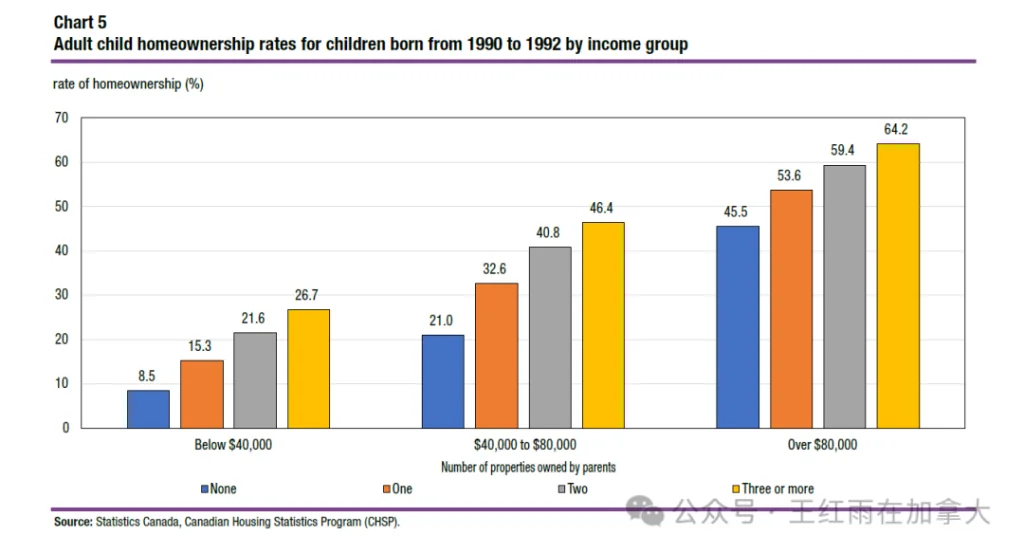
Figure 7
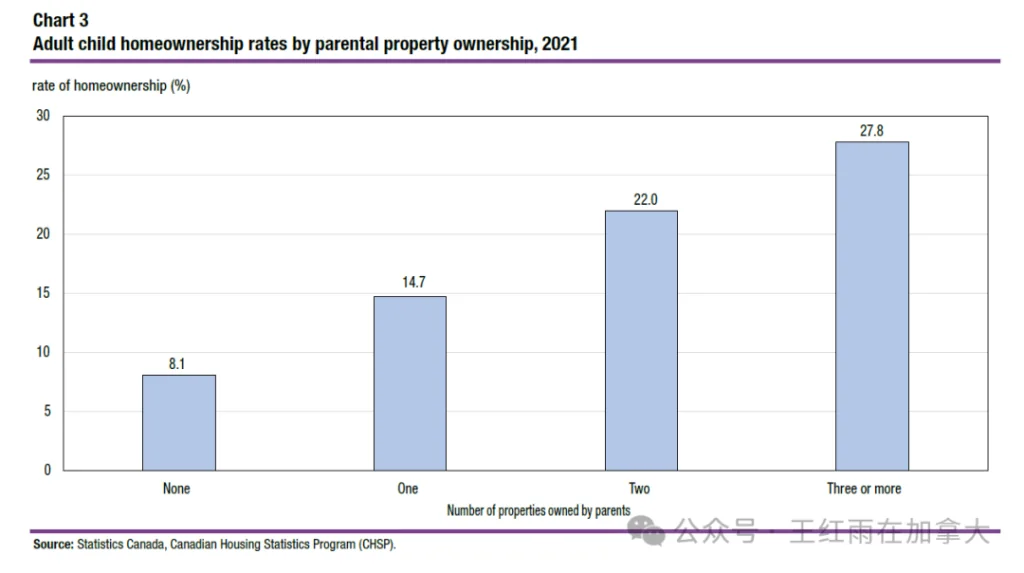
Figure 8
When self-employed people apply for loans, banks need to look at the average income of the past two years, so it's too late to improvise. Therefore, every year before the tax filing season, I help self-employed people who are willing to buy a house to review their previous tax filing records and provide specific tax filing suggestions for that year. Due to the impact of past tax return income, many self-employed people have limited loan capacity. My suggestion is to "marry the house first, and then discuss the income." Buy as much property as you can borrow at a corresponding price. When your income increases in the future, you can refinance instead of waiting for 2 years before taking action.
Which company has the strongest loan capacity? Of course, households with higher incomes have stronger borrowing capacity. The income of each family changes with age, and the period when people have the strongest borrowing ability is usually after middle age. According to the bank's loan policy, you must cherish it when your income is high. This is especially true for families who did not have the support of a “bank of parents” when they were young. When your income is at its highest, you can consider changing to your own home. You can cash out the mortgage on your original home as a down payment for your new home, and keep your original home as an investment property. If you don’t plan to change your home, it’s best to pay off your home loan in one go, because the more loans you have for your home, the worse your ability to get an investment home loan.
Families that already have investment properties and want to use the future income realization method to buy more investment properties have two action plans. 1. Completely redo the investment house loan, increase the mortgage, cash out, and make the down payment for the next investment house. If you add the mortgage when the loan expires, you can not only extend the repayment period, but also cash out without default penalties; 2. If the interest rate of the existing investment house loan is very low, you can apply for a credit line on this low-interest mortgage and withdraw money from the line as the down payment of the next investment house; if you already have a credit line for the investment house, you can apply for an increase in the credit line to withdraw more cash.
Borrowing capacity is determined by income. Regardless of your income at this time, you can take advantage of bank policies to buy a property in your name first, and then re-address the mortgage issue based on changes in future income. Marry real estate first, and then slowly fall in love with income. This combination will make time your friend, because the longer you hold real estate, the richer you will be.
04 Marry real estate first, then date interest rates
"I will buy if the interest rate drops. If the interest rate does not drop, I will wait." 90% of people have this plan.Population determines the long-term trend of housing prices, and interest rates affect short-term fluctuations in housing prices., many people understand this truth, but the strange thing is that no one wants to buy at the bottom of fluctuations, and they all wait for housing prices to rise before taking action. This is exactly the same mentality as buying stocks. I am afraid this is also the financial attribute of real estate.
The risk of interest rate increases in 2024 has been greatly reduced, and the situation where interest rates suppress real estate transactions will be alleviated. The damage caused by existing debt is still expanding. This year, 14% of mortgage loans will expire for renewal, and the monthly payment amount will be reset; in 2026, 35% of mortgage loans will expire, and the monthly payment amount will be reset. The proportion of loans coming due this year is less than half that of 2026, so the actual situation in terms of quantity is not as terrible as people fear. The central bank has made a forecast for the loan maturities this year, as shown in Figure 9. The conclusion is that the increase in monthly payments will not be large. In addition, the central bank believes that income inflation has occurred in the past two years and wages have generally risen, which will offset part of the pressure brought about by the reset of monthly payments, as shown in Figure 10. The "House Selling Theory" has been called out from last year to this year. Last year, no one sold their houses, and there will be no such thing this year. For borrowers who renewed their contracts from August to November last year, the renewal interest rates were at the highest point, at around 7%, while now the renewal interest rates are around 5.8%. The idea of having to sell the house as soon as the loan is due seems so naive and should have been brainstormed by people who are eager to get into the car.
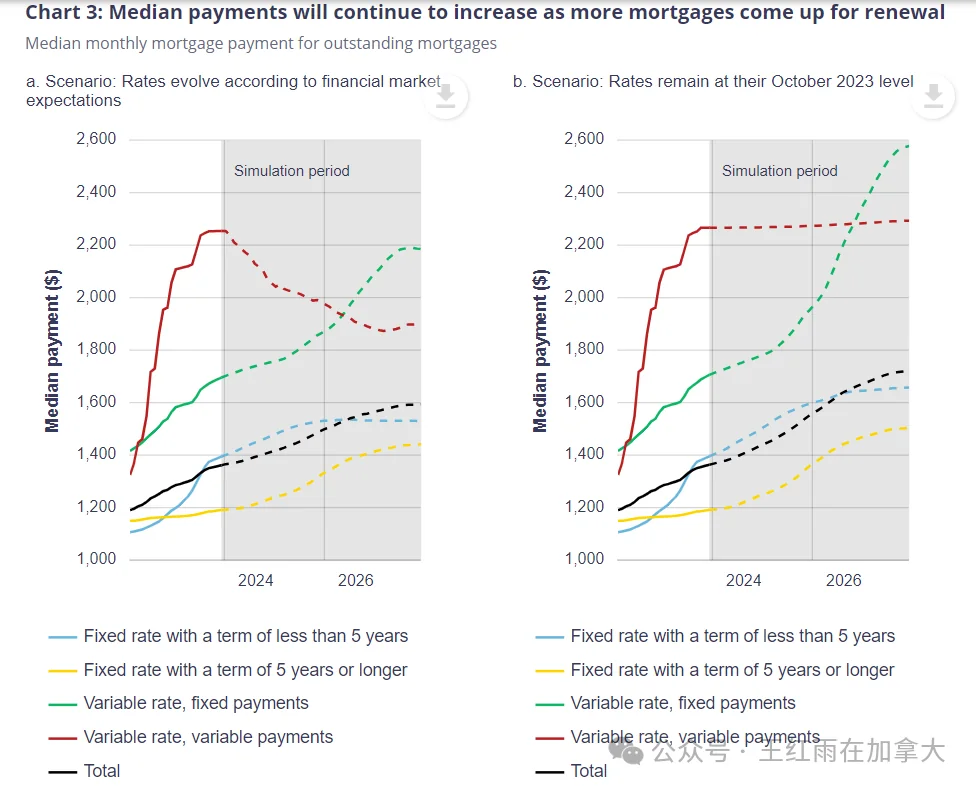
Figure 9
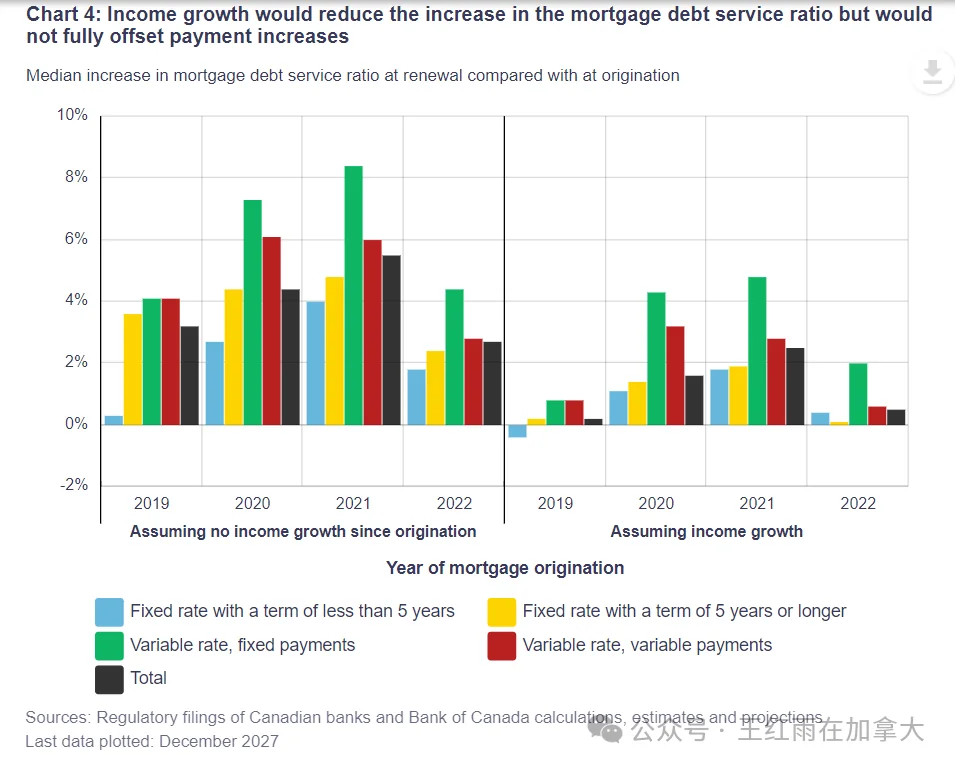
Figure 10
At the current loan interest rate level, is it worth buying an investment property? Now, the monthly payment for every 100,000 yuan of loan is about 570 yuan, which is 42.5% higher than the monthly payment of 400 yuan per 100,000 yuan when the interest rate was the lowest. From the perspective of monthly payment, if 80% of the loan is used to buy an investment house in the GTA, it will be difficult to have a positive cash flow. Therefore, real estate investment is more suitable for families that can withstand negative cash flow. To improve your ability to withstand negative cash flow, you need to reduce the monthly payment of your home loan. Therefore, if you have cash in hand, you need to proactively reduce the monthly payment of your home loan. Even if you don’t have cash on hand, you can lower your monthly payment. If your mortgage expires, whether it’s a rental or owner-occupied home, you can lower your monthly payment by refinancing the loan and extending the loan term back to 30 years. The current interest rate level will eliminate many powerless real estate investors. Therefore, the market competition is not very fierce. Families who can afford loans can get the loan first and wait for the interest rate to change. Interest rates can change in two directions. 1. Interest rates continue to rise or remain unchanged, so the interest rate locked now is a low interest rate; 2. Interest rates fall, and the borrowing capacity of all buyers increases, which will push up housing prices, so buying now means buying at a low point. No matter how interest rates change, the current environment is most beneficial to households with borrowing capacity.
Predicting interest rates to decide when to buy a home is often an exercise in futility. Opportunities with low interest rates and low housing prices have appeared before, but 99% of people did not seize them. That was when the epidemic first broke out and cities were closed everywhere.The timing of buying a house is determined by your borrowing ability. The best time is when others don't have the ability to borrow money and you have the ability to borrow money.
When interest rates are low, many people see others snatching houses and house prices soar and are afraid to buy. When interest rates are high, they cannot borrow money or have too much negative cash flow, so they are unable or afraid to buy. So there is an endless cycle of "waiting": when the macro environment is good, maybe your micro environment is not ideal; when your situation improves, maybe the macro environment gets worse again."Wait a little longer" is not a good medicine, but a placebo that does not cure the disease.People who wait for the best time to act often have to wait forever because they cannot tell when the best time is. Regarding the topic of "wait a little longer", Teacher He Fan has the following wonderful description in the preface of his new book "Variable 6: Adventures in the Macro World".

05 Excerpt from the preface of "Variable 6: Adventures in the Macroworld"
You want to change, but you don't want to change. You want to leave, but you don’t want to leave. You want to fight for it, but you don’t dare to fight for it. You want to give up, but you can't bear to give up. This year for us is very much like Waiting for Godot, an absurd play written by the Irish writer Beckett. Two tramps wait under a leafless tree for a mysterious figure called Godot, who never appears from beginning to end. The past year has been the same: what you were waiting for never came. The wait seemed endless. Why you can only wait, you don't understand.
Sometimes, you are very optimistic and always feel that something better will happen, but to your disappointment, nothing happens. Sometimes, you are very pessimistic and always feel that there is going to be a huge crisis soon, but the worst case scenario does not happen. You are like the old landlady lying downstairs, full of worries and sorrow, unable to fall asleep until late at night. Just then, you heard the young man living upstairs coming back. He sat on the bed, took off one of his boots, and threw it heavily on the floor. In fact, you had already heard his footsteps going upstairs and the sound of the door opening, and you knew he was about to take off his boots, but a muffled sound from the ceiling still startled you. Past experience tells you that next, the boy will take off the other boot and throw it hard on the floor, making another "thud" sound. So, you anxiously wait for the other boot to drop. But for some reason, the young man suddenly changed his mind. He placed the second boot gently on the floor and fell asleep. It's just a pain for you. You are on the lower level and have no idea what is happening on the upper level. You always feel that there is a second sound, maybe in the next minute, maybe in the next minute, but you guess wrong every time. Is there another possibility? You think in your mind, maybe, the second boot has already landed, but when did it fall? Why does the second boot hit the ground differently than the first boot?Is this some big game being played?You toss and turn, stay awake all night, puzzled by your thoughts.In this age of anxiety, there is no way to believe that an event happened without a loud bang.
Waiting can nourish hope, but waiting too long and helplessly will only consume confidence. Waiting can make people more resilient, but it can also make people gradually numb and lose their sensitivity to new things. Waiting can make people more tolerant, more patient, and more open-minded, but it can also make people become cynics and lose their courageous qualities. All things have their own laws. You wait, or wait impatiently, and you cannot affect the movement of the stars, nor the swaying of the wind and rain.
。。。
To wait or not to wait, that is the question. Which choice is more courageous? Which option is more loyal? Which choice is wiser? Which option is more far-sighted?Which option would give you more options in the future?Which option exposes you to more unexpected risks?
Don't worry, there is another question. Have you ever wondered why so many people are waiting like you?
。。。。
Because everyone is waiting for the same thing. It is not micro choices that determine personal destiny, but macro trends.
Of course, when it comes to macro, every micro subject has different feelings. Therefore, when everyone looks at the macro picture, it is like looking at flowers in the fog, and a blind man feels the elephant.
。。。。

Major opportunities almost always appear after a crisis, when everyone is still immersed in pessimism.This was true after the East Asian financial crisis in 1998, it was true after SARS (SARS) in 2003, and it was true after the global financial crisis in 2008. . . .
Macro and micro are different. The biggest difference between macro and micro is:The micro level is decided by oneself, while the macro level is decided together with others.Since it is decided together by everyone, the final macro result is a "self-fulfilling prophecy." When everyone is optimistic, the economy will prosper; when everyone is pessimistic, the economy will be depressed. Nothing but faith.
The macro is like a ball on the top of a mountain. If you push it to the left, it will fall to the left. If you push it to the right, it will fall to the right. In economic terms, this is "multiple equilibria." The laws of Newtonian mechanics no longer apply in the world of relativity. Likewise, micro-level reasoning can easily mislead macro-level discussions. To macroeconomists, this is a simple truth. Unfortunately, too few people understand this. It is said that the greatest gain from studying history is to know that history is created by people who do not study history. I often feel similar emotions when studying macroeconomics.
To sum up: the macro is not the sum of the micro. But you are a micro subject and you cannot determine the macro.
So, your question becomes: What should I do if I can’t decide the big picture?
You must believe in yourself, because you are different from others:You are a micro subject who knows that the macro is not the sum of the micro.
What difference does this make? Of course there are differences. On the highway, all cars are going forward. If you want to go in the opposite direction, it is too dangerous. However, when driving forward, some drivers are smarter, always watching the road conditions, ready to change lanes at any time, and consciously looking for the exit of the highway. If there is a traffic jam ahead, it will be easier for these smart drivers to avoid it.Traffic jams are a macro variable you cannot control, but avoiding traffic jams is a micro choice you can make.
You can think of macro policies as changes in the weather, and micro agents as farmers working in the fields. Farmers cannot control the weather, but they must learn to "eat by the weather." They have an instinctive intuition about whether it will rain or be sunny tomorrow. When it rains a lot, we need to drain water; when it rains a little, we need to fight drought.No matter what the weather brings, they have to find a way to cope. Over time, micro entities have gained experience in dealing with macro fluctuations.If you are smart enough, you will consciously understand how others do it and learn from their experiences and lessons.
。。。。
Conclusion:
I hope this article can give everyone the courage to take action in 2024. As long as the borrowing capacity allows, when the loan expires, whether it is a self-occupied house or a rental house, it is recommended to refinance. Even if you cannot withdraw cash from the house, you should try to extend the repayment period to 30 years, lower the monthly payment, and make preparations for real estate investment. Canada's housing crisis will be protracted. No matter who becomes prime minister, the housing problem will not be solved overnight. Your own borrowing capacity determines the timing of investment, not the macro environment. The housing crisis is an investment opportunity. The more severe the crisis, the longer it lasts, and the longer the slope, the bigger the snowball becomes. The important thing is that you start taking action and have your own snowball.