Historical article note: This article was originally published on 2018-08-28. Rates, policies, home prices, statistics, product names and qualification standards reflect the environment at that time and may have changed. This archive is for historical record and general education only. It is not mortgage approval, investment, legal or tax advice.
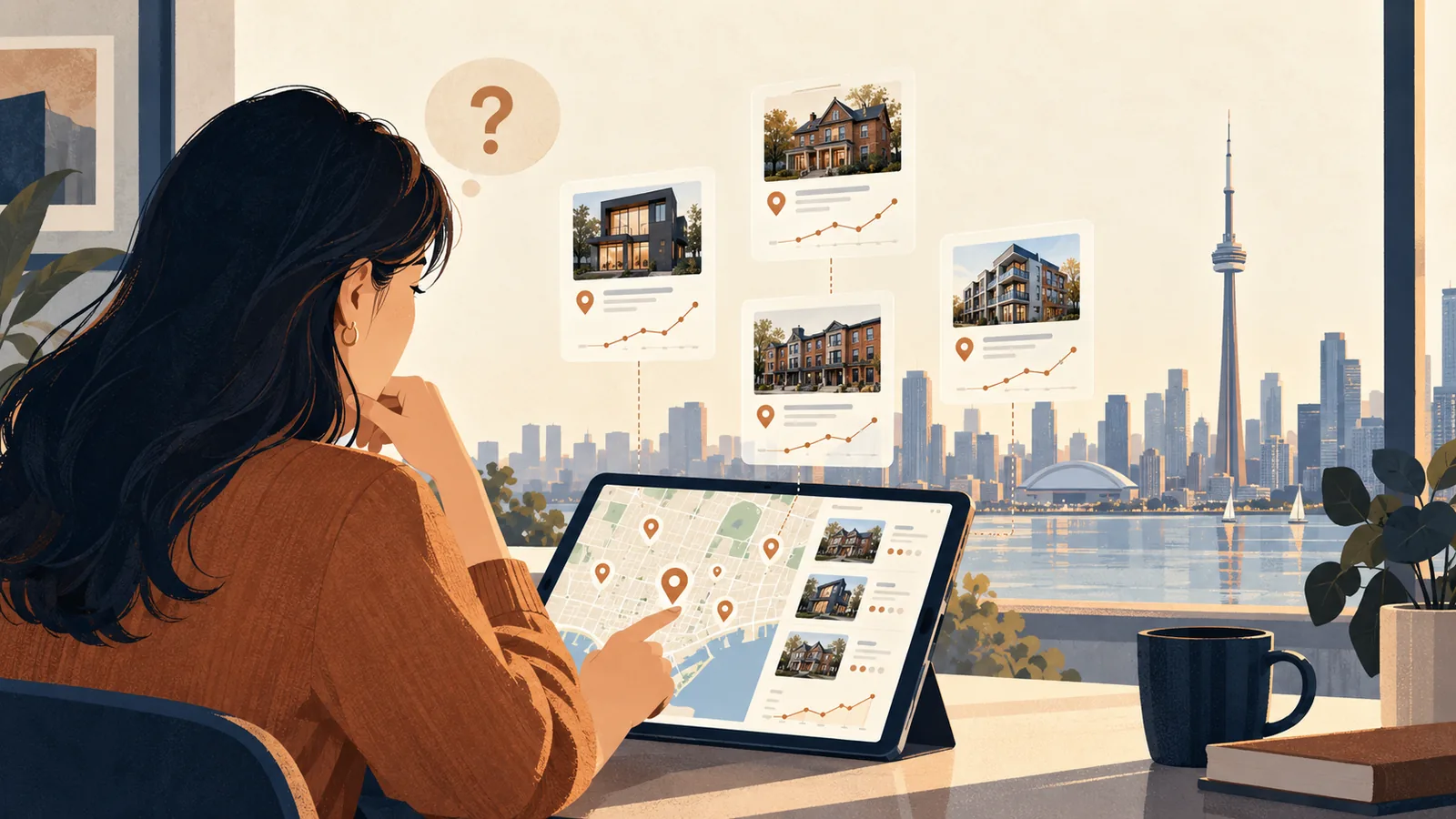
The legal battle between the Toronto Real Estate Board and the Fair Trading Agency lasted for seven years, and finally ended with the result that the Real Estate Board had no right to monopolize the sales price information of second-hand homes. It is conceivable that soon someone or a company will provide the public with timely selling price information so that potential buyers or sellers can make bids. Previously, only members of the Real Estate Bureau, that is, real estate agents, had the right to inquire about the past transaction price of a certain house. If consumers wanted to know this information, they had to entrust a real estate agent to obtain it. The real estate agent needed to pay a "protection fee" - a membership fee - to the Real Estate Bureau. People online cheered: Real estate agents are going to lose their jobs! Data transparency has increased, intermediaries can be eliminated, and you can buy a house yourself without going through a real estate agent. Is it really that easy to buy and sell second-hand houses in Canada?
The United States, like Canada, uses the MLS system to compile and display information about second-hand homes for sale. For buyers, MLS can only see information about properties for sale, but not the past sales prices of similar properties in the surrounding area. If a buyer wants to make a bid, he or she needs to use a real estate agent to help check the recent transaction prices of neighboring properties in the area as a reference for his or her bid. Once a property on the MLS is sold, the public cannot see the property's information on the MLS. Only licensed real estate agents can see it. This is why real estate agents pay "protection fees" to the real estate bureau. For sellers, if they want their real estate information to be listed on the MLS system to increase exposure, they must entrust a licensed real estate agent to log out the information on the MLS. The seller can only entrust an exclusive real estate agency to handle the sale of the house within a certain period of time. Compared with other regions around the world, the MLS in North America is quite complete and developed. It can not only publish real estate information for sale, but also retain very precious historical transaction records. Compared with the MLS system, there is no unified second-hand housing listing information in China. It is difficult to distinguish the authenticity of the listings provided by various regions and companies. It can be said that there is no transparency at all. Both sellers and buyers are kept in the dark. Moreover, the intermediary industry is neither standardized nor professional, making second-hand housing transactions more difficult than in North America. China's economic development has benefited from the Internet, mobile Internet and big data in recent years, but it has yet to make any achievements in real estate. No company can collect complete second-hand housing data in a province, let alone the whole country. Although various real estate apps in China are still burning money, they haven’t seen any results yet. China's second-hand housing market is in a situation where even the listings are not transparent, let alone professional intermediaries. Under disorderly competition, life is difficult for both consumers and real estate agents. The situation in the UK is not much better. A house can be sold by multiple real estate agents at the same time, and whoever sells it gets the commission. It is a horse racing system for real estate agents, and it is difficult for new real estate agents to survive. In comparison, the survival rate of real estate agents in Canada and the United States is very high, and some new immigrants can join them for two reasons: when buying a house, there is unified listing information; when selling a house, there is an exclusive entrustment system. In a nutshell: North American real estate agents are the best real estate agents in the world because of their MLS system. The Greater Toronto Area has a population of 6.41 million, and the number of real estate agents is as high as 50,000. Excluding the retired and minors, nearly 1% of the people are engaged in real estate agents for the sale and purchase of second-hand houses.
Compared with the standardized second-hand housing transaction system, Canada’s new home buying and selling system is relatively chaotic. New homes are supposed to be marketed by developers themselves, directly to customers. Since some apartment buildings are sold off-the-plan in large quantities and they want to sell them quickly, developers often provide commissions to real estate agents, which they use as their own marketing expenses, and encourage real estate agents to help with sales. As mentioned before, real estate agents in Canada are actually protected by the Real Estate Bureau and are intermediaries who aim to facilitate the sale of second-hand houses. The job of real estate agents is not to sell new houses, and there is no course on selling new houses when taking the real estate transaction license exam. The biggest problem in the new home market is the supply barrier. Some developers give some real estate companies priority in choosing apartment types and enjoying preferential prices in the form of VIPs. The purpose is to attract a group of real estate agents to become "developer fans" to vigorously promote themselves. Over time, these "developer fans" called themselves "VIP off-the-plan real estate agents", that is, they became a bridge between other real estate agents and developers, contrary to the trend of eliminating intermediaries, adding another link to the market. There are as many people as crucian carp crossing the river who call themselves VIP off-the-plan property agents. It doesn’t matter who is really a VIP to consumers, as long as they buy a house. Some hot-selling "houses" detached houses, semi-detached houses or townhouses can be sold by developers on their own, so they do not pay commissions to real estate agents. If consumers want to buy real estate, they should not consult real estate agents, because they may be recommended to properties that offer commissions, while those that do not offer commissions will be "forgotten". As a developed country, it is normal for the housing stock (second-hand housing) market to be larger than the incremental (new housing) market. Taking the Greater Toronto Area as an example, 90% of the purchases and sales in the stock market will be reflected in the MLS second-hand housing transaction system. Although the incremental market data is not very transparent, but generally speaking, the annual second-hand housing sales are twice that of new housing. Due to the small size of the new housing market, local chaos has not yet reached the point of being managed, and people who make a living by sewing will continue to exist for a long time. In the new home market, data is more opaque and transactions are more complex. At least new home contracts are much thicker than second-hand home sales contracts, and the final handover is more uncertain. The involvement of real estate agents in new home transactions can promote the smooth completion of the transaction, but it is not a decisive role.
From the above overall perspective, whether the Toronto Real Estate Board agrees to make the home sales price information on the MLS available to the public does not have a fundamental impact on consumers. I have been engaged in mortgage work for more than 8 years, and I have never seen many people complete a second-hand house purchase transaction without the help of a real estate agent. Sellers, on the other hand, rely more on the MLS system to give their properties the best exposure. The price at which your neighbor's house recently sold is not important enough to decide whether to hire a real estate agent to help find, view, or close the house.
What are the problems and benefits after real estate transaction data are released to the public? First of all, there is no historical price as a reference for whether the price of a new house is reasonable. However, when buying a new house, you can check the prices of surrounding second-hand houses by yourself, which is good news for buyers. Secondly, when buying a second-hand home, it is also good news if buyers can compare historical prices with the recent sales of surrounding properties without having to use a real estate agent. Third, for buyers, some houses cannot be sold for a long time. The seller’s agent often resorts to constantly re-listing the house to cover up the situation that it cannot be sold for a long time. For example, if the house is re-listed every 4 months, the buyer cannot see on the MLS that it has been listed multiple times. In the past, if the buyer did not go through a real estate agent, such information could not be found. Now it can be found in the future, which is also good news for the buyer. Fourth, the rule that the transaction price can be announced 60 days after the transaction is completed is a challenge for both sellers and buyers. If the handover date is determined to be after 65 days when the transaction is completed, once one party in the transaction defaults and the transaction is not successful, the previous transaction price will have been exposed. Therefore, the possibility of the seller allowing the buyer to deliver the property after 60 days is greatly reduced. The rush to prepare for the handover will cause certain problems. Finally, if the transaction price of other properties has been announced before the sale and purchase transaction is completed, the buyers and sellers who have not completed the transaction may refuse to perform the signed contracts due to the impact of the selling prices of other properties, causing more breach of contract disputes than before. In short, the increased transparency of data promotes disintermediation, but whether buyers can completely ignore real estate agents and complete the entire process of buying a house independently based on public data alone is still a huge question mark.
For consumers, releasing data is definitely a good thing, at least it can satisfy their curiosity. For practitioners, is this a disaster? Just look at the United States. The United States also uses the MLS system to publish second-hand housing transaction information. Most states have already allowed the disclosure of transaction records to the public, but real estate agents in the United States have not lost their jobs. For buyers supported by the Internet and big data, 91% of second-hand houses are still purchased through real estate agents. The reason is simple. The availability of transaction prices for similar properties next door does not have a substantial impact on the completion of the entire transaction between buyers and sellers. The main reason why consumers ask real estate agents to help complete real estate transactions is that buying and selling real estate is like holding a wedding. It is a low-frequency event that only happens a few times in a lifetime. Few people can use their past life experience or the experience of their parents to complete a real estate transaction. The job of a real estate agent is not only to help customers match widely varying needs with different properties within a specified time, but more importantly, to help customers complete complicated transactions. Finding a house is only part of a real estate agent's job, not the whole job. After the data is made public, practitioners who only rely on monopolized data for a living, without professional knowledge and practical experience, are indeed in danger of being eliminated. The real estate brokerage industry is no longer an information intermediary, but it is still a service intermediary.
The second-hand housing transaction market will change due to the increased availability of data. Data providers, advertisers, and mobile applications that promote transactions will compete for more markets. Because the information matching in the second-hand housing market is complex, the information transmission chain is long, the information content is professional, and the information is localized and non-standardized, both parties to the transaction need more professionals to participate. The second-hand housing transaction market can be subdivided into: commission market, advertising market, and supporting market. The commission market is the largest market. In the United States, the commission rate was 5.2% in 2013, and the second-hand housing turnover rate was 4.5%. 91% was completed through real estate agents. Multiplying the three, the total commission rate was as high as 56.8 billion US dollars. The situation in Canada is similar, with a turnover rate of 4.5% and a commission rate of 4.5-5.5%. Nearly 90% of second-hand houses are completed through real estate agents. U.S. high-tech companies have long had a peek at this market, but things are not as everyone imagines. Fortunately, as the data improves, sellers can easily sell their properties by themselves. In 1997, the proportion of self-sold properties in the United States was 18%; in 2005, the proportion of self-sold properties was 13%; by 2013, the proportion of self-sold properties dropped to 9%, and as high as 91% was completed through real estate agents. This is a classic information paradox: the more information there is, the harder it is to choose and complete a deal. Is there no Internet+ company in the United States, which is so technologically advanced, to impact such a huge commission market? Yes, the typical company name is Redfin, which means re-defining the real estate market. This company was born in 2002. To put it simply, it was dissatisfied with the 5.2% commission and launched a house selling service with a commission as low as 1.5%. The hired real estate professionals broke down the transaction process into eight parts, including negotiation, house viewing, drafting documents, legal consultation, loan arrangements and other details. Special persons were responsible for special tasks. In a word: it is not a single person who helps customers complete the house sale transaction, but completes the real estate transaction according to the assembly procedures in the factory. The results are very interesting: the company's employee efficiency is six times higher than that of traditional real estate agents, but the income has not changed much because the real estate agent commissions allocated to the buyers are too small and are widely resisted by traditional real estate agents. Therefore, it generally takes a long time for sellers to sell their properties. Sellers have to bear the land tax, management fees, and utility bills of the house during the long process of selling the house. This saves commissions but makes the sale more difficult. Redfin’s current situation is typical of discount brokers. If you haven’t heard of this company before reading this article, that’s completely normal. This type of discount brokerage companies are regarded as alien and niche. No one is willing to advocate for them, and they lack word-of-mouth promotion. Let’s talk about the advertising market. Zillow is the leader among such companies in the United States. When you log on to the company’s website, you can see their valuation of a certain property. Many Americans often check how much their houses are worth even if they don’t buy a house. Therefore, the website has a large number of views and has become a stronghold for real estate advertising. Recently I heard that the website is also planning to get involved in real estate transactions, because this move will offend existing advertisers. The company is also hesitant and does not know how it will progress. With the liberalization of data, websites and mobile applications that provide transaction data will spring up in Toronto, all for this advertising market. 10-20% of real estate brokerage commissions in the United States are spent on advertising. In 2013, advertising expenditures reached US$9 billion, of which more than 50% was online advertising. Both consumers and real estate agents should pay close attention to new things in this type of service, as someone may be able to come up with a disruptive innovation. The supporting market refers to peripheral businesses such as mortgages, legal consulting, appraisals, accounting, and home inspection services, and professional services that promote real estate transactions. These services have little to do with the disclosure of real estate data, so we will not discuss them again.
If the reader is a consumer, please don’t be too excited. Data should be transparent, but the actual role of high transparency is still limited. The reason is that the tools that use data to help complete real estate transactions are not yet mature. Empty data can only make the mind clear. Consumers need to pay close attention to the emergence and development of new tools. If the reader is a real estate agent, please recognize the current situation clearly. There is no need to worry unreasonably, but you must be prepared to transform from an information-based intermediary to a service-based intermediary. If readers are innovators, I have a message: When you are a member of the public, please be tolerant; when you are a minority, please be brave.
Regarding the topic of Internet + in the second-hand housing market, I would like to recommend a book to everyone. It will be very beneficial for practitioners to read it. Two years ago, I recommended it to my real estate agent friends, "The "Internet +" Path to Real Estate Transformation" edited by Ba Shusong. Discount brokers often appear in the Toronto real estate market and attack the traditional market with low commissions. Friends who have read the above book will have a clear understanding of the future and fate of these discount brokers and will not take it to heart at all. The development of Canada's real estate market closely follows that of the United States. If you want to know the future of Canada's second-hand housing market, it is enough to look at the United States today.
The article is long, but it is indeed not an easy task to explain clearly the Canadian real estate market. Although I have been observing the Canadian real estate market for a long time, I am not a licensed real estate agent after all. If there are any errors or omissions in the article, please feel free to point them out. You are also welcome to leave a message for discussion. Thank you for your patience in reading this article.