01 The budget is a pie-sharing plan
There are many contents in the federal budget. You can read them for yourself, so I won’t go into details. From an overall perspective, the federal budget is a plan to divide the cake, not to make it.
I have 6 episodes of videos on YouTube "We are forced to invest in order to balance our lifetime income" , talked about one of the changes in the situation that Chinese immigrants need to understand after immigrating to Canada: China is wealth Increment Larger countries, and Canada is the wealth Stock A larger country; in China, what everyone is chasing is the increase in wealth, for example, young people 996, starting businesses, and changing jobs; while in Canada, what people are chasing is the stock of wealth, for example, buying multiple second-hand houses, and low-income families receiving government relief. Judging from this year's federal budget, it once again confirms my view: The focus of Canada's economic activities is how to distribute existing wealth, rather than how to develop the economy and create jobs, let alone large-scale infrastructure construction. When we immigrated to Canada from China, we changed the soil. You were a blooming flower before, but if you can't adapt to the new soil, you will soon wither. From a country where cakes are made to a country where cakes are divided, our life and investment behavior should change accordingly.
Canada's federal budget is very different from other countries. In order to stimulate the economy and allow employment and consumption to quickly recover from the COVID-19 epidemic, both China and the United States have launched government-led infrastructure projects, but Canada has not. Let us analyze the starting point of Canada’s federal budget considerations point by point.
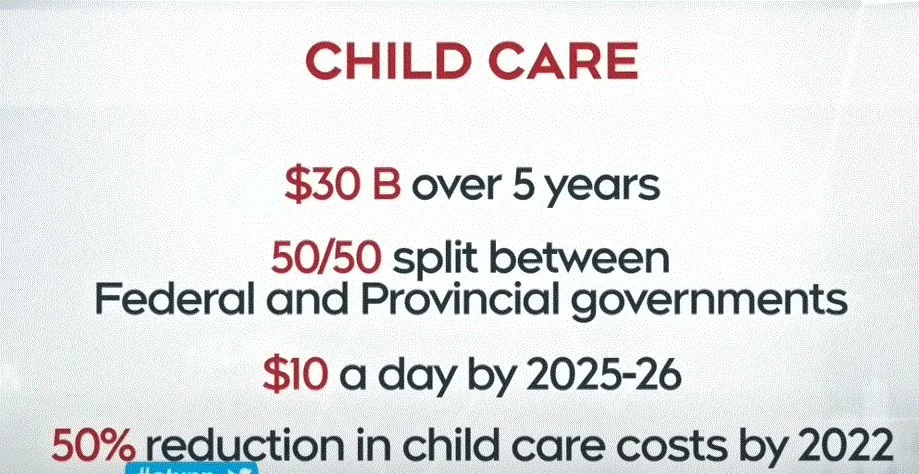
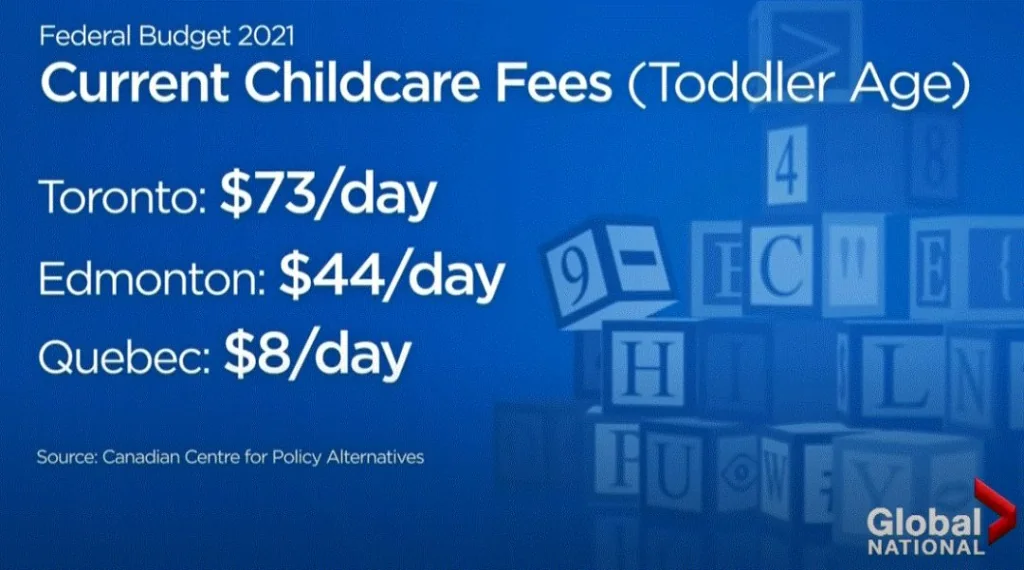
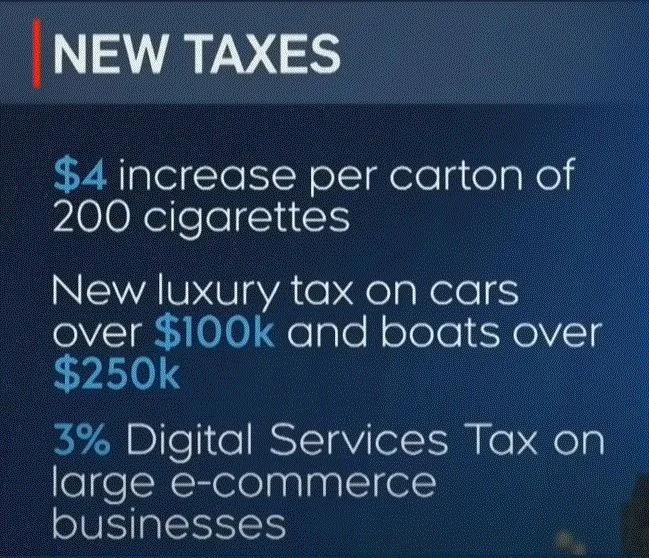
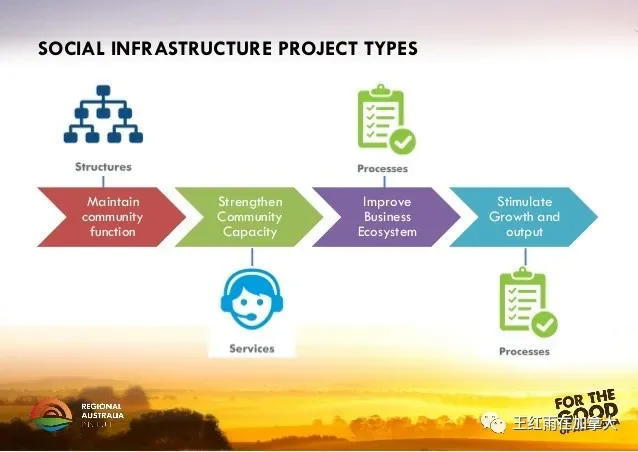
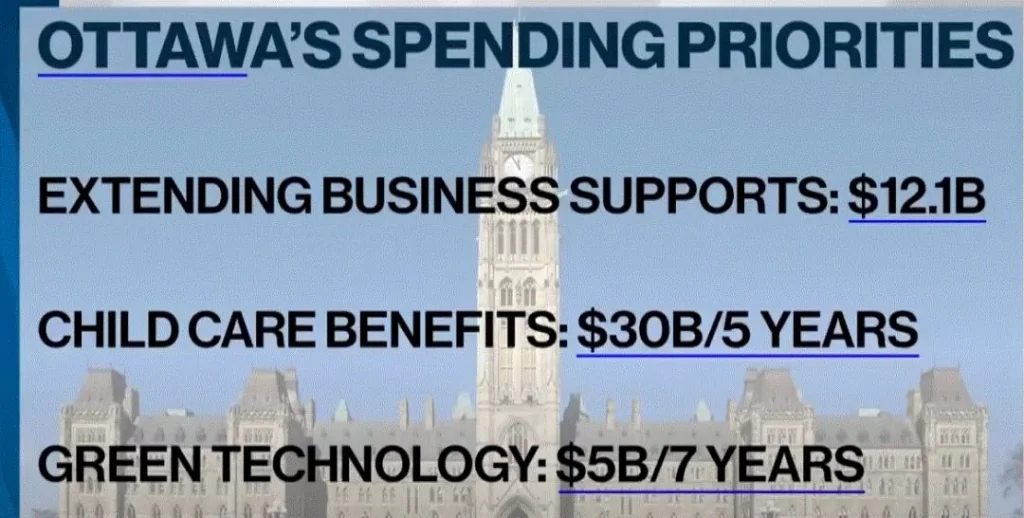
An important element of Canada's federal budget is federal spending to lower child care costs. The current daily child care fee in Toronto is 73 dollars, while in Quebec it is 8 dollars per day. Why is there such a difference? Because child care fees in Toronto are market-based and there are no government subsidies, while in Quebec the fees are so low because there are provincial government subsidies. According to the federal budget, the federal government will subsidize child care fees. This cost is very large. It will spend 30 billion Canadian dollars in the next five years. Beneficiary provinces must match 50% of the federal government's subsidies. By 2026, the national child care fee will be 10 Canadian dollars per day. What does it mean? Taking Toronto as an example, the market price of child care fees is 73 dollars, which is the money received by the child care center. If the child care fee reaches 10 dollars out of pocket, the federal government has to pay 31.5 dollars, and the Ontario government has to match 31.5 dollars. A total subsidy of 63 dollars, and the child care provider has to pay 10 dollars, for a total of 73 dollars to the child care center. This plan is interpreted by the Liberal Party as an investment because it can liberate mothers who work full-time to take care of children and increase the supply of labor. However, it obviously does not take into account the demand for labor. If there are no thriving companies to employ these liberated mothers, there will be a huge waste of resources. Canadian academics openly oppose the Liberal Party’s rhetoric because The government uses long-term liabilities to pay for long-term consumption, not long-term assets. It's like borrowing a loan of 1 million and buying a sports car instead of buying a house that can be used for a long time. Buying a house can save money on renting a house and repay the loan. After buying the sports car, you will have to spend more money. So how do you repay the loan? Only from the perspective of political motivations can we explain the grand blueprint for the most advanced child care subsidy in the world: currently only Quebec has implemented child care subsidies, and the Liberal Party’s plan can allow Quebec’s finances to offload the burden to the federal government; in addition, in British Columbia, there is a fancy way of spending money called “social infrastructure/social "Infrastructure " means investing in community construction rather than infrastructure. British Columbia is the home base of the NDP. The Liberal government is currently a minority government and needs to show favor to the NPD, so it will embark on this project that claims to be social infrastructure/social infrastructure. Insightful people in Canada sneered at the Liberal Party's rhetoric and pointedly pointed out that child care subsidies are not social infrastructure, but social spending, which will eventually lead to unsustainable federal debt.
From the analysis of the above examples, Canada's fiscal policy is a policy that feeds the big pot, and the budget is a specific plan for dividing the meal, trying to make the people with the most votes happy. The so-called economic stimulus effect requires strong words and far-fetched explanations to "make sense".
The economic line proposed in the federal budget is lackluster, but the involution and internal friction of each project are clear at a glance. As the opposition party, the leader of the Conservative Party's rebuttal to the budget was simply weak. He claimed that if he was in power, he could reduce taxes. The TV host asked him the same question three times in a row: "Which tax rate do you plan to reduce, and by how much?" This guy was talking about him and couldn't say anything. The leader of the NDP party expressed dissatisfaction with the budget bill for not imposing a wealth tax. He believed that the deficit caused by the epidemic subsidy should be paid by the rich, rather than that those who received the subsidy should work hard and pay taxes after the epidemic. The leader of the Green Party complained that the federal government only provided rent subsidies to small businesses and did not provide additional subsidies to families who did not pay rent.
The biggest characteristic of Canada’s economic development route is that it has no route or map, and is like a fool walking randomly. The current prime minister has made many shocking quotes since his debut. The most shocking one is "the budget will balance itself." There is a video of a handsome guy saying this on YouTube. This sentence reveals the essence of Canada's federal budget and is destined to be recorded in history. Only Canada has a budget that can be balanced by oneself, which means you can budget as much as you spend. Some people ask me what I think about the government budget, and others ask me about the impact of the budget on housing prices. If you know enough about Canada and the current Prime Minister, it would be unkind to bother me with such a question. In the budget two years ago, there was an astronomical number of affordable housing construction projects. Two years later, no one knows where the money was spent and where the houses were built. If so many houses were really built, housing prices would not be as high as they are now. Canada's federal budget is a cake-sharing budget, not a cake-making budget. If you are waiting for the cake to fall from the sky, please join the team that needs relief. Those who want to make their own pie bigger need to rely on monetary policy, not fiscal policy.
02 When will the Bank of Canada raise interest rates?
Canada's fiscal policy cannot stimulate economic recovery, so the task of stimulating economic recovery falls on the shoulders of monetary policy. After the central bank governor announced the deceleration of QE, he explained his considerations in an interview with reporters: The central bank has one goal and two responsibilities, namely, to control the inflation rate below 2%. The first responsibility is to ensure the stable operation of the banking system, and the second responsibility is to ensure liquidity. QE, the large-scale quantitative easing policy, is a weapon of mass destruction to ensure liquidity. The central bank continuously purchases various bonds into the asset column of the central bank's balance sheet, and then pays cash, thereby achieving the effect of supplying a large amount of cash. When buying bonds, it raises the price of bonds, which leads to a decrease in bond yields, thereby lowering the interest rates on long-term loans. This approach was invented by the Japanese in 2000. From an effect point of view, the cash released is enough for commercial bank loans. There is no need to endlessly buy bonds. Buying too much creates a kind of push-the-rope effect. There is too much cash and commercial banks cannot lend it out at once. The cash accumulated in commercial banks cannot stimulate the economy. After the outbreak, Canada's banking regulator OSFI released $300 billion in cash to commercial banks in one day by reducing deposit reserves. The central bank has purchased 4 billion bonds every week since last year and released 4 billion in cash. A total of 200 billion in cash has been released. Commercial banks currently have no liquidity problems at all. The headache is how to find qualified borrowers to lend money in a short period of time.
According to Mundell, in countries that implement a floating interest rate system, monetary policy is more important than fiscal policy. Judging from the situation in Canada, this is indeed the case. Through fiscal policy, the Canadian government has subsidized the rent of small businesses, paid for some protective equipment for small businesses, and spent a lot of money to support the unemployed, thereby ensuring social stability. If small businesses want to survive the epidemic, they also need to apply for interest-free or low-interest loans from banks, such as CEBA’s 60,000 dollars epidemic relief loan and BDC’s working capital loan. Because banks have sufficient funds, most small and medium-sized enterprises have received emergency loans as long as they do not use the epidemic to provoke trouble. Companies established after the outbreak are obviously suspected of being tampered with and cannot apply for epidemic relief loans. According to the honey effect proposed by Hayek, the money printed by the central bank will first benefit commercial banks in the first round, the corporate customers of commercial banks will taste the sweetness in the second round, and the honey will be enjoyed by families who can obtain loans in the third round. So, Since the epidemic, families who have taken out loans to buy houses have become the beneficiaries of monetary policy.At present, the concentration of honey is still relatively high, commercial banks still receive a large amount of cash from the central bank, and commercial banks are in good health and have a strong willingness to lend. It depends on who can become a qualified borrower.
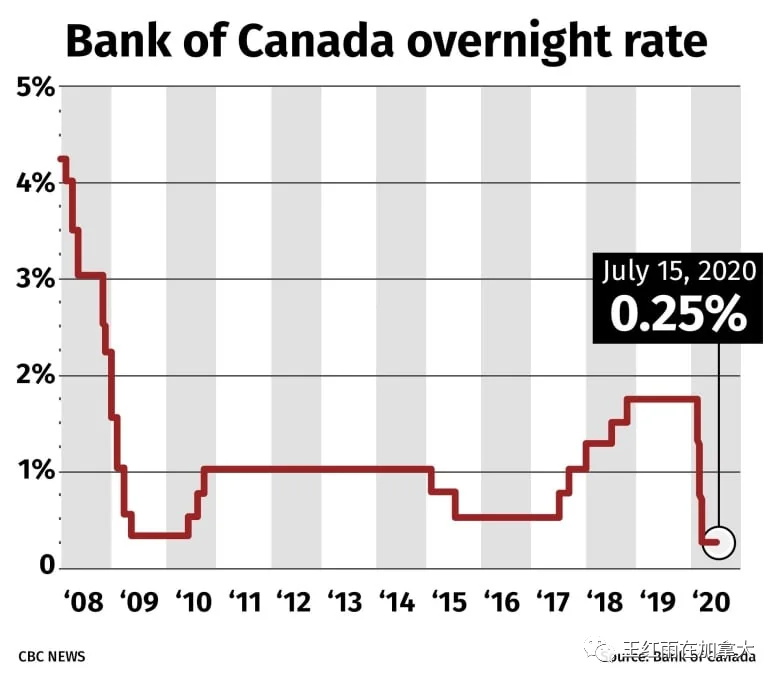
Although Canada has an independent monetary policy, the liquidity of global capital means that Canada's monetary policy depends on the Federal Reserve. At present, QE in the United States has not slowed down because Biden's plan is more ambitious and requires more cash support. Many countries hope to slow down before the United States slows down. The reason is that if the United States slows down first, the dollar will appreciate and capital flight will occur in their own countries. Judging from the Fed’s monetary policy after the subprime mortgage crisis, The Fed’s steps to raise interest rates are as follows: 1.QE Buying bonds slows down, 2. stop QE buy bonds, 3. Start shrinking balance sheet and sell bonds 4. The Fed raises interest rates. Other countries follow this sequence, but usually act before the Fed does. The reason why Canada is jumping the gun now is that after the second wave of the epidemic, employment rebounded very quickly, and the central bank governor optimistically estimates that it will be the same after the third wave of the epidemic. In addition, the United States will strongly stimulate the economy, and Canada can ride on the U.S. car for free, accelerating Canada's economic recovery. The governor of the central bank is very optimistic. Haha, this situation happened before in 2010. Canada rushed to raise interest rates, but later found that it was too early and lowered the interest rates back in 2015. Judging from the above steps, raising interest rates by the central bank is the fourth step. Currently, the Bank of Canada is in the first step, and we don’t know whether this step is right. We don’t know whether there will be a fourth wave of epidemics, such as the Indian epidemic, and we don’t know the speed of the U.S. economic recovery. Some people now expect the Bank of Canada to raise interest rates in the second half of next year. I think this estimate is too optimistic, even more optimistic than the governor of the Bank of Canada. I can’t predict when the Bank of Canada will raise interest rates, but my advice to everyone is: as long as you don’t get to step 3 and apply for a mortgage loan, always choose a floating interest rate.
03 Gray rhinoceros from a middle-class family
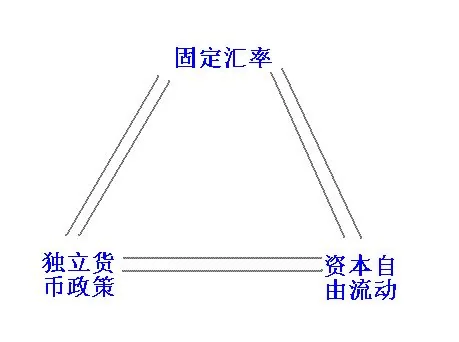
One of Mundell's world-famous theories is the Impossible Trinity, also known as the Mundell Triangle. What it means is that the three goals of fixed exchange rate, free capital flow and independent monetary policy cannot be achieved at the same time. For example, China has a fixed exchange rate (it claims to be a floating exchange rate), so it can only achieve a combination of fixed exchange rate + independent monetary policy, but cannot achieve free flow of capital, so it has always had foreign exchange controls. The other way around is to understand that under a floating exchange rate, the three goals of free capital flow + independent monetary policy + floating interest rates can be achieved. Canada has a floating exchange rate system, so it has its own independent monetary policy and capital can flow freely. The transmission mechanism of monetary policy is that the central bank implements monetary policy stimulus to the real economy through commercial banks. Commercial banks, of course, will not add a zero to the end of a depositor's account balance. If you want to obtain monetary policy support from commercial banks, you can only borrow money. When monetary policy dominates the world, it is when those who can borrow money get rich first.
I was there last year "Canada Restart" QE , how will our investment be affected? 》 The article clearly explains this logic. Under the QE environment, only households that have obtained loans can preserve their assets. Unfortunately, there are too many people who pretend not to understand, and some egoistic people come out to refute my views. In the comment area of this article, I posted two well-founded objections. Because there are many likes, they are still ranked at the top of the comment area. It’s not that I mean to slap these people in the face, I just hope everyone can see clearly how a correct view can be distorted by cowardly people. People with paralyzed decision-making are unwilling to accept facts they don't want to see. They just want to win the argument, not wealth. In the end, they can't even win the argument.
Knowing that printing money will inevitably lead to an increase in asset prices, but standing still; knowing that one's life after retirement is not guaranteed, but doing nothing. This is caused by the cowardice, fear, and muddling mentality of middle-class families when facing major threats. Michelle Walker's "Gray Rhino: How to Cope with a High Probability Crisis" analyzes from the inside out the behavioral pattern of acting like an ostrich in the face of a high probability crisis. The average social pension in Canada is 20,000 dollars per person per year. If longevity is unexpected, most people will be in the dilemma of "the money is gone while they are still alive". The characteristic of the gray rhino incident is that it can be seen and sensed, but it is relatively far away. When the gray rhino approaches, there is no time to escape. What people think about when faced with the gray rhino incident 5 The reaction was: 1. Deny its existence, 2. Find reasons to live by,3.Debate over what to do, 4. fear, 5. Taking the wrong action under time pressure. The elderly are often deceived, which is the inevitable result of the gray rhino incident. People who are not prepared for retirement often choose to take desperate risks when they cannot avoid the problem at all.

Excessive currency issuance will either cause inflation or asset bubbles, which is unavoidable. The longer the problem is delayed, the more difficult it will be to solve it. In the ocean of money, you can only survive by grabbing physical assets , there is still a long way to swim to the shore. Usually, a family with a net worth of more than 5 million Canadian dollars and an annual passive income of 200,000 can be considered as swimming ashore. There is no need to struggle anymore, and the anxiety disorder will heal itself. Real assets, especially houses, are expensive and cannot be obtained through savings without the help of banks and monetary policy. Whether a bank lends leverage depends on whether the borrower is qualified to buy a house in partnership with the bank. Those who meet the requirements but hesitate to wait and see are waiting for the gray rhinoceros to approach. The anxiety will increase as the gray rhinoceros gets closer and closer. Every family can deserve it through their own efforts, the key lies in their ability to act.
Conclusion: In Canada, fiscal policy and the federal budget are prepared for families who plan to eat from a big pot. They are the price paid by the country for a fair result and play a small role in the total economic output. Monetary policy is leading the roadmap for Canada's economic development, and the beneficiaries of monetary policy need to cross a certain threshold and meet loan requirements. At the same time, monetary policy is a small pot of rice prepared for families striving for financial independence and wealth freedom. It is this pot of small pot of rice that constitutes the main body of the Canadian economy. After the Chinese immigrated to Canada, most of the families that successfully changed their land relied on the leverage support of banks. Among my clients, the net worth of my clients, who are skilled immigrants, have stable income, and are worthy of buying a house in partnership with a bank, is increasing year by year, and many of them have exceeded the net worth of investment immigrant families in Canada. The greatest joy of my job is watching my clients compete for stock wealth and swim ashore before the gray rhino approaches. Poor people like easy ways to make money, such as buying lottery tickets. To consolidate their financial security, middle-class families must choose investment projects with a high probability of maintaining and increasing value. Although it is not easy, as long as you persevere, every day will pay off. Real estate investment not only has a strong return on investment, but also has a probability of making money of more than 90%. It is recommended that qualified middle-class families should not waste their time.