Historical article note: This article was originally published on 2019-06-06. Rates, policies, home prices, statistics, product names and qualification standards reflect the environment at that time and may have changed. This archive is for historical record and general education only. It is not mortgage approval, investment, legal or tax advice.
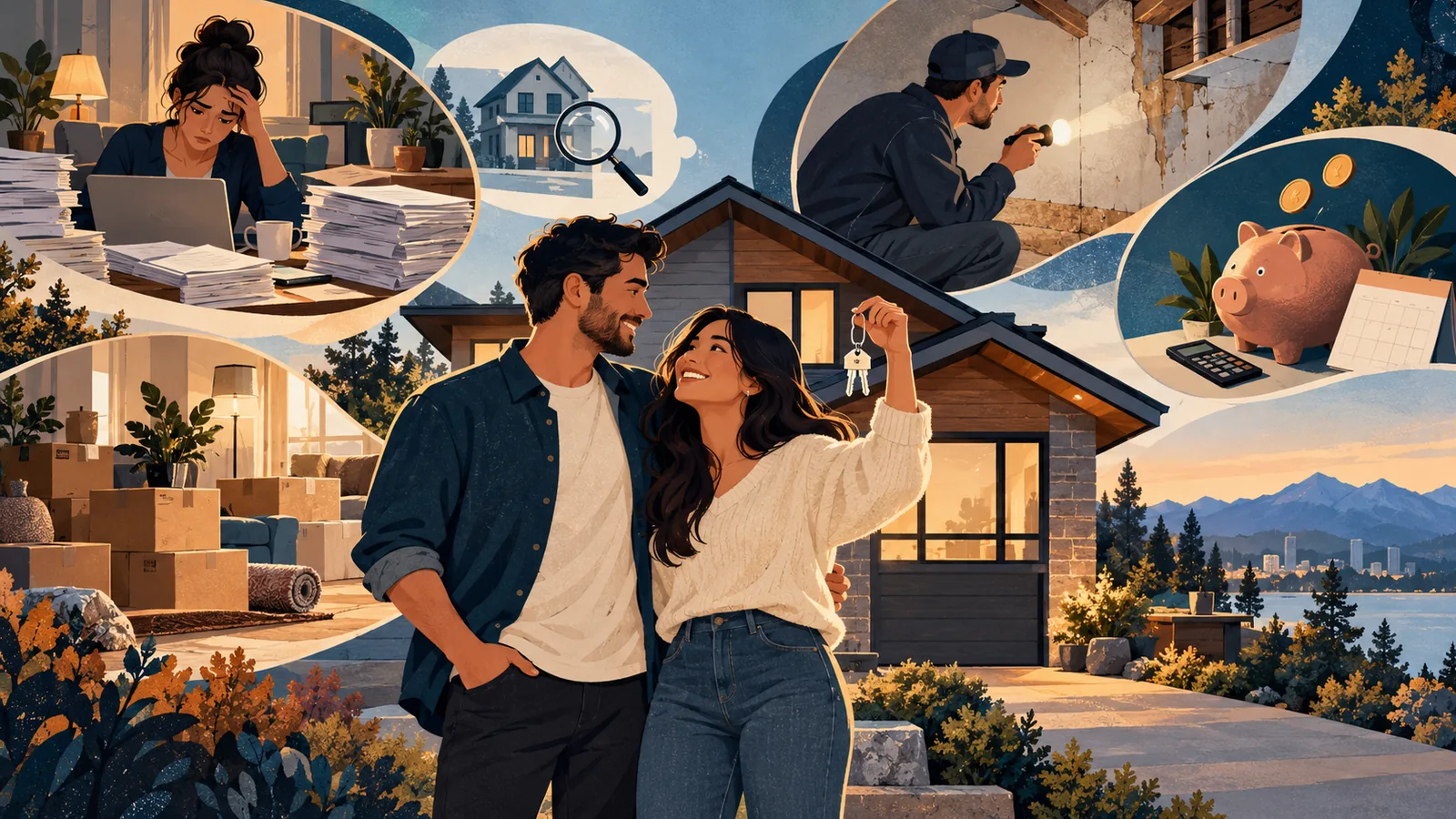
Because I work in the mortgage business and make a living from it, many people find my articles interesting but remain skeptical. There are very few people in this world who openly say that buying a house is good and clearly advise buying early, and they are often heavily criticized, such as Ren Zhiqiang and Ou Shen. If you don’t mind, you can include me too: buying a house is good, buying early is even better. Buying a house is not a joyful experience, so not many people can take the advice. Renting is also very good; you can move whenever you don’t want to live somewhere, paying rent is easier than paying a mortgage, you don’t fear government restrictions on housing prices, you don’t worry about interest rate hikes, you are neither greedy nor fearful, and you can even take a certain pleasure in seeing housing prices fall. Landlords can raise rent at most 1.8% per year, maintaining a stable standard of living, and always stand on a moral high ground to criticize speculators… However, buying a house is actually very stressful: it requires a six-figure down payment, possibly with help from your parents, you need to buy a property meeting your mother-in-law’s size requirements in the specified time, pay attention to interest rates, government restrictions, the ruling party, worry about mortgage policies tightening before you buy, worry that the house will drop in value as soon as you own it, worry that tenants will damage the property or default on rent, be prepared 24/7 for emergency calls from tenants, call all the banks when your loan comes due to find the lowest rate in the universe, pretend not to see experts' warnings about excessive debt, deliberately ignore scholars' predictions of housing price crashes without timing, dare not dissent online against military-style internet users attacking unscrupulous landlords… it seems endless. The joy of buying a house is built upon the pain of buying a house; the joy of being a landlord is built upon service and gratitude toward tenants. Let me slowly tell you about the pain and joy of buying a house as I have observed.
01 Buying your first home is about breaking through psychological barriers
We have discussed before that buying a house is actually for investment purposes; otherwise, renting is enough. The biggest fear in investment is that, after buying a property, the government comes up with harsh measures to suppress housing prices, interest rates rise beyond expectations, one loses their job after signing a long-term repayment contract with the bank, and so on. These worries and uncertainties partly come from personal temperament, but mostly from public opinion and the media, such as expert and scholar opinions, reported high debt indicators in newspapers, suppression policies for non-residents in various provinces, interest rate fluctuations, and pessimistic sentiment online. Let's go through and analyze the external disturbances faced by first-time homebuyers.
All over the world, not just in Canada, "experts and scholars" are basically skeptical about real estate. When they express their opinions, they often say things like, "Canada's overall debt is relatively high, Toronto housing affordability is showing a red warning light, so enter the market cautiously," or, "The U.S. is shrinking its balance sheet, mortgage rates will rise in the future, so buyers should act within their means." Every sentence is politically correct, always a well-meaning reminder. Let me share my observations: highly educated people avoid buying houses and real estate investment; experts who invest in stocks and bonds avoid buying houses and real estate investment. Why? Highly educated people generally experience poverty because of their education. Jack graduated from high school and started working; I, on the other hand, studied all the way through a PhD: 4 years for undergrad, 2.5 years for master's, 2.5 years for PhD, a total of 9 more years in school than Jack. Three years after graduating high school, Jack bought his first house; in the 6th year he bought the second; in the 9th, the third. I graduated with 60,000 in student loans and rented a place. At this time, how do I view real estate? If you ask me to give my opinion on buying a house, all I can produce are these sour-grapes "conscientious words." Real estate and high education mutually disdain each other—not that highly educated people disdain real estate, but real estate also equally disdains highly educated people. Choosing to mature late means accepting the missed wealth effect of buying early; this world is fair—not that high education naturally brings wealth. There’s no need to explain why financial advisors and finance experts demean the benefits of buying real estate. In Canada, 76% of wealth is in real estate, yet some people are digging in the wrong place and even persuading others to join in.
Why does the government always try every possible method to suppress housing prices? Because in big cities, the supply of housing can never keep up with the speed of population inflow. Beijing, Shanghai, Shenzhen, New York, Toronto—aren't they all like that? The vacancy rate in Toronto's rental market is 1%, which means there aren't enough houses to sell, let alone to rent. But the government can't reveal this truth. Allocating land, approving projects, and building affordable housing are all responsibilities of the government, so they can't admit their own incompetence. Moreover, once the truth is revealed—that housing prices keep rising due to tight supply, and people rushing to buy will further push up prices—they will be criticized even more. The cheapest and most effective way to curb housing prices is to make those who want to buy homes wait a little longer. The measures usually involve pointing the blame elsewhere, saying non-residents have driven up prices, claiming speculators have driven up prices, using grand gestures to prove they are taking action, leaving homebuyers wary, and letting them fantasize that perhaps the government can really bring down housing prices if they wait a bit more. In the end, the government achieves its goal of making buyers wait.
The phenomena on various online forums are indeed quite strange: in the real estate sections, a large number of people claim that investing in stocks is better than investing in property. Come on, if that were truly the case, go discuss it in the finance investment section. Buying a house has a threshold, and it's not low—it requires a six-figure savings to start, which is much higher than buying stocks. The stock experts who passionately post in the real estate section probably want to buy a house, but just don’t have enough for the down payment yet. I often browse such forums, not for the content, but to check the activity level. If it’s very active, it means there are still many people saving for a down payment, so housing prices won’t drop.
There are many 'news reports' that talk about debt and affordability, and the data is indeed reliable, but it is incomplete. Does the ratio of per capita debt to income make sense in big cities? Can an ordinary worker in Shougang afford a house in Xidan? Probably never. It's the same in Toronto; the incomes of wealthy people vary, and due to factors like tax avoidance, they are not necessarily obvious. New immigrants' incomes are not in Canada, but banks have special mortgage policies for them. Households with high assets but low income only exist in the world's top international cities, so affordability indicators in these cities are basically useless. Does a high debt ratio mean it's unaffordable and likely to default? Consider a household with an annual income of 100,000, its primary residence fully paid off, and five investment properties with a total mortgage balance of 2 million; can you say this household is over-indebted? Obviously not, because these debts are being paid by tenants. Debt can be good or bad; debt that is not repaid from your own after-tax income is good debt; debt with no risk of default is good debt, for example, a mortgage being paid by tenants. When discussing debt levels, default rates must be taken into account; otherwise, it is misleading and incomplete.
In the internet age, there is an explosion of information; although transparency has increased, we are also overwhelmed by noise, making it difficult to find useful information, so judgment has not actually improved. First-time homebuyers are surrounded by this high-decibel noise and find it hard to make correct decisions. I mentioned in my previous articles that one must know how to read economic signals and not follow the herd. Experts may 'benevolently' advise you, officials may mislead you, netizens may scare you, and numbers may terrify you—but do you have your own opinion? For first-time homebuyers, making a decision to buy a house is painful, not joyful. If you try to filter out the noise from these information channels and ask elders or friends who already own property, the feeling will be different.
02 The pleasure of eating apples and the pain of planting apple trees
After humans began walking independently, their hair became sparse and their skin became thin, so they became particularly sensitive to abrasions. As a result, they started living in caves. Once caves became overcrowded, humans began constructing fixed man-made spaces—real estate. Warmth, safety, comfort, stability, and spaciousness are the basic requirements for living. With the development of civilization and industrial progress, most people on Earth can live in such fixed man-made spaces. Of course, some rent, and some buy. In big cities, owning your own property is not easy, because competition among people is essentially competition for living space, with competition for man-made fixed living space being the fiercest. Renting a house is the easiest, buying a house is difficult, and owning multiple houses is the hardest. Naturally, it goes from easy to difficult: first rent, then buy, then own multiple properties. The winners in urban competition are those who own multiple properties, with the reward being the right to collect rent and superiority. As income increases, especially with the growth of families, many renting households begin to consider buying a house, while some households consider renting larger homes. This is a crossroads, because renting is easy, buying is difficult. These families will face the dilemma of whether to buy an apple to eat immediately or buy an apple tree to grow themselves. Families who buy apples will have to keep buying them for a lifetime; apple prices may grow more expensive, and income may decline as one’s working ability decreases. Families who plant apple trees face hardship: first they must save enough money for the down payment, then borrow funds to buy the tree. After purchasing, they must repay the bank loan while continually watering and nurturing the apple tree, but over time, sooner or later, they will be able to eat apples for free. The human left brain is rational, the right brain is emotional; the left brain restrains desire, the right brain pursues pleasure. Every day we live amidst impulses and conflicts, which is essentially a battle between the left and right brain. There is a famous line in the Harry Potter movies: When we face a choice, it's not between the right way or the wrong way, but between the right way or the easy way. In real life, those who choose the easy way now will inevitably face the difficult way later. If you don’t believe it, just try it. Life is a one-way journey, with no return. Only when one experiences the difficult way near the end of life does one realize that the easy way chosen in youth was indeed the wrong way. Just imagine: 40 years from now, a 75-year-old collects rent from another 75-year-old. At 75, do you want to be a landlord or a tenant?
03 Pain Index vs Investment Returns
In the digital age, it seems unconvincing not to provide specific pain index figures. The Royal Bank of Canada has long been dedicated to researching the housing pain index, not only persisting for many years but also achieving remarkable results, frequently cited by air force commanders and online propagandists alike. Here is the latest issue of their report: The average pain index for households owning property in Toronto is 66.1%, meaning that 66.1% of their monthly income goes toward housing. This number is from the fourth quarter of 2018, which worsened by 1% compared to the previous quarter but improved by 0.2% compared to the same period last year. From 1985 to the present, the average value of this pain index is 50%. Based on this pain index, Torontonians should be living in extreme distress. But hold on, for families owning detached houses, it's practically living in hell. Here are the numbers: The average pain index for households owning detached houses in Toronto is 79.1%, meaning that 79.1% of their monthly income goes toward housing. This number is from the fourth quarter of 2018, which improved by 1.5% from the previous quarter and by 0.5% from the same period last year. Since 1985, the average value of this pain index has been 57.7%. Believe it or not, I believe it: buying a house is painful, and buying a detached house is extremely painful. Consider whether you should rent instead. The Royal Bank report also compares renting and buying: Owning a two-bedroom condo versus renting a two-bedroom condo costs an additional $1,138 per month in Toronto, further demonstrating just how painful buying a house is.
It is evident that buying a house is not only painful when making the “buy” decision but even more painful afterward. In fact, the most painful experience is for landlords with multiple properties. In the early years of owning investment properties, not only do you have to cover the monthly mortgage, spend money to maintain tenants, but also diligently serve the tenants. Those who cannot endure severe hardship are very unsuitable for buying property.
The returns on real estate investments usually do not appear immediately. To receive cash returns from real estate investments, one needs to wait a very long time. People without patience or those who need immediate returns should never invest in real estate, as it is far too disappointing. The pain of buying a house combined with the long wait for investment returns keeps those with weak willpower away from the extremely painful task of property purchasing.
The greatest joy of buying a house is enduring all the aforementioned pains, beating inflation, and feeling increasingly relaxed and happy in life.
04 How to Live a Painful Life
"Poor Charlie's Almanack" contains eleven of Charlie Munger's speeches, the first of which is on the topic of "How to Live a Painful Life." It’s not long, but it’s both witty and thought-provoking. In the speech, he quotes Rousseau: 'Before life is over, no one’s life can be called happy.' Munger’s prescription to ensure you live a painful life is: fall in love with chemicals; be jealous; harbor resentment; be capricious; fail to learn from others; stumble after failure; reduce the burdens in front of you. If the pain we avoided in youth is postponed, will it really disappear in life? And if in old age, when our bodies are weak, we have to bear the pain we didn’t face in our youth, what then?
"When I was young, I thought money was the most important thing in the world, and when I got old, I realized it really is." — Oscar Wilde. When we grow old, we will understand many things, but by then, we are powerless to change them. I was born in the 1970s. Before 1998, I had no idea that houses could be bought. In 2007, while working at the Bank of China’s New York branch, I heard that one of my colleagues’ families had a mansion on Long Island. I asked him what the secret to buying a house was, and he responded quickly and decisively, 'Buy early.' So I took it literally and acted immediately, buying my first house in Toronto in 2007. By the end of 2008, when my wife and I moved from New York to Toronto, the real estate market was at its most depressed period. I felt anxious and regretted buying early, so I requested a bank valuation under the pretext of refinancing. The house I bought at a 'high price' of 317,000 in 2007 had dropped to 310,000 by the end of 2008. I secretly rejoiced; the world-class financial tsunami had little impact on Canadian house prices. Soros’ investment theory is unknown to many, and even he cannot fully explain it, but he would conduct experimental trades before taking action. For example, before attacking the pound, he’d test using the lira—both to verify his hypothesis and to probe the market’s depth to see potential gains or losses. If the idea was validated, he would act and go all in.
Conclusion: We live in a world full of conflicting opinions, and there is also conflict between our own left and right brains; we all live in a unidirectional river, unable to flow backward or stop to think, only able to make decisions according to our principles as we move forward. Every decision changes the direction of the river, yet the final destination of this river remains unchanged. Before reaching the end, the river may become wider or narrower; I hope that my river has become broad and calm by the time it reaches its destination. People my age, many have read 'New Concept English', in which there is an essay by Bertrand Russell titled 'How to Grow Old'. Do you remember this passage? 'A person's life should be like a river—small at first, confined within its banks. In youth, passionate, rushing past rocks and plunging over waterfalls. Gradually the river widens, the banks recede, the waters flow more gently, and eventually merge into the sea without any clear boundary, painlessly relinquishing individuality. An individual human existence should be like a river—small at first, narrowly contained within its banks, and rushing passionately past rocks and over waterfalls. Gradually the river grows wider, the banks recede, the waters flow more quietly, and in the end, without any visible break, they become merged into the sea, and painlessly lose their individual being.' I hope that each reader enters old age not in pain but leaves the pain to their middle-aged and younger years.