The epidemic has entered its final stage. Looking back at the social and political changes since the outbreak, Chinese people living in Canada should have further seen some of the characteristics of our living environment.
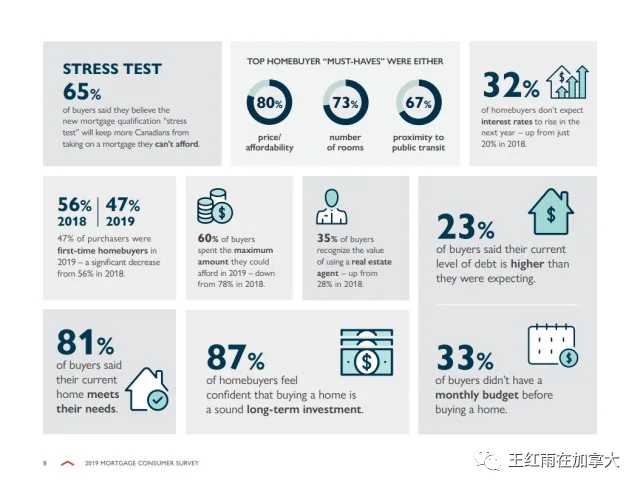
Canada is a country that is strong in its differences. Canadians are Olympic champions in taking the initiative to get vaccinated, which reflects Canadians have a very strong social consensus . On issues involving common interests, there are no divisions or antagonisms based on race, ideology or religion. This kind of social consensus is very rare and valuable. Some public accounts in the Chinese community, during the epidemic, ignored the facts and bombarded the side effects of vaccines in order to gain attention. Fortunately, other ethnic groups were not so negative, which stimulated the Chinese people's sense of participation. Social consensus is the most easily overlooked, but particularly important force. Robert Shiller's "Narrative Economics" talks about the impact of this social consensus on the economy. While 87% of Canadians believe real estate is a good long-term investment, Shiller's book states that only 43% of Americans think real estate is a good investment. Social consensus has made real estate the mainstay of family wealth for Canadians. In the United States, where there is no such social consensus, real estate plays a less important role in family wealth. Public opinion makes gold, which refers to the phenomenon of social consensus.
Through the epidemic, we can clearly see that Canada is a country that leans to the left politically and to the right economically - it is very resolute in robbing the rich and giving to the poor, while at the same time allowing the invisible hand of the market to adjust freely. Canada is also the world champion when it comes to giving out money. The ruling Liberal Party's behavior is exactly the same as that of the far-left NDP. Netizens joked that the Liberal Party was taking the NDP's path, leaving the NDP with nowhere to go. In terms of economic reconstruction, there is neither a large-scale infrastructure budget nor any stimulus plan, and there is no hasty intervention. Instead, the market is completely allowed to adjust freely. The public complained about the soaring housing prices, but neither ignored nor intervened. The state-owned enterprise CMHC badmouthed real estate and took the initiative to raise loan approval standards. As a result, two private competitors refused to follow up, resulting in heavy losses in market share. The federal government was also indifferent and did not even lift a finger to help. As a result, CMHC retracted its wrong policies in disgrace.

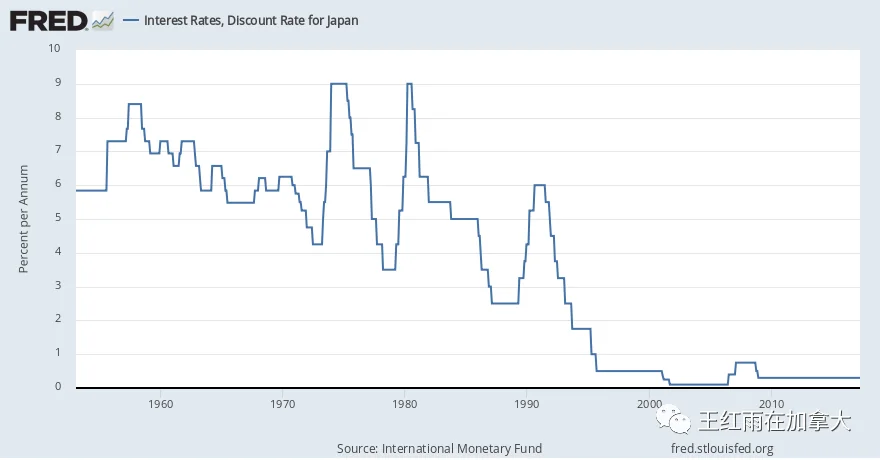
The epidemic has solidified two trends in Canada’s economic policies: 1. Adhere to the immigration policy and expand the number of immigrants; 2. Follow the United States in implementing low interest rate policies.In "The Legend Continues: The Autobiography of Trudeau," our Prime Minister only mentioned his economic program once, and he only said one sentence with precious words: "Immigration policy is economic policy." I thought about this sentence for a long time and thought he was right. Judging from Canada's natural endowment and population situation, there is no better economic policy than absorbing a large number of new immigrants. After the outbreak of the epidemic, the United States instantly entered QE mode and implemented quantitative easing policies to the point of no bottom line. The country that followed the most quickly was Canada. It is still printing money at a rate of 2 billion Canadian dollars per week and is firmly on the road to suppress long-term interest rates. In Japan, which invented and implemented the QE monetary policy in 2000, the central bank's overnight interest rate has been below 1% for 21 years, and there is still no prospect of raising interest rates. Judging from the large-scale money printing in Canada and the United States, low interest rates will last for a long time.
The characteristics of the post-epidemic era are becoming more and more obvious, and investors will not be able to sit back and win. What should we do and what should we not do in the coming days?
01 If I knew where I would die, I would never go there
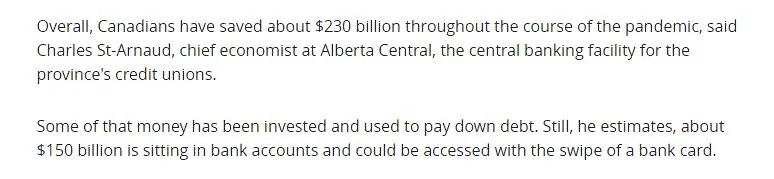
In a recent video interview, I was asked a belt question: If you want to invest, you have to tighten your belt. Is there any investment that does not require such discomfort and can get huge returns? Since the epidemic, Canadians' savings deposits have soared by $230 billion. Many people have used part of their savings to speed up the repayment of personal debts, but there are still as much as $150 billion in new deposits sitting in accounts with extremely low interest rates. These people have the belt problem mentioned above. People are eager to invest their spare money in safe, effortless, and profitable assets, so Madoff's opportunity comes. We have seen many fund-raising advertisements in the Chinese community, "No loans, no need to manage tenants, real estate investment you don't know about" and so on. Charlie Munger often said, If I knew where I was going to die, I would never go there. Yes, if we want to obtain excellent investment returns, we must first not be deceived into a fundraising trap, so we should first make a list of "where not to go" for ourselves.
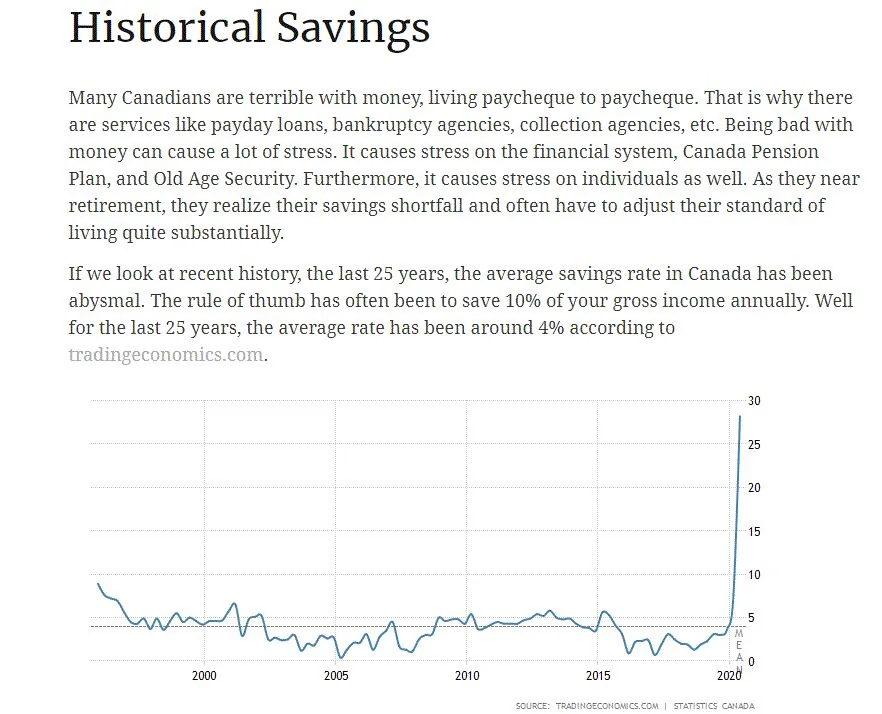
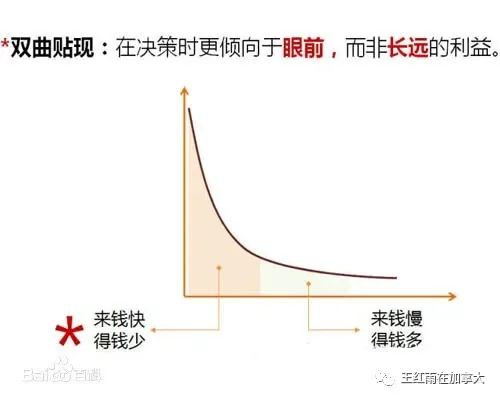
The first point is that there is no investment that is not uncomfortable. Because investing is to balance your lifetime income, spending all the balance of your current income is fun, but it won’t be fun after retirement. People often say "a bird in the hand is better than two birds in the bush". This is the truth. It is easiest to get gratification in time, but it is difficult to delay gratification. Behavioral economics calls the one-two-birds problem "hyperbolic discounting." That is, the short-term discount rate is regarded as very high, but the long-term discount rate is underestimated. In fact, the long-term and short-term discount rates are the same. Hyperbolic discounting accurately describes how small, immediate gratifications trump greater, delayed gratifications. If you don’t tighten your belt now, you may lose weight in the future, so you need to tie your belt even tighter. Scammers take advantage of the behavioral bias of hyperbolic discounting and offer clueless people tips for getting rich quickly. So the first place not to go is where you can get rich quick, and where you can get rich without tightening your belt. People who like two birds in the woods are extremely rare. For example, when Buffett was young, he saw that his wife spent 30,000 dollars on renovating a house. He was so heartbroken that he almost went into shock, because in his eyes, the current value of 30,000 dollars is 300 million dollars in 50 years. However, his wife, Susan, felt that the renovation money was worth it. If you’ve been scammed by get-rich-quick schemes, don’t worry, you’re not alone, most people prefer instant gratification and short-term small profits.
The second point is that you cannot gain without taking risks. When a turtle crawls forward, it must extend its head because it cannot crawl when it is retracted. However, there are risks as long as you stick your head out. Recognized risk-free investments now all have negative interest rates. For example, Treasury bonds and time deposits (GIC) have interest rates of less than 1%, while the inflation rate is 3.6%. If we hide our heads in national debt and GIC, not only will we not be able to move a step, but we will be worse off than a tortoise. Not only will we not be able to move forward, we will naturally go backwards. An investment that promises capital preservation and a return rate of more than 8% is definitely a sickle. Don't be a leek. When Madoff was swindling money in the 1990s, the fixed deposit interest rate was 7%. He promised 8%, guaranteed capital, and stability, and some people took the bait. The current fixed deposit interest rate is 1% and promises to give you a stable and capital-guaranteed investment return of 4%. Is it really reliable? The second place not to go is when the rate of return exceeds 4% , an investment with stable income and capital preservation. The return rate on a risk-free investment is less than 1%, and any investment with a return rate of more than 1% is risky.
The third point is to mind your own business, stay out of national affairs, and don’t get caught up in ideological disputes. Canada is likely to hold an election soon. The natural disaster is almost over, and the man-made disaster is about to begin. The Liberals and Conservatives have begun to attack each other, focusing on how to balance the budget. The Liberals never intended to balance the budget, and the Conservatives have no way of balancing the budget. In the upcoming general election, how to collect taxes will become a focus. After all, there must be an explanation for the overdraft caused by the epidemic. There is an important figure in the Liberal Party, Carney. He performed well as the governor of the Bank of Canada during the subprime mortgage crisis. He has both Canadian and British nationality, so he was invited by the United Kingdom to be the governor of the Bank of England. He resigned from the United Kingdom and returned to Canada this year. Carney has announced that he will not run in the election and will fully promote the carbon tax. Environmental protection has never been supported by hard science. Although Al Gore won the 2007 Nobel Peace Prize for his contribution to environmental protection, the "Climate Gate" incident broke out in 2009 in which scientists falsified data, making the issue of climate change caused by carbon emissions a mystery. The democratically elected president of the Czech Republic and a famous scholar, Vaclav Klaus, once wrote a shocking book "The Violence of Environmental Protection", which fiercely criticized the West for hindering the development of developing countries in the name of environmental protection and plundering the limited resources of contemporary people to deal with problems that are not actually problems. On the weird issue of environmental protection and carbon tax collection, because it is the leader Biden who takes the lead, the Liberal Party is getting more excited and is determined to push the carbon tax to the end. It has vowed to eliminate 100% of fuel vehicles in Canada by 2035, that is, 14 years later. Everyone must drive all-electric vehicles. Today, only 5% of people in Canada drive all-electric vehicles. How to achieve the goal in 14 years is unknown. The Conservative Party has been labeled as not environmentally friendly and politically incorrect, and it won't be able to shake it off for a while. The Conservative Party’s question is actually my question: If we spend less on the future, wouldn’t we be able to collect less taxes on the current generation? Is it really necessary to collect a carbon tax under a clever name? I want to end this issue here and never think about it again, because if I continue to think about it, I will become a prisoner of ideology. Munger warned us that the brains of people with strong ideologies are like cabbage, getting tighter and tighter. The third place you shouldn't go is where you have ideological disputes with people, unless you want to turn your head into a cabbage. " The first law of economics is scarcity, while the first law of politics is to ignore the first law of economics." If political issues and economic issues are discussed together, there will never be any results.
The fourth point is that the basic skill of investing is to identify whether to make money or to invest. I recommended and forwarded an article in my circle of friends, "One out of every 10 returnees from overseas goes into the financial industry, but is it easy to make a living?" 》This article introduces the ecology of financial practitioners and explains a very simple situation that most people are unaware of: junior staff of financial practitioners are arranged to engage in work such as soliciting savings and promoting investment products. In fact, they are collecting money for the institution. After the money is pooled, it will be used by higher-level people for capital allocation. To put it simply and bluntly, ordinary investors and customers of financial institutions mostly face the salesmen of the institutions who are responsible for making money. It is difficult to find experts who can help customers balance their lifetime income. Not to mention wild people, a big boss from the United States, claiming to own thousands of houses, and with a lot of halo on his head, comes to Canada to help the poor and lead you to get rich together. Haha, it’s the same, here to get your money. Munger told a story. He walked into a fishing gear store and found green and purple fishhooks, so he asked the boss, "Can these colored fishhooks catch fish?" The boss replied impatiently, "These hooks are not sold to fish." When you buy these colorful fish hooks, you have entered the fish shop owner's fish basket, and your fish are still swimming in the water. "Where Are the Client's Yachts" is a 60-year-old work that is still a best-seller. Buffett recommends this book to the public to understand the nature of the asset management industry. The asset management industry sells fishing gear. Real estate investment is particularly popular in Canada. There is a sign of making money in Canada - "a new type of real estate investment that you don't understand and have never participated in." If you see such an advertisement, please avoid it. As long as you don’t need loans or manage tenants, it’s not real estate investment. , including before the completion of the off-plan property, it all belongs to fundraising. In the past 10 years, a certain developer pre-sold more than 600 units, and more than 140 were actually built. People who bought the remaining 400 units felt like "Wow, I almost won money" when pulling a slot machine, so they decided to put in another coin and pull again. The fourth place you cannot go is that you have not studied in depth the various investments in Wealth Ark that are made by others. If you don't deserve to be a captain, just don't get on the ship. Because if you don’t take the time to learn and practice, you won’t have the ability to identify whether someone else is taking your money or you are investing to balance your lifetime income.

02 Investors in the post-epidemic eraTODO LIST
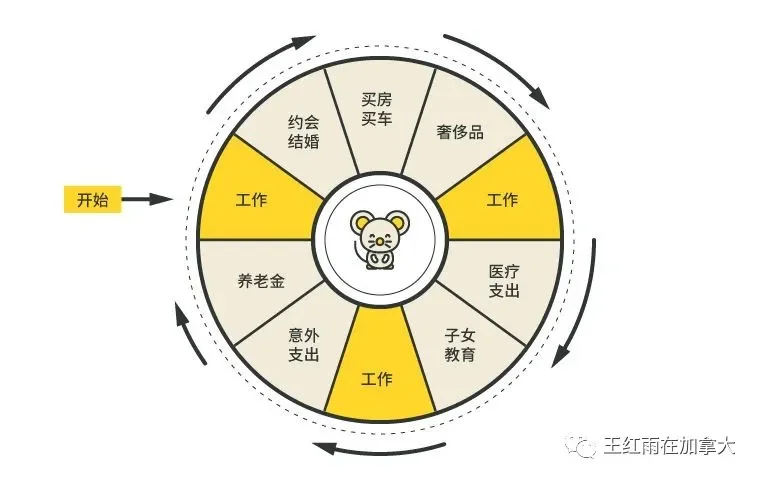
In the post-epidemic era, what do investors need to do to balance their lifetime income? Another question I was asked in the same interview was about rats. "If a person keeps making money, spending money, making money, and spending money again and again, isn't it like Sisyphus constantly pushing the stone up the mountain, rolling it down, and pushing it up again? Some people say that there is a way to jump out of the rat race and go straight to the freedom of wealth. Is this statement reliable?" I remember my answer at the time: If all the income is used for consumption, it will always be a rat race. If the income is used for investment, only by accumulating the family net worth to more than 5 million can we get out of the rat race. Otherwise, we will change the cage and continue to be a mouse, and will never become a cat.
Post-epidemic era The first item on the to-do list is to accumulate as quickly as possible 500 Ten thousand net assets, therefore, investment must be concentrated, not diversified, or balanced. It must be focused and concentrated, and the net assets must be accumulated to a high level before balancing and diversifying. Doing balance and diversification first will slow down the speed of wealth accumulation. Only by finding the investment field that you are best at and concentrating all your efforts on investing will you be able to leave your peers behind. Only by thinking about the head and the tail, balancing and balancing, will you be able to live a lifetime. Someone left a comment under my video and said a lot of nonsense about balanced investment. Why don't you say these words to Buffett and Soros, let them balance the balance and buy some Bitcoin and real estate. There is no scientific basis for diversifying investments, it is just the rhetoric of financial product salesmen. 90% of the assets are real estate, leaving 100,000 in cash in the checking account, 1 million life insurance for each other as husband and wife, and 1 million available credit lines collateralized by the property rights. Is the liquidity sufficient? Is the security enough? Why do you have to buy stocks? A member of the financial business group said it best, "I don't care how concentrated my assets are. What I want is to be able to accumulate them quickly."

There is a video on the Financial Post’s YouTube channel titled ‘People are being paid to borrow money’. Although it is only 12 minutes long, the quality of the information is top-notch. The reporter asked how investors can benefit from low interest rates. Guest David Kaufman believed that "our era is paying people who borrow money." He believes that only investors who can borrow at low interest rates can benefit, but those who borrow loan sharks cannot; interest rate cuts are faster than interest rate increases, and interest rate increases are much more difficult than interest rate cuts. Interest rates can be lowered in a few days, but it takes several years to rise; Farm prices are rising; investing in fixed-income bonds means lending money to others, and you are a lender, so buying bonds is not an option now..." David 's comments also include his views on the stock market. Let's find out for yourself. In short, an environment of low interest rates and high inflation is conducive to borrowing for investment. You can borrow money at an interest rate of 1.5% to buy real estate. In the next 30 years, you can use rent and depreciated currency to repay debts, and you can quickly accumulate family wealth. The age of competing for borrowing power has arrived. The second item on the to-do list is improving borrowing power.
In that video interview, I was also asked a question, "How to control debt leverage, what is the appropriate ratio of first loan, second loan, third loan and private loan." My answer is that the ratio of second loan, third loan and private loan is 0 as the optimal level. I have mentioned private loans in my public account articles before, which can be used under very special circumstances, but must be paid back immediately. For example, if the owner-occupied house A has a loan balance of RMB 300,000, and the customer wants to pay it off in one lump sum to release the borrowing power, he can use an investment house C as a mortgage to borrow a private loan to further reduce the balance of A, and then add a mortgage on investment house B to pay off the balance of A. After releasing the borrowing power, he can add an additional mortgage on house C and use the bank loan to repay the private loan. This process takes 2 months. Excessive use of leverage is very dangerous. A Hong Kong real estate investor wrote a book called "Three Retreats and One Retreat". The author's investment philosophy is that when all the banks said NO to his first loan application, he did not rush in to get second and third loans. Instead, he re-examined his debt situation and made sure to advance or retreat without losing ground. Munger said that he and Buffett never try to cross the 7-foot-high hurdles to avoid hurting their hips, but instead look for 1-foot-high hurdles to cross repeatedly. Feng Tang also said a similar experience. When it takes 250% effort to complete something, the best way is not to be the 250th. Many people want to turn the cash in their hands into houses, but banks have a scale to determine whether the applicant's income can afford the debt. Applicants with low income, hidden income, long-term government benefits, long-term family receipt of insurance benefits, etc. will be blocked from the mortgage loan. Mortgage interest rates are the best debt with the lowest interest rates. At the same time, real estate is the asset with the highest certainty of investment return. Many people salivate over mortgages and real estate, and take risks to borrow second loans, third loans, and private loans. Most people leave the risks behind out of jealousy. The third item on the to-do list is to stop being jealous, work hard, file your taxes honestly, optimize your household debt, and don’t over-indebt.Jealousy is listed as one of the seven deadly sins in Catholicism and is a very deep-rooted human nature. Munger often mocks modern psychology by mentioning that one-third of people are naturally jealous, but this topic is never discussed in psychology textbooks. Don’t be jealous of people who have more assets than you. They do things you dare not do. They delay more gratification and immediate enjoyment. Even if they are cloaked in the guise of social justice, people can see at a glance that the sentence "Buying so many houses has pushed up housing prices, making it impossible for Millennials to afford a house." It comes from the mouths of envious people. Social justice is the emperor's new clothes for the envious, only those who wear them don't know that they are naked. Don’t even be jealous of people who have been receiving benefits for a long time, or who have been receiving insurance benefits for their whole family for a long time. There are steel scales in banks, and the weight is the tax amount.

Conclusion
I define middle-class families as families whose basic household expenses account for less than 1/3 of their income. It is my bounden duty to help middle-class families improve their borrowing power and put more properties in the names of families who file taxes honestly and work hard. Low interest rates are a gift of this era. If you don’t have the ability to borrow money, you will waste everything. Among English-speaking democracies, Canada is the only country that implements an active immigration policy. Its immigration policy ensures a steady stream of property buyers. In a low interest rate environment, there are only two market trends in house prices: Kuainiu and Slow Niu. There is no need to be pretentious and look for value depressions. Turning cash into houses as early as possible is the first priority. I am convinced that Real estate wealth is the promised land for Canadian Chinese middle-class families , the conditions are simple: work hard, file your taxes honestly, and learn to manage your personal debt.