Since I started doing mortgage business in Canada in 2009, housing prices, loan policies and interest rate issues have always been hot social news and the focus of family investment and financial management. The epidemic is over, but inflation is back. When the epidemic came, people asked, "What impact will the epidemic have on housing prices?". After the epidemic ended, people began to ask again, "What impact will inflation have on housing prices?". The central bank announced the withdrawal of QE on October 27, 2021. Some people asked again, "What does this mean? Will it have any impact on housing prices?"
Houses are the core asset of Canadian family wealth. No matter what happens in society, everyone's first reaction is: What impact will it have on housing prices? This is very different between us and Americans. Americans always ask "...what impact will it have on the stock market?" This is becauseAmericans' wealth is mainly in the stock market, while Canadians' main wealth is in their houses.
When inflation first appeared, both the Federal Reserve and the Bank of Canada explained the inflation as temporary. However, as time goes by and the degree of inflation intensifies, this temporary explanation becomes increasingly unconvincing. Since there is inflation, the central bank should raise interest rates. This is what some families with large deposits and small loans have been waiting for. The central bank governor's reasons for not raising interest rates have been keeping pace with the times in the past six months. At first, he said that employment has not returned to before the epidemic, so interest rates cannot be raised; the Canadian real estate market has slowed down, and there is no rush to raise interest rates; Canada's total employment in September has returned to before the epidemic, housing transaction volume has begun to rebound after falling for five consecutive months, and house prices have been rising. Therefore, the central bank has changed its reasons for not raising interest rates. Now his reason is: Let's take a look, see what inflation expectations are, and then see whether wages have increased. Faced with the obvious signal of raising interest rates, as the governor of the central bank, why don't you rush to raise interest rates to puncture the real estate bubble and let people with savings and no houses feel proud, but why do you always find excuses not to raise interest rates? If the inflation rate remains above 4%, and the central bank interest rate is 0.25%, wouldn’t it make it easier for real estate speculators? Prices are soaring and everyone cannot afford pork, but they have to favor real estate speculators. It's unfair, unfair. Don't worry, there are "experts" who have come forward to plead for the people. An "expert" predicts that the Bank of Canada will raise interest rates eight times in a row in the next two years. The central bank's interest rate is now 0.25% and will be increased to at least 2.25% two years later. This will make real estate speculators cry to death in the toilet. Can interest rates be raised 8 times? Someone came to ask again. So, what is inflation? Does inflation necessarily require interest rate increases? What impact will rising interest rates have on house prices? What are the consequences if the experts are right?
01 What is inflation? How should governments and households respond to inflation?
Inflation, to explain in one sentence, is too much money chasing limited goods.If there is more money and the quantity of goods remains unchanged, prices will rise; if the currency remains unchanged and there are fewer goods, there will also be inflation. In the economic environment where the epidemic is gradually receding, people have more money in their hands, but production and transportation cannot keep up, resulting in a situation of high demand and low supply, leading to rising prices. The three areas where prices are rising fastest in Canada are: transportation, housing and food. CIP increased by 4.4% in September, of which transportation costs increased by 9.1%.Housing costs rising4.8%, food prices rose 3.9%. Rising oil prices and more people traveling have pushed up transportation expenses, while rising rents and decoration expenses have pushed up housing costs. There are many factors that increase food prices, including more people eating out and increased transportation costs.Housing costs include tenants' rent, homeowners' mortgage interest payments and renovation costs, but do not include house prices. Homeowners' mortgage interest payments fell.9%, a very large decrease. After taking into account the decrease in homeowners' interest payments, the overall housing cost still increased by 4.8%, indicating that rents have increased significantly.As the economy climbs up from the trough, it is normal for prices to rise due to the uneven recovery of productivity, which requires some patience to overcome various supply bottlenecks. People are actually not worried about the current level of inflation because it has not had a big impact on their lives. What is worrying is that if inflation continues to develop, hyperinflation will occur, leading to a reduction in income and wealth. Since last year, many people have been preaching in their circle of friends, "Inflation is coming, buy a house quickly", as if they are familiar with inflation.
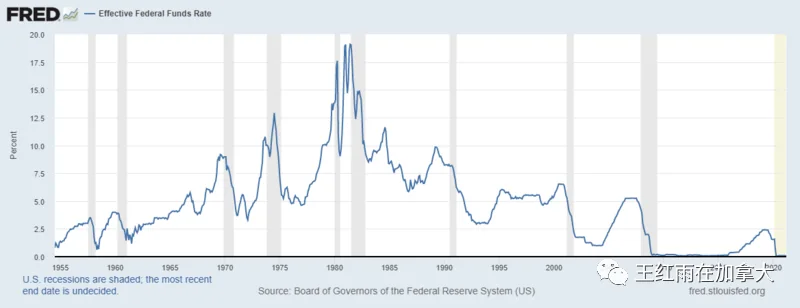
In fact, the last global inflation occurred in the late 1970s, more than 40 years ago. The inflation at that time was caused by the second oil crisis. When Iran's Ayatollah Khomeini came to power, global oil prices rose, which led to high supply-side costs, pushing up production costs and prices, which in turn caused wages to rise. In turn, rising wages further pushed up production costs, pushing up prices for the second time, and an inflationary spiral emerged. The chairman of the Federal Reserve at the time was Paul Volcker. He raised interest rates to 19%, and at the same time cooperated with the U.S. Treasury Department's price restrictions, credit tightening and other measures to suppress inflation. Farmers at that time marched on Washington with tractors, and builders associations threatened to strike. President Carter called on people to restrain consumption and cut off their credit cards to cut their feet and shoes. At that time, Americans were very obedient and mailed credit cards cut in half to Carter to express their support for the president. Thousands of scrapped credit cards were received in the White House mailbox every day. Inflation was contained, but the economy fell into recession. What is a recession? That is, the national output GDP falls, the unemployment rate rises, and the demand turns from excess to deficiency. President Carter lost re-election.
Could similar inflation be happening now? Canada's GDP shrank in the second quarter and stagflation occurred, but it was short-lived. GDP returned to growth in the third quarter. Rising oil prices are one of the drivers of inflation, but they are beneficial to Canada because the Canadian dollar is a commodity currency. When oil prices rise, the exchange rate of the Canadian dollar will rise, resulting in low prices for imported goods, which can offset part of the rising price pressure. That is, it is difficult for inflation from other countries to be imported into Canada. At the same time, if the Canadian dollar exchange rate rises, exports will be blocked, and Canadian companies involved in global trade will be very uncomfortable. If Canada continues to introduce a large number of new immigrants, it will effectively lower workers' wages, export costs should be under control, and it is unlikely that export costs will rise excessively. As a second-tier country in the world, it is very important to resist the inflationary output of other countries, especially the United States. Judging from Canada’s economic structure, it is unlikely that inflation will get out of control because:Canada is a country of immigrants. It is very difficult to significantly increase labor costs, or wages. Canada is rich in oil resources. If inflation is caused by rising oil prices, Canada has a natural ability to resist imported inflation.
I will make a personal assumption and deduce the path of inflation in Canada. You can just treat it as a matter of imagination and don’t take it seriously. The CPI is now at 4.4%, which by itself will not make life difficult for any family. Transportation costs, housing costs, and rising food prices can largely be met by Canada raising supplies on its own, without the need for international trade. supply, which has eased as the federal government has eliminated all pandemic subsidies. 660,000 people received epidemic subsidies for 19 months from March last year to October this year. These people did not participate in production, only consumption. After being weaned by the government, most of them will participate in production, otherwise they will not survive. The continued rise in oil prices is very beneficial to Canada's prairie provinces, because the cost of Canadian oil sands extraction is about US$40 per barrel. If the oil price stays at US$80 per barrel for a long time or even rises to US$100, it will be good for Canadian employment. Government tax revenue will be greatly improved as a result. The calculation of CPI is based on data from a year ago. The consumer price index in September this year is compared with consumer prices during the third wave of the epidemic last year. This is called the one year base effect, that is, the one-year base effect. Next year, the monthly consumer price comparison will be with the month corresponding to this year, so the CPI will not rise too much next year, so the pressure on the central bank to raise interest rates will not be as great as it is now. My personal opinion is: Taking into account Canada’s internal factors, external factors, and the calculation method of CPI, Canada’s inflation next year will not be too wild unless other unexpected circumstances occur.
What the government can do to curb inflation is either to suppress demand or to promote supply. For example, if all epidemic subsidies are removed, consumer demand will decrease and supply will increase at the same time. Removing the epidemic subsidy also eliminates the negative external effects of this policy. Some people have been getting something for nothing, which is a harm to other people's work enthusiasm. Suspension of benefits is very beneficial to Canada's economic recovery. Raising interest rates actually affects both demand and supply, and is not conducive to economic recovery. If you want to boost output and increase GDP, the best way is to maintain low interest rates. If you can reduce taxes, the effect will be even better. Stopping money printing is also an effective method. The money supply will be reduced, and the situation of excessive money chasing limited commodities will be alleviated. Stopping QE is a good idea.
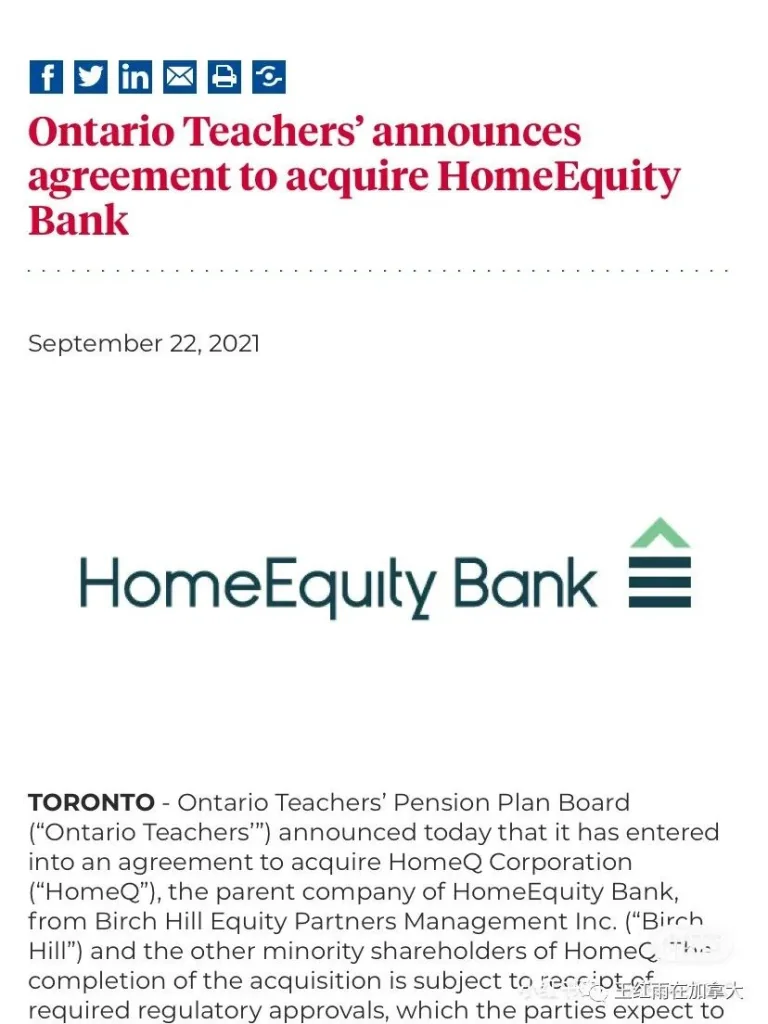
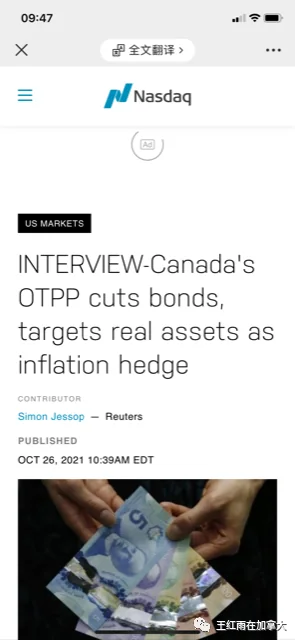
There is actually only one way for investors to deal with inflation, which is to seize real assets.Among investors, both institutional investors and individual investors have the same response measures when facing inflation. The Ontario Teachers' Pension Plan OTPP is a very active institutional investor. They announced on September 22 that they had acquired HomeEquityBank, a reverse mortgage finance company, and explained the reasons for this change in investment strategy in an interview with Reuters. The interview topic was: Sell bonds and exchange them for real estate to fight inflation. You can search online and read Interview – Canada’s OTPP cuts bonds, targets real estates as inflationhedge. When the epidemic broke out, the central bank’s QE policy was to purchase 5 billion bonds per week, which was gradually reduced to 2 billion per week, and finally stopped buying bonds on October 27 and exited QE. When the central bank bought bonds, investors like OTPP took advantage of the entry of big buyers and sold the bonds in their hands at high prices. Since bond prices were pushed up by the central bank, bond yields were artificially lowered, and we saw that mortgage interest rates were also lowered. The withdrawal of QE by the central bank means that the largest buyer in the financial market will no longer exist, bond prices will fall, and yields will increase. For institutional investors, the meager return on investment cannot meet the requirements of investors, so they reduce their bond holdings on a large scale and use the cash-out money to exchange for real assets and real estate to resist inflation. For individual investors, the above operations serve as a model, just COPYPASTE. Why do families want to seize physical assets? Obviously, the central bank can print money, but it cannot print houses, oil, gold, natural gas, chips, cars, and food. But commodities that can be stored for a long time without depreciating, for ordinary families, are houses and gold. But gold is dead, and paper is burned when something happens.
02 What does the central bank’s withdrawal from QE mean to ordinary families?
The central bank's purchase of bonds, that is, the implementation of the QE policy, has three effects: 1. The central bank's purchase of issued bonds in the hands of investors will push up bond prices, allowing those who originally held the bonds to make a lot of money; 2. After the bond prices are pushed up, the bond yields fall relative to the fixed rate of return on the bonds, and the cost of long-term loans decreases due to the decline in bond yields, which reduces the debt costs of the government, enterprises and households; 3. In order to buy these bonds, the central bank releases a large amount of cash, which improves liquidity and creates a currency flood. Therefore, when the United States first implemented QE in 2009, it was considered to be dropping money from helicopters. The implementation of QE is beneficial to financial investors and long-term borrowers.ExitQE means that the largest buyer of bonds has disappeared, the motivation for the appreciation of bond face values has disappeared, bond yields have risen, and long-term loan interest rates have risen. If your family does not benefit when QE is implemented, it will not be affected when QE is withdrawn. For households that benefited from QE, this advantage will be reduced or no longer exist when exiting QE. For example, if interest rates rise, the interest rates may have already increased by the time your mortgage is renewed.
QE is implemented to suppress long-term interest rates and release liquidity. However, we know from practical observation that these highly liquid funds rarely flow into the real economy and basically circulate in the capital market. Assuming that OTPP sells their bonds at high prices, will they become venture investors to support start-up companies? It seems not. Most of the cashed-out funds will still be invested in financial assets, such as buying stocks, so we saw that the stock market was very prosperous during the implementation of QE. If OTPP believes that after stopping QE, new funds will decrease and inflation will rise, they will change their investment direction. The new investment strategy of this institution is mentioned above. In fact, it is the same as that of every family, holding on to real assets to avoid being washed away by the flood of inflation.
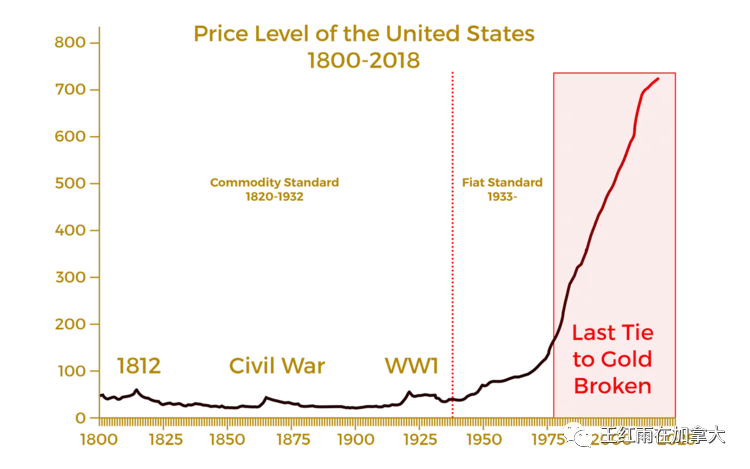
Many people complain that the QE policy has caused a flood of money. In fact, the currency flood has caused a rising tide that has not lifted all boats, which is what everyone envy and hate the most. From the perspective of the principles of QE, it is mainly financial investors who benefit from it. Others who do not enjoy the ultra-low loan interest rates actually suffer because the prices of everything have increased, especially assets, which have increased the most. People who have not yet bought a house are looking for regret medicine everywhere. Currency is originally a general equivalent used for exchange, but currency has been waterlogged and abused long ago. It is the central bank's fault that the purchasing power of money has been eroded. 50 years ago, in August 1971, Nixon announced that the agreement established by the Bretton Woods system that each ounce of gold could be exchanged for 35 US dollars was invalid and no longer convertible, and began a floating exchange rate. From then on, the central bank issued banknotes without the gold anchor, which also meant that human beings' ability to create money was freed from the constraints of natural resources. At first, everyone thought that the "Nixon Shock" was a temporary shock. Unexpectedly, mankind could never go back and no longer wanted to limit the amount of money printed to gold. Therefore, as I said before, gold is dead and paper will be burned if something happens. From now on, the amount of banknotes issued depends entirely on the integrity of the central bank. Until the Federal Reserve began to launch the QE policy in 2009, central banks still had a certain discipline in issuing money. Except for the Bank of Japan, that is, currency issuance basically matched GDP growth; the government also had a certain degree of discipline in issuing treasury bonds, and treasury bonds basically matched tax revenue. After the outbreak of the epidemic, in March 2020, the Federal Reserve announced the restart of QE. Everyone was shocked. If we don’t develop a vaccine or close the city, why print money? In fact, it is very simple. The central bank has QE addiction syndrome. No matter what happens, its first reaction is to print money. Regardless of the fact that QE has stopped now, restarting QE only requires a slightly unusual reason.
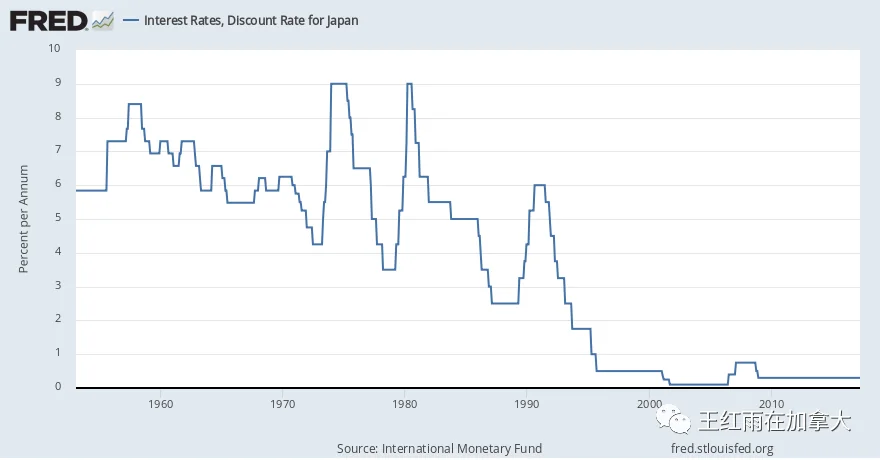
Will the central bank sell the bonds it buys? Good question. If the central bank sells these bonds on its balance sheet, it is called "shrinking its balance sheet." In 2017, the United States announced that it would be shrinking its balance sheet, and Canada really believed it. It not only shrunk its balance sheet but also raised interest rates. As a result, everyone knows that the stock market is failing. The stock market crash in December 2018 brought the Fed's balance sheet reduction action to a complete halt. Shrinking its balance sheet means that the central bank has become the biggest seller in the capital market. If it continues to sell, no market can bear it. The Bank of Canada went further than the Fed in shrinking its balance sheet, but eventually stopped and no longer dared to raise interest rates throughout 2019. QE is easy, but shrinking the balance sheet is difficult. We can know this from the lessons of the Bank of Japan in the past 21 years. Japan was the first to implement QE policy, using QE in 2000. As a result, to this day, the central bank interest rate has been below 1% for 21 years.Humanity has entered an era of low interest rates.The Bank of Canada learned its lesson from the previous trend of shrinking its balance sheet and made an early promise: Even if it starts to raise interest rates, it will not shrink its balance sheet. Last month, the governor of the central bank made this commitment on September 9: The current balance of bonds purchased in the central bank's balance sheet is 350 billion. If any bonds mature, the central bank will purchase a corresponding amount of bonds from the market, thus maintaining the total amount of 350 billion unchanged. To put it simply, even if interest rates are raised, the balance sheet will not be reduced, sufficient liquidity will always be maintained, and the total amount of money floods will not decrease.
03 How far are we from raising interest rates?
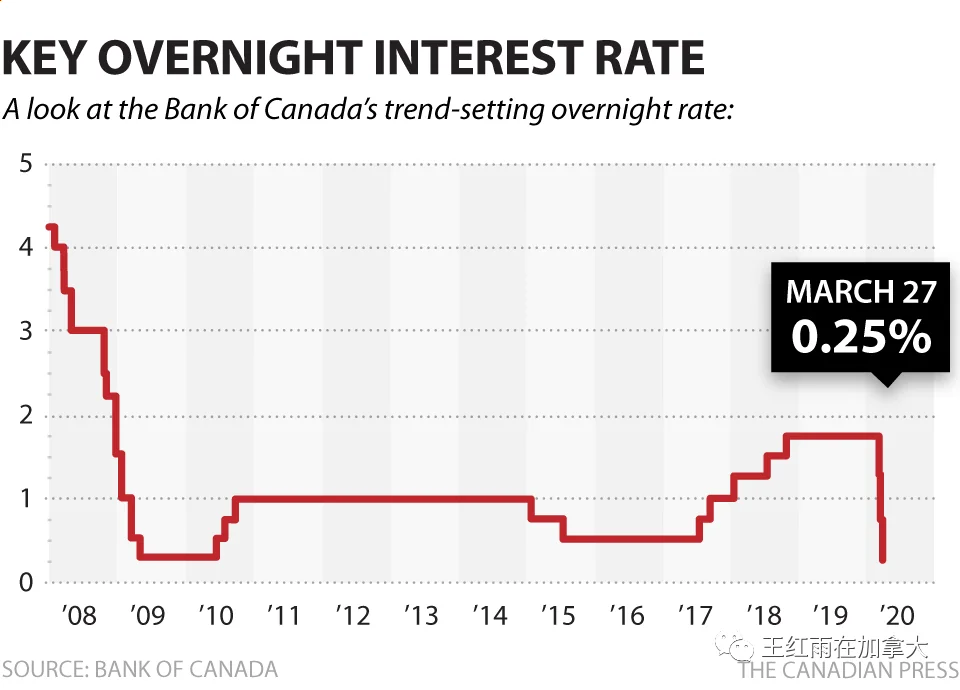
The Federal Reserve has raised interest rates a maximum of 17 times, bursting the housing bubble at once and bringing disaster to the world. Cynics want central banks to raise interest rates like crazy and bankrupt homeowners with antisocial personality disorder. With the lessons learned from the United States, no central bank in any country will repeat the same mistakes. Are real estate investors the worst affected by the U.S. subprime mortgage crisis? Obviously not. The homeless and unemployed who suffer the most are the people at the bottom of society. The last time Canada raised interest rates and reduced its balance sheet occurred from July 2017 to December 2018, a total of five interest rate increases, from 0.5% to 1.75%. There was no interest rate increase throughout 2019, and it was lowered back to 0.25% in March 2020. The Bank of Canada will tentatively raise interest rates in line with the U.S. pace of shrinking its balance sheet and raising interest rates, but it will not raise interest rates as cynics predict and hope. There are four side effects of raising interest rates: 1. Increase the government debt burden and crowd out public expenditure; 2. Increase corporate borrowing costs, inhibit economic recovery and hinder employment recovery; 3. Capital market funds flow out of the bank deposits and depreciate financial assets; 4. Suppress personal consumption and weaken demand.What we are about to see is that the thunder is loud and the raindrops are light. Voices predicting interest rate hikes are endless, and the central bank continues to refresh its reasons for not raising interest rates, but the actual implementation of interest rate hikes has been slow to come down.As long as the central bank does not raise interest rates, borrowers who choose floating rates will not actually increase their borrowing costs. Should I choose a floating interest rate or a fixed interest rate now? This is a question raised by private messages in the background of this public account every day. Again, regarding private questions, if they are not my customers, I will not answer them. How to choose? In fact, I have already answered this question. For the answer, please refer to the article "Looking at the Anxiety of Middle-Class Families from Canada's Economic Policy."
When the central bank withdraws from QE, bond yields will inevitably rise. Therefore, although mortgage fixed interest rates have already risen, they will continue to rise. As fixed interest rates continue to rise, even if the central bank does not raise interest rates, the floating interest rates offered by commercial banks will rise. The reason is that if the gap between fixed interest rates and floating interest rates is too large, banks' fixed interest rate products cannot be sold at all. So we will see floating interest rates and banks giving less and less discounts. In this process, the bank's income increased, and shareholders who invested in banking stocks were happy. People who are afraid of interest rate hikes can invest in bank stocks as a hedge.
In the next 1 to 2 years, our hearts will fluctuate with interest rates. Without the worry of the epidemic, the worries of interest rates and inflation will come again. We will find that the interest rates provided by banks are seafood prices, which vary every week. This situation cannot be predicted or controlled. We can only follow the trend of the market and take whatever interest rate is available. Anyway, it won’t be much higher.
04 Where will house prices go?
The new cabinet of the federal government has added a minister to deal with housing cost issues, headed by the original Immigration Minister Hussen. He will be responsible for implementing the four-year campaign promise of repairing and building 1.4 million housing units. There is a CONDO in Toronto named Wellesley On The Park. The pre-sale date was 2014. It was completed and completed the property transfer in 2021. It took 7 years and has a total of 740 units. If the federal government is so efficient that it can build a 740-unit apartment building in four years, then it would have to start building 1,891 such buildings at the same time to reach the goal of building 1.4 million new homes in four years, which is obviously impossible. Then renovate 1.4 million houses. Only by renovating the 350,000 uninhabitable properties into habitable properties every year can we increase the supply, right. Otherwise, if people live in them, the supply will not increase even if they are repaired. We will wait and see what method Minister Hu Sen will use to turn the 29,000 uninhabitable properties into habitable houses every month. General election promises are quite harmful.
Looking at the past 10 years, I have come to a conclusion: Canada's housing prices are driven by the contradiction between the number of new immigrants and the number of new housing constructions. If the supply of new housing lags behind the housing demand of new immigrants every year, housing prices will get higher and higher due to the contradiction between supply and demand. Even if there is administrative intervention, it will fluctuate and the upward trend will soon resume. The only two factors that have a causal relationship with housing prices are the new population and the number of new houses. Other factors, such as unemployment rate, interest rates, mortgage policies, epidemics, QE, etc., are not causally related to housing prices, but are correlated. The most obvious thing is that from July 2017 to December 2018, Canada finally raised interest rates, and raised interest rates continuously. As a result, CONDO prices soared, and those who were waiting to see if housing prices would fall due to interest rate hikes were disappointed again.

During the epidemic, the real estate market has undergone great changes. For properties in remote suburbs, chickens and dogs have risen to heaven. I advise my friends who have vacation homes by the lake to take the opportunity to sell their properties, which only skyrocket during special periods, and return to the city center for investment. Nature has gravity, the earth has gravity, and humans have community gravity. The idea that distance is dead is simply untenable. If distance were dead, there would be no ghost towns, no place of no support, and no rust belt. As long as people are alive, they have social needs. The biggest punishment for a living person is to put people in prison and deprive them of their social rights and freedom of movement. A temporary escape from the city center will not last long.
Some people have been analyzing low-end real estate investment in a serious manner. In fact, looking back on the past 10 years, all real estate prices have increased, but the time zone of the increase is different. This reflects the fundamental contradiction between population and housing. People need a place to live immediately based on their affordability. They will buy wherever they can afford it. If a place has already risen in price, they will buy it in a place that has not yet risen. When TH rises, they will immediately buy a CONDO. Various properties in different geographical locations are constantly increasing. There is actually only one secret to buying a house, buy early.
In the post-epidemic era, housing prices will not change their continued upward trend because immigration policies have not changed, local new home approval processes have not changed, and the supply rate of new homes remains unchanged. The 1.4 million housing units promised by the government are just a drop in the bucket. After the epidemic, the price of real estate in the city center will make up for the increase. In short, there is a lot of discussion about housing prices. My summary is:If interest rates are raised, housing prices will rise; if interest rates are cut, housing prices will rise faster; if there is an epidemic, housing prices in remote areas will rise; without the epidemic, housing prices in central urban areas will make up for the increase; with high unemployment, housing prices will rise; with low unemployment, housing prices will rise faster.
Conclusion:
In the next two years, the governor of the central bank will explain to you from the bottom of his heart why he has not raised interest rates and why he has raised interest rates so slowly. He has repeatedly threatened to raise interest rates, but it is difficult to implement them. Because the central bank takes into account the burden of government debt and enterprises, you can use his tricks to delay the use of floating interest rates as much as possible. The current interest rate difference between floating interest rates and fixed interest rates is between 0.7% and 1%. If you use a fixed interest rate, this interest rate difference is the interest rate insurance premium. I think this premium is too expensive.
The end of QE is a good thing for middle-class families with few financial assets.
We hope that inflation will fall automatically, because inflation is a tax on the poor, which does little harm to people with high assets and high incomes, and is particularly beneficial to people who borrow a lot. Using watered currency to repay agreed debts is taking advantage.
House prices in remote suburbs will end their runaway status, and real estate prices in the city center will make up for the increase. Overall, there is no opportunity to buy the bottom, and it is recommended that properties in too remote areas escape the top.
To deal with inflation, it is very simple. Learn from institutional investors, stay away from bonds, and focus on real estate.
In writing these articles, I use my spare time to communicate with readers in a one-to-many manner on the premise of ensuring that I can provide high-quality services to my customers. I hope that the time I devote will be respected by everyone. Please do not message me privately with your personal questions. This small public account has never carried any advertisements, so I don’t need traffic. The output of these popular knowledge is my return to society. Of course, I can also enjoy the beauty of flow time when writing. The Internet has memory. Every sentence I write is my true thoughts at this moment or at that time. Even if it is wrong, it is my sincere sharing. I believe that honesty can stand the test of time. Mark Twain said, "If you tell the truth, you don't need to remember what you said." People often quote me in my articles, but I don't seem to have said it. Maybe it's because I always tell the truth. The basic concepts and my way of thinking in these articles I write hope to bring you new knowledge and thinking. You can ignore my predictions. Writing articles on public accounts is providing free public information. I don’t want to see the tragedy of the commons, and I don’t like to be a party. Please be kind to reliable public information.