People describe the life of a middle-class family as running on a treadmill. Although they are sweating profusely, they are still standing still. Now the situation is even worse. Someone has increased the speed of the treadmill. Already tired middle-class families have found that they need to run harder to avoid being thrown off by the treadmill. The current high interest rates have caused middle-class families with heavy debts to bear more interest. Inflation has generally increased the cost of living. Competition in the workplace has become more intense when working from home has become the norm. Artificial intelligence is approaching those positions that are easily replaced by robots... All of this requires middle-class families to run faster in order to stay where they are. Since the outbreak of the epidemic, the pace of change in the times has been accelerated. People engaged in professional work are likely to fall off the treadmill if they cannot keep up with the adjusted speed.
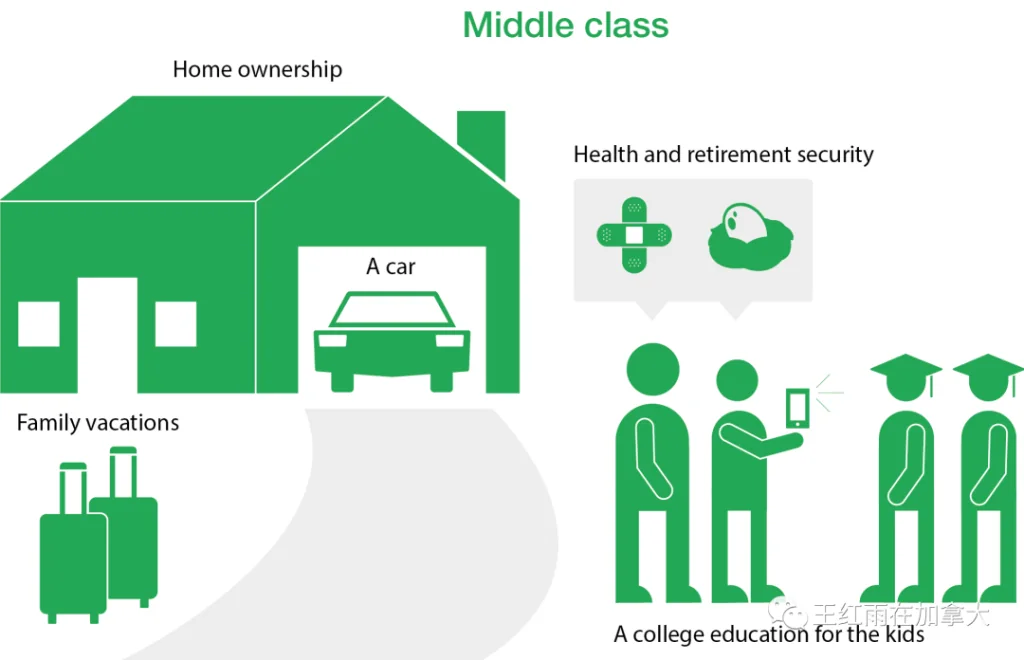
Before establishing asset-based passive income channels, middle-class families face the risk of downgrading at any time. The biggest threats come from the stagnation of active income and being entangled in consumer debt, making it difficult to move forward or even going backwards.
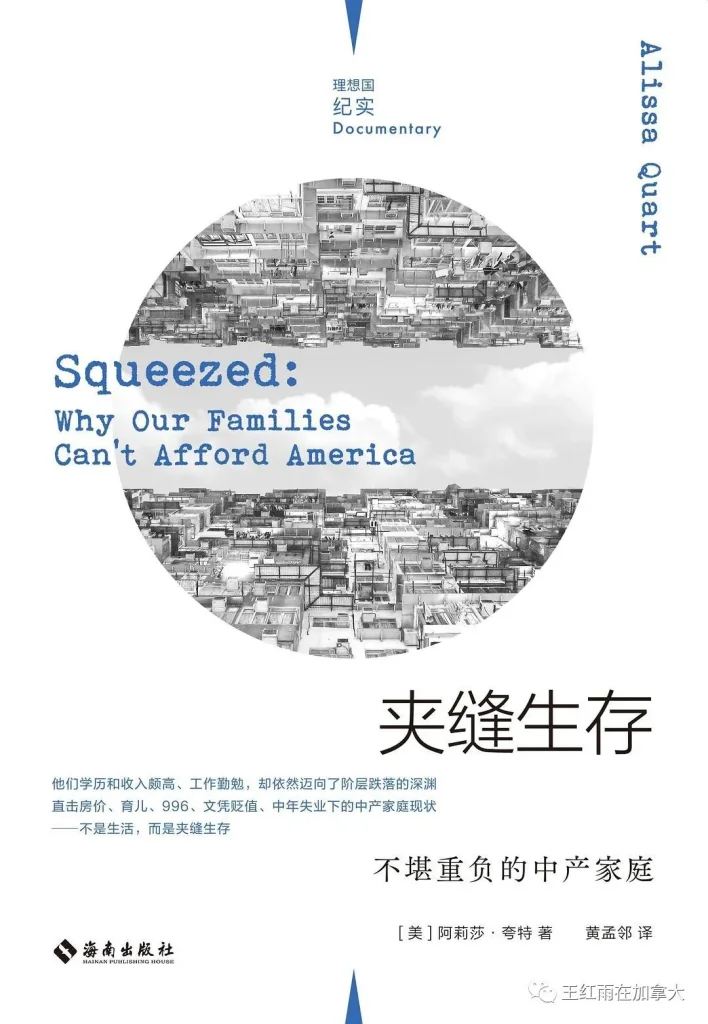
Some industries that used to be very profitable may be wiped out as times change. For example, journalism was once hailed as the fourth force, after the legislative, judicial and executive powers, because of its control over public opinion. Journalists not only have the right to speak and supervise, but they also earn a lot of money. The current journalistic industry in North America has basically become a gig industry, with no job security, very meager and extremely unstable income. Teacher Zhang Xuefeng, who helps with college entrance examination applications and postgraduate entrance examination guidance, has become popular recently because when someone asked him whether it would be good to major in journalism, he said that if his child was admitted to the journalism major, he would rather break his child's legs. American female writer Alissa Quart's 2018 work "Survival Between the Seams - Overwhelmed Middle-Class Families" describes the various "dangerous middle classes" in the United States who are desperately running on the treadmill just to not be left behind. The author was a journalist whose media company no longer exists, and he became a freelance writer doing odd jobs. It is very admirable that she can speak honestly about her situation, but she believes that this is a failure of the government and that for a middle-class person like her to fall freely, it is a disgrace to civilized society. I feel that no country’s safety net protects the middle class from falling down the social ladder. The social safety net guarantees basic survival rights and has no obligation to protect the middle class from losing their status.
In addition to the possibility that the income of middle-class families will sink along with their industries, the heavy burden of consumer debt will also prevent them from keeping up with the speed of the treadmill.There are three big pitfalls in consumer debt for middle-class families: credit card and car loans, student loans, and home loans.The interest rates of these three types of consumer loans vary from high to low, but the nature is the same: debt incurred due to overdraft of future income. Future income must be used not only to repay the principal but also to repay interest. When loan rates rise, the burden becomes even heavier. There is an essential difference between consumer loans and productive loans. If the loan is for purchasing assets that can bring income, the loan is a good debt and a productive debt; if the loan is for consumption, it is an overdraft of the future, making the foundation of life fragile and unable to withstand major accidents and storms. Taking a loan to buy an investment house is to use debt to purchase productive assets; taking a loan to buy a home is overdrafting your future self and making your financial situation fragile and unable to withstand high interest rates, accidents and industry sinking.
If middle-class families want to keep up with today's treadmill, they must first keep their active income growing faster than the currency issuance, and second, keep their consumer debt low enough so that their running speed will not be slowed down by debt.
01 The meaning of work is given by yourself
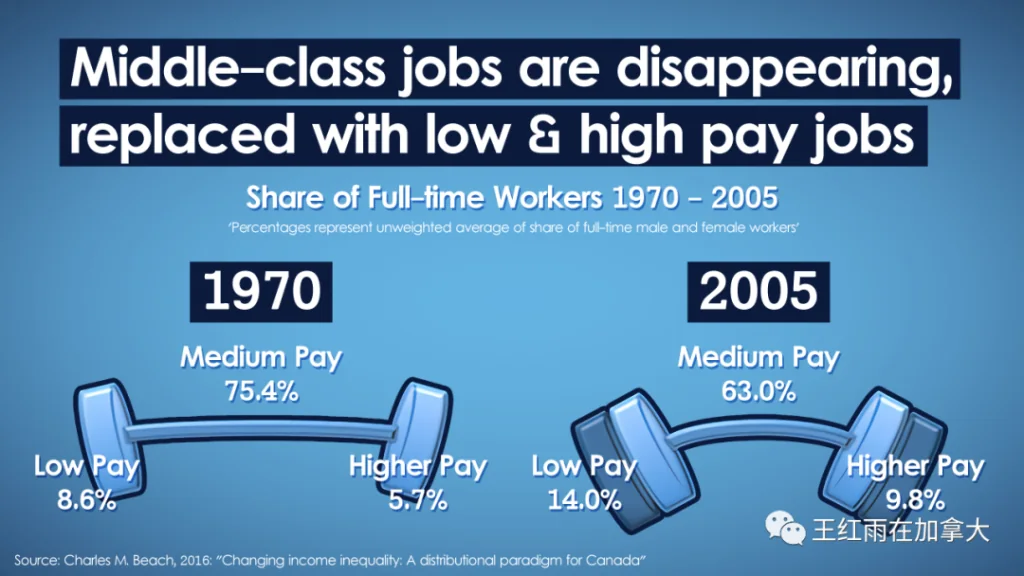
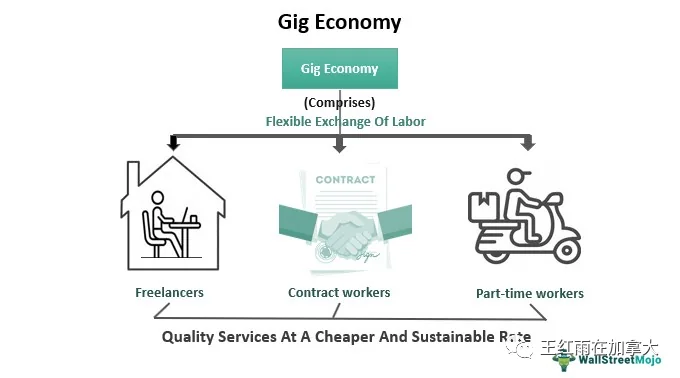
There will be more and more industries like journalism that are wiped out by gangs as soon as they start working. Many hospitals in the United States are now using robots to replace pharmacists. Robots are fast and accurate in dispensing medicines. They are not afraid of hardship or tiredness, and can work up to 24 hours a day. There is about to be a breakthrough in the field of autonomous driving. This technological advancement will first replace truck drivers. The average annual income of American truck drivers is around 70,000. They are middle-class jobs with a large number of people. About 3.36 million people are engaged in trucking, accounting for 6% of full-time jobs in the United States. Middle-class people working as journalists, pharmacists, and truck drivers are the first industries to be impacted in the information age and the artificial intelligence era, but this is just the beginning.More middle-class people will reduce or even lose their active income before establishing passive income cash flow.The entire society does not actually realize that certain professionals who were once considered to be the middle class have actually become the main force of the gig economy. People still look at them with the same eyes as the middle class, and these people are very cooperative in maintaining the same quality of consumption to prove that they are still worthy of middle class status. Some practitioners in industries that have been wiped out by the group are making difficult choices between identity and being unable to make ends meet. The problem of stagnant or even declining income for middle-class families has become more and more serious after the epidemic, and the scope is expanding. The good days of finding a job after graduation and holding it till retirement are long overdue. Especially in capitalist countries, it will become more and more common for industries or positions to be eliminated by groups in the future. In the past, people used machines to replace their hands, but now artificial intelligence is replacing people's brains. It is a fact that most human brains are no better than artificial intelligence and therefore will certainly be replaced.
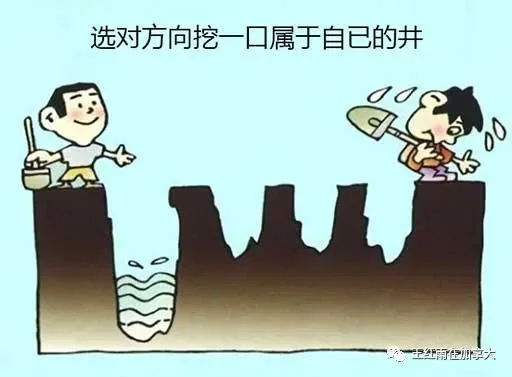
Once the active income that can support a certain consumption capacity is lost, the middle class will naturally be downgraded. This has nothing to do with which country or social system one lives in. It is only related to a person's ability to obtain active income. No one wants to see their existing status be downgraded, but maintaining active income at a certain level is no longer a matter of course in today's environment. The main threat to the downgrading of the middle class comes from the application of artificial intelligence. Xiangshuai concluded in a speech: Adam Smith discovered that human wealth comes from division of labor and exchange. The more detailed the division of labor, the more complete the exchange, the greater the wealth; Bismarck, the iron-blooded prime minister of Germany, discovered that specialized education can quickly cultivate a person into a "professional" and gain an advantage in the division of labor. So The Prussian education model was accepted by the world and is still used today; it is this situation that artificial intelligence is going to subvert; if a person wants to learn to become a "professional" in a certain field, if it takes 5 years, artificial intelligence may only need 5 days to learn the same knowledge. In other words, if a well consists of a well It takes 5 years for humans to dig, but it may only take 5 days to dig with artificial intelligence. This is a disruptive change; if a person finds that the well is dry after digging for 15 years, and stubbornly stays at the bottom of the well and refuses to come up, then he is waiting to die. No matter how high the cost of replacing the well is, he should bravely climb out. Come and start over, but in real life, there are more and more people staying at the bottom of the well. Not only do they refuse to climb out, they also complain about social injustice. The opportunity cost of artificial intelligence to change wells is very low, fast, and emotionless. Therefore, some industries that do not need to dig deep wells will be the first to be replaced by artificial intelligence. I completely agree with Xiang Shuai’s above views.

Compared with some people who cannot dig out water, there are a group of people who spend too much time looking for wells. They have not dug out water anywhere for more than 10 years and have only dug a few holes. We respectfully call those who can dig wells in many places "slash youth", while those who dig holes everywhere are at best unemployed youths. Some people feel that they must do meaningful work, and becoming an honest office worker is something they don't bother to do. There is an American anthropologist, David Kleiber, who wrote a book, "Meaningless Work," in which he believes that "some jobs should not exist, but they are dragging down your life." Capitalism is rich in people who criticize capitalism all day long, and their analysis angles are becoming more and more sophisticated. Kleiber believes that 37% of jobs are meaningless and people who do these jobs are wasting their lives. He included consultants, public relations professionals, corporate lawyers, human resources department employees, university administrators and other white-collar jobs in this category. The total number is staggering. He believes that only by recognizing those meaningless jobs can real labor value be obtained. Work is beautiful, but only if you have the courage to refuse meaningless work! I don’t agree with Kreber’s point of view. I think that in a capitalist society, if 37% of jobs are meaningless and do not need to exist, then most capitalists and employers are fools and are paying people to do useless work. I think all salaried jobs are meaningful, worth doing, and worth working overtime, and then applying for a home loan with your pay stubs and tax records. Many of my clients disliked their jobs before they became real estate investors, and it is these seemingly meaningless tasks that play the most important role when it comes to loan applications.I believe that the meaning of work is entirely given by oneself. If a person cannot give meaning to his work, he lacks the ability to earn active income., we still need to continue working hard instead of digging holes everywhere and making meaningless attempts.
02 Debt is the accelerator of the decline of the middle class
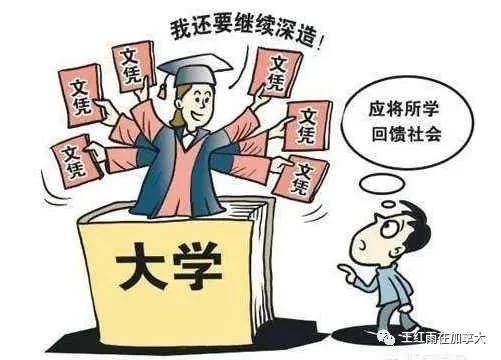
Many middle-class families in the West have been trapped in debt throughout their lives and cannot extricate themselves. The starting point for some family debt, before starting a family, is student loans. Alyssa Quart also mentioned the issue of student loans in "Surviving Between the Cracks", but she believed that the debts formed by people in their pursuit of middle-class status should be paid by the government, otherwise people will be in debt while getting a degree. The popularity of her works may be due to the fact that she expresses the feelings of many middle-class people. Many people are very arrogant when pursuing academic qualifications, degrees, and qualification certificates. They hide in ivory towers for many years and dare not come out. The more they pursue academic qualifications, the higher the tuition fees and the more they are isolated from society. For personal pursuits, it is more reasonable for individuals to foot the bill, otherwise the ivory tower will be overcrowded. Many academic qualifications and degrees cannot help students win the competition. For example, some law school graduates with high tuition fees but low admission scores cannot find a job after graduation. If the government forgives student loans, it will become a wrong incentive mechanism, allowing some people to pursue diplomas instead of abilities.
In addition to the vanity of academic qualifications that can lead self-proclaimed middle class people to be strong but incompetent, the unwillingness to be outdone in consumption has also caused many professionals to fall into debt difficulties. 124 years ago in 1899, American economist Thorstein Veblen published his masterpiece "The Theory of the Leisure Class", which explored the emptiness and falsehood of conspicuous consumption. But at that time, loan consumption was still very rare. At that time, the leisure class really had passive income support, and it was possible to engage in conspicuous consumption. Since the popularity of credit cards and consumer loans, the pseudo-middle class has been born, and the harm of conspicuous consumption has become even greater. Those who prove their identity through consumption are actually very SA. The price of living for others to be seen has to be borne silently for a long time, possibly a lifetime, but they think that others cannot see the truth.
As mentioned earlier, owner-occupied housing debt is a bad debt for early consumption, but in the early stages of accumulating wealth, every family starts by buying their own home. The speed of saving money cannot keep up with the speed of rising housing prices.But the speed of borrowing money can keep up with the speed of printing money, so most families buy their own homes with loans.It doesn’t matter how much house a middle-class family can buy after the down payment and loan. The key is to buy it early. Home ownership is a standard feature of the middle class. In other words, if you don’t have home ownership, no matter what your academic qualifications are or how you engage in conspicuous consumption, you know in your heart that you are still far from the middle class standard. After taking on the bad debt of home loan, an important goal of family financial planning is to pay off the home loan as soon as possible. Families who have not done so should understand after experiencing this round of interest rate hikes why I have been so earnestly advising you to pay off your home loans faster in the past five years.
By not blindly pursuing higher education and not excessively borrowing money for consumption, you can avoid unnecessary debt troubles. If you want to afford your own home, you not only need a down payment, but you also need to pay enough active income tax, both of which are indispensable. Even if you borrow a housing loan, you still need to pay it off quickly. You see, if a middle-class family wants to reach the entry level and maintain its middle-class status, there is little left for conspicuous consumption. Ripe ears of wheat always have their heads lowered, while ears of wheat with their heads held high may not be genuine. After seeing this, I believe many readers can think of people around them who are pseudo-middle class.
Families that do not eliminate student loans, consumer loans, and owner-occupied loans as soon as possible will have a very fragile overall financial situation, and this fragility cannot be avoided by buying insurance. No insurance can protect the middle class from being downgraded, and the social safety net will not protect the social status of middle-class families. Once a middle-class family encounters an unfavorable unexpected situation, the above three types of consumer loans will immediately become a catalyst and accelerate the process of class decline.
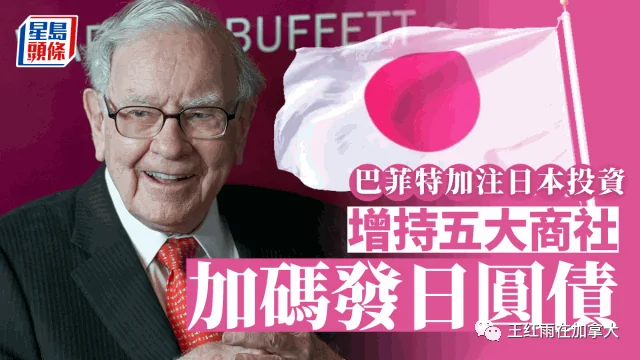
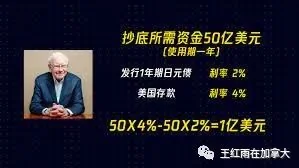
Debt and leverage are two completely different financial instruments.Debt is an overdraft of the future, and leverage is the opportunity to obtain profits through loans.Qiaozhen, one of the protagonists in the TV series "Life" adapted from Lu Yao's novel, changed from a farmer to an entrepreneur by virtue of "dare to take out a loan". The world-recognized leverage master is Buffett. He wholly owns the GEICO insurance company through Berkshire Hathaway, and uses the insurance company's float to invest in financial assets. The float serves as leverage without interest, so the cost of Berkshire Hathaway's investment income is extremely low. Not only that, in the past two years, Buffett has used leverage to an extraordinary level, which has amazed the world: Japan's economy has been in sluggishness for 30 years. One of the biggest problems is that Japanese residents and companies are afraid to borrow money. The spiral of low desire has caused the entire country to be lethargic. After the epidemic, Buffett took advantage of He used his own credit to aggressively issue yen-denominated bonds in Japan. As the leader, he took the lead in borrowing from the Japanese market, and the bond interest rates were very low. He used this huge amount of low-interest funds to invest in the Japanese stock market, control oligarchs with pricing power and cash returns, and single-handedly revitalized the Japanese financial market. It is true that Buffett does not borrow money from banks to speculate in stocks, but this does not mean that he does not use leverage. He not only uses leverage, but also uses it when others dare not use it, and uses it in places where others dare not use leverage. It is impossible for middle-class families to have Buffett's vision or ability to use insurance float or issue bonds to obtain leverage. The leverage with the lowest interest rate that middle-class families can obtain is mortgage loans. If they do not dare to use leverage such as mortgage loans, they can only watch the over-issuance of currency swallow up their own deposits. The final result may be worse than even farmers who dare to take out loans.
03 Everyone is equal before housing prices
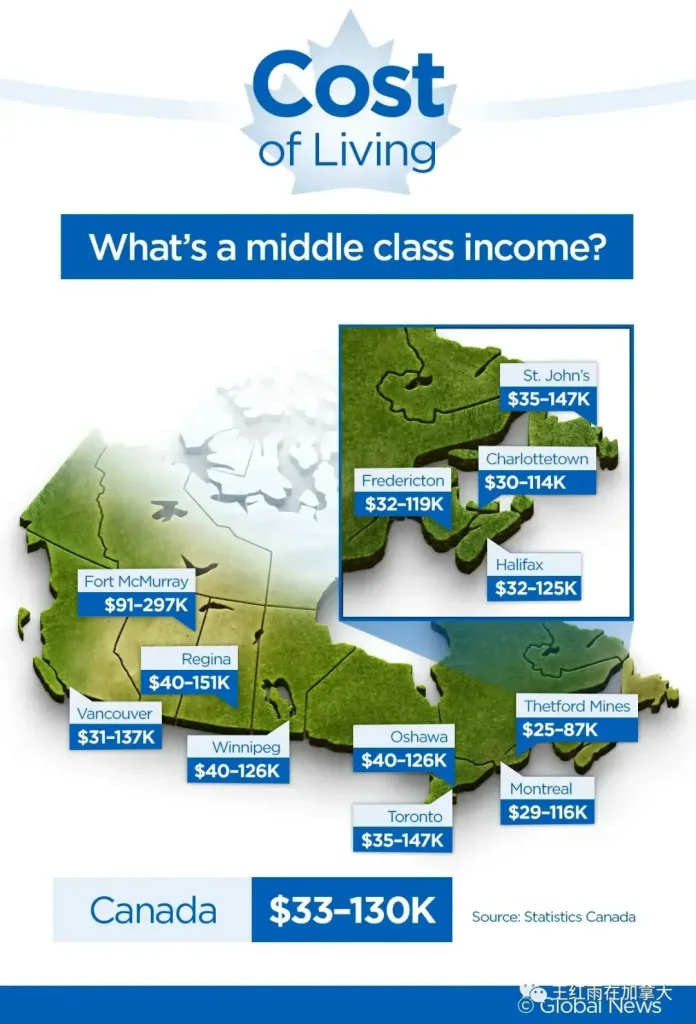
There is a 28-year-old mayor in Ontario with an annual salary of 90,000. He complains that he cannot afford a house and he still lives with his parents. In the face of housing prices, everyone is equal, regardless of your origin, education, position, ideals, ambitions, motivations, or age. Doctors can't afford a house, doctors can't afford a house, civil servants can't afford a house, lawyers can't afford a house, professors can't afford a house...it's all normal, no need to be surprised.Residents living in the first city in the country, no matter where you come from, a family with a household income twice the average income should be able to afford a property with an average price. It is not surprising that when the family income decreases, they rent a house or even rent a basement to live in.Greater Toronto is the first city in Canada, with an average household income of 110,000 and an average house price of 1.15 million. Therefore, a family with a household income of 220,000 can afford a house with an average house price. This is in line with the rules around the world and is not abnormal at all. Houses should be bought by those who can afford them, and rented by those who cannot afford them. The passing line for the middle class is simply and crudely drawn without any prejudice or mercy.
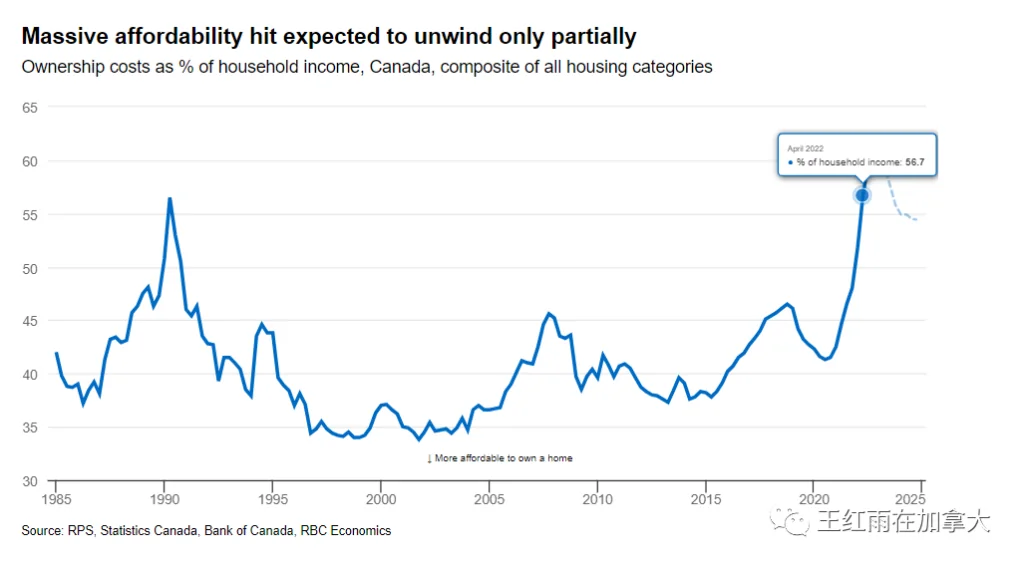
"You see it or you don't see it, house prices are there and keep rising. You want it or you don't want it, the population policy is there and there is a constant stream of new immigrants. You love it or hate it, the rent is there and it won't go down. You follow it or you don't follow it, the threshold for buying a house is getting higher and higher, and the government won't save you. Go to a big city, or, or escape from a big city, come and go freely." The author of this big city song is Maifang Meicuo.Buying a house cannot afford to be delayed., because the population is increasing too fast and there is no time to build houses, people need to spare no effort to fight for it in the second-hand housing market, and the one with the highest price will get it. There is no room for pretense when buying a house. Neither diploma nor occupation will be recognized. Bloodline and age will not be considered. Except for down payment and borrowing ability, relatives will not be recognized. Apart from housing prices, there is currently no standard that can identify the real and fake middle class so clearly and efficiently.
Buying your own home and investing in real estate are two completely different things. If those who dream of becoming the first urban middle class cannot afford to buy their own home, they can start by buying an investment property to take advantage of the rising housing prices. In 1999, when I was interning in Hong Kong, I first heard about the practice of buying an investment property first. When I was a trainee auditor at Nanyang Commercial Bank, Xiao Zeng, who was in the same group, must have been under 30 years old at the time. He was already financing two investment properties, one by himself and the other with his sister. They called it "property financing". Renting a house to live in and buying a house to rent out at the same time should have been a rare phenomenon in mainland China 24 years ago, but in Hong Kong at that time, it was a very popular practice among young people. Where Xiao Zeng worked, Nanyang Commercial Bank was located on Hong Kong Island. The rent was very expensive, and several young people could barely afford it. Xiao Zeng couldn't afford a house on Hong Kong Island. When I was in Hong Kong in 1999, the dormitory I lived in for three people was about 400 square feet. The market price was more than 4 million Hong Kong dollars, and the price per square foot was more than 10,000 Hong Kong dollars. You must know that this was after Hong Kong's housing prices dropped by 70%. After the resignation of Chief Executive Dong, the housing prices rose again. Xiao Zeng rented a house on Hong Kong Island, and at the same time bought two investment houses outside Hong Kong Island. He did not live in them himself, so he rented them out. He had only one purpose in doing so, which was to ride on the rising housing prices. Later, I saw the same advice in "How the Middle Class Protects Their Wealth" written by Ou Shen and "Xiangshuai Finance Lecture Notes" written by Xiang Shuai: if you work in Haidian District, rent a house in Haidian District, save commuting time for studying and working overtime, and at the same time buy an investment house outside the 5th Ring Road and rent it out. Families living in the Greater Toronto Area whose income is less than twice the average income can first buy an investment house and buy half-price real estate as an investment. For example, if the annual income is 130,000, if you cannot afford a house of 1.15 million for the time being, you can rent a house first and buy a house with a price of 550,000 as an investment house, because entry-level properties have the most potential buyers and have better property appreciation potential.

An interview video of Bezos has been widely shared, indicating that this passage touched on the pain points of many people. The general meaning of Bezos's words is this: When I also have anxiety, I find that the source of anxiety is that I know there are things I should do, but I haven't done them yet. When I do them, regardless of whether the problem is solved or not, the anxiety subsides. I tried the method provided by Bezos, and it was very effective. When I felt anxious, I immediately took action on the things I should have done but had put off doing. The results were surprisingly good, and the anxiety naturally subsided. Regarding the matter of buying a house, many families know that they will buy a house sooner or later, but there are too many opinions and suggestions, and they have been putting off taking action. As a result, anxiety has arisen and lingers. Many people say that real estate practitioners have been selling anxiety. I disagree with this statement.Anxiety comes from things you should have done but haven't done yet, and it has nothing to do with whether others remind you.Everyone is equal when it comes to housing prices, and no one can buy a house easily, especially in Canada, especially in the Greater Toronto Area, where you can only get one if you spare no effort.
Conclusion
Marx stopped writing "Das Kapital" after finishing the first volume, and the next two volumes were continued by Engels. Many diachronic scholars have concluded that Marx was indeed very thorough when analyzing capitalist society. However, as he wrote, he discovered that in addition to capitalists and proletarians, a middle class suddenly appeared in capitalist society, and there is a large middle class in North America. Because Marx couldn't see where the middle class came from and where it was going, he couldn't write any more and stopped. The concept of the middle class still does not have an accurate definition today. This stratum between capitalists and proletarians has been tenaciously surviving. Not only did Marx not know the development direction of this class, but even the people in this class themselves did not know. The English title of the book “Squeezed: Why Our Families Can’t Afford America” is Squeezed: Why Our Families Can’t Afford America, which illustrates two problems: the middle class has been a squeezed class since its birth; the symbols that represent the middle class are increasingly unaffordable. The author was born in 1972, which is the same era as me, so I can relate to the situation she described in the book. The reporter's identity has now been destroyed by the group, but the author has been able to rise from the ashes and upgrade his reporter's identity from adversity to a best-selling author. It can be seen that the middle class has its own vitality and soil. It is not so easy to recover from a setback and accept the collapse of the class with peace of mind. I believe that all middle-class people who encounter adversity can get out of the predicament through their own efforts, provided that they are not vain, do not borrow money for consumption, and continue to expand their comparative competitive advantages.

The situation of the middle class will become increasingly difficult in the future, especially when faced with the impact of artificial intelligence. They will not only have to compete with their peers, but also with artificial intelligence. Only those who are fully aware of potential risks can face them objectively and bravely. There is no doubt that the Prussian education model will collapse in the era of artificial intelligence. The future middle class will be those who make good use of artificial intelligence tools, rather than those who compete with artificial intelligence for their memory and professional knowledge. I do not believe that lawyers, accountants, and doctors will be replaced by artificial intelligence, but if these professionals do not have a cross-border systematic thinking model and blindly stick to the little knowledge learned in Prussian schools, it is equivalent to sitting in a dry well and waiting to die. For example, what accountants are best at now is helping taxpayers save taxes. If they only have this skill, they will be replaced by artificial intelligence sooner or later. If accountants can expand their horizons and provide taxpayers with investment and financial management advice, not only can they jump out of the dry well and rise from the ashes, but they can also help their clients maintain their middle-class status.

What the middle class finds most difficult is acquiring assets that generate passive income. This problem will become increasingly difficult. Buffett, who has been investing for 80 years, also finds it difficult, but he has not stopped learning and trying. His feats in Japan show that although good assets that can stably generate cash flow are increasingly difficult to find, it is by no means non-existent, and requires greater wisdom and courage to obtain. With passive income, the middle class has the ability to adjust the speed of the treadmill. When they are tired or thirsty, they can slow down the treadmill and take a break to catch their breath. As technology advances, the speed of treadmills has been increased. Some people hope that technology will progress slower or even go backwards, but they have never succeeded. In 1779, a weaver named Ned Ludd in Leicester, England, smashed two looms in anger. Later generations collectively called those who undermined technological progress "Luddites". All Luddites have been crushed into dust by the wheels of history, and there is no way for the middle class to escape technological progress. The way to face difficulties is not to master all advanced technologies yourself, but to be in a lane that will not be crushed by advanced technologies as soon as possible. Buffett is the best teacher for the middle class. The tracks he chooses are all areas where technological progress cannot defeat him. He has not invested in the latest technology, but his assets are growing at a rapid rate. Buffett's formula for success is to buy high-quality assets that can generate income and hold them for as long as possible. Real estate in the Greater Toronto Area is an asset that meets this criterion. Although it is difficult, if we go in the right direction and persevere, middle-class families will eventually gain the ability to adjust the speed of the treadmill. I have no doubt about this.