Recently, someone told a story on Xiaohongshu about how he lost 400,000 yuan when selling his house. He gave many reasons for selling his house, one of which was that he did not want to pay interest to capitalists like banks. I left a message under the video saying: "Farmers sell their land in bad years to survive; landlords buy land in bad years for wealth. There is a problem with the logic of treating banks as capitalists. The money you borrow is the depositor's deposit. How to use this loan depends on your ability."
Since the interest rate hike, the financial burden of many families has become heavier and heavier. In this environment, what kind of decisions should be made to face the current difficulties and future life are questions that many families need to answer. Some families find that their previous decision to buy a house has led to a dilemma in their lives today. It has become a difficult problem to survive or give up the property. In the same interest rate environment and the same famine years, the situations and decisions of different families are different, just like the above-mentioned choices of farmers and landowners.
There are 30% of families in Canada who own their own homes and have paid off their home loans, which I call A; 35% of the families who own their homes and have their own home loans, which I call B; 35% of families who rent their homes, I call them C, and the landlords of these families, I call them D. Some families are A&D, and some families may be B&D. Judging from the above-mentioned population and housing composition, the number of A and A&D families should exceed 30%, and there is no problem of excessive debt. This is what this public account has been suggesting for the past five years: Become A as soon as possible. Unless Household C who lives in a rental house is in a much better financial situation than before, it will be difficult for them to become homeowners in today's high interest rate environment. Neither A nor C are the main objects of discussion in this article.

Whether to continue to hold, buy, or sell depends on the specific circumstances of each family. In addition to high interest rates, some quiet changes have taken place in the general environment:
1. The banking regulatory authority OSFI plans to introduce measures to tighten mortgage policies in January this year and invites the public to provide opinions on the plan. The discussion period will end in April, after which OSFI will respond to public opinions. In the article "Analysis of the Direction of Canadian Mortgage Policy Adjustment and Social Contract" on February 6 this year, I listed the OSFI policy adjustment intentions for you. On October 16, OSFI responded to public feedback. The long-awaited shoe finally landed, but no media reported it because OSFI accepted the public's opinions in the reply and decided not to make large-scale adjustments to the current policy. Everyone was in for a false alarm. Of course, this is not good news for those who are looking forward to continued decline in housing prices.News of falling house prices is good news, so no one reports on the no longer tightening of mortgage policies.
2. Inflation data released on the 17th of this month showed that the core inflation rate that affects the central bank’s decision to raise interest rates was 2.8% in September, down a lot from 3.3% in August. The data did not provide a reason for the central bank to continue to raise interest rates. The trend of the interest rate hike cycle is relatively obvious. In the article "Real Estate Investment Outlook for the Greater Toronto Area in 2023" on January 1 this year, I put forward my view on inflation: In the 16th month after the inflation rate reaches its peak, that is, in November this year, inflation will reach a relatively stable state. At present, this prediction is relatively accurate.
3. BC has introduced policies to crack down on short-term rentals. Even if the federal government does not follow suit, other provinces will follow up with similar policies. The short-term rental profit-making market will be cracked down, which is conducive to the healthy development of the long-term rental market.
4. The Canadian Parliament is promoting Universal Basic Income and the Universal Basic Income system in a day-to-day manner, leading Canada to move firmly in a further left direction, constantly demonstrating its determination to equalize income and wealth.
01 Lucky Cat and Pi Xiu (Pi Xiu)
Many real estate investors aim to pursue positive cash flow, and are even so paranoid that they will not invest if there is no positive cash flow, or they will increase the down payment ratio for the sake of positive cash flow, or buy properties in remote areas. Some people even illegally sublet the property, and some operate the house as a hotel. This type of investors regard investment properties as "lucky cats." After the interest rate hike, some "lucky cats" not only failed to attract wealth, but instead dispersed it. If the owner of the "lucky cat" relies on the positive cash flow from the investment house to buy groceries, he will encounter difficulties in eating. At present, the "lucky cats" in poor locations are in a difficult situation. The pressure on landlords comes from two aspects: 1. Tenants may encounter financial problems and have difficulty paying rent; 2. Housing prices have fallen significantly, and potential buyers are unwilling to buy because they are looking forward to further declines.Excessive pursuit of cash flow and choosing low-quality properties is a wound, and high interest rates are salt.Homeowners who operate their houses as hotels will encounter a drastic change in policy if their houses are in British Columbia.
Stock investment is like liquor, don’t try it if you don’t have the ability to drink; bond investment is like beer, you’ll get drunk even if you drink too much;Real estate investment is like red wine. The place of origin is the most important, and it is expensive. People who do not care about the location but are looking for cheap, it is best not to invest in real estate.
Another group of "lucky cats" who turned against them had stronger backlash capabilities. Some investors who bought off-the-plan properties in 2019 and 2020 planned to transfer them at a high price before the property was delivered. They speculated and left. When the property was handed over, they immediately found that there was no way out. Even if they wanted to cut off the tail of the "lucky cat" to survive, they couldn't find scissors. When off-the-plan properties were on sale, the price of off-the-plan properties in Toronto was as high as 1,500 to 1,800 per square foot. Now that the house is about to be handed over, the market price is 1,100 to 1,200 per square foot. It is difficult to find a buyer even if you accept the loss. In the past five years, articles on this public account have analyzed and warned many times about the risks of off-plan investment. However, only mature real estate investors will try to avoid invisible risks. Some people only focus on the immediate risks and selectively ignore the invisible risks. Although I don’t want to see it, the risks that this public account has warned about in off-plan investment are becoming a reality. How do you lose money by speculating in real estate properties? What is happening today happened in 2014, and history is repeating itself. For example, the off-plan property purchased at the end of 2019 for 1,500 yuan per square foot will have a market price of 1,200 yuan per square foot at the end of 2023. The purchase price of a 600-square-foot unit is 900,000. The market price at the time of delivery is 720,000, and the bank will lend at 80% of the 720,000. If you have paid a 20% deposit of 180,000 yuan, you will face two choices before delivery: 1. For settlement, you need to get a loan of 576,000 yuan and an additional down payment of 144,000 yuan; 2. Transfer, if the transfer price is 720,000 yuan, you will lose the entire 180,000 yuan deposit. Due to the severe trampling of the transfer market, such as the current situation, you can only transfer 680,000 yuan. In addition to losing the deposit of 180,000 yuan, you will also have to pay another 40,000 cash, and the total loss is as high as 220,000 yuan. Compared with investors who buy off-the-plan properties in 2021 and 2022, investors who are about to hand over their properties may not be the worst off.
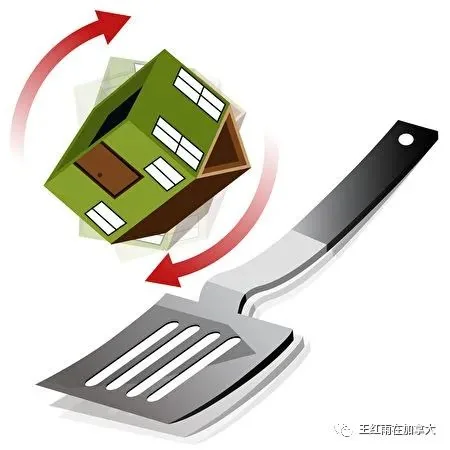
Over the past decade, those who make money by renovating and renovating properties have turned away from the real estate market. In the era of getting rich quickly by renovating old houses, house prices were not as high as they are now. A few masters could work together to flip the house for a while, and once they became a landlord, they could get away with it. But it is different now. With such high housing prices, once a landlord becomes a landlord, he will not be able to survive. There is a statistic in Vancouver. In the past 10 years, the proportion of speculators who short-term second-hand housing has dropped from 16% to 6% of buyers. The number of masters who dare to take advantage of the fire has plummeted. Speculators of off-the-plan properties also need to experience the pain that decoration enthusiasts have experienced before they can learn their lessons.
Investment property holder D is divided into two categories, one is small landlords and the other is institutional landlords. Among small landlords, there are a group of landlords who are quick to accept the good news. They sell high and buy low, which is also the "lucky cat" style of play. There are also a group of small landlords who only buy but not sell, overcoming various difficulties and holding multiple apartments for a long time. These small landlords are a rare species, Pixiu. The net worth of a Pixiu that has only been bought but not sold in the past 10 years may be more than 5m, and the net worth of a Pixiu that has only been bought but not sold in the past 5 years may be more than 2m.When investing in real estate in Canada, the most important thing is not the timing of buying, but the holding time, followed by how much you hold. The longer you hold, the more properties you hold and the safer your finances are.For families that do not yet have a sense of financial security, the best way to overcome anxiety is to learn from Pixiu, which can only go in but not out, and swallow everything without diarrhea.
The appearance of Pixiu is very different from that of the "lucky cat". The "lucky cat" keeps waving its little hands when it has a little money, for fear that others will not know; Pixiu hides it and never shows off. The inner worlds of Pixiu and "Lucky Cat" are even more different. Pixiu accumulates assets in order to balance a lifetime of income, even at the expense of current consumption; "Lucky Cat" regards increasing current income as its goal. Pixiu is accumulating wealth; "Lucky Cat" is increasing income. Different animals have different efforts. Pixiu understands the "lucky cat" very well, but the "lucky cat" doesn't understand what Pixiu is thinking, and the difference between a swan and a sparrow.
High interest rates will make some people spit out their wealth first. From now to next year, the "lucky cats" may be the most active group of people to spit out their wealth. Pixiu may continue to eat.

02 Life is a process of constant choices
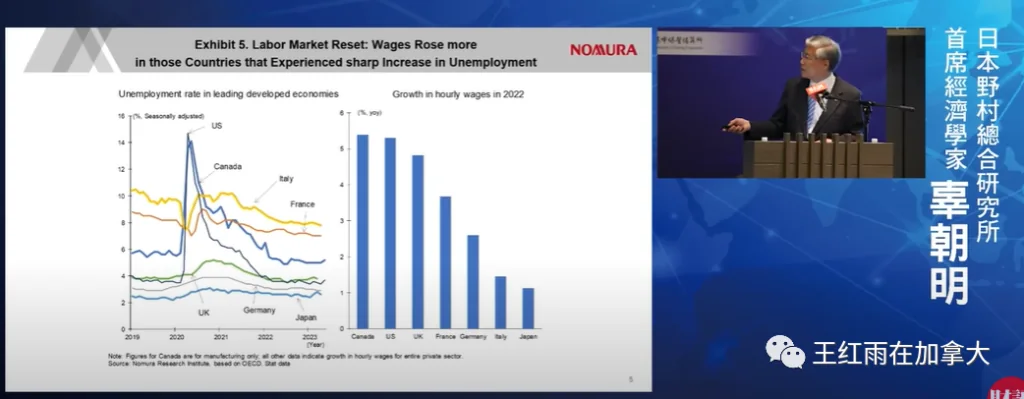
Canada's current economic indicators are all good, but everyone feels a lot of pressure. Needless to say, those who have loans, even families without loans are also suffering from inflation. High interest rates are the biggest problem for both businesses and individuals. Canada's opposition parties accused the Trudeau government of excessive aid during the epidemic, causing secondary harm to Canada after the epidemic. This statement has some truth, but it is also biased. Ku Chaoming mentioned in a speech that after the outbreak, Canada and the United States had the highest unemployment rates in the world. Not only did they have the greatest relief, but they also had the highest wage increases during the recovery period. Canada's inflation has shifted from demand greater than supply to income-driven inflation, so it will take longer to heal, which means high interest rates will last longer than in other countries. There is a public choice theory in economics. This theory explores how the government makes decisions to maximize social welfare under limited resources. It also points out that among multiple options, the government will choose the option that is beneficial to the next re-election. The choices made by the Canadian government during the epidemic determined our living environment today, but no one cares about what considerations the government made at that time. What we are more concerned about is the current situation. Public choice, after everyone surrenders their rights to the government, has no control and can only accept the results. But more important than public choices are individual choices.
When getting married, both the priest and the Civil Affairs Bureau will confirm with the couple in person whether it is voluntary. The same applies to loan selection, which requires a written signature to confirm whether it is voluntary on your part. Free Will, Free Will, in any civilized country, is not only natural law, but also statutory law. A contract signed on the basis of free will must perform its terms unless it is proven that the person was under duress or was in a psychotic episode at the time of signing.
I once joked that if I retired and had time to write a book, I had already thought of the title: "Monthly Payment." The monthly payment is related to the repayability of the debt, which is not a trivial matter. Therefore, when choosing a loan, the affordability of the monthly payment is the primary factor to consider. During the period of low interest rates, the temptation of floating interest rates was very great, and many families chose floating interest rates. If you happen to borrow from a bank whose monthly payment remains unchanged after interest rate hikes, it can be said to be the best of misfortunes; if you choose a bank with variable monthly payments, it will be the best of misfortunes. Fortunately, the choice of interest rate is not a one-time decision for a lifetime. Even if you were lucky enough to choose a 3-year fixed interest rate 3 years ago, or you chose a 2-year fixed interest rate 2 years ago, you still have to make a new choice now. Every time we make a choice, we make a judgment based on known information and the most reasonable predictions about the future. There is no superman, and the results are consistent with the expectations every time. There is a difference between making a choice and getting lucky. When you don’t know the terms of the monthly payment changes in the floating-rate contract you signed, the element of getting lucky is higher.
Active choice and luck are two completely different attitudes towards life. The decision made is by chance, not by choice. It is a kind of denial of one's own existence. It is recommended that those who like to take chances read Sartre or Heidegger's existentialism. Existentialism believes that people arefor oneselfexists, the object isat easeexistence. "For yourself" means what you do determines who you are, so objects cannot exist like people, and everything a person has done defines who you were before; what you are doing defines who you are now. Therefore, existence precedes essence, and man is always in the process of becoming someone. Heidegger's explanation of existence is very poetic. He said:exist,Being is the blooming of meaning. If a person always refuses to admit what he has done, and always says that the consequences he did not want were instigated and influenced by others, then what is the meaning of your own existence? By the way, there is a joke, there is a book about Heidegger, the title is "Man, Dwelling Poetically", because Heidegger once quoted a poem by the poet Holderlin when defining "man": "Man is full of achievements, but he also lives poetically on this earth." What Heidegger means is that no matter what Whatever you have done, whether you have achieved results or worked in vain, whatever you do next can be poetic. However, the phrase "people live poetically" is always written by real estate developers on the promotional brochures of new properties in remote areas. There are indeed people who do not know existentialism who buy such off-the-plan properties.
If you signed a loan contract by chance, it means you are not very lucky this time; if it is a choice made under free will, then accept the consequences calmly. Everything in life is accidental and has no fixed structure or real purpose, so life is light and free, and you can live a lifetime by luck; but every decision and choice in life has heavy meaning and consequences, so Czech writer Milan Kundera used his philosophical novel "The Unbearable Lightness of Being" to explain what life is.
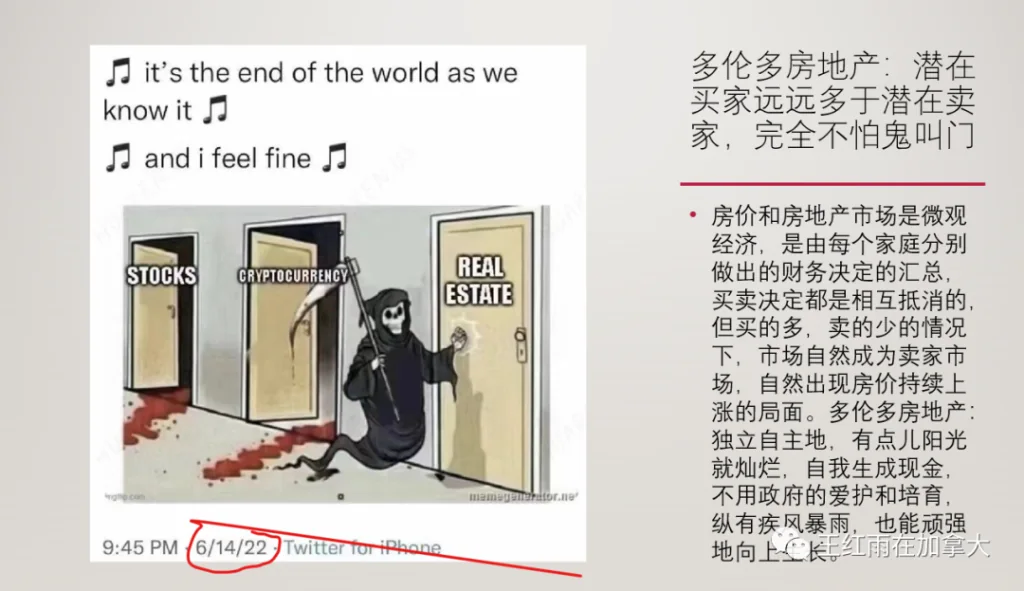
No matter who your spouse is, or whether you have a spouse, it is your choice, and it is unlikely to be luck. Since it is a choice, you must bear the consequences; whether you are poor or rich, it may be luck, but you can change it through choice. No one wants to live a life by luck. Lottery winners are 99% based on luck, and chess champions are 99% based on strength. Between these two extremes, choose a position that suits you. Do you want to live a life based on luck or live a life based on choice? This is a matter of choice. Just think carefully about the answer and be responsible for your answer. Remember, the greater the strength, the greater the ability to choose. If you know that you were lucky enough to get a loan and buy a house, just like the Mexican guy who picked strawberries in the United States before the subprime mortgage crisis, and now you find that fate has caused you to become one of those people who are facing difficulties, then there is no regrets. Just let fate take its course. If you actively chose to endure negative cash flow and obtained a loan based on your strength and qualifications and passed the stress test, please stick to your choice and bear the consequences of your choice. For families B and B&D, it is a question whether they choose to persevere or abandon the house and run away. If B abandons the house and runs away, they will return to the state of C; B&D can sell the investment house and become A, or they can become A&D by adding a mortgage and follow the method I introduced in the article "House Slave Turns Over and Sings | How to Pay Off the Home Loan Overnight". Everything is the result of choice.
03 Is it worth borrowing a chicken to lay eggs?
Professor Chen Zhiwu mentioned in a popular science article about debt that in 1800, the treasury of our Qing Dynasty and neighboring India were full, and Great Britain and the United States were starving. The United Kingdom was in debt of 840 million pounds and the United States was in debt of $75 million. In 1800, all countries whose governments were heavily in debt were now developed countries. Countries with surpluses in their treasury at that time are now all developing countries or underdeveloped countries. Professor Chen believes that a country that dared to borrow and spend money like this more than 200 years ago would have a hard time getting rich. In addition, if the government borrows money to spend, it must be approved by the parliament. A poor government itself is a government controlled by the people, and every penny spent must be clearly explained to the voters. The U.S. government is about to shut down at every turn because it has overspent again. Congress needs to discuss whether it should lend more money to the government. The United States is a country that has chickens at home but borrows chickens all over the world. The more it borrows, the more the government is controlled by the people and the more eggs it has. The more courageous and capable it is to borrow chickens to lay eggs, and the more other countries believe that the United States will not default on its debts. From 2021 to 2022, the U.S. fiscal deficit will be very high, but the proportion of the U.S. dollar in the SWIFT international settlement system has increased from 39.38% to 46.46%. The world trusts the United States and the U.S. dollar more. The legendary de-dollarization is still a legend.
As is the case with the country, so is the family. Due to my work relationship, I am fortunate enough to have contact with many real estate investors. The longer the history of hoarding houses and the greater the number of houses hoarded by investors, the safer their finances will be. The short-term Treasury bonds issued by the U.S. government this year have yields above 5%, but the U.S. government has not stopped borrowing money because of high interest rates. The same goes for mature real estate investors. When interest rates are high, housing price bubbles are bound to be smaller; when interest rates are low, housing prices rise rapidly and the number of available properties increases, which are opportunities for real estate investors to buy properties. As interest rates peak, people begin to look forward to interest rate cuts. Real estate investors all know that interest rate cuts will cause the market to become hot, and demand that has been suppressed for too long will be released. Competition among buyers will then quickly push up housing prices. Therefore, long-term investors are not willing to exit the market when the market has reversed and housing is hard to find. Pixiu doesn't worry about timing. When he has the ability, he can swallow it without hesitation.The more families have chickens at home, the more they dare to borrow chickens to lay eggs. The more eggs they have, the more they dare to borrow. The same logic applies to the country and the family.
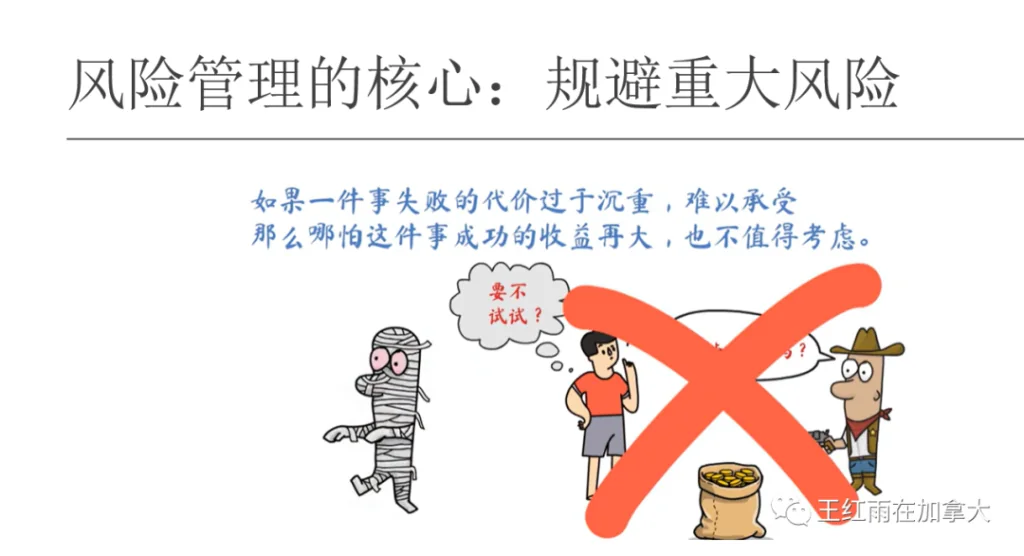
When interest rates are high, the government still dares to borrow money, which shows that the country is confident and capable of repaying it. Of course, the government can print money to repay the debt. For families, they do not have the ability to print money and cannot repay debts by printing money like the government does, but they can get a free ride from the government. The subprime mortgage crisis and the epidemic caused two large-scale money printings, which pushed up housing prices and stock prices. Families who own houses and stocks have a free ride on the government. The Canadian government guaranteed $50 billion in small business loans during the epidemic. It was a guarantee, not a loan. This money should be returned at the end of 2023. How to pay it back? If a borrower borrows 40,000 yuan during the epidemic, he will repay 30,000 yuan before the end of this year, and the government will pay for the remaining 10,000 yuan, so the borrower does not have to repay it; if a small business borrows 60,000 yuan during the epidemic, he will repay 40,000 yuan before the end of the year and the government will pay for the remaining 20,000 yuan. For companies that do not repay, the loan will be converted from an interest-free loan to an interest-bearing loan, but approval from a commercial bank is required. The government-guaranteed interest-free loans issued during the above-mentioned epidemic period are called "sucking" CEBA loans. The money is lent by commercial banks and guaranteed by the government, so the bank has no risk of loss. We know from the news that in the past two years, many small businesses have gone bankrupt with money. For these bad debts, as well as the promised reductions and exemptions mentioned above, commercial banks will pursue recovery from the government as a guarantor. The government must either raise taxes or continue to print money to fill this hole. In addition, since the interest rate hike, the central bank's deposit interest rate for commercial banks has been getting higher and higher, now as high as 5%, while the yield on bonds purchased by the central bank during the epidemic was less than 2%. This huge interest rate gap has caused the central bank to lose money every day. Starting last year, the central bank suffered the first loss in CCB's 88 years. As of now, as of October 2023, the Bank of Canada has rapidly accumulated losses of 4.5 billion. This number is growing every day. As long as interest rates are not cut, losses will continue to expand at the current rate. In the past, the central bank paid profits to the Ministry of Finance every year, but now it is reversed, and the Ministry of Finance has decided that all losses of the central bank will be borne by the Ministry of Finance.It is highly likely that the Canadian government will continue to print money to repay its debt, because raising taxes will lead to a loss of votes. Although real estate investors know that interest rates are currently high, they are also very aware that such high interest rates are draining the government's finances. The epidemic is over, but the sequelae are still there and must be treated, and the medicine cannot be stopped.
The most terrifying sequela of the epidemic is welfare dependence. Canada is expected to be the first country on earth to offer UBI. Universal Basic Income, that is, labor-free income, has such a solid mass base in Canada that it would be a pity not to be number one in the world. In addition, the government has responded to requests for low-cost rental housing and has introduced major policies one after another to cater to voters. Therefore,It is only a matter of time before there is another large-scale over-issuance of currency.。
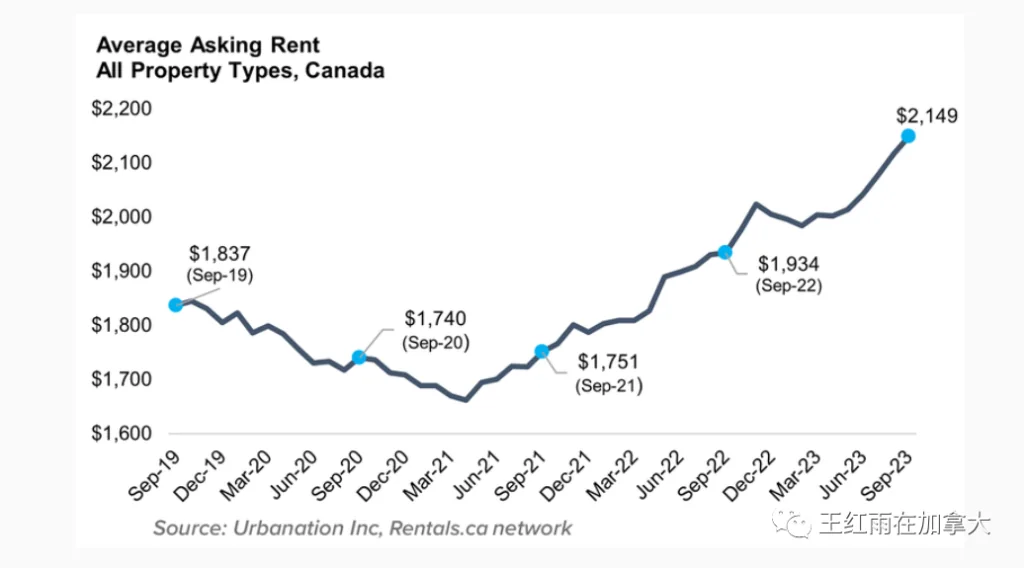
In addition to confidence that the government will continue to issue more money, another source of confidence for real estate investors to continue buying real estate is Canada's housing crisis. The housing conflicts accumulated over the past 30 years will take at least 30 years to be alleviated. Any suggestion or practice of quickly solving the problem is just a show. A detailed analysis has been carried out in the September article "Don't Waste Canada's Housing Crisis" and will not be repeated here.
Confidence comes from strength, not arrogance. People who can't make money in good years should not think about counterattacks in bad years. In countries like the United States and Canada, multi-home investors dare to borrow money because their confidence comes from their strength. hard power,The most core strength is the ability to borrow money, I don’t believe you are good at it.
When it comes to interest rate fluctuations, Charlie Munger's experience applies to everyone: a person who can live to be 100 years old will experience interest rate fluctuations from 0 to 20%.The interest rate isWhen the interest rate is 0%, you need to know how to seize the opportunity; when the interest rate is 20%, you need to know how to get through it.
04 Selling land or buying land in lean years
First, answer a question: Will 2023 and next year, 2024, be your lean years? If not, don’t follow the trend and sell your house.
"Farmers sell their land in lean years in order to survive." This sentence refers to B. For B, who only owns one home, the years when he is hit by high interest rates are bad years. From 2020 to 2021, families who bypassed bank stress tests and entered the market with high interest rates are very similar to the experience of the Mexican strawberry picker in the United States before the subprime mortgage crisis. The original shape was revealed after the interest rates increased. Such families had better offload debts they cannot afford to avoid greater harm.
Having only one owner-occupied house and a high loan balance is a very fragile situation, and it is easy for the cash flow to be interrupted after being impacted by external forces. Some banks' floating interest rates will increase monthly payments whenever interest rates rise. Even if it is a fixed interest rate, the monthly payment will increase after maturity. Whether it is a boiling frog in warm water or a boiling frog in boiling water, households with high owner-occupied housing debt are in a state of being boiled in a high interest rate environment. The way out of this predicament is simple, but not easy:Work hard, pay your taxes honestly, and reduce your home loan balance as quickly as possible.
In a high interest rate environment, it is not easy to sell a house. Not only is it difficult to sell large houses, but condos are not necessarily easy to sell either. Families whose home loan balance exceeds five times their annual household income must either do their best to ensure monthly payments or sell their homes as soon as possible. This year's Toronto CONDO market is exactly the same as the market in 2014, with a situation of "less than a year but more than a month": the concentrated delivery of off-the-plan properties has led to short-term oversupply, and a severe stampede in the off-the-plan property transfer market has directly affected the transaction price and volume of the second-hand condo market. From 2014 to 2015, it was very painful for speculators to deliver off-the-plan properties. They could not transfer the property without cutting off the property. People have forgotten what happened 10 years ago. It doesn't matter, Li Shi is the most patient teacher. If you can't remember a beating after one, just beat him again. Of course, there is no need to be too pessimistic. Just look at the condo housing prices in 2016 and after. It is a very gratifying supplementary increase.

Those who can take over the land in lean years are not ordinary rich farmers, but landlords with long-term accumulation. The gap between rich and poor is widening in broad daylight. When the stock market plummeted, the news said that the market value had evaporated to some extent. The buyers at that time were investors like Buffett. In fact, the market value did not evaporate, but was bought by investors with vision and strength. At any time, there will be people selling their assets while fleeing for their lives. In times of famine, there are just more people fleeing for their lives. In this world, it makes sense to use wealth to measure a person's courage, courage, strength, vision, foresight, IQ, and action. Those who bought land in lean years not only saved the lives of farmers, but also accumulated their own wealth. Hayek said that business is the greatest public welfare; Professor Xue Zhaofeng said that business is the greatest charity. The meaning is the same. Buying land in lean years is a public welfare and charity, so the harvest must be rich.
A: It is a family that owns their own home and has paid off the loan.
B: Families who own their own homes but have not yet paid off their home loans.
C: We are a renting family
D: It is a family with investment property
A&D: It is a family that owns a home, has paid off the home loan, and also holds an investment property.
B&D: It is a family that owns a home, but the home loan has not been paid off, and also holds an investment property.
A and A&D families have an advantage in the current environment and can become the protagonists in buying land in lean years. Through unremitting efforts, B and B&D families will one day become socially beneficial investors capable of buying land in lean years.
Conclusion:
Canada's economy will continue to grow in 2023, and the unemployment rate throughout the year will be lower than the natural unemployment rate of 6%. For most Canadians, this year is not a lean year. The "bad years" mentioned in this article only apply to some families with problems with their ability to repay their debts. Assuming that Canada receives an average of 500 millimeters of rainfall throughout the year, we cannot say that the backyard lawns of all Canadian households will be green this summer. There must be some families with only 50 millimeters of rainfall, and the lawns are withered and yellow. Therefore, when we look at GDP and infer the financial situation of each household, we will make a big mistake.
How to survive the famine years, each family needs to make its own decisions, and the answers cannot be found from others. Whether your family should sell their house or not, no one else can give the answer. All suggestions are for reference only. Your choices constitute your own life. If someone else's lean year happens to be your good harvest year, buying land in a lean year is a good option. As long as you live long enough, you will experience interest rates ranging from 0 to 20%. The current interest rates will not make you want to live and die and shirk responsibility. After the epidemic is over, we still have to pay for the sequelae of the epidemic. Only by running non-stop, fast enough and far enough, can we get rid of the entanglement of danger, anxiety, and lack of full-featured negative emotions, and leave a sufficient safety margin in life. A and A&D families are in the safe zone because of their unremitting efforts, not by waiting and waiting. I hope that all the "lucky cats" running around among readers can become Pixiu on the safe island as soon as possible.