I recently participated in a real estate investment forum and saw a variety of real estate investment ideas. Destroy and rebuild, conduct large-scale renovations, and achieve forced appreciation of real estate; buy off-the-plan properties, use small to make big, and rely on market momentum to make lazy investments; find value depressions and profit from market pricing errors; and use one property to rent multiple tenants, combine long-term and short-term groups, and make money by managing the property and tenants, etc. Indeed, there is more than one way up the mountain, and all roads lead to Rome. Everyone thinks that the real estate investment path they have found is the shortcut to the top of the mountain. The "Real Estate Investment Guide" in the Rich Dad series of books is also a kaleidoscope of real estate investment. It introduces ways to make money by buying land and subdividing plots, panning for gold in the auction house market with zero down payment, investing in renovating small apartments, and building and holding commercial properties. These dazzling real estate investment methods, for me, a person with a T4 salary income, most of them are something that I yearn for but cannot do. Looking back on my own journey in real estate investment, I believe that investing can only be done with the mindset of planting trees. Friends who are in the same situation as me will definitely be able to do the same.
Bezos asked Buffett: Your investment method is so simple, why can’t others learn it? Buffett replied that other people don't want to get rich slowly. What a heart-wrenching realization. Getting rich in a hurry can lead to waste in haste. This is a common problem for everyone since Buffett. We don’t expect to be as rich as Buffett, we just want to use the idea of getting rich slowly so that we can balance our lifetime income and achieve a soft landing in retirement life. Investors who pursue positive cash flow from real estate investment have insufficient current income and hope to rely on rent to subsidize their current income. Their purpose is not to balance their lifetime income, but to increase their current income. Investors who pursue profits from real estate transactions are eager to accumulate wealth as soon as possible and then settle down. These two types of investors hope to get rich immediately through real estate investment, rather than getting rich slowly. Just like Buffett said, people who don't want to get rich slowly usually find that not only can they not get rich quickly, but they can't get rich either. Instead, they become more and more green and turn into leeks.
Canada is a country suitable for getting rich slowly. Looking for a vent in Canada, hoping to be blown up by the wind, you are definitely looking for the wrong country. There is an article on the Internet about Chinese people’s painful lessons in real estate investment in Canada. The author lives in Vancouver and learned that the government wanted to build infrastructure in a certain place. So he sold the real estate in Beijing, bought two properties that were beyond his affordability, and waited for the wind to blow. As a result, the government changed, infrastructure projects were canceled, and dreams of getting rich were shattered. Canada is a developed country, that is, a developed country, not a developing country. People are very content with the status quo, the administrative system is rigid, and the government has never regarded stimulating the economy as its own responsibility. In this general environment, if new immigrants want to accumulate personal wealth, they need to compete for a share of existing wealth, and there is little hope of creating incremental wealth. Only by seeing this general environment clearly can we calmly accept the concept of getting rich slowly, and use the existing mature environment and game rules to find a way to get rich slowly.
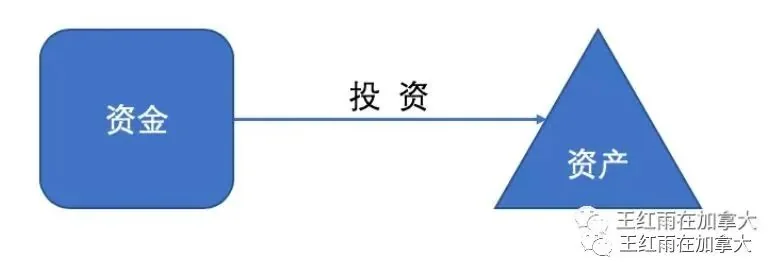
01 Plant the seeds early
As early as 1999, I was sent by Bank of China to intern at Nanyang Commercial Bank in Hong Kong. Xiao Zeng, who was in the same group, was a Hong Konger from Fujian. He was less than 30 years old and already had two properties under his name, but he was sharing the house with others. Both of his properties are rented out, one of which he bought jointly with his sister. He told me that Hong Kong people began to "pay for housing" very early. He bought a house not too early, and he learned it from his peers belatedly. It was the second year of China's housing reform. I was only 29 years old. My hometown of Harbin was still quite closed. No one talked about buying a house, so I couldn't understand why Xiao Zeng did this. Isn't buying a house not for living in, but for renting? In Hong Kong in 1999, two years after the handover, housing prices have been falling. On the one hand, people lack confidence in the future. On the other hand, Mr. Dong threatened to reclaim land and build public housing to suppress housing prices. Therefore, housing prices in Hong Kong dropped by 70% from 1997 to 2003. Why did Xiao Zeng buy a house but he couldn’t live in it? Why didn’t he sell it even when house prices dropped? These questions have troubled me for many years.
I was assigned to work at the New York Branch of Bank of China in 2004 and came to Canada for short-term immigration in 2005. As the deadline for coming to Canada for long-term immigration approached, the issue of buying a house gradually surfaced. There was a manager in the New York Bank's credit department who was said to live in a big house on Long Island, so I asked him what I should pay attention to when buying a house. He replied to me without blinking with two words - "Buy early". I actually believed it.
It was only many years later that I realized that I was subconsciously strongly influenced by these two colleagues——Buying a house is not a matter of timing or location at all, but a matter of time. "Buy early" is the only secret to buying a house; buying a house is not necessarily for living in, it can also be for renting.
The reason why Xiao Zeng did not hesitate to buy a house was because he had confidence in Hong Kong. At least he did not believe that Mr. Dong could harm Hong Kong's housing prices, so he still chose to buy early. He did not live there himself, which meant that he could not afford the cost of living there, so he rented out all the properties. I call the situation of not living in it after buying a house and getting into the car "getting on one leg." At present, the second generation immigrants in Toronto have also begun to use this method. After the probation period of their jobs, they buy a house to rent out with the support of their parents instead of living there themselves. If you can't afford it, just admit it openly without any shame. It's a pity that some people who got on the bus early bought houses they couldn't afford and lived in them. The common characteristic of these people is that they either sublet the basement, or they are unable to invest in real estate due to too much debt for their own housing, and they are trapped in place by their own vanity. Therefore,It’s not enough to master the trick of buying early, you also need to pay attention to affordability, at least not to live for others, carrying a huge housing debt, unable to move forward. Although the house is good, don't be greedy for big money. Wear as big a hat as your head has, otherwise it will be very inconsistent.
The best time to plant a tree is10years ago, followed by now. But don’t plant a tree you can’t afford.
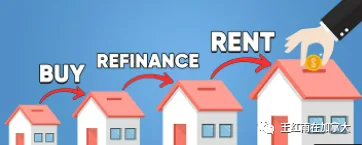
02 Develop leveraged resources
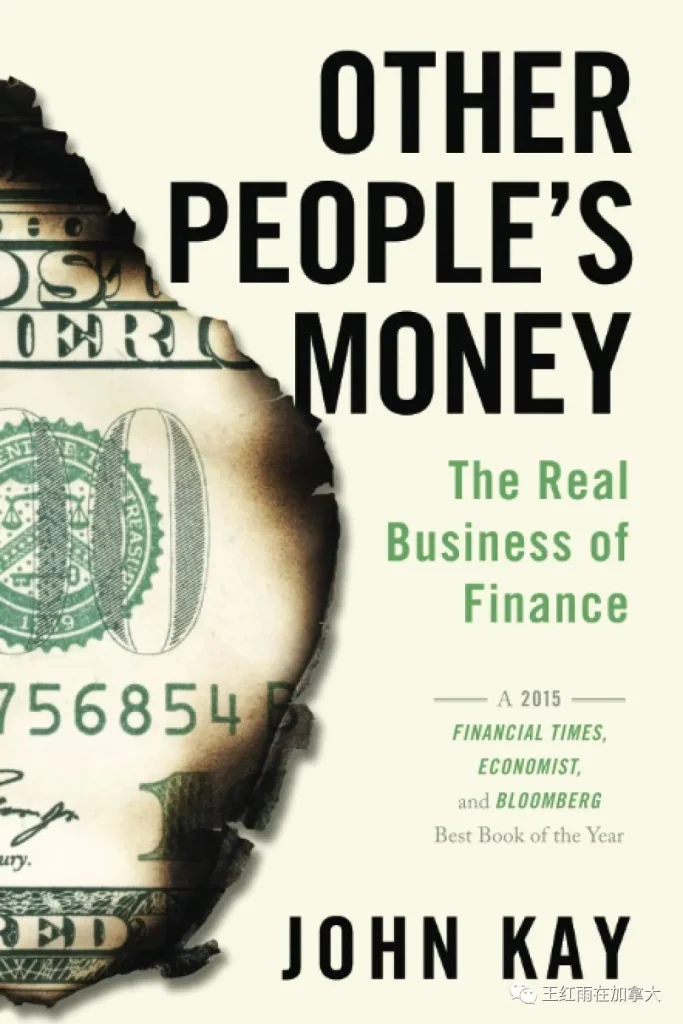
When real estate is regarded as a consumer product, leverage can be used to achieve early consumption. When real estate is used as an investment, leverage can help you make money with other people's money. In short, only by using leverage can we achieve the goal of buying early. When leverage plays the role of advance consumption, leverage is a kind of liability that must be repaid with after-tax income; when leverage is used to purchase investment properties that generate rental income, leverage plays the role of using other people’s funds to buy one’s own assets, and other people’s funds are called OPM, other people’s money. Li Xiaolai once described in his book that when a friend recited the main content of the MBA course to him, Li Xiaolai blurted out that the MBA course is to teach people how to make money using OPM. He is right, using other people's money to make money is the core content of modern business management.

If you want to make money with other people's money, you need to develop leverage resources. Families with T4 or T4A income in Canada are naturally qualified to obtain leverage resources. However, this group of people rarely take the initiative to improve their financial level and cannot distinguish between debt and leverage. The Rich Dad series of books classifies working-class people in the E quadrant, that is, people who work for others and serve capital. Migrant people are naturally afraid of debt, but capitalists know how to make money by borrowing money. Over time, the difference between making money with deposits and making money with other people's money becomes apparent. Although I have written so many articles to introduce the logic of borrowing money to make money, it still has no practical effect for many people in the working class. Not daring to make money with OPM is still the crux. In a country with a huge stock of wealth, tapping into the wind created by policy changes is a thankless job. Being down-to-earth, using your own T4/T4A income to obtain leverage from the bank, and writing the existing assets into your own name when others are selling their houses, is what salaried workers strive for.
Salary workers don't have to worry too much about debt management. When you go to the bank to apply for an investment housing loan, the bank will evaluate the debt affordability. If the bank agrees to the loan, it means that based on fair risk assessment standards, your family now has the risk tolerance. You can just enter the market and buy, regardless of the market noise. If you can't get a loan, you must find out the reason, otherwise you will never learn how to make money with OPM. An important reason why people are interested in real estate investment is that this OPM has the lowest interest rate, and even the actual interest rate after excluding inflation is negative.
Some people have been arguing with me about which investment return is higher, buying off-the-plan properties or buying second-hand existing homes. In my opinion,not usedOPMReal estate investment is not real estate investment, but a kind of fund-raising. Buying off-the-plan properties is a way to make profits based on time and market momentum, not onOPMProfit.When buying an off-the-plan property, the deposit has an opportunity cost, and this opportunity cost is the income from buying a second-hand house. When you buy a second-hand house, OPM will come in immediately, and tenants will immediately help with repayment. During the period of holding the property, there is an opportunity to increase the mortgage. If the opportunity cost of buying an off-the-plan property is 700,000, and you earn 500,000 by buying an off-the-plan property, then when the opportunity cost is taken into account, the investment in the off-the-plan property will be a loss. The loss is due to the 7 or 8 years from the purchase of the off-the-plan property to the delivery. There is no OPM to help you make money, and there is no opportunity to increase the mortgage. Any other form of real estate investment that does not require loans is also crowdfunding and is no different from financial asset investment.
The process of obtaining OPM is the process of learning and improving financial intelligence. It is like taking an MBA course. Although there is no diploma, there is wealth as a reward. Let’s talk about a case of Jewish tree planting and see how to use OPM to plant trees. A Jew developed a small island as a high-end resort, and the back door was crowded. So he thought of a way and advertised in the resort that people who come to the island for vacation can buy saplings and plant commemorative trees themselves. The resort provides tree planting tools and a botanical garden. As a result, he planted trees all over the island without spending any money, and the tourists who planted commemorative trees became repeat customers. This is a case study in the MBA course, how to make money with other people's money.
03 Plant as many trees as possible
Housing prices will not rise to the sky. The rise in housing prices will definitely be constrained by affordability. If you expect a house to increase by 100,000 yuan every year for 30 consecutive years, this idea is obviously unrealistic. But you can buy 10 houses, and each house will increase by 10,000 per year. This is a completely achievable goal. It is more reliable to consider buying multiple houses as a real estate investment goal than to put all your life security in retirement on a single home.
There are big drawbacks to betting on real estate investment. There are currently two popular types of bet-based real estate investments: 1. The poor dad style, constantly changing to a larger home, because there is no capital gains tax on selling the home, and many people use it as a means of housing for retirement. Facts have proved that it is not feasible. During the epidemic, very few people sold their homes to go to DOWN SIZE because they did not dare to live in a nursing home and the prices of all properties have increased. It is difficult to afford other houses after selling their own house; 2. People who continue to buy and sell real estate without holding it, for example, renovating and renovating, are earning hard-earned money instead of making money through OPM. For families with T4/T4A income, they can only yearn for it but not be able to get there. The biggest advantage of real estate investment is the certainty of investment returns and the leverage effect of making money with OPM. Only by holding it for a long time can you have the opportunity to continuously increase mortgages on real estate, borrow more OPM using real estate as collateral, and then purchase more real estate. For families without a stable T4/T4A income, it is impossible to add a mortgage, so they are forced to keep buying and selling. They seem to be active real estate investors, but in fact they are just trying to make a living by renovating and reselling.
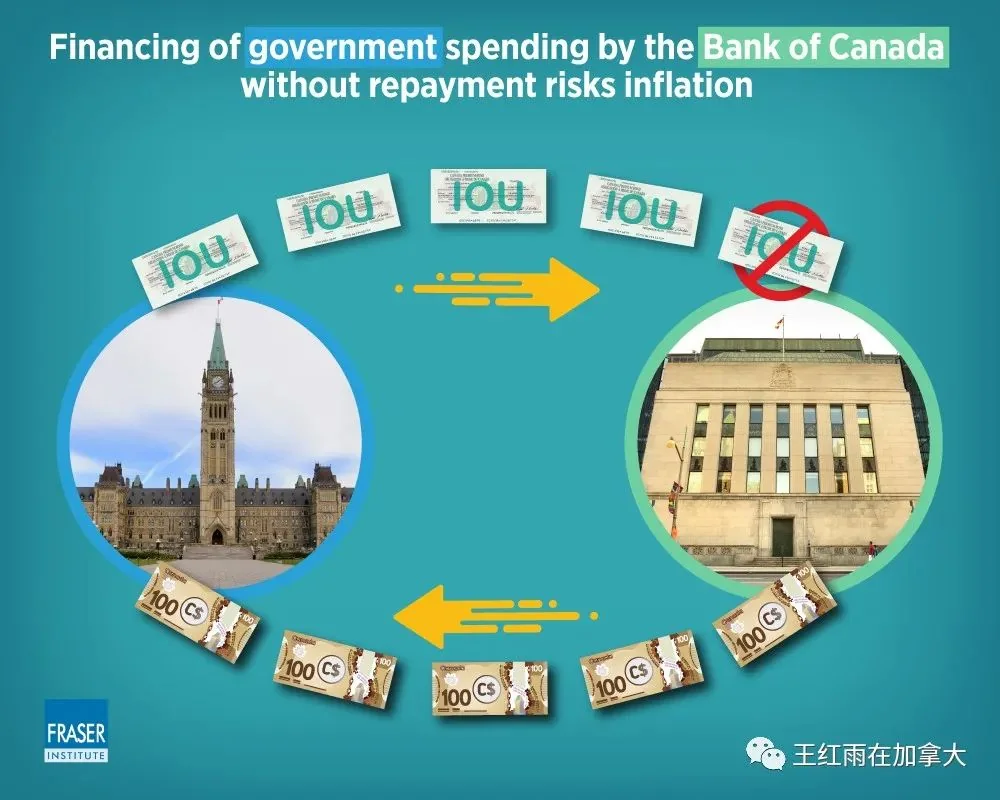
Within the scope of your borrowing capacity, it is better to purchase multiple properties as early as possible, even if they are types of properties such as CONDOs that seem to have relatively high holding costs, rather than just sitting around and running around.Real estate prices are supported by two forces:1It is necessary for residence.2is a monetary phenomenon, the increase in the number of new immigrants is greater than the number of new houses completed, which will push up housing prices; the government prints more money than people create wealth, and money will flow into assets, and Canadians are more willing to put their money into real estate than Americans. No matter what the original intention of the government is to print money, as long as the money is printed, it is not the government’s final say on how people spend it. As long as there is a continuous influx of people and nourishment from the rain and dew of the government's over-issued currency, the saplings will grow taller day by day, and there is no need to buy a big tree.
When it comes to additional mortgages, many people who have never tasted additional mortgages but continue to resell their properties feel very unhappy. If you cannot remortgage a property, the funds locked in the property rights cannot be withdrawn, and you cannot purchase more properties while holding the property. The voices opposing the extra pressing have never stopped, but I feel that those voices are not opposition but jealousy. When a bank evaluates a borrower's ability to refinance based on strict stress tests, it is doing a free risk assessment for the applicant. Once the bank releases the loan, more OPM will be taken out of the property by the applicant.The ability to hold multiple apartments is actually the ability to increase mortgage loans., many families who do not have the ability to add mortgages are full of envy and jealousy. Generally speaking, households that are generally approved by major banks to apply for mortgage loans are those whose home ownership debt is less than 2.5 times their annual income. This is not a policy of a certain bank, but a commonly used risk assessment method. If you want to hold multiple properties, slowly grow your own saplings, and speed up the repayment of your home loan, this is a shortcut. The smaller the home owner's debt is and the more saplings are in his name, the easier it is to hold multiple apartments. I said in the video series "We are forced to invest in order to balance our lifetime income" that when you can add a mortgage to your first investment house, it is a rolling stone. The down payment of the subsequent properties purchased will be provided by the bank, and there is no need to save a down payment.
04 Wait for the result
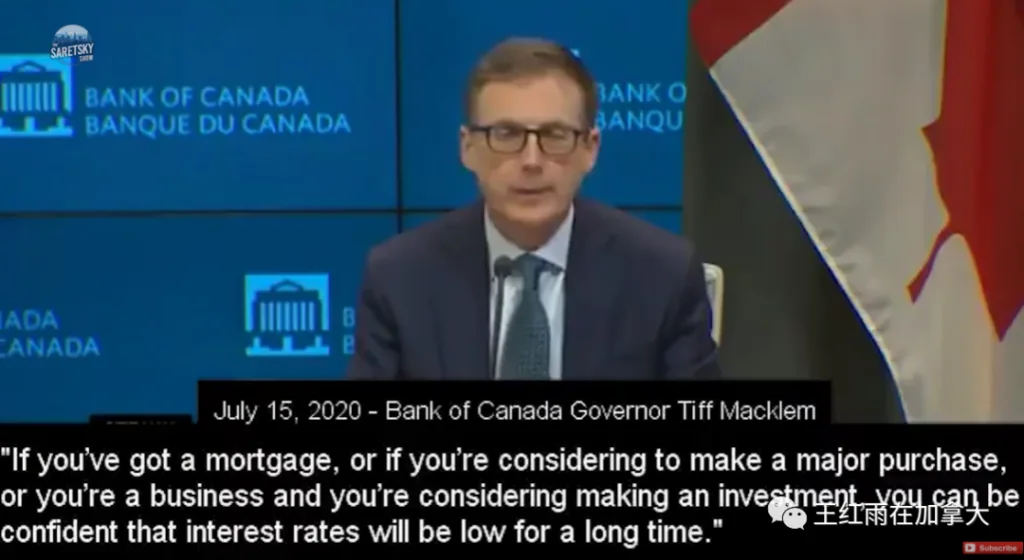
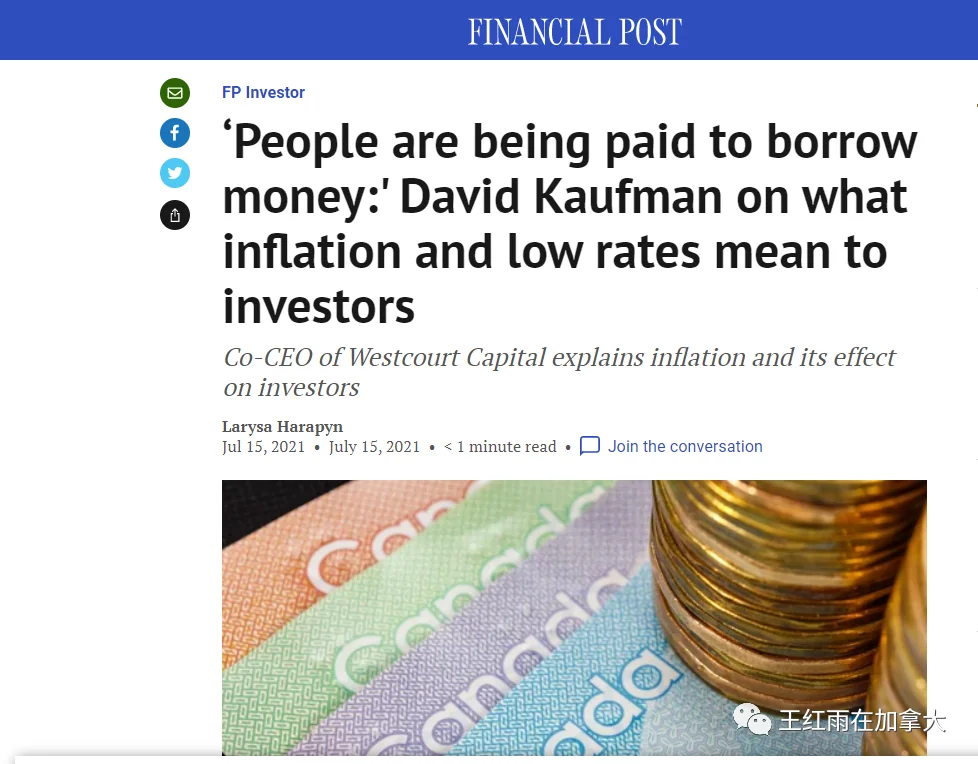
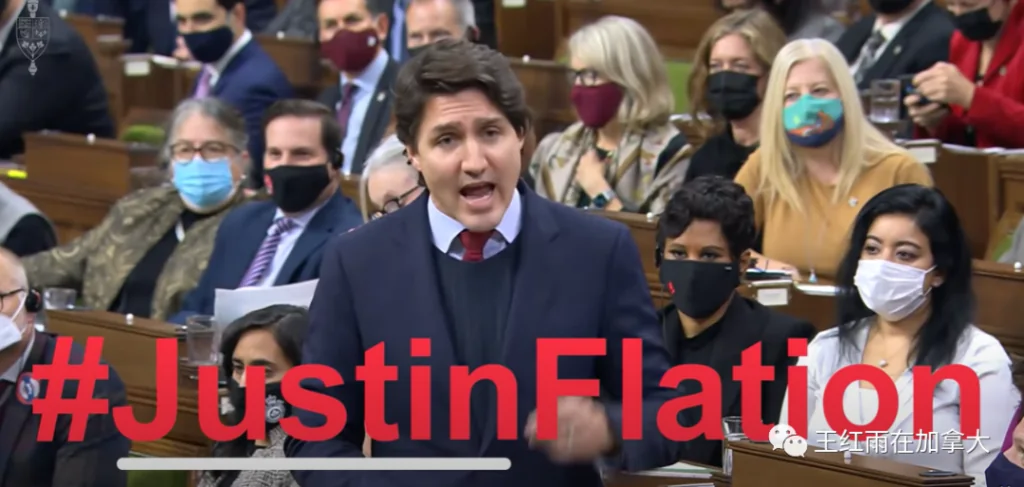
When housing prices were driven only by population growth, housing prices in the Greater Toronto Area increased by an average of 8% per year over the past 30 years. For investors with a down payment of 20%, the annual return on investment was 40%, or five times 8%. In the past year, due to excessive government subsidies, which caused a large amount of currency over-issuance, the rise in housing prices has added a strong driving force. During the epidemic, the central bank purchased 400 billion yuan in various types of bonds at high prices. Some investors who made profits from selling bonds switched to real estate. The funds flowing out of the capital market ignited property prices street by street. In addition to the central bank's money printing, the government's epidemic subsidies can be said to have played an indispensable role. Taking the second quarter of 2020 as an example, the private sector's reduction in employee salary expenses due to the blockade was only 20 billion, but the government's epidemic subsidies during the same period were as high as 70 billion, an overcompensation of 3.5 times. The financial review of epidemic subsidies is not in place, giving people with a low moral bottom line an opportunity to take advantage of it. Whatever the reason, after the outbreak, people were eager to live in bigger houses. Just as the government came to help, housing prices soared. The situation in other countries is similar. Compared with the United States, Canada's inflation level is lower than that of the United States, but the increase in housing prices is higher than that of the United States. This kind of "house price inflation" unique to Canada, that is, housing inflation, is nicknamed JustinFlation by the opposition parties. No matter what inflation is, congratulations to real estate investors, you are the biggest beneficiaries of Canadian inflation, especially real estate investors in the Greater Toronto Area. House prices in the Greater Toronto Area have increased by 30% in the past year. If you pay 20% down and use 5 times leverage, the return on investment in the past year will be as high as 150%! ! ! In this particular year, most real estate investors outperformed Buffett.
Judging from the above calculation of investment return, the lower the down payment, the greater the leverage, and the higher the return on investment. Increasing the mortgage means continuously increasing the leverage, otherwise the leverage level will decrease with the monthly mortgage principal and interest payments. There are two consequences of increasing the mortgage: 1. Cashing out funds from the property rights for other investments, 2. The negative cash flow becomes even greater. Regarding the issue of negative cash flow, there are even more people who have different views from me, especially those who have no other off-site cash flow except real estate investment, because they rely on the positive cash flow from rent to buy vegetables and meat, and positive cash flow is their lifeline, so they will never accept my point of view. There are rewards for enduring negative cash flow. 1. The net rental profit is reduced, which can reduce the amount of tax payable; 2. The level of leverage is increased, the efficiency of capital use is improved, and the return on investment is maintained high. People who cannot tolerate negative cash flow have no chance of enjoying these returns. Some people say that if I buy a house for investment, I can't "lose money", haha,Negative cash flow is not a loss, but an installment of the down payment. Getting approval from a bank for a down payment that can be paid in installments is an honor, as only those with strong off-site cash flow are likely to get approved.
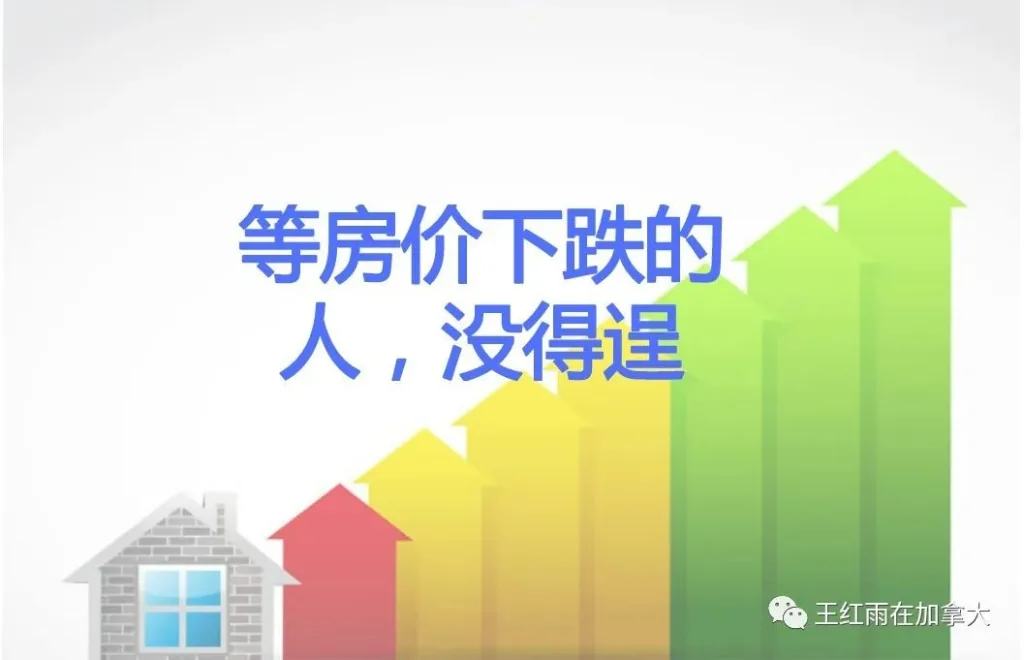
Although the return on investment is gratifying, as long as the return on investment is realized, the government will share the investment results. When selling an investment property, you need to pay capital gains tax, and you also face the question of what to invest in cash-out funds. Under Mr. Jia's leadership, Canada has been able to reflect inflation into housing prices, which I don't think any other country can do. Real estate investors have become the big winners from the epidemic, which is purely a Canadian characteristic. I think that when it comes to investment, we don’t have to look far, so we should unite closely around Mr. Jia and let housing prices rise for a while. The first generation of Chinese immigrants have not yet sold their houses.The current investment strategy is: don’t short positions, don’t change positions, and never sell the properties in your hands. As long as you have the ability, you will mortgage more, and then buy, buy, buy.If investing in real estate is compared to planting a tree, then the rent is the fruit. The tree trunks have to wait until the tree is grown before cutting it down to sell the wood. Cutting it down when it is still a sapling is killing the goose that lays the eggs.
I hold multiple properties for a long time and keep adding more mortgages. It’s always nice to keep adding more mortgages.The ability to add mortgages is the ability to invest in real estate. Real estate investment is an investment based on ability, not luck.People who don’t have the ability to increase mortgages think that I encourage everyone to increase mortgages in order to get more loans. Let them go. If these people had the ability to increase mortgages, they wouldn’t be so blind as to get more loans. If you sell the house, you will lose the collateral for additional mortgages. If you buy an off-the-plan property, there is no chance of additional mortgages.Mortgage is the engine of real estate investment. Without an engine, it is just a pushcart.T4/T4AFor families, the taxes paid cannot be in vain. Turn grief into the ability to increase mortgages, and you are the winner.Don’t be complacent with the 30% increase in housing prices this year, let alone sell investment properties. Money printing has not stopped yet, and housing prices will continue to rise. The basis for additional mortgages is that housing prices continue to rise. As long as there is an opportunity to increase mortgages on investment properties, increase mortgages. At the same time, we must work hard to speed up the repayment of home loans. The monthly payment of a home loan for many families is the largest negative cash flow in the family, but they don't care much about it. They are still worried about the negative cash flow of investment houses. In fact, all negative cash flow is shouldered by you, and it's just the difference between your left shoulder and your right shoulder. If an investment house has a negative cash flow of 500, and the monthly payment of the home loan is 4,000, the family's negative cash flow is 4,500. After paying off the home loan, it can afford eight more investment houses with a negative cash flow of 500, and the monthly negative cash flow will still be 4,500. Banks look at the ability to bear negative cash flow on a household basis, and do not care which house has a greater negative cash flow.
What is the result of waiting for real estate investment? Hold before retirement6Set up more than one investment house, pay off the home loan, and after retirement, when you need to release the positive cash flow of the investment house, sell one property, or even two properties, and use rent to balance your lifetime income. At that time, we will understand that the negative cash flow we bear today is worth it, and it is worth it for us to immigrate to Canada.
Conclusion:
Real estate investment in Canada has the right time, location and advantages, and there is a large amount of wealth waiting for us to tap and hold. Real estate investment in Canada is a positive-sum game, not a zero-sum game. Those who buy early are the winners. Compared with the new immigrants who have not yet landed, current residents who buy early are the winners.Investment is competitive, but the competition in real estate investment is not fierce because the competition is about the ability to borrow money and add mortgages.Occasionally, people with strong abilities in this area rush for a house in the market at the same time, but this also shows that real estate is becoming a high-quality asset that people are competing for. With more people buying, especially long-term holders, and fewer people selling, house prices will rise steadily accordingly, which is beneficial to all real estate investors. People with the ability to add money can outperform dry land eels by a few streets. We don't have to covet the money earned by decoration masters. 85% of Canadians believe that buying a home is a good long-term investment, while only 43% of Americans believe that buying a house is a good long-term investment. This is double the difference. According to the theory of Robert Shiller's "Narrative Economics", assets with a strong reputation will be sought after, asset prices will have a stronger ability to resist inflation, and families that can hold real estate for a long time will have an advantage in Canada.
December 31st every year is the deadline for many banks to accelerate repayment. We hope that families with still high home loan balances can restrain their tax avoidance inertia of purchasing RRSPs and TFSAs and speed up repayment of their home loans, because doing so is the best way to improve their borrowing capacity.
Red Rain End of December 2021
Mortgage borrowing capacity calculation formula