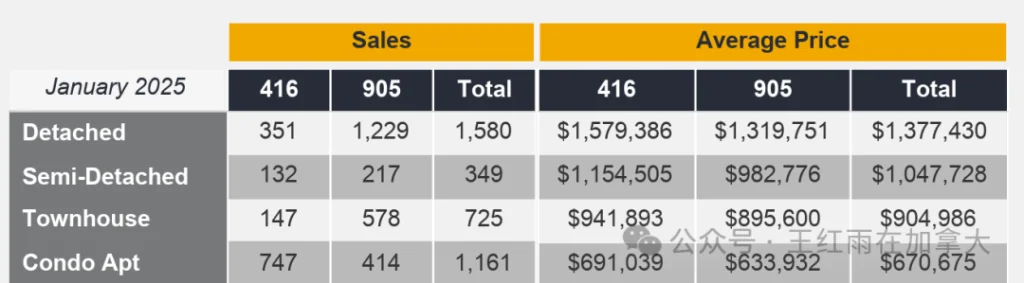
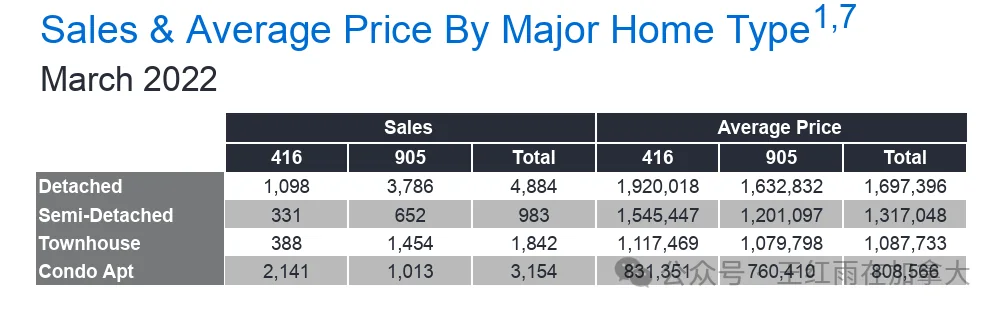
Among the Toronto second-hand housing market data in June, the most eye-catching one is the price of second-hand CONDO. The average transaction price was 696,000, an increase of 3.88% from 670,000 in January this year, and a 13.8% decrease from the peak of 808,000 in 2022. Looking back at the changes in CONDO prices since the interest rate hike, the CONDO price of 670,000 in January 2025 has unknowingly reached the lowest point. From the highest point of 808,000 in March 2022 to the lowest point of 670,000 in January 2025, the average price dropped by 20.6%. At present, the price of second-hand CONDO is on the way back home. Since last year, countless mainstream media and self-media have used eye-catching adjectives such as crash, plummet, and so on when talking about the Toronto condo market. However, after carefully examining the data, what we see isCONDOmarket resilience. It is recommended that you watch less news, especially the news that is pushed here, and read more data, because housing prices do not lie.
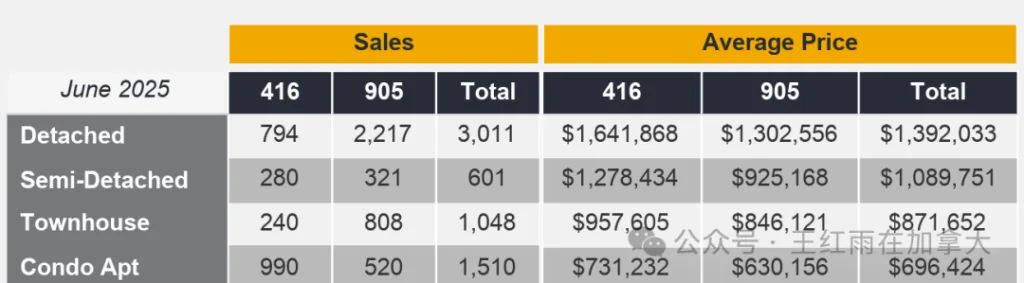
The trading volume of second-hand CONDO is also recovering. In January this year, the transaction volume of second-hand condos in Toronto was 1,161 units, and in June, the transaction volume was 1,510 units, with the transaction volume increasing by 30%. It also shows that although inventories are still increasing, the speed of destocking is also significantly increasing.
Buyers of high-priced off-the-plan properties have put tremendous pressure on the second-hand condo market in the past two years. The rush of buyers of high-priced off-the-plan properties to transfer and sell is reflected in the increasing inventory in the second-hand market, which has suppressed the price of second-hand houses. The media's attitude toward high-priced off-the-plan property buyers is one-sided and "blaming the victim"; very few people and institutions have expressed sympathy and understanding, or offered help. The pre-sale system determines that commercial banks will only consider issuing construction loans after seeing that developers have pre-sold a certain number of units. Developers use dozens of pages of pre-sale contracts to tightly tie buyers into the transaction, making it difficult for buyers to get out of the contract regardless of changes in their financial status.All off-the-plan property buyers are actually venture investors, just like venture capital that participates in financing before a company's stock IPO. If a society shows a one-sided aversion to venture capital or takes schadenfreude, then no one will try to take risks in the future, which is not in line with the spirit of capitalism. Seeing the above-mentioned signs of stabilization in the second-hand CONDO market, buyers of high-priced off-the-plan properties have reason to believe that as long as they find ways to fulfill their contracts and hold them for a long time, they will eventually see a bright future.
There are not many ways for buyers of high-priced pre-construction properties to save themselves. They must either have enough cash for settlement, or have the borrowing ability to restructure existing debts and work hard to complete the settlement. Based on the practice of the past two years, this article provides some problem-solving ideas for buyers of high-priced off-the-plan properties who have the ability to borrow money. The following content is of no help to buyers of high-priced off-the-plan properties who have completely lost their ability to borrow money. Readers should decide for themselves whether to continue reading.
01CONDO three years laterSupply of new homes dries up, CONDOThe price will increase significantly and you can hold 3Year?
I recently participated in an offline discussion on home selling issues, and various home sales elites shared their secrets and successful experiences in selling homes in the current market. There is one point that caught my special attention. A guest mentioned,In the current buyer's market environment, it is most important for sellers to keep their heads clear.Yes, in a buyer’s market environment, only sellers who absolutely have to sell need to list their property for sale at this time. If you decide to sell, you should "complete the display of the property rigorously" as another guest suggested, and become the top 3 best-selling properties of the same type. Otherwise, you will be helping others sell their houses. Sellers keep their heads above water. My understanding is that sellers need to answer themselves honestly, are you really that desperate seller? If so, you should also seek professional advice to see if there are other ways out of despair. There is only one purpose.If you can't sell it, don't sell it.
2025 will be the peak year for the handover of off-the-plan properties, and the number of completed CONDO units in the Toronto area is expected to exceed 40,000 units. If a person can eat 6 Big Macs a day, 2 each in the morning, lunch and evening, that’s fine. But if he eats 6 Big Macs at once for breakfast, it will be difficult to digest. The current problem in the CONO market is market indigestion caused by concentrated completion. According to CMHC data, the inventory currently in the hands of Toronto developers needs to be sold for 58 months, which seems to be a long way off. But market conditions are not necessarily as pessimistic as the numbers suggest. According to Winston Chan, vice president of sales at developer Tridel, in a video interview on July 13, there have been family offices and other ultra-wealthy families looking for prices from developers recently, planning to purchase the developer’s inventory in bulk. In addition, according to data from the New Housing Research Institute, the number of completed condos in Toronto is expected to drop sharply to less than 10,000 units in 2028, which is less than a quarter of this year's delivery volume. Toronto’s off-the-plan inventory problem has not only been targeted by super investors, but there is also the possibility that it may be quickly absorbed in three years.
If buyers of high-priced pre-construction properties have a way to complete the handover and hold the property for three years, the final result may be better than choosing to default or transfer at a low price. The situations of buyers of high-priced off-the-plan properties vary widely. Unless you have to, the best thing to do is to fulfill the contract and hold on, because the future is bright and you just need to survive the darkness in front of you.
02Other methods are limited, the best way is to fulfill the contract and hand over the property
There is no reliable basis for the statement that the default rate of off-the-plan properties is 30%. If the default rate is so high, there will be a problem of being unable to register as a CONDO company after the handover of CONDO. Currently, this has not occurred. Industry insiders estimate that the default rate for off-the-plan properties is between 10% and 30%, and is extremely uneven. Once a condo building cannot be registered due to a high default rate, the developer will choose the financing method of inventory loan. It will first take over the property rights of the defaulted unit with a loan, complete the handover, and then initiate litigation. If buyers of high-priced pre-construction properties choose to breach the contract, they will inevitably face legal proceedings, and the extent of their losses will be incalculable. Giving up the deposit, breaking the contract, and not delivering the goods are the last resort. Unless the situation is desperate, it is best not to go to this step.
The current success rate for off-the-plan property transfers is between 15% and 18%, which is very low. Reasons for difficulty in transferring include:
1. The receiver does not know the final delivery time, and the market price at the time of delivery may be lower than the transfer price, resulting in actual losses;
2. During the transfer process, some of the benefits agreed between the original buyer and the developer, such as the development fee cap, will become invalid, causing the receiver to bear unpredictable development fees;
3. The move-in fee is too high. Within a few months from the handover of the key to the handover of the property rights, the receiver may bear huge move-in fees;
4. Investors who take over the property face a fierce competitive environment when leasing it, and the rent may be lower than the market price;
5. The transfer market is narrow and information is opaque. The reason is that transfer opportunities cannot be displayed on MLS and can only be conducted privately.
Faced with the above-mentioned uncertainties, buyers who plan to take over the sale can choose second-hand CONDOs instead of going through the muddy waters of off-the-plan property transfers. There are indeed self-occupied buyers taking over, but in the face of the above-mentioned uncertainties, buyers who take transfer transactions seriously are still very rare, which is not enough to support the huge number of off-the-plan properties to be transferred.
As a buyer of a high-priced off-the-plan property, the possibility of returning the condo unit to the developer is extremely low. How can a contract that has been firmly locked be broken easily? Default, transfer, or next, that is the question. From what I have observed over the past two years, the best solution is to do it yourself.
03How to hand over high-priced off-the-plan property through mortgage loan
Among the buyers of high-priced off-the-plan properties, there are many serious investors whose original plan was to buy them and hold them for a long time. Although I have long been opposed to investors buying off-the-plan properties, many readers have already bought them, and I still hope to help these buyers complete the handover. The following experiences and opinions are for reference.
First, adjust your mental account, accept reality and actively respond to it. Many investors are not buying CONDO for the first time. The price per square foot may have been very low when they bought it before. For example, before the unit price of second-hand CONDO took off in 2016, the price per square foot was about 700 yuan. If you are unfortunate enough to buy an off-the-plan property worth 1,300 square feet, you can balance your mental account by yourself, and make a "psychological average" between the past purchase price and the purchase price of the off-the-plan property, and you can also do a "loan average." The specific method is to add a low unit price CONDO loan, withdraw cash for the down payment of the off-the-plan property, and reduce the loan amount for the off-the-plan property.
Second, if your feet hurt, treat your head. Many people have mistakenly believed the advice of loan experts. In the past few years, they have taken out the property rights from their own homes and increased their own loan for real estate or stock investment. When handing over the pre-construction property, the amount of the self-housing loan was too large, which reduced the borrowing capacity of the pre-construction property loan. This type of off-the-plan property buyers need to restructure their home loans, reduce their home loan balances and monthly payments, and prepare for the handover of their off-the-plan properties.
Third, balance and restructure all mortgage loans for existing properties, try to increase investment housing loans and reduce owner-occupied loans. When reorganizing the loan, apply for a HELOC line to prepare for the additional down payment when the uncompleted property is handed over in the future. Many high-priced pre-construction properties require a large amount of cash to supplement the down payment due to low valuations when they are handed over. This cash can come from the HELOC of the investment property, which can minimize the impact on the borrowing ability when the off-the-plan property is handed over.
Fourth, after jointly signing a property with no loan for parents or children, apply for an additional mortgage and withdraw the cash from the property to help hand over the unfinished property. Or jointly mortgage the mortgage of parents or children, and seek solutions from the existing properties of the extended family to meet urgent needs.
Fifth, re-examine the purpose of buying a high-priced off-the-plan property and make flexible adjustments. For example, if the current owner-occupied house has a relatively high loan amount and monthly payments, making it difficult to reorganize the debt, you can consider designating the high-priced pre-construction property as the owner-occupied house, and at the same time designating the existing owner-occupied house as a rental house, using the market rent to offset the existing debt, improving the borrowing capacity, and moving into the new house after the handover.
Sixth, regarding valuation, each bank has its own valuation method. Some banks' valuations do not necessarily require on-site evaluation. Instead, they first use a recognized database to conduct a valuation test. Once the test is passed, on-site evaluation is exempted. Buyers of pre-construction properties will only know the specific evaluation results when they apply. It is recommended that buyers of high-priced pre-construction properties try the evaluations of several banks.

Conclusion:
Prevent the disease before it becomes ill, and prevent the disease from becoming worse. Many buyers of high-priced off-the-plan properties choose to hide their illnesses and avoid medical treatment. They hold time bombs in their hands and are reluctant to apply for loans. After handing over the keys, I was still praying that the project would be unfinished and that I would be able to escape. It was known that the transfer would result in losses immediately, and it was difficult to find a takeover. At the last moment of handover, I was still imagining that there would be a miracle, and I was lucky enough to meet a white knight. These "procrastinations" can be fatal, turning a cold into pneumonia and then into an incurable disease. Three days before the handover of the off-plan property, someone called me to inquire about how to get a loan. The time bomb that I had held for N years exploded immediately, leaving not enough time for demining experts.
For struggling buyers of high-priced off-the-plan properties, borrowing capacity is the most important antidote. Families that live seriously, work hard, and pay taxes honestly will be able to gradually solve their problems even if they encounter temporary difficulties. Families who know that the potential risks are high but are unwilling to make early plans need to give up taking chances and face the decisions they have already made. Being forced to sell a house or transfer a contract is like an amputation, painful and impossible to restore, while resolving it through a mortgage loan is more like conservative treatment, which takes time and requires early planning. Procrastination is often the leading cause of amputation.
Maintaining housing price stability and promoting market prosperity is in the interest of every homeowner. I hope the above experience and suggestions can help readers who are temporarily experiencing difficulties.