Real estate investors and families with multiple apartments always give people a mysterious feeling. On the one hand, people are curious. It is difficult to buy a house by yourself. How can someone hold multiple houses at the same time? How rich is this? On the other hand, I am also worried about them, especially when interest rates are skyrocketing. With so many loans, we must not liquidate them. Why don’t we sell them? I recently read an article. The author believes that the most dangerous families now are families with multiple houses, which may go bankrupt. The author is also more specific in his concern, believing that families with more than 5 houses in their names are the most dangerous. I think that when a family with 5 houses encounters financial problems, selling one of them should be able to solve the problem without selling 5 houses. Such a simple mathematical problem stumped the author of the article. A family with 10 apartments is more financially secure than a family with 5 apartments. A family with 5 apartments is more financially secure than a family with 1 apartment. Those who own a house are more financially secure than those who don't have a house. Shouldn't this be the order? To me, what is difficult to understand is how the editor, who is worried about families with multiple apartments, would care about people who are several times more financially powerful than himself in his busy schedule? Even more bizarre than the editor's algorithm is the author of social media who said, "House prices dropped by just one down payment in 6 months." You must have seen this algorithm before. When house prices were at their peak in February this year, the average house price in GTA was 1.334 million, and in August the average house price was 1.107 million. If the down payment is 20%, the difference in down payment amount is 44,300. Can this 44,300 be used as a down payment to buy a house? To me, people who talk down real estate all day long are too mysterious. Why do you care so much about real estate and real estate investors if you don’t buy a house? Multi-property real estate investors are not that mysterious to me, and their growth process is actually very simple:Learn to use leverage and tolerate what others cannot tolerate。
01 Mental preparation
Someone can calculate the above two mathematical problems and produce such unexpected results, which shows that it is not a problem of ability, but a psychological problem. Real estate is an asset that can bring rental income. Everyone has the right to obtain it. Using real estate investment to balance your lifetime income is no different from using financial asset investment to balance your lifetime income. If you view owning an investment property as an evil, you will make yourself pay the price for this discrimination. "Xue Zhaofeng's Lecture Notes on Economics" has a special chapter discussing the issue of discrimination. The conclusion is very simple. Whoever discriminates will pay the price. Those who do not discriminate benefit from those who discriminate. Just look at real estate investment levelly, treat real estate investment equally with other investments, and compare returns and certainty.
The psychological construction of real estate investment has three contents:1. Get rid of the superstition that financial investment can support your retirement; 2. How not to become a poor dad; 3. Real estate investment can balance your lifetime income.
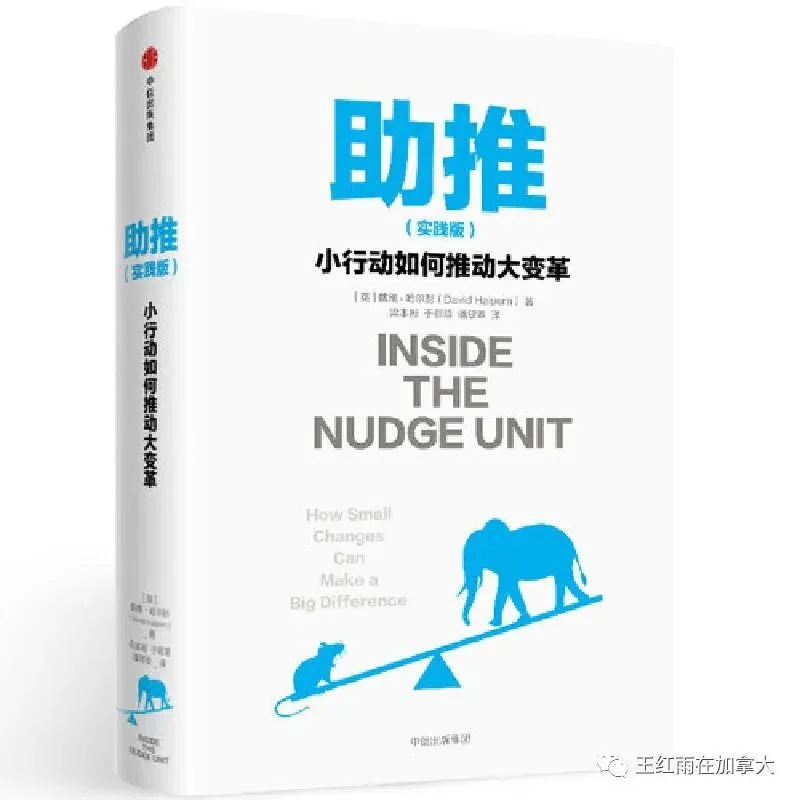
There is a representative work of behavioral economics called "Nudge", which tells a case of behavioral design. When an employer writes the monthly pension contribution ratio as a default option in the employment contract when employees join the company, the proportion of employees participating in the pension plan will increase significantly. In contrast, when employees were proactively asked if they would like to participate in a contributory pension plan, fewer people volunteered. Richard Thaler, the author of "Nudge", won the Nobel Prize in Economics for his discoveries and suggestions in behavioral economics. Many people default that they do not need to prepare for retirement, and they need to use the routine designed by Taylor before they are willing to spread their current income to the future. I personally think Taylor's approach is more harmful than people not preparing for retirement. People in this routine believe that since they have contributed to their retirement funds, they should not worry about the investment of funds in their retirement accounts and can retire safely, but this is far from the truth. The United States filmed a documentary last yearThe Pension Gamble It has been viewed by 1.4 million people. It tells the story of Kentucky public servants’ pensions being wiped out. Retired teachers and firefighters still don’t know where to collect their pensions. Canada's Registered Retirement Savings Plan, RRSP, is not much better. People think that the money placed in this tax shield is money for "raising children for old age." Unfortunately, many people find out when they retire that their sons have not grown up, and some have shrunk.The boost of system design has pushed many people into a big pit: they believe that financial assets are the default and must-select assets for retirement funds; they believe that all financial assets purchased will definitely appreciate in value; they believe that the pension plan designed by the system is enough to provide for retirement, and they do not need to make additional efforts.Judging from the actual situation that retirees in the United States and Canada are getting harder and harder to survive, the current pension plan is neither adequate nor stable, and is becoming increasingly unreliable as life expectancy increases. In addition to institutional design issues, there are also big problems with financial assets themselves. Minsky proposed afinancial instability hypothesis, which was verified during the subprime mortgage crisis:The main instability of capitalism is reflected in financial instability; the more stable the economic development, the more serious the accumulation of financial risks, the greater the possibility of financial collapse, and the greater the losses.Before the subprime mortgage crisis, few people knew Minsky's name. It was Yellen who used the word "Minsky moment" and people began to look up what Minsky said back then. The Greenspan era, known as the "Great Stability Period", had no major financial crisis. However, Minsky's theory points out that the longer the period of calm, the greater the possibility of financial risks erupting and the more destructive they are. A great boom can last for many years and then explode, destroying long-term accumulated financial assets. Raghuramirajan stridently made the same point as Minsky at the 2005 Jackson Hole annual meeting of central bankers, two years before the subprime mortgage crisis broke out, among the many voices singing Greenspan's praises. Rajan in Memoirs"I do my own thing"Discussing this issue of risk management in financial asset investment, Rajan said that when the market is going smoothly, fund managers will hide tail risks and constantly pursue high risks and high returns. "By concealing the degree of beta risk, the returns generated from taking beta risk are disguised as alpha." Beta accumulates more and more in a stable environment, eventually causing alpha to fall short. The subprime mortgage crisis was like this. The financial market concealed the possibility of mortgage defaults, added leverage to the leverage, and even added leverage to default insurance, betting that there would be no mortgage defaults. In the process, everyone, financial practitioners, and pension investors made a lot of money, until finally a wave of loan defaults broke out and blew up the entire subprime bond market. Minsky predicted that the U.S. financial market would collapse by relying solely on reasoning. The reason is very simple:If it is too stable, investment managers will pursue high risks and high returns. It is impossible for everyone to make money in a zero-sum game. Risks and losses are just pushed into the fat tail, and they will one day be liquidated.Minsky called contemporary capitalism “money manager capitalism”, he believes that the masters of capitalism are these fund managers with pension funds, and these people are the creators of financial instability. "Instability" is unacceptable for old-age care. When you need money to save your life the most, who can bear it if you collapse. British pension funds have recently been on the verge of collapse. In fact, all types of pension funds in these old capitalist countries are not far away from thunderstorms. Because people are living longer and longer, pension investments often suffer losses. It is too difficult for fund managers to ensure that every retiree has money to spend while they are alive. Canada's state pension fund, CCP, suffered huge losses after the outbreak of the epidemic because it bought a large amount of cruise ship stocks; Canada's Ontario Teachers' Pension Fund bought a large amount of shares of the virtual currency trading platform FTX, which has recently made financial headlines.The pension boosting plan actually benefits the investment and financial management industry. Some mediocre people who are not qualified but want to make a living by managing money for clients have eroded a large amount of retirement wealth that should belong to investors, causing those who are indifferent to their retirement wealth to get into greater trouble after retirement.Real estate investment, with a stronger certainty of return than financial asset investment, is the most important escape hatch from the risk of financial instability. This escape hatch must not be blocked just because of discrimination.

Real estate investment is a very local investment, so we cannot find a general textbook. The best-selling book series "Rich Dad Poor Dad" is still the best guide to real estate investment. However, everyone's experience and experience learned from it are very different. The most important idea I learned from it is,Don't be a poor dad. It is a common path for poor dads to move to a larger home and take on a larger mortgage after getting a promotion and a salary increase. The result is that they will spend their whole life struggling to make ends meet. When they retire, they will only have one home and the loan may not be paid off, and then they will rely on social security and investments in their own retirement accounts for the rest of their lives. The ending of poor dad is sad, but 90% of people in life still follow the life trajectory of poor dad. They are not only financially strapped and insecure, but also emotionally cynical and resentful. Contemporary thinkers have done a lot of analysis and research on the situation of poor dad, but because people are too busy imitating poor dad, they are completely unaware of these thinkers' reflections on poor dad's life. Marcuse called this kind of person who goes all the way to the dark side "one dimensional person"; Nietzsche calls these people who take pleasure in disappearing into the crowd "last man", the last man; Foucault calls this kind of person who blindly follows other people's lifestyles without thinking "People who have been disciplined by society". How not to become a poor dad is more important than how to become a rich dad. Just as Socrates said, "A life without reflection is not worth living." Seriously reflecting on what happened to a poor dad can prevent us from making the same mistakes again. The way of life in the industrial age, including the way of caring for the elderly, seems reasonable and appropriate, but it is a dogmatic way of life that is disciplined by wrong knowledge and experience, is the same, and is very nihilistic. Rich dad was a typical example of someone who broke the rules, refused to obey discipline, and worked hard to live a different life.

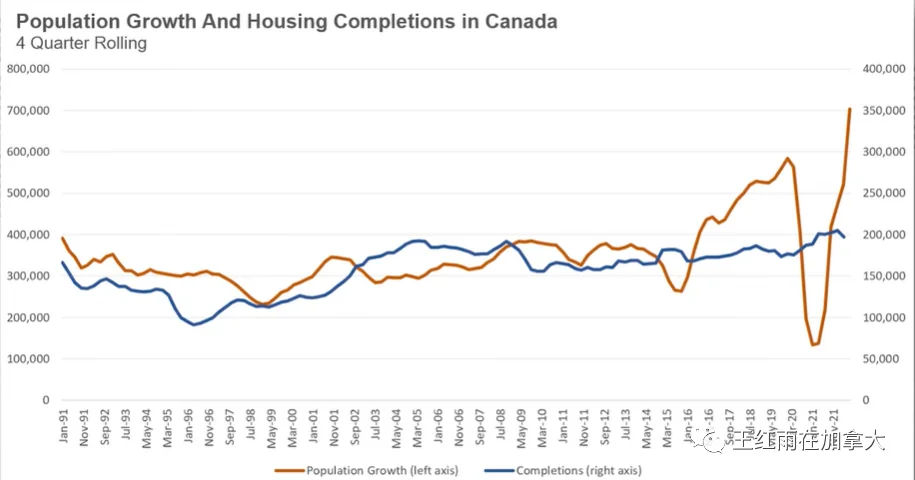
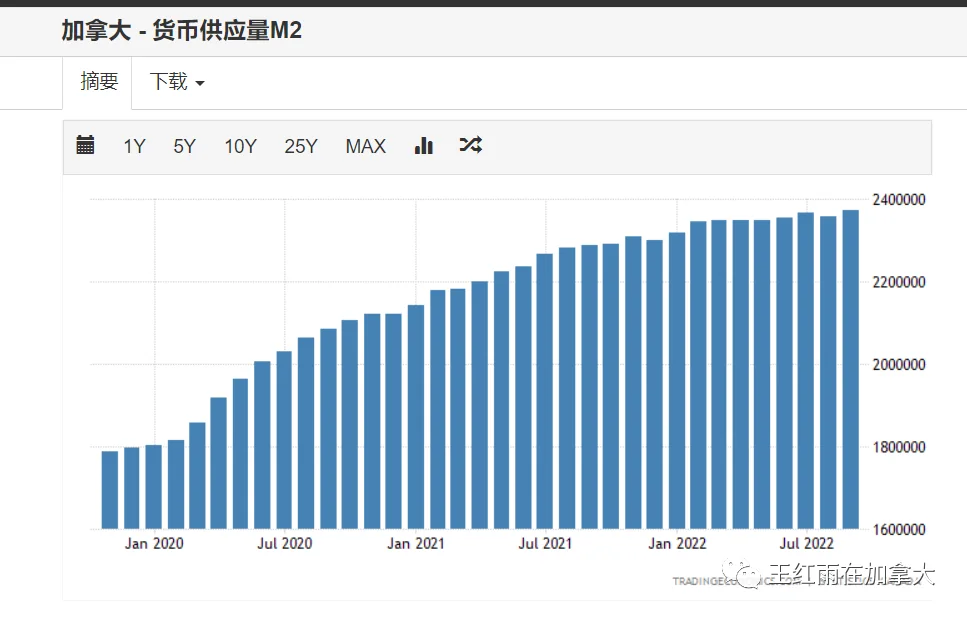
Canadian real estate has a strong local attribute. Take the Greater Toronto GTA as an example. Because it is the city with the most employment opportunities, it is attracting a continuous influx of people. At the same time, real estate in the Greater Toronto Area is also the best asset for attracting money. Many people confuse excessive currency issuance with inflation. After the subprime mortgage crisis, there was a massive over-issuance of currency, but there was no inflation. The over-issuance of currency flowed into the stock market in the United States and into real estate in megacities like Toronto in Canada. Therefore, the criterion for measuring the purchasing power of money is not how much prices have risen, but how much housing prices have risen.Since the epidemic, more money has been overissued, so housing prices have risen even more. The chart below shows that to this day, the Bank of Canada is still overissuing money on a large scale. The money that real estate failed to absorb flowed into commodities, causing inflation. In Canada, especially in Toronto, housing price inflation occurs first, followed by commodity inflation. The current high interest rates have prevented further inflation in house prices, but rents have inflated again. This shows that real estate is a scarce resource in Canada, and the inflow of population exceeds the rate of construction of new homes.High interest rates have hindered pre-sales of new homes, digging another hole in the supply of new homes in five years. Canada's baby boomer population is entering retirement and requires a large number of new immigrants to supplement the labor force. The contradiction between population growth and housing shortages makes real estate investment even more attractive.
02 The first barrel room
Only psychological construction is not enough. Investment is a practical art. People who have never lost money mean that they have never ended up. There are many people on the Internet who have never lost money. They celebrate on social media that they did not buy a house last year or this year. I wish them never to lose money and stay invincible forever. I know many investors whose houses have been vacant during the epidemic, or who have been forced to lower rents, and are currently struggling to support themselves under high interest rates. These people are not bothered by the trouble, and are not afraid of losses. They believe in real estate investment, and they believe that they can keep their houses and are not afraid of losing their money. Ever wonder why real estate investors are so forbearing? Then we need to review the way they came and analyze how the first barrel room came to be.
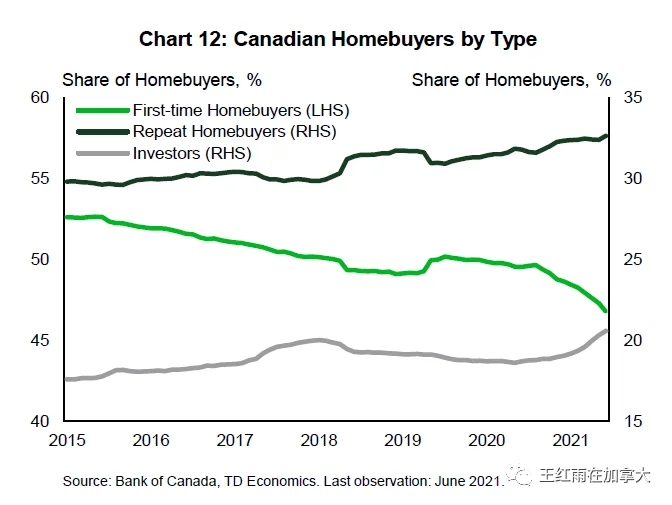
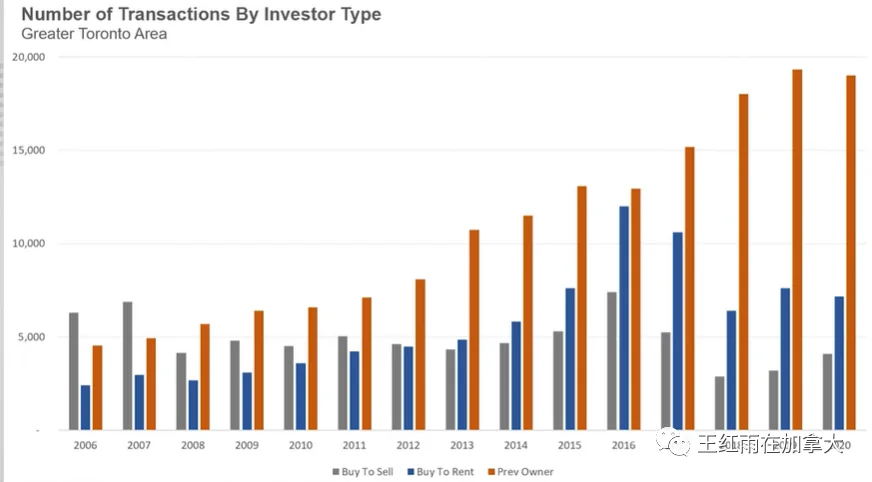
The YouTube channel move smartly provides two data charts that reveal the trajectory of real estate investors in the Greater Toronto Area in recent years. The first picture shows that the proportion of first-time homebuyers is declining year by year. This is very understandable because house prices are getting more and more expensive and it is becoming more and more difficult to get to the first level. Therefore, more houses are needed for rent, and investors have just filled this gap. Therefore, as shown in the picture, the proportion of investors and the number of people changing houses is growing. The first picture fully embodies the Matthew effect, or what is said in the "Tao Te Ching", "The way of man is to lose more than you can gain." The more people dare not risk all their money to buy a house, the less they own their own home. The more families dare to take the risk to buy a house, the more properties they have. The figure in Chapter 2 breaks down investors. In the 14 years from 2006 to 2020, the structure of investors has undergone tremendous changes. In 2006, the proportion of speculators who sold immediately after buying was higher than the proportion of buyers who bought to rent out and those who bought new homes and rented out their original homes. By 2020, the proportion of speculators is much lower than the proportion of people who bought their own homes and then kept their original homes for rent. This turning point occurred in 2008-2009, and the gap has continued to widen since then. This illustrates two problems: 1. Housing prices took off after the large-scale over-issuance of currency in 2009. The amount of funds that real estate speculators need to invest has increased significantly, and the risks have increased significantly. Speculating in real estate is like pulling chestnuts from the fire. Speculators have gradually left the market, and speculators and decorators have taken a back seat; 2. The practice of keeping the original home as a rental house when changing to a home has been widely used and has become a key path for real estate investors to obtain their first pot of gold since 2010.
In order to own their own property in the first city, many families need to empty out six wallets, grit their teeth, squeeze out the last penny for the down payment, and apply for the maximum loan amount that the bank can approve before they can buy a property suitable for the family size. This situation is the same in any era and in the first city of any developed country. There is nothing to make a fuss about. Unless the former wave has already helped you endure this hardship, otherwise, just swallow this bitter pill happily for yourself and the latter wave. Just look at those steadfast wallflowers and you will know that waiting and hesitating will make this bitter pill more and more difficult to swallow, until you want to eat it but can no longer eat it.In fact, you only need to make one down payment to buy a house in your life. After buying the first house, all the houses you buy in the future, including investment houses, will be exchanged, and no further down payment is required.This sentence is worth millions of Canadian dollars and is related to the happiness of generations of people living in Canada. You must remember it well.

The first home you buy, A, is the beginning of your real estate investment in this life. When you need to change your home and buy a home B, don't sell A. Instead, add a mortgage to B as the down payment, then take out a loan to buy B, keep A, and move to B as your home. Property A has become the first bucket of real estate investment. The dividing line between a poor dad and a rich dad is whether he sold house A when he bought house B. Without selling A, it is easier to buy B. This is what many people do not understand.Reason for buyingThe reason why B can still keep A is because when calculating the borrowing capacity to buy B, the bank regarded A as an investment house, assessed A's market rent, and used the rent to offset A's debt.By analogy, when buying property C as a home, first add loans to houses A and B, cash out as much as possible, and make a down payment for house C. The lower the loan for house C, the better. By following the above operations, you can accumulate an investment property portfolio by moving. The bank’s borrowing formula is,The annual income can be borrowed for the owner-occupied house5 times; for investment properties, you can borrow 5 times your annual income minus the balance of the home loan.This formula determines that it is less difficult to apply for a home loan. For families with limited income, they can also invest in real estate by constantly moving. When time is T1, you buy A, and the down payment is paid by yourself. When time is T2, you can add additional mortgages to A. At this time, A is still your own home. As long as the house price rises and the family income rises steadily, you can add additional mortgages to withdraw cash. Many friends ask when is the right time to add a mortgage. This time point T2 is determined by income and housing prices.The cash that can be withdrawn through additional mortgages is enough to make purchasesWhen making the down payment for House B, the time for additional mortgage comes T2.By analogy, at T3, additional mortgages are taken on houses A and B, and cash is withdrawn as a down payment to buy C. It can be seen from this thatThe time to buy a house is not determined by the rise and fall of house prices or interest rates. The time of buying a house is determined by your income and whether the current house price supports a mortgage and the purchase of the next property.
03 growth
When buying property A, if the loan is obtained through a special project, such as a new immigrant project, the loan amount for house A may far exceed the amount borrowed based on income. The above-mentioned method of accumulating real estate through house exchange is almost invalid. The so-called "almost" means that after some families realized this problem, they rented out House A, continued to save a down payment, and relied on their income to buy House B as their own home, returning to the path of accumulating real estate by moving. As a Canadian tax resident, you must file taxes in Canada on your global income. Overseas salary income can be regarded as Canadian income in the third year if it is reported in the 104 line of the T1 form in the Canadian tax return for more than two years and used to support mortgage applications. There is no such situation as having no income at all, but many families fail to report truthfully, so it is difficult to get loans.
The basic condition for investing in multiple properties is to maintain family income. It is difficult for families without income to realize their desire to accumulate properties. This is because adding a mortgage depends on income, and buying the next property also depends on income. Although each bank has high net worth projects, the requirements for high net worth are also determined based on income. Families with no income at all have the highest requirements for high net worth. Qualifying financial assets in Canada must exceed the amount of the newly applied loan plus the amount of the existing loan, so the problems that high net worth projects can solve are limited.
The growing pains weren't just about income, the constant move was also out of the question. After the family stabilizes and has children, the children need a stable learning environment and cannot move around all the time. Therefore, growing real estate investors need to constantly minimize the balance of their home loans during the process of moving. When the loan amount for property C is less than 2.5 times the annual income, you can directly borrow money to buy an investment house. Because the bank's borrowing formula shows that the investment housing loan amount is equal to 5 times the annual income minus the balance of the owner-occupied housing loan.

The ultimate goal of multiple real estate investors is to pay off the home loan as soon as possible, so that when they retire, they will have no loans for their home while holding multiple investment properties in their name. I have introduced the violent method of quickly paying off the home loan. You can search for the article "House Slave Turns Back and Sings" in the public account. The sooner you pay off your home loan, the easier it will be to invest in real estate, because the loan formula for investment homes is that each investment home loan can be applied for 5 times the annual income minus the balance of the home loan. If the balance of the home loan is 0, then each investment home can be applied for 5 times the annual income. Many families need 10 years to complete the construction of multiple houses, while some families only need 5 years. The difference lies in whether the balance of the home loan can be paid off as soon as possible. Many real estate market onlookers wonder why some families are able to withstand the negative cash flow of multiple investment properties without collapse. The principle is that the debt of the owner's house is carried on the left shoulder, and the negative cash flow of the investment house is carried on the right shoulder. Assuming that a family's debt capacity is constant, after the debt on the left shoulder is removed, the ability of the right shoulder to carry things will naturally increase. Banks also regard a family's total debt capacity as one. The smaller the home loan, the more loans can be approved for investment properties.To grow as a real estate investor, you must learn to transfer debt from your left shoulder to your right shoulder, otherwise you will have to move.During this transfer process, not only do you have to postpone gratification and bear the pressure of negative cash flow from real estate investment, but you also have to continuously maintain your own income, which is enough to support this requirement of active debt management.
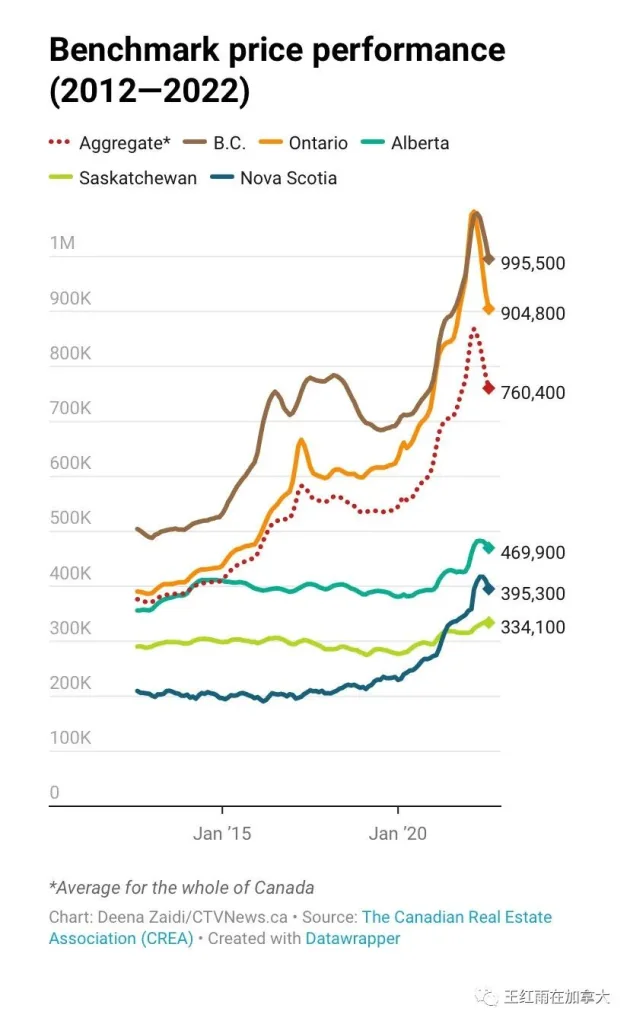
It is not easy to avoid being influenced by popular prejudices in the goals and directions of real estate investment in this atmosphere where a weak culture prevails. When some people see housing prices falling, they clamor that the era of real estate investment is over. There are still people who suggested on Xiaohongshu that "Conscience reminds you that you cannot buy a house now." This voice was also loud in 2018, but time has proven that it was the best time to buy real estate.The timing for real estate investors to buy real estate is determined by their ability to raise mortgages, not by housing prices and interest rates.Some people ask when the interest rates will be cut. The interest rates are too high now and they dare not buy. When interest rates come down, there is a rush for housing. At that time, people are even more afraid to buy because they are afraid of buying at a high price.There are two opportunities to buy a house:1. Buy early, 2. Buy, buy, buy, because it is impossible for every family to maintain its ability to borrow money forever, so it is necessary to buy, buy, buy when you can get a loan.Families over the age of 70 who only have one home have little ability to buy and buy, and they only have the ability to make sarcastic remarks. In order not to fall into this passive situation, you must seize the opportunity when you are able to buy. Experts who analyze when to buy a home are fighting against windmills because there will never be a time to buy a home that works for everyone. Looking for a home with low value is futile in terms of time. Does it matter which district in the GTA you bought a property in 10 years ago? Even the type of property is not important. If you bought a condo or a detached house 10 years ago, there is actually little difference in the investment effect.Building an asset package with mortgages as the core is the most important way for the middle class to escape the trap of investment and financial management. The key word here is "mortgage", not houses.In the first city of a country, establishing an asset package with housing loans as the core can quickly build a moat for financial security. Let the currency depreciate. We have the hardest assets as our financial foundation.
04 End point and inheritance
In 2014, I helped a woman make 5 loans for 5 units in the same pre-sale condo. The buyers were all family members of the woman. Last year, her two daughters came to me for investment housing loans. The two daughters now have more than 5 properties in their names. They are both young and have very good incomes. Many people ask me how to pass on real estate and how to cultivate the financial intelligence of the next generation. All I can tell you is,If you don’t work hard in the first wave, you will be sad in the later wave. Don’t build your hopes on the next generation. Don’t believe those experts who talk about asset inheritance to teach you how to avoid taxes. Instead, you must practice it and set a good example for the next generation.
Parents who can continue to postpone gratification and continue to learn debt management will go through a complete learning process of accumulating real estate and building a financial security moat. This personal experience is the best teaching material for their children. Those who keep shouting that house prices are too expensive and that young people cannot afford a house are cultivating a victim mentality in their children, who will believe in the NDP when they grow up. There is no savior in the world. A house is a commodity, not a welfare. It must be obtained through hard work and forbearance. The end point of real estate investment is not measured by how many properties you own. For working-class people, they need to consider how many rental houses they can manage. Having no mortgage on your own home when you retire, and owning more than 5 investment properties at the same time will bring a strong sense of security to your retirement life."Satisfaction" is the end point of real estate investment.
The next generation has its own worldview and methodology, and parents don’t have to force it. Many young people think that encrypted digital currency can represent future wealth, so let them try it. It is very necessary for parents to set an example for their children. If their children do not follow suit, it is not a big deal. Forcing your children to have properties they are unwilling to manage can be resentful and thankless. If their children like to invest in real estate, and parents mortgage their own real estate and withdraw cash as a down payment for the next generation, they have done their best to be kind and righteous. It is best to ask their children to return this gift through their own efforts in the future. I believe that in this way, the children will be more grateful for the support they received back then.
Conclusion:
Financial assets can easily make us fall into currency illusion. Only housing prices can allow us to clearly understand the speed of currency depreciation. If you seize real estate, you can resist currency depreciation. This is a unique advantage for residents living in capitalist metropolises. Families who have benefited from rising house prices can read this article. On the contrary, families who have suffered from rising house prices will reject my point of view until one day they turn from losers to beneficiaries. Some people say that the GTA real estate transaction volume in October this year dropped by 49% compared to the same period last year, and you are the only one who is still advocating real estate investment. The same glass is half full of water. Some people see the glass as half empty, while others see the half glass of water remaining. In such a difficult home buying environment, half of the people are still taking control of their own destiny and working hard to buy a house, right? Don't complain about the large wealth gap, because you backed down when it was time to move forward, which widened the gap between the rich and the poor. If you can't overcome your fear, you can't take action when you should. Don't be jealous of the bravery of others.
The interests of politicians sometimes run counter to the interests of families. You see, now the Bank of Canada is celebrating recession and cheering unemployment. What's more, for the benefit of certain lobby groups, capitalist countries will use nudges to make financially insecure families fall into inexplicable and conventional disciplines. Poor dad was a victim of this discipline. Therefore, modern people need to have their own judgment instead of blindly following absurd correctness. A life without reflection is not only not worth living, but also more likely to lead to trouble. I hope that my small public account, by constantly summarizing the growth process of real estate investors, can open a small window for Chinese people living in capitalist countries to see the colors of life that do not conform to discipline.