When inflation was high, the Bank of Canada adopted a method of raising interest rates called "pre-loading", known asfront-loading. The central bank governor said this is the way to achieve a "soft landing" for the economy, that is, to make Canadians suffer first and then get sweet. The interest rates were raised by 1% on July 13 and by 0.75% on September 7. The central bank increased interest rates from 0.25% on March 1 this year to 0.75% on September 7. In just 6 months, interest rates have been raised by 3%. Now Canadians are finally suffering. This bitterness needs to be swallowed, and it must be swallowed under the condition of high inflation, otherwise we will not be able to survive the sweet day.
I started writing this public account on January 1, 2018, hoping that by sharing my own experience in real estate wealth accumulation and debt management, I can help readers better manage their debts and accumulate real estate wealth at the same time. In Canada, it is real estate that widens the wealth gap, and it is also real estate that allows middle-class families to gain financial security. However, you can't achieve real estate wealth without taking on mortgage debt. They are two sides of the same coin. To achieve wealth, you must manage your debt.
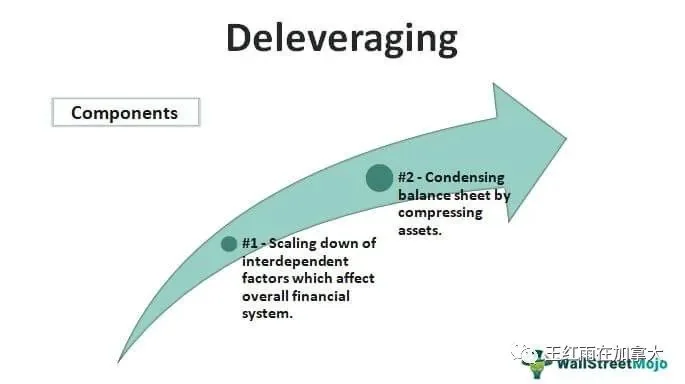
With interest rates so high now, do we need to deleverage? Many people cannot do without deleveraging because a letter from the bank has been sent to their home, asking them to increase monthly payments or accelerate principal repayment. This is forced deleveraging. There are also many borrowers with fixed monthly payments, even with floating interest rates, who will not be required to deleverage unless certain conditions are met. These borrowers can choose to deleverage or continue to maintain monthly payments. I have always advocated proactive deleveraging of owner-occupied housing and consumer debt, regardless of interest rates, active or passive. Investment properties vary from person to person, and you can choose to deleverage, but if you have no repayment difficulties, you do not need to deleverage, and you can even choose to increase leverage.
01 Prospects for interest rate hikes remain uncertain
The Chairman of the Federal Reserve spoke for 8 minutes and 50 seconds at the central bank governors’ meeting on August 26, summarizing three historical lessons for the central bank to control inflation. We need to be familiar with the history of the American economy to understand what his three lessons are.
The first lesson is that curbing inflation is the responsibility of the central bank. In the past, we have been waffling on the issue of the ownership of this responsibility for too long, which delayed the opportunity to curb inflation. This time, we will never waffle again. The United States debated this issue for 15 years from 1964 to 1979. It was not until Chairman Paul Volcker took charge of the Federal Reserve that it became clear that curbing inflation was the responsibility of the central bank. From 1970 to 1978, the period from 1970 to 1978 was the period when inflation rose the fastest in the United States. Arthur Burns served as Chairman of the Federal Reserve. He always believed that the Federal Reserve alone could not suppress inflation. As we are discussing now, inflation has a lot to do with supply chains and geopolitical issues. The central bank can neither produce beef, build houses, nor stop wars. How to suppress inflation? Back then, the ball to curb inflation was kicked around until it reached Volker's feet before being shot into the goal. Powell brought up the old story just to shut up those who are still talking nonsense. The central bank has the unshirkable responsibility to curb inflation.
The second lesson is that inflation and inflation expectations feed each other. If this cycle is not broken, the more people expect inflation to rise, the more inflation will really rise. The central bank needs to make people really believe that inflation will be suppressed, rather than half-believing, in order to eliminate inflation expectations. Volcker once said, "Inflation is self-feedback to a certain extent, so in order to restore a more stable and more productive economy, part of the energy must be focused on controlling inflation expectations." Powell's current approach is that as long as someone predicts that the Federal Reserve will cut interest rates, he will be attacked head-on. He only repeats one sentence:There is no preset target for interest rates. The Fed has only one preset goal - to reduce inflation to2%,Stop guessing how high interest rates will rise. In the past, the Fed did not do a good enough job in controlling inflation expectations. It relaxed measures to suppress inflation without eliminating inflation expectations. This time it will not happen again. Powell believes that inflation expectations are eliminated only when people "rationally ignore" the inflation problem. Rational neglect means that when people no longer talk about inflation and newspapers and TV news no longer use inflation as headlines, the inflation issue will be ignored and inflation expectations will disappear. A book written by Irving Fisher in 1928, "Money Illusion", revealed a phenomenon. When people have moderate inflation, they will have the illusion that the face value of currency they see is the purchasing power it represents. However, the actual situation is that the purchasing power of currency continues to decline. In other words, only when inflation is high will people break the currency illusion and realize that the purchasing power of currency is declining and the currency is depreciating. What Powell said about returning people to a state of "rational neglect" of inflation is to get the public back into the monetary illusion and stop caring about currency depreciation. When everyone is awake, the issue of the central bank's failure will become the focus, and the central bank's job will be difficult. The central bank now needs to threaten to raise interest rates at all costs in order to get people back to the monetary illusion as soon as possible. This intimidation cannot stop. The last sentence of the Bank of Canada's interest rate hike announcement on September 7 was the most eye-catching, "interest rates will continue to be raised." This sentence is expectation management. The central bank is worried that the public thinks that the interest rate hike is over, and whether there will be two more interest rate hikes before the end of this year is actually a big question mark. However, according to Powell, expectation management must be done, so the words must sound true.
The third lesson, history shows, is that as high inflation becomes entrenched, the cost of containing it can increase over time. Volcker raised interest rates to 19% in desperation after many attempts to curb inflation failed in the previous 15 years. History has proven that not raising interest rates enough, just like not enough medicine, will drag the economy into a terminal illness. Therefore, the Fed now hopes to avoid a prolonged and painful situation by acting decisively.

What Powell said above is the same as what the Governor of the Bank of Canada said at the press conference on raising interest rates by 1% on July 13, which is to use "front loading" to raise interest rates sharply first and then make fine adjustments to shorten the painful time as much as possible, and even hope to achieve a painless soft landing. Powell has also said "soft landing" in previous speeches, but in his speech on August 26, he did not mention the phrase "soft landing" at all, but used the word "pain". This shows that the Federal Reserve has confirmed that it is impossible to lower inflation painlessly. It can only let others endure the pain and let them lower inflation. The style has completely changed.
The purpose of going this far is to analyze the prospects of raising interest rates, because Canada's current monetary policy relies heavily on the Fed's monetary policy guidance.If the Bank of Canada does not follow the Fed in raising interest rates, the situation that is currently happening in other countries will occur, that is, inflation will be imported from the United States.The U.S. raises interest rates and the appreciation of the U.S. dollar makes U.S. imported goods cheaper, which helps the U.S. curb inflation. If countries that export to the U.S. do not raise interest rates, their currencies will depreciate. Although it is good for exports, it will cause the prices of imported goods and raw materials to rise, and the issuance of local currency will increase, leading to inflation. The United States' unilateral interest rate hike is to export inflation to the world. Only by raising interest rates along with the United States can it resist imported inflation. Canada is following closely, otherwise there will be a situation where Canadian inflation rises while U.S. inflation falls.
Regarding raising interest rates, my personal view is this. The Bank of Canada has lost its autonomy to raise interest rates and will follow the Fed step by step. Unless an extreme event occurs, the price of this situation is that we and the American people will endure the pain of raising interest rates together. A painless landing is impossible. The Bank of Canada will adopt a "pre-load" approach to raise interest rates before the Fed, and the rate hike will be larger, because to block the imported inflation from the United States, it must be half a step ahead and build a dam. The rate hike before the end of this year will be smaller, which is a fine-tuning, because the front-end is already heavy, and fine-tuning will be the main focus in the first half of 2023. The interest rate hike on September 7th was the most important step, and the market's fear began to be released.real estate market from8There has been a reversal at the beginning of the month, and the rebound will continue to increase in the future. Despite the gunfire of continuing to raise interest rates slightly, housing prices and transaction volume will continue to rise.VType reversal.The anchor of mortgage interest rates is fixed interest rates. Although bond yields still fluctuate, the fixed interest rates for mortgages between June and September have stabilized between 5.1% and 5.5%. Before September 8, the lowest stress test interest rate was between 6.1-6.4%.9month8After No. 1, the stress test rate was raised to7.1%Arrive7.5%In the meantime, this stress test interest rate will stabilize for a certain period of time, giving loan applicants a sense of certainty.Faced with mortgage interest rates between 5% and 5.5% in the coming period, many borrowers whose loans are due will face considerable deleveraging pressure. After the loan matures, the interest rate and monthly payment need to be reset. The monthly payment of the expired loan needs to be reset based on the current interest rate, the remaining repayment period and the balance. Many families will choose to accelerate the repayment of some loan principals to actively deleverage.Between now and the end of next year, Canadian homeowners will enter a period of painful deleveraging.
02 It is recommended that owner-occupied housing loans and consumer loans be proactively deleveraged
From March 2 to September 7, Canada is inrunning hikeDuring the crazy stage, fear and uncertainty dominated the market; in the future, Canada will enter a period of slowly raising interest rates. The fear at this stage has subsided, but the pain has come. The central bank's interest rate is in the range of 2% to 3%, which is generally considered to be a neutral interest rate. That is, the interest rate neither stimulates nor inhibits the economy. When it is higher than 3%, it not only inhibits economic development, but also causes pain to debtors. The central bank is very clear that raising interest rates after the interest rate is higher than 3% will enter a dangerous period of interest rate hikes, which can easily cause the debt chain of enterprises and households to break. People are busy deleveraging, which will reduce aggregate demand and inhibit the activity of economic activities. Raising interest rates too high will also causedeflationary recession。
From the perspective of the debt cycle, if it is local currency debt, the peak of the debt cycle is deflationary recession. The starting point of the debt cycle is excessive borrowing caused by economic recovery, which pushes up asset bubbles and accumulates debt. When the amount of debt repayments is higher than income, the debt falls into crisis, and then it entersPainful deleveragingDuring this period, as asset prices fall or stop rising rapidly, the central bank will come to the rescue after extreme pain and adopt a loose monetary policy, either by printing money or cutting interest rates and printing money. What follows isHarmonious deleveragingstage. Regarding the characteristics of the debt cycle, it is recommended to read the book "Debt Crisis" by Ray Dalio. Credit and debt are linked to all economic activities and are also the link between all economic entities. Changes in debt status affect our daily lives and future plans, so we need to carefully understand the characteristics of credit and debt.
In economic activities, loans are usually used for three purposes: 1. Purchase productive materials; 2. Purchase assets; 3. Advance consumption. According to Minsky's classification, debt is divided into three categories: 1. Hedging debt; 2. Speculative debt; 3. Ponzi scheme debt. If the production materials or assets purchased with a loan can generate income and can be used to repay the principal and interest of the debt, it is a hedging debt. For example, if a tractor is purchased with a loan and used for agricultural production, the principal and interest of the loan will be repaid after the agricultural products are sold; if an investment house is purchased with a loan, the rent collected will be used to repay the principal and interest. Speculative debt means that the loan does not generate enough income to repay the loan principal, only enough to repay the interest, and the loan contract needs to be continuously extended. Ponzi scheme debt refers to the inability to repay the principal or interest after taking out a loan, and one can only rely on constantly applying for new loans to borrow new and repay the old. Loans to buy a home, a car for one's own use, a loan to go to school, a loan to buy durable consumer goods. These long-term or short-term loans for consumption can easily turn into speculative debt or even Ponzi-like debt when the economic situation turns bad. The original repayment plan becomes unsustainable due to worsening economic conditions, including rising interest rates, unemployment, serious illness, etc. Families without assets have no ability to withstand when an accident occurs. During the epidemic, many people relied on relief to live. After the relief was suspended, they relied on borrowing for consumption. With the increase in interest rates, when the debts of consumer loans cannot even pay the interest, they can only apply for personal bankruptcy. Families with assets can avoid personal bankruptcy by selling their assets when they encounter a debt crisis. The bankruptcy rate of Canadian homeowners is only 1%. That is, 99% of bankrupt households are households without houses.
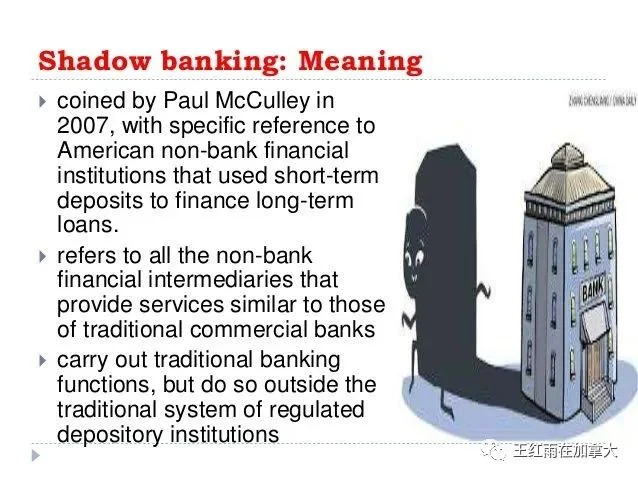
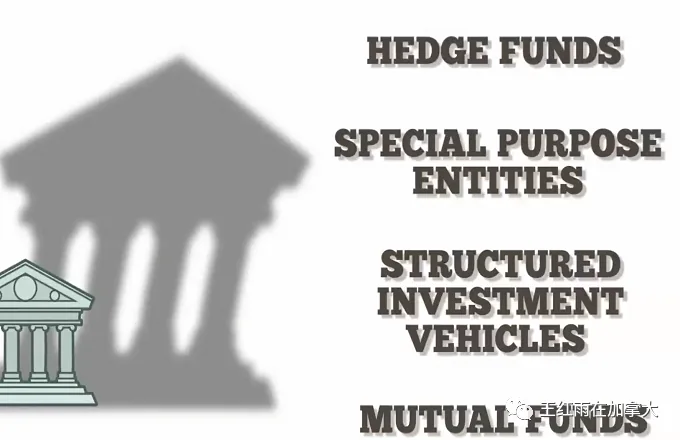
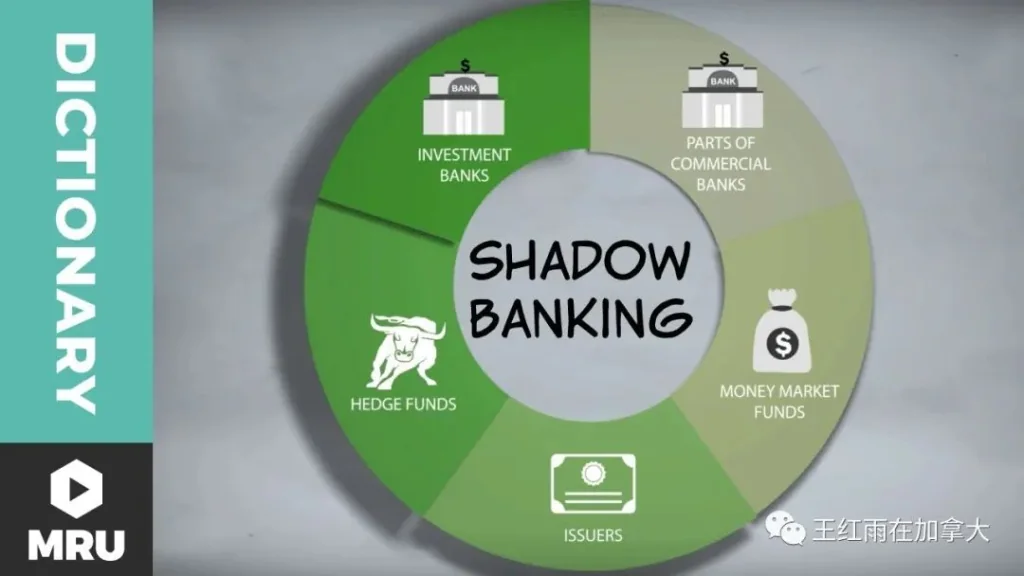
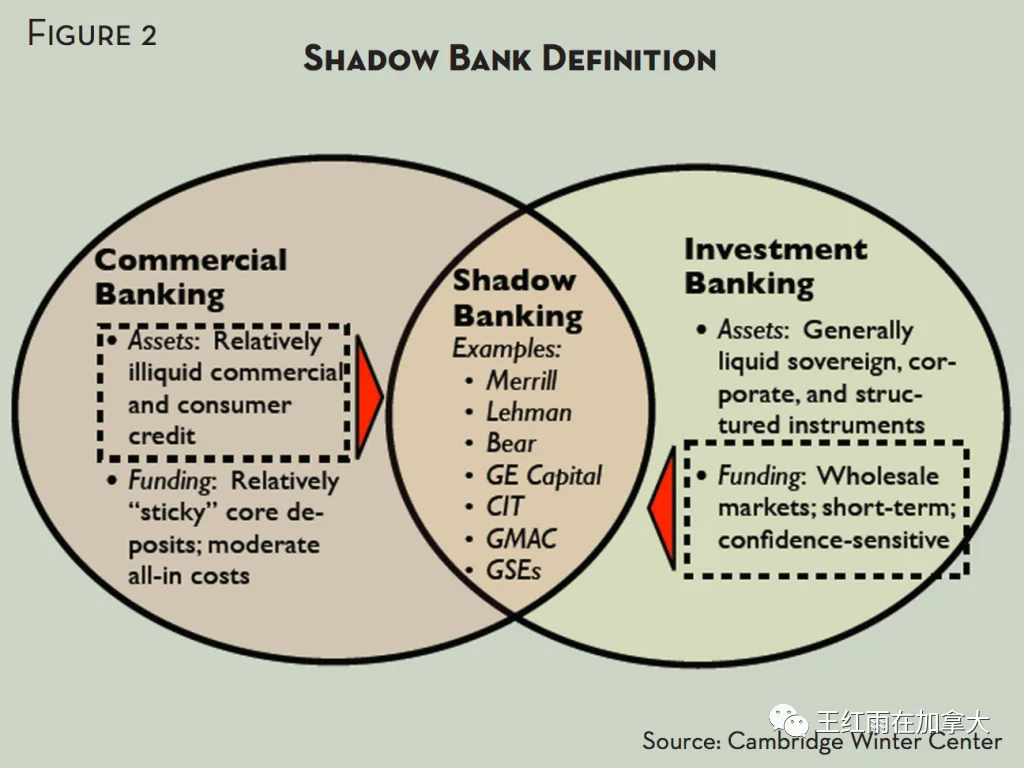
Home loan, like car loan, student loan, and credit card debt, is a consumer loan, and the interest is used to pay for excessive consumption. When obtaining a home loan, you need to pass the bank's stress test. The bank will evaluate whether this consumer debt has sufficient income cash flow to support it. The bank will also consider the buffering effect of the applicant's financial assets. The high-net-worth project you have heard of is a special loan project for banks to examine the borrower's financial assets. Some borrowers felt that the bank's stress test was too strict, so in order to buy a house as soon as possible, they chose to borrow from relatively loose shadow banks. Especially during the epidemic, shadow bank interest rates were not high and housing prices rose rapidly. People who were envious of real estate wealth and did not meet bank loan standards flocked to shadow banks in large numbers. Shadow banks in the Greater Toronto Area approved 36,000 mortgages in 2021, significantly higher than pre-pandemic levels. These loans have short terms, 1-2 years, and doubling the interest rate at maturity will double the monthly payment. Families that have borrowed money from shadow banks to buy their own homes in the past two years are now facing huge deleveraging pressure. If they cannot afford the new monthly payments and cannot transfer their loans to major banks, they may be forced to sell their homes. Real estate investors have the opportunity to find better investment opportunities from this group of people who are forced to deleverage. The so-called shadow banking refers to financial institutions that have not joined the deposit insurance system. The deposit and loan risks of these institutions are very high, so the cost of funds is very high. The greater the lack of liquidity, the higher the loan interest rate. Since the interest rate hike in March this year, shadow banks engaged in the mortgage business have gone bankrupt in the United States. Some shadow banks in Canada have stopped making new loans and only renewed contracts. These all reflect the current situation of shadow banks. If mortgage borrowers can only choose to renew contracts with shadow banks instead of transferring loans, they will fully understand what usury is. Even if it is a loan from a big bank, if it is a self-occupied house, whether it is a fixed interest rate or a floating interest rate, if it matures in the next 1-2 years,They will renew their contracts in a high interest rate environment, and the reset monthly payment may be very high. Therefore, households with large owner-occupied loan balances need to limit other household consumption, regardless of financial asset investment, and actively and planned deleveraging to avoid a hard landing of debt when the loan matures.
The current interest rates make many premature consumption behaviors less worthwhile. Existing consumer debt will enter a rapid deleveraging stage under the high pressure of interest rates. The U.S. government announced a significant write-off of student loans in August, and individual debts will be borne by the state. Although this is Biden's expense to buy votes, and although it makes it more difficult for the Federal Reserve to suppress inflation, it is a great thing for those who cannot apply for a mortgage because of student loans. Whether Trudeau will follow Biden's good example, we don't know, but we'll keep our eyes peeled. If the $500 billion in student loans written down by the U.S. government is converted into consumption power, it will be more difficult for the Fed to raise interest rates to suppress inflation; if the debt written down promotes the recovery of the real estate market, it will be considered a good thing. According to my long-term observation, Canadian money is usually spent on the back of the knife, such as subsidizing childcare fees, free dental care, etc. It is estimated that families with heavy consumer debt cannot count on Trudeau.
03 Which families are suitable for leverage?
Families planning to buy their own home need to leverage all existing properties in order to minimize the debt of the newly purchased home. Many readers ask about turning the left shoulder to the right shoulder. Specifically, it is to transfer the debt of the owner-occupied house to the investment house. I currently live in property A and have two investment properties, B and C. I plan to buy property D as my primary residence. If ABC is not added, the debt of property D will be huge. The purpose of adding a mortgage to property ABC is not to avoid taxes, but to minimize the debt of property D. For example, if the original plan is to borrow 1 million for property D, if you first mortgage property ABC and withdraw 500,000 in cash, then you can borrow 500,000 for property D. This means moving the debt from the left shoulder to the right shoulder. A home loan can be borrowed up to 5 times the annual income, while an investment home loan can only be borrowed 5 times the annual income minus the balance of the home. If there is no additional mortgage before buying property D, and after moving to property D, since property D is a self-occupied house and the loan amount is large, it is impossible to increase the mortgage on ABC, so the entire family will be in a loan vegetative state. The order of adding before changing to your own home is: first add the existing investment house BC, and finally add the existing home A. The order cannot be wrong.
Families who plan to continue investing in real estate need to mortgage their existing investment properties rather than their existing home. If the down payment of the next investment house is taken out from the existing investment house to achieve maximum leverage, all the funds for this investment house will be provided by the bank, and the majority of the loan will be borne by the tenant.
Families that plan to retire and no longer have active income need to remortgage all investment properties, because without active income, it will be difficult to withdraw cash from the property.
Families with car loans, student loans, and huge credit card debts need to restructure their debt with an investment property if the interest rate on their consumer debt is much higher than the mortgage loan interest rate.

There is a time window for increasing leverage, and you only have the opportunity to increase leverage when your borrowing ability is strongest. I see many people who are not qualified, or who have lost their qualifications, object to the additional mortgage, and always associate the additional mortgage with risk.The risk control of mortgage loans lies with the bank. Being able to obtain a loan means that it has passed the risk stress test.Canada's credit system is very healthy. The credit approval procedures of large commercial banks follow the unified standard B20, so some people find that they cannot obtain loans from any major banks. In fact, this is the result of bank risk control. Borrowers who bypassed the approval standards of big banks and sought help from shadow banks were very active during the epidemic, because the interest rates in shadow banks were not high at that time. Those seeking to obtain exceptional loans even thought smugly that even though they did not pay taxes, they could still get loans, but the interest rates were slightly higher than those of banks, and they took advantage.The practice of increasing leverage in shadow banking involves great risk risks, because the loan contract period of shadow banking is very short, and the interest rate and monthly payment will soon be reset upon maturity. In the current interest rate hike environment, those households that bypassed the stress test during the epidemic should know the consequences of increasing leverage regardless of risk.There is no need to talk about additional mortgages, because banks will check them. Maximizing leverage on a property is often strategic, but can also be misguided. You can borrow up to 5 times your annual income for your own home, and the loan is easy to get approved. Some loan practitioners persuade customers to maximize the mortgage on their home and take out cash for real estate investment or financial asset investment. This kind of advice is poisonous. Adding a mortgage to the owner-occupied house is only beneficial when changing to the owner-occupied house, because the original owner-occupied house will become a rental house, and the repayment will mainly be borne by the tenant, and at the same time, the loan amount for the new owner-occupied house can be minimized. Remember, don’t listen to deception, and don’t increase your mortgage on your home without changing your home.
04 Thoughts on the interest rate hike in the past six months
Since March 2 this year, the Bank of Canada has raised interest rates by 300 basis points in six months, causing the real estate market transaction volume to halve compared to the same period last year.real estate recession, which was completely unexpected last year. Whether the real estate recession will spread to other areas of the economy, I think it is for sure, I just don’t know to what extent. The extent and frequency of the Bank of Canada's interest rate hikes are dominated by U.S. interest rate hikes. Therefore, it is important to understand and analyze the logic of U.S. interest rate hikes. The prospects for the Fed's interest rate hikes have been introduced previously, and why the Bank of Canada needs to follow suit. Let's review the reactions from all walks of life in Canada since the interest rate hikes.
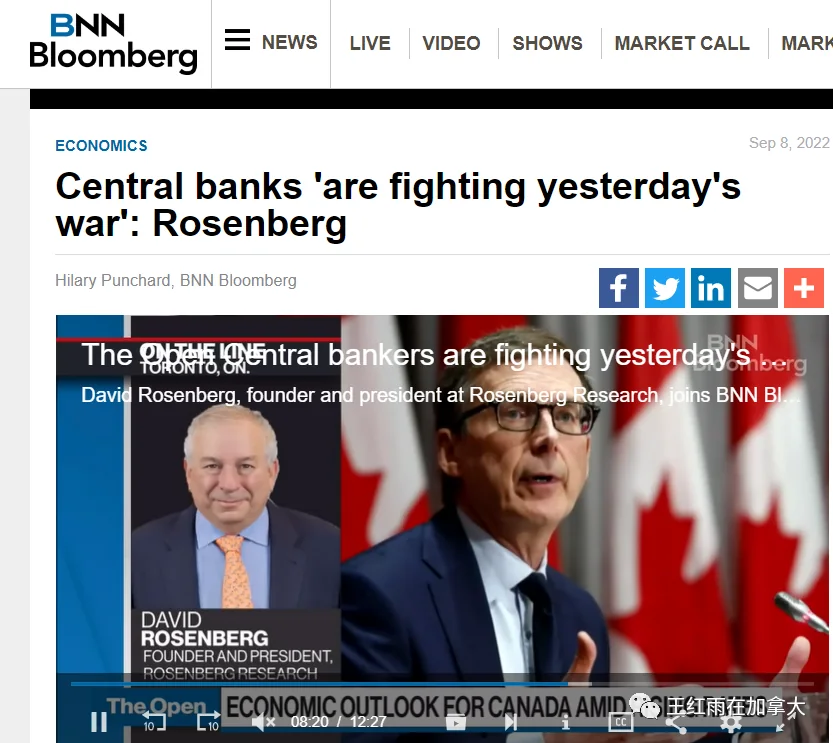
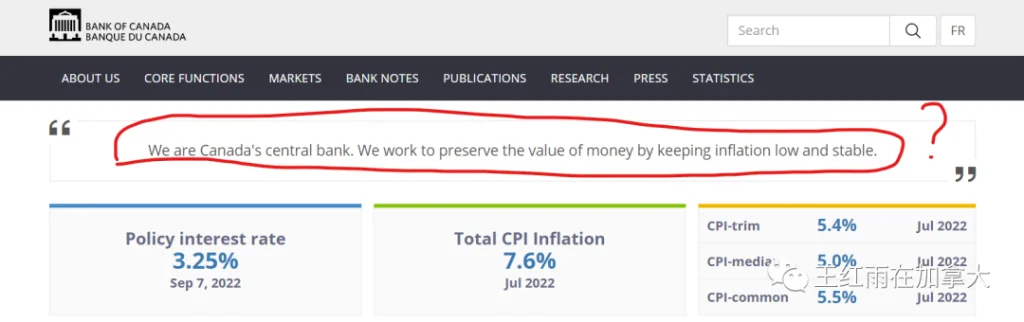
The Bank of Canada will not personally acknowledge the fact that it is forced to follow the U.S. in raising interest rates. Canadian economists are very ashamed of the central bank's actions. After the interest rate hike on September 7, economists from the Canada Group wrote an article criticizing the central bank for using "sugar-coating" Coating wraps up the reasons for raising interest rates and warns that such an increase in interest rates will lead to an economic recession. The reason is simple. Canada has no supply chain problems. It can produce and sell food and oil on its own. The energy tension caused by the U.S.-China War has not affected Canada at all. There is no basis for explaining the reasons for raising interest rates based on supply chains and geopolitics. Rosenberg, a respected investment tycoon, said the Bank of Canada was struggling with last year's mistakes and had forgotten where it was going. The opposition parties have been accusing the central bank governor of failing to fulfill his duty to maintain currency stability, printing money to squander Trudeau, and should be fired because of a banner on the central bank’s website: We are Canada’s central bank. We work to preserve the value of money by keeping inflation low and stable. “We are the Central Bank of Canada, and our job is to maintain currency stability by keeping inflation low.” I personally believe that the central bank’s decision to raise interest rates is to follow the Federal Reserve. There is no other reason. We ordinary families can only accept the results and adapt to the situation. Former Bank of Japan Governor Shirakawa Hohei once said in his memoirs that the central bank often faces unprecedented events and is at a loss in front of everyone, just like driving a broken car with a broken windshield on a mountain road on a rainy night. As long as it does not fall into the ravine, move as far forward as you can. Now that the United States is determined to bring inflation back to 2%, and has initially achieved results, it will definitely not stop treatment after taking half of the medicine, unless some other sudden illness occurs; the Bank of Canada is determined to follow suit, and will not hesitate to be accused of making excuses.The rest is left to each family to decide.
I personally believe that we need to follow the central bank's policies. When interest rates are low, we need to increase leverage to buy a house and respond to the central bank's call. When interest rates are high, we need to actively deleverage, respond to central bank policies, cooperate with inflation control, reduce consumption, and take the initiative to repay home loans and consumer loans when we have money.
Regarding the real estate market, when I was asked about the trend of housing prices in the second half of this year during the Q&A session of the Landlord.com Group on July 16, between 3 hours, 2 minutes and 29 seconds to 3 hours, 4 minutes and 17 seconds in the video, I said that because fixed interest rates have peaked, no matter how high the floating interest rates rise, people have gained certainty, so there is no room for housing prices to fall, and there will be a V-shaped rebound. The transaction data in August proved my judgment in July. Today, I still have this view. I don’t think August is an Indian Summer, let alone a flash in the pan.Sellers are back on pricedriver seat on, transaction volume and house prices will appearVType reversal.The above prediction was made on July 16 for the following four reasons: 1. Fixed interest rates have peaked, and buyers' worries about endless interest rate increases will be relieved; 2. A 100-point increase in interest rates by the central bank will scare away sellers, and the reduction in the number of listings is actually a kind of short squeeze, which will discourage buyers who hope to see house prices fall. Everyone is desperate; 3. There is only one chance for the central bank to raise interest rates by 100 basis points, and it has been used up on July 13th. The fear of raising interest rates will be lifted. At the same time, supported by rising rents, sellers have a way out of not selling, and gradually take the initiative in sales negotiations; 4. The interest rate increase on July 13 caused the stress test interest rate to exceed the highest stress test rate in four years of 5.25%. Buyers' borrowing ability plummeted, and some buyers were at risk of being priced out by the market price, forcing buyers to enter the market early. The stress test interest rate was raised to more than 6.1% on July 14, and the stress test interest rate was raised to more than 7.2% on September 8. Some buyers were forced into a corner. The market rebound was not caused by the rush to buy houses in some school districts, but the fear of missing out. It is caused by FOMO sentiment, which is difficult to reverse, so the foundation for market reversal is very solid, that is, buyers cannot hold on any longer.
To sum up, the market since March 2022 is very similar to the real estate market downturn in 2018. It was originally the best time for buyers to buy, but 50% of buyers missed this opportunity.The gap between the rich and the poor is not about how smart the rich are, but about the fact that the poor dare not get rich. They watch the wealth and poverty widening, and there is nothing onlookers can do about it.I will use numbers to illustrate the offline lecture on the landlord website on September 17. From a rational calculation point of view, "wait a little longer" is not worth it at all. The widening wealth gap is entirely caused by your own fear and cowardice. It has nothing to do with anyone else. People who post random comments online and suggest waiting before buying will not lose a penny to you. Those who do not understand other people's borrowing ability should not advise others to wait before buying.
Conclusion:
Don’t go against the central bank. Don’t hold on to those who should deleverage. Households with large consumer debts, including home loans, should stop investing in all financial assets, especially GICs. Don’t be greedy for small profits, and do your best to accelerate deleveraging. When deleveraging, it is best to take the initiative to repay the principal and try not to increase the monthly payment. Banks do not want to see customers default, nor do they want to repossess properties. Banks will try their best to deal with the issue of triggering interest rates. Therefore, if it is an investment property, as long as the bank does not write a written notice asking you to speed up the repayment, do not contact the bank or take the initiative to deleverage.Real estate investors should remember not to take the initiative to increase monthly payments。
There is no causal relationship between deleveraging and continued rise in housing prices. Households with large home ownership debts can work hard to deleverage, and investors can work hard to increase leverage. Investors should not bypass the stress tests of big banks and seek help from shadow banks. Don’t think that your life can be obtained under special conditions. Those noble people who obtained under special conditions in the past two years are struggling in the pit of debt.
There has been no update for a month from August 7th to now because the stress test interest rate has risen too fast and the time window is too small. I must devote more time and energy to the lonely brave men who have awakened and dare to continue to invest in real estate when the market is desperate. I know that in any era, 20% of people own 80% of the wealth, and this structure will not change, but I hope that those 20% of people can have a few more of my clients.