In the post-epidemic era, everyone faces challenges, but the middle class faces the greatest challenges. Gu Jia's class demotion in "Only Thirty" left a deep impression and endless aftertaste on the audience. A middle-class family that has just accumulated wealth may lose everything by accident, and the fireworks factory explodes. As soon as the house that is the cornerstone of Gu Jia's wealth is sold, he immediately returns to his original shape and regains his proletarian status. Just imagine, what if the proceeds from their fireworks business were used as a down payment to buy more apartments instead of investing in teahouses? We shouldn’t fight poverty so quickly. Zhong Xiaoqin's unintentional copyright income is passive income. She used the money to buy an investment house. The rental income is still passive income, which is more pragmatic than starting a tea house. Of course, there is sentiment in the teahouse that Gu Jia opened by mistake, not just for repayment. Many middle-class families have followed this drama mainly because the plot is more realistic. I personally think that Wang Manni's character design is far-fetched, and a separate drama should be made specifically for someone with the same fate as her. It is difficult for aboriginals in first-tier cities to maintain their hard-earned status, and it is even more difficult to rush from outside the city to the city. Without any accidents or encounters, there will be no miracles. The ending is also in the name of studying abroad, and she is arranged to continue looking for encounters.
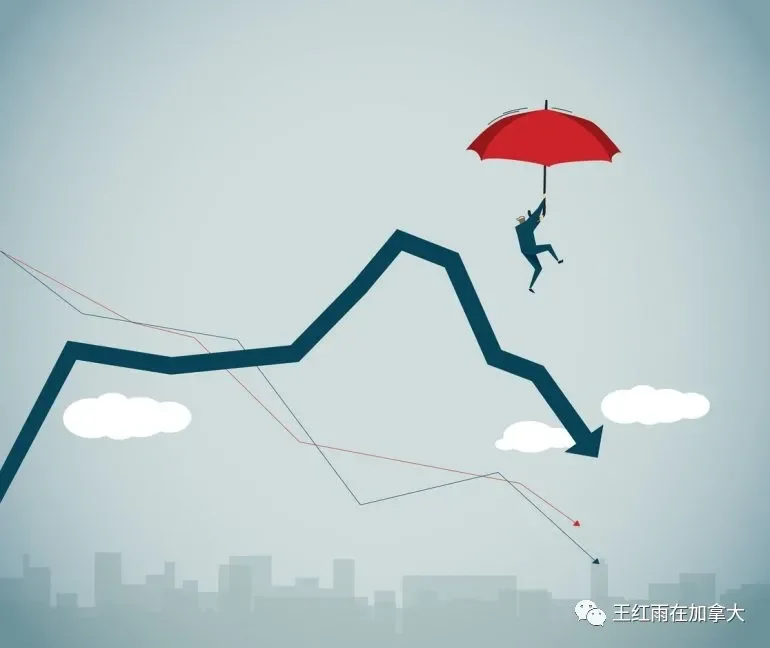
In the post-epidemic era, middle-class families face a greater risk of class downgrade, not less. Here’s why:
1. With interest rates lower, capital will bypass the main line of industrial capital and pursue more of the main battlefield of the second cycle of capital - real estate. China has tightened its policies on loan restrictions, sales restrictions, and purchase restrictions in Beijing, Shanghai, and Shenzhen, just to prevent residents' deposits from flowing into real estate. It would be best to lose them in the stock market.
2. The flow of people decreases, economic activities decrease, demand decreases, and all businesses become difficult to do.
3. International trade and global division of labor are de-Sinicizing, which will have an impact on all countries that have trade and division of labor cooperation with China.
4. Excessive printing of money, the proportion of resources available to the poor is low, and the marginal propensity to consume is high; the proportion of resources available to the rich is high, and the marginal propensity to consume is low. More money flows into assets instead of consumption, pushing up asset prices, rapidly widening the gap between the rich and the poor, and widening the gap between the millionaire next door and the middle class.
In short, the rich chase assets with cheap money, pushing up asset prices and squeezing real investment, resulting in less income for the poor, who have needs but have no ability to pay, insufficient effective demand, and reduced consumption, causing the real economy to spiral downward and making money in all walks of life more difficult. If the assets under the name of a middle-class family cannot keep up with the average rate of asset appreciation, they will be downgraded. If their income spirals downward with the real economy, it will also lead to class downgrade. In the post-epidemic era, it will be even more difficult for the middle class.

01 Low interest rate feast, have you participated?
In April 2017, Ontario began to collect the non-resident real estate speculation tax NRST, and the Bank of Canada began to raise interest rates in July; in January 2018, the new B20 policy came into effect, and the mortgage policy was further tightened. Since then, people have wondered whether interest rates will continue to rise, and the debt burden will become heavier and heavier, making borrowing money unprofitable for investment; mortgage policies will become tighter and tighter, with fewer and fewer people able to afford a house, and whether the real estate market will collapse and housing prices will continue to slump. This epidemic has put most people in deep trouble, and few people can make a comeback through the epidemic. However, mortgage borrowers have unexpectedly benefited from it. In August 2018, the two-year fixed interest rate was 3.29%. Now that the contract expires and is renewed at the current interest rate, the monthly payment will be reduced by 65 dollars for every 100,000 dollars borrowed. That is, the monthly payment for a 500,000 loan will be reduced from the original 2181 to 1856 at the time of renewal. If the monthly payment is maintained at 2181, the monthly accelerated principal repayment amount will reach 325, which greatly shortens the total time it takes to pay off the loan.
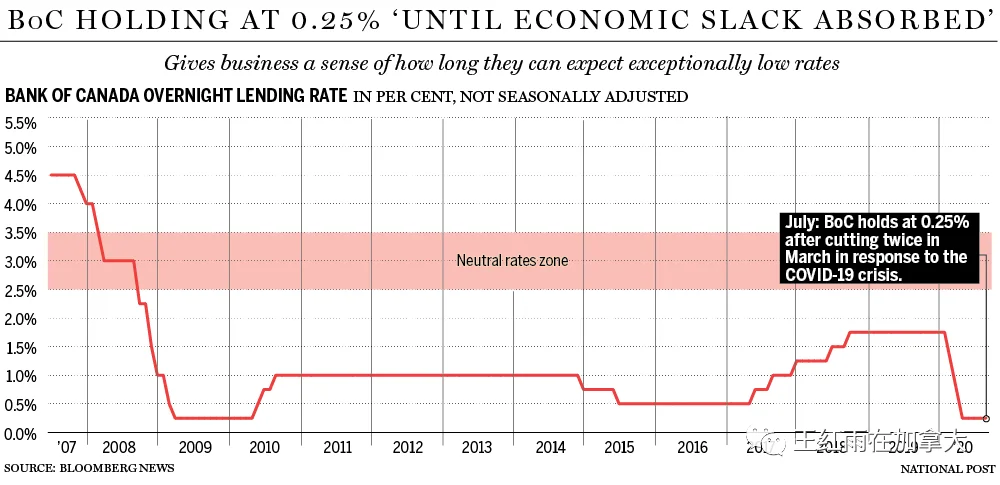
The world is rewarding those who dare to borrow money. The more they borrow, the bigger the red envelope. Those who choose to invest with loans have higher expected returns than before. Banks are just credit intermediaries. The red envelopes issued to borrowers are not paid by the bank; Depositors are subsidizing borrowers , after interest rates are lowered, banks pay less interest to depositors, and depositors are being punished.
After the implementation of the 2018 version of the B20 mortgage policy, the interest rate used to calculate the stress test reached a maximum of 5.34%. That is, an interest rate of 5.34% was used to calculate borrowing capacity. This resulted in a significant decline in the borrowing capacity of property buyers during the interest rate hike years of 2018-2019. As QE suppresses bond yields, long-term bank interest rates have begun to slowly fall, and the current stress test interest rate used to calculate debt solvency has dropped to 4.79%. Due to the reduction in the stress test interest rate, the borrower's borrowing capacity increased by 6.3%. The original borrowing capacity of 500,000 people was automatically increased to 531,000. This change is the icing on the cake for those with the ability to borrow money and continues to push up housing prices; for those without the ability to borrow money, the housing price train that has been parked at the station for two years is leaving the station and starting a new journey. With real estate as a fault line, the class gap continues to widen.
From the perspective of liabilities, debtors immediately received red envelopes due to the low interest rates brought about by the epidemic. From the perspective of asset prices, the moat for real estate investment has become wider. What does it mean? We assume that the price when the property is sold in the future is known, then the lower the interest rate, the higher the current price. The formula for calculating present value is PV = FV / (1+r) n , where R is the interest rate, in the denominator, so the lower the R, the higher the present value. The interest rate when you bought a house in 2018 was 3.3%, and now it is 2.2%. As long as the selling price is different in the future, the price of buying a house now should be higher than the house price in 2018. The actual situation we see is also the same, house prices have begun to rise.
What is best for debtors should be inflation. Higher inflation is better for borrowers. It is difficult for the additional banknotes issued by QE to reach low-income groups with high marginal consumption propensity. Therefore, it is more difficult for monetary policy to trigger inflation, but monetary policy will definitely trigger an increase in asset prices. Fiscal policy is to directly send money to low-income people, but it requires a lot of money to trigger inflation, which is difficult for various countries to afford. Borrowers may not be able to get the inflation dividend for a while.
The interest rate is low, it is a feast, and every dish is delicious, but tickets are only issued to those who are willing to borrow money to invest and are qualified to borrow money.
To answer a question that has been asked a lot recently, condo rents are currently at a low level. I don’t know when they will get back on their feet. A new round of suburbanization has begun. Buyers prefer detached houses with large spaces. Should condos be sold as soon as possible? My answer is simple: not selling. The rental market price has dropped, but the loan burden has also dropped. The original high interest rate loan will drop when the contract is renewed. CONDO As a property with relatively low affordability requirements, the demand will not decrease. Even if the rent has dropped, the market price has not, which fully reflects its strong demand. 99% of middle-class families buy assets before retirement and do not need to sell them. From 2010 to 2016, CONDO prices were low. Those who sold during this period are now filled with regret. Don’t make the same mistake again.
02 Assets equal liabilities plus owners' equity
Middle-class families are the most anxious families. If they make the right choice, they can be promoted to the millionaire next door; if they make the wrong choice, they may be demoted back to the proletarian state. No one in "Only Thirty" has been upgraded. Gu Jia was demoted, Wang Manni is not yet qualified to be middle class, and only Zhong Xiaoqin is on the road to upgrade. "Millionaire next door" refers to a family with a net worth of US$5 million, which is the next small goal for middle-class families. Readers who do not understand this concept can find my article "Small Goals for Middle-Class Families - Millionaire Next Door" and read it again. The net assets mentioned here are called owners' equity in accounting and are the difference between assets and liabilities.
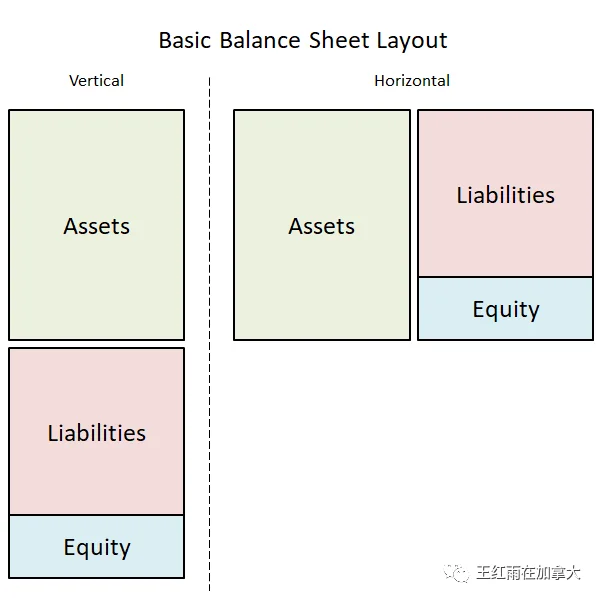
Henry Paulson was Captain America who saved the world during the U.S. subprime mortgage crisis. In his memoir "The Edge of the Cliff", he mentioned very little about China. When he mentioned the Chinese leader, he only mentioned one, and he spoke highly of it. The original text read: "He looked me straight in the eyes and said this to me. Words: 'Assets equal liabilities plus owner's equity. '. I don't know if American political leaders can make such a concise and clear summary of a balance sheet like this out-and-out communist. "The Chinese leader whom he spoke highly of has the same view as Kissinger. It is really unbelievable that American elites who have personally met many Chinese leaders have such a unanimous view. They all believe that the Chinese leader who understands capitalism best is Mr. Jiang. Henry Paulson is an elite among financial elites and has read countless people. His view of American leaders is that there are not many people who can explain their balance sheets clearly, and they are not as good as Chinese leaders. It can be seen that even if they are born in a capitalist country, not everyone is born with an understanding of the relationship between assets, liabilities and owner's equity. However, the seemingly insignificant accounting equation is a cornerstone of finance and commerce, and it is also common sense that those who govern the country should know. No wonder Henry Paulson remembered this passage deeply and included it in his autobiography.
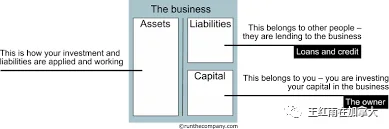
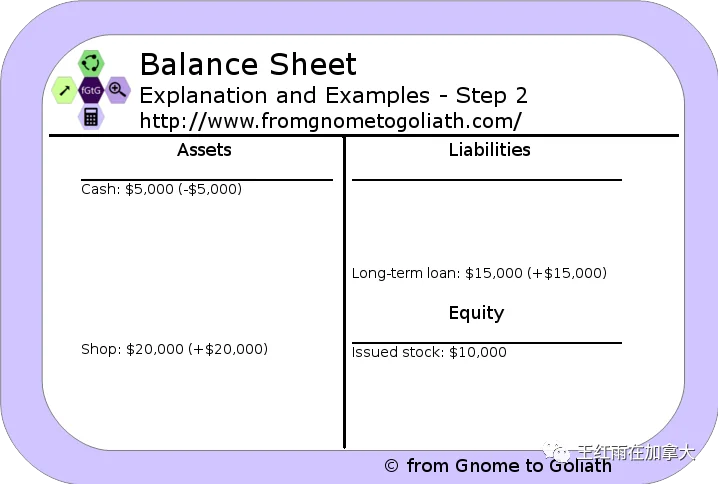
The house is an asset, so your down payment is the owner's equity, and the loan is the liability. The balance of the liability becomes lower and lower as the loan is repaid, so the owner's equity becomes larger and larger. If housing prices rise, the owner's equity will accelerate. When the property is sold, the owner's equity is converted into cash, minus the original down payment, which is capital gain. Throughout the process, owners' equity, i.e., net assets, continues to grow. If the net worth/owner's equity reaches more than 5 million US dollars, the middle class status will be stable.
The main reason for Gu Jia's class downgrade is to use personal assets to rescue companies. This anti-poverty approach is voluntary and proactive, because the company is a limited company, and no matter how big a loss is, it will not affect personal wealth. The screenwriter wrote this to promote the character's virtues, which is not in line with the usual practice. In life, I have actually seen an example where a Canadian real estate was mortgaged at a high interest rate and used as a private loan to rescue its own company in China. In the end, the domestic company collapsed and the debt in Canada would take at least 20 years to pay off. But compared to Gu Jiaqiang, the house is still there. This shows that Canada is good. It can refinance and not sell the house. If you have your own business, for middle-class families, you cannot use your own assets to support the operation and development of the business unless it is absolutely necessary. The business is a legal person, and you must let it die when it is time to do so, otherwise it will affect the accumulation of family wealth. The correct and normal approach is to declare the profits generated by your company in your own name and obtain as many mortgage loans as possible / Debt, add as little ownership equity as possible, buy the property in your own name, and let the tenant repay the loan / debt to increase one's own owner's equity. Not only fireworks factories can explode, any business can collapse at any time, and I have yet to see an immortal company. The practice of selling off assets to rescue companies is the fastest way to quickly fight poverty, and it can happen overnight. The scientific and reasonable investment method for middle-class families is to make money from the first cycle of capital, transfer to the second cycle of capital, and gradually withdraw from the first cycle of capital.
03 The second cycle of capital
From Marx to "Das Kapital" to Piketty's "Capital in the 21st Century", the research focuses on the operation of industrial and commercial capital. Gu Jia's fireworks factory and tea farm are all products of the operation of industrial and commercial capital. There is no essential difference between the business model and the 19th century: the talent, passion and capital of the founder, plus hired labor and land, generate surplus value, accumulate capital, reinvest, and recycle operations. The management innovation of the tea farm is very old-fashioned, which may not be obvious to the Chinese in Canada, but the Chinese in mainland China will know at a glance that Wu Xiaobo bought an island to grow plums in his early years, and named the wine "Wu wine". Teacher Wu asked his fans to claim the plum trees and enjoy the honor of drinking alone. However, Gu Jia does not have this internet celebrity effect and cannot imitate it at all. The circulation of capital in the industrial and commercial field requires not only the investment of all factors, such as time, capital, manpower, land, etc., but it is still unknown that surplus value may not be generated. Too many people are spinning in this first cycle of capital, thinking that they can succeed if they work hard, but this may not be the case. Adopting a tea tree or a plum tree is an "idea" that belongs to business model innovation and has no intellectual property protection at all. If it can make a profit, it will immediately lead to imitation and competition. If the competitor has big capital to back it, the innovator will be a target and will die quickly.

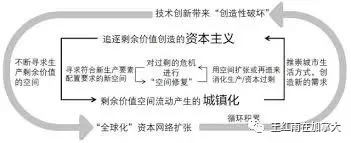
Because the first circulation model of capital has a history of hundreds of years, various business fields have become red oceans, and entrepreneurs are often criticized as bosses exploiting workers. Therefore, capital has already created the second circulation, that is, building cities. There are very few economists who study the second circulation of capital, and their research results cannot enter the mainstream economics hall, but this does not mean that there is no second circulation of capital. There is a geography teacher in the United States, David Harvey, who has studied Marx's theory and socialism for many years. He is now working at the City University of New York. He is about the same reputation as Harbin Radio and Television University in my hometown. His main focus is to repair Marx's Capital. The main content of the repair is the second cycle of capital. According to him, Capital spatialization belongs to the second cycle of capital, that is, how capital makes profits in the process of building cities. I have not seen David Harvey’s theories cited by mainstream economists, but most of his works are inspired by Marx and have been translated into Chinese. His findings are still very enlightening: capital has long been fully utilized in the first cycle, and a large amount of floating capital has appeared wandering in the financial market. The profit-seeking nature of capital has led to capital being pervasive and flowing wherever there are profit opportunities; the profitability of city construction has long been targeted by excess floating capital, and own capital plus loans are used for construction. In the city, after the house is built, the buyer uses the down payment and the mortgage to obtain the property. At the same time, the builder's capital makes a profit and exits. The debt is successfully transferred to the homeowner. The homeowner rents out the property, and the tenant slowly repays the debt, increasing the homeowner's equity. After the homeowner sells the house, he recovers the principal and makes a profit, further passing on the debt to the new landlord.
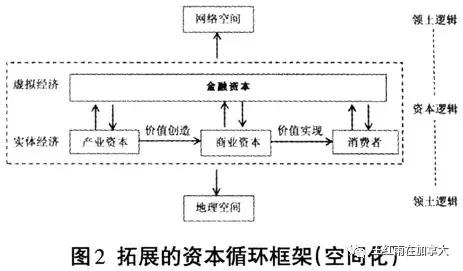
In the second half of the second cycle of capital, after the landlord takes over the property from the builder, he no longer needs to invest in all factors, only his own funds and debts. Whether real estate can achieve sustained appreciation is the key, so real estate should be selected in first-tier cities with continued population inflow and relatively developed economies, or other cities with potential. Gu Jia's second venture still chose to go shopping in the first cycle of capital, while Zhong Xiaoqin's way of consolidating her middle-class status was to participate in the second cycle of capital. Personally, I am more optimistic about Zhong Xiaoqin's choice.
Another way of the second cycle of capital is this: developers use their own funds and construction loans to build office buildings, hotels, and apartments specifically for rental, and sell them as a whole to real estate trust funds REITs to recover the funds and carry out the next real estate development. REITs are either publicly traded or privately offered. Investors who invest in REITs and financial institutions that provide leverage to REITs are the capital providers for REITs and act as white knights for development and cash-out opportunities in the second cycle of capital. Investors who like to invest in real estate but don’t want to take care of the property can invest in REITs.
04 Consumption tendencies of middle-class families
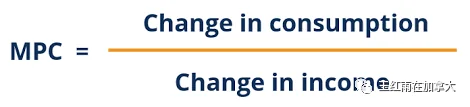
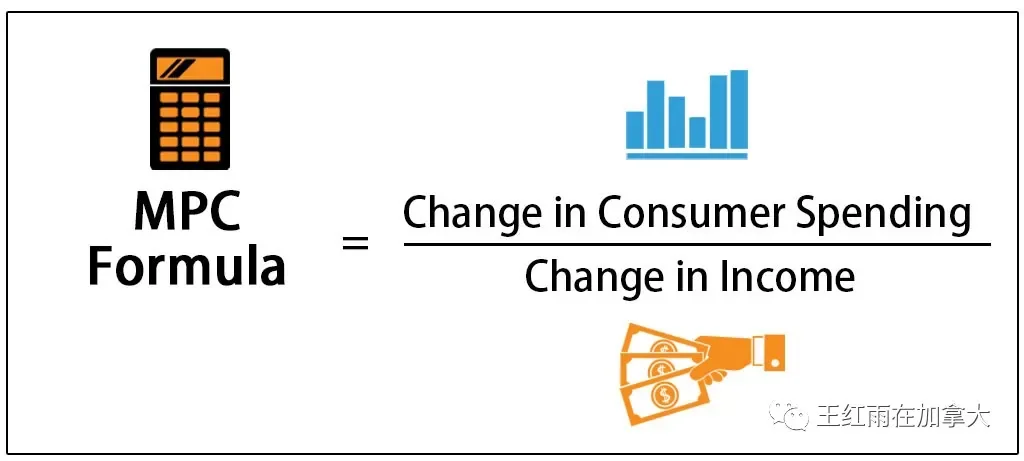
Zhong Xiaoqin's buying and selling after receiving the royalties is shocking to watch. Marginal propensity to consume refers to how much of an extra 100 dollars of income is spent on consumption and how much is spent on investment. For people with low incomes or those who have been poor for a long time and suddenly become rich, the marginal propensity to consume is high, and 100% of unexpected income may be used for consumption. For high-income families, the marginal propensity to consume is low, and 100% of unexpected income may be invested. In a society, if the marginal propensity to consume is high, it will easily lead to inflation, and conversely, it will easily lead to deflation. For Zhong Xiaoqin's style of sudden wealth, marginal consumption is reasonable. Small money is used for buying and buying, and big money is used for investment.
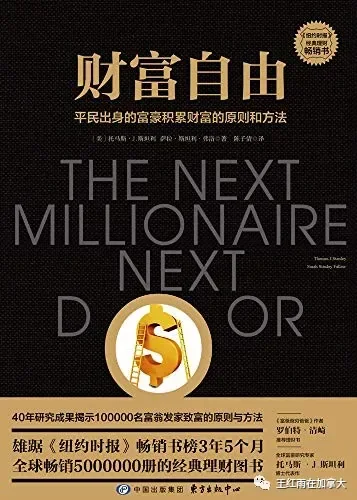
The "Millionaire Next Door" series of books written by American writers Stanley and his daughter reveals through long-term research the spending habits of millionaires next door whose family net worth exceeds US$5 million. If the middle class wants to become the millionaire next door, they must not only make a clear and reasonable decision on which capital cycle to join, but also need to follow the marginal propensity to consume. The millionaire next door approach: Invest more, spend less, and delay gratification. Consumption is payment to others, investment is payment to yourself. Robert Kiyosaki said when talking about consumption: Pay yourself first.

Conclusion: 11 years ago, the TV series "Snail House" received widespread attention because the plot was very close to life. As early as 2009, the pressure to buy a house had begun to overwhelm ordinary middle-class families. At that time, social hot spots were focused on housing prices and affordability. Now, 11 years have passed, and "Thirty Only" has once again aroused heated discussions about the life of middle-class families in metropolitan areas. Today's class conflicts are more profound and difficult to bridge. The root cause of the anxiety of middle-class families is that if they don't advance, they will retreat; investment channels are narrow and it is difficult to balance their lifetime income. The situation faced by the urban proletariat is even more heartbreaking. Old Wei asked Wang Manni, "Are you here to attack me or to attack the opportunity?" Wang Manni also knew very well that if she wanted to find her roots in a first-tier city, she would either stand or lie down. If she was a man, she would not even have a chance to lie down. China's intercity fault lines are wider than the gaps between countries in Europe, and the barriers to population movement are more difficult than immigration. The epidemic hits every family differently, but it only adds salt to the original wounds. Gu Jia's tea farm business will not be better than before the epidemic, and Zhong Xiaoqin's B&B business will also encounter greater challenges. The two of them encountered a bottleneck problem, while Wang Manni encountered a bottom-of-the-bottle problem. When fat people become thinner, thin people will starve to death. There is a big difference between the middle class and the proletarians. With the naked eye, you can see that people who have the opportunity to escape from the proletarians will immediately betray this class. Everyone has the desire to survive. Middle-class families in big cities, regardless of whether there is an epidemic or not, must act and cherish, consume cautiously, and invest wisely.