At the end of March this year, Carney proposed for the first time in his election promise to establish an organization called Build Canada Homes (BCH). After the new government came to power in May, it reiterated this plan to the mayors of various provinces at the annual meeting of the Federation of Municipalities. On August 14, BCH finally released its first document - "Canadian Housing Construction Market Research Guide". It was a full 6-page document, full of official style, but it caused almost no splash. Just like Mao Buyi sang in "The Nameless Man": "I am a nameless person on this road. I have no news and no one comments..." As soon as this guide came out, no one paid attention to it. I checked from the 14th to the 26th. For two whole weeks, I only found one report from CBC. The guest said bluntly: I am afraid it will have to wait until 2030 for BCH to actually build a house.
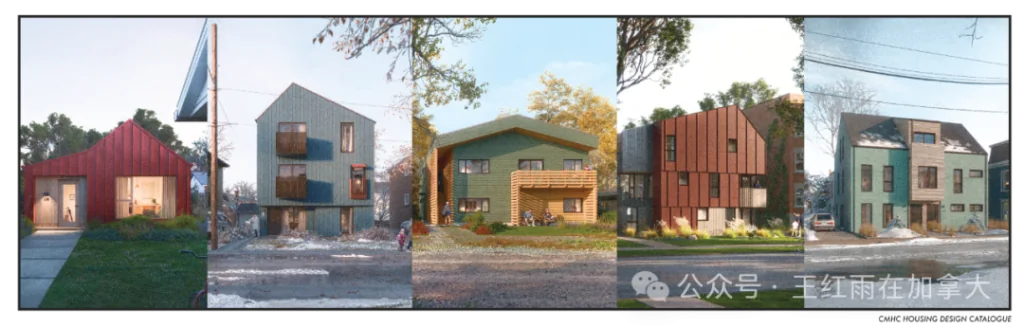
01|What exactly is Canada’s new federal housing policy doing?
As early as March 31 this year, Carney's Liberal Party housing campaign platform announced for the first time that it would become an entity "Build Canada Homes". Shortly after the new government was sworn in on May 13, at the annual meeting of the Federation of Canadian Municipalities (FCM) on May 30, the housing agenda and this new agency were reiterated to provincial governors and mayors. On August 14, as a proposed housing leader, "Build Canada Homes" made its first appearance, announcing to all Canadians "I have money here, who has projects?" and released a 6-page "Build Canada Homes Market Sounding Guide", which aims to explain which projects will receive government support. For this "Research Guide", a deadline for the public to provide feedback is set, August 29. You can find and read this document with great official authority according to the name of the document.
From campaign promises to the release of the first official document, the Carney government’s housing policy has become clear:Compared with the Trudeau government's housing policy, it focuses more on the construction of welfare housing. Housing in Canada has a serious trend of public goods and welfare, and Canada will become a country dominated by rental housing.Every Canadian needs to know the following aspects of the New Deal in order to adjust their investment or home buying decisions according to the policy:
Build Canada Homes, hereinafter referred to as BCH, will be Canada's new federal entity responsible for building low-rent housing, providing financing to low-rent housing builders, and promoting productivity in the housing construction industry. This entity will bring together key partners in the housing ecosystem to build homes by addressing barriers, mitigating risks and assisting in the non-market housing construction process.
BCH has two major goals: 1. Large-scale construction of low-rent housing: Build low-rent housing for most working-class people, students, and elderly people with fixed incomes. Work with builders and housing providers who are focused on long-term affordability, such as co-ops, community housing developments or builders that promote affordable housing solutions to increase and accelerate the construction of affordable housing. 2. Build faster, better and smarter: Use advanced materials and manufacturing and construction methods to build housing to increase productivity, scalability, and reduce construction costs, time and environmental impact.
BCH's role is to serve as a "single window" for all stages of the low-rent housing development process, working closely with developers, investors, manufacturers, other government levels and Aboriginal partners to obtain housing financing and construction. Financing methods include: loans, equity investments, loan guarantees, and donations. The construction approach includes acting as a developer in various capacities, working with contractors, operators, investors and other developers to build housing, develop land, procure materials, share risks and provide expertise. From contracting directly with builders to build housing and leasing it to affordable housing providers, to acting as a coordinator bringing together land, financing, project sponsors and other levels of government to drive projects forward.
BCH’s current main job is to select projects for investment or construction. The selection criteria include A, B, C, and D. There are four selection criteria:
– A. The scale must be large;
– B. Must truly benefit middle- and low-income groups;
– C. New technologies, Canadian materials, and low-carbon methods must be used;
– D. We must make efficient use of government money and try to attract private capital.
In summary, the above-mentioned Build Canada Homes is a new entity bureaucracy that requires time and effort to prepare, and the proposed functions are highly similar to the work currently undertaken by CMHC. The agency attempts to achieve multiple goals, but these goals may be conflicting. On the one hand, it wants to build low-rent housing at scale by partnering with large builders and using traditional methods; on the other hand, it wants to focus on innovation, working with startups that use immature technology, are more expensive and have yet to achieve scale. At the same time, the goals of public-private partnerships are inconsistent. The government wants to combine the construction capabilities of private developers, but does not want private companies to make money. At the same time, inefficient bureaucracy is superimposed, and the risk of unfinished projects or delays is highlighted. In the above-mentioned plan of the federal government, there is no trace of provincial and municipal governments at all. It is a project that is completely taken over by the federal government. Unless these selected projects are built on land owned by the federal government, the taxation and regulatory requirements of local governments will seriously hinder project construction. Don’t forget, this is a plan designed to build 500,000 housing units a year. Judging from the content of the above six-page document, the possibility of the plan being implemented is very slim.

02|Is the existing housing policy effective?
Until the new agency, Build Canada Homes, comes into play, CMHC (Canada Mortgage and Housing Corporation) will continue to fulfill its mission of meeting the federal government's housing goals.
In response to a massive housing shortage in the late 1940s to mid-1950s, the CMHC worked with private builders to build massive amounts of post-war housing, such as the approximately 900-square-foot "Strawberry Box" style detached houses spread across Canada, even spawning entire communities like Ajax, Ontario. However, this government involvement decreased significantly in the mid-1990s. Between 1993 and 1995, social housing construction was deemed a "non-emergency issue" as the government focused on balancing the budget and house prices fell in some areas (such as the GTA), causing the annual construction of non-profit or cooperative housing to plummet from about 16,000 units per year between 1973-1994 to just 1,500 units per year between 1994-2016. At present, in accordance with the housing policy of the Liberal Party government, CMHC has once again shouldered the important task of building social housing and low-rent housing. However, the situation is very different from the 1970s. CMHC’s previous efforts could see balanced results across Canadian provinces. Today, the harder CMHC works, the more serious the structural problems in Canada’s housing areas are.
The current housing construction environment is much more complex than it was 70 years ago. Modern construction requires more factors to be considered, including: 1. Tighter standards: home safety, more comprehensive building codes, more municipal regulations, and climate factors; 2. High costs: Land costs have risen significantly, especially when development land is scarce. Costs, including duties on imported materials and appliances, are also increasing, development fees and taxes in the Toronto area have risen about 2,000 per cent over the past 20 to 25 years, and higher labor costs, even after adjusting for inflation, increase the cost of building each home. These factors have contributed to the current regional structural problems in the housing market. Construction is still booming in traditionally lower-priced markets such as Alberta and Quebec, driven by financing support from CMHC. However, in high-cost markets such as the Greater Toronto Area (GTA) and Greater Vancouver Area (GVA), the situation is less optimistic. Home prices in the GTA have fallen about 20% since the start of 2022, which is great for renters and first-time homebuyers, but it creates a paradox: With construction costs remaining high or rising and home prices falling, new home construction no longer makes economic sense. This resulted in condo sales in the GTA falling by more than 90% and single-family home sales by approximately 70%. At the same time, CMHC-funded projects require the provision of low-rent housing. However, in the Greater Toronto and Greater Vancouver areas, due to the high construction costs, developers cannot build low-rent low-rent housing, so they cannot obtain CMHC funding. CMHC intervenes in housing construction on behalf of the federal government. The most significant achievements it has made so far are: a large number of low-rent housing has been built in areas that do not need a large number of housing. There is no CMHC funding in areas that are in urgent need of new housing. The regional housing structure problems among Canadian provinces have become increasingly serious due to the efforts of the federal government's CMHC.
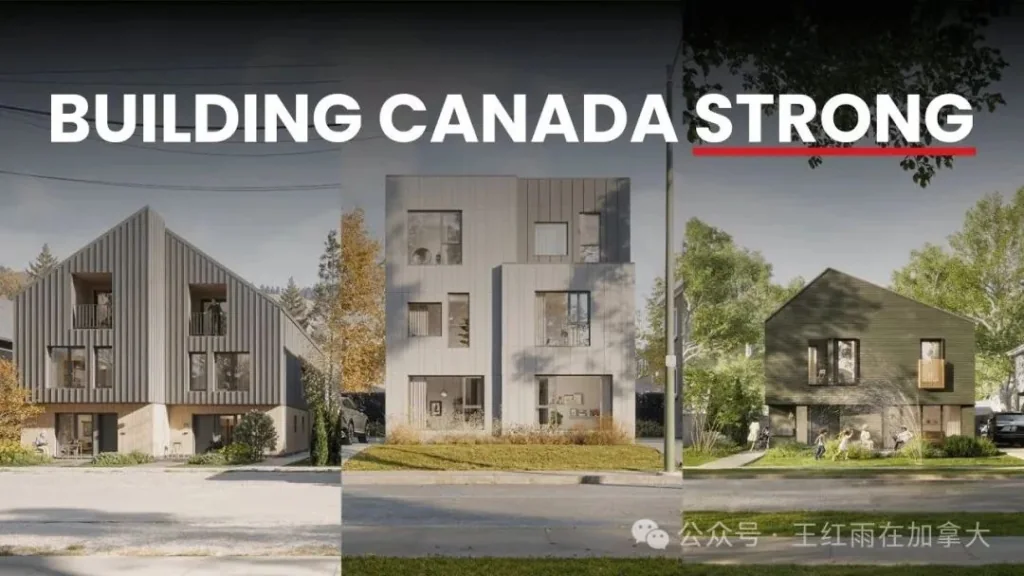
03|What does this mean for property investors?
We all know that Canada has publicly funded medical care, that is, medical care in Canada is a public good, not a commodity. The Liberal Party government defined "housing rights" as human rights in 2017 and has been rushing towards "public ownership of housing". And in the past eight years, we have tried every means to decommodify real estate, hoping to realize a housing system similar to the publicly funded medical system. Although the results have been minimal, the Liberal government is still doing its best to move towards this goal. The ultimate ideal of the Liberal Party is to make Canadians have nothing, but be very happy: no job, the government provides a basic income; no own house, live in low-rent housing provided by the government; no need to buy their own medical insurance like Americans, rich or poor enjoy free medical care; no need to spend money to raise a child, childcare fees are 10 yuan a day, etc. If the Liberal Party continues to be elected, I think these socialist ideals can all be realized in Canada. It is just a matter of sooner or later.
For real estate investors, the government’s efforts are making things easier for multi-suite investors. The harder the government works, the lower the property ownership rate becomes. Many people sit back and wait for the government to build low-rent housing. The level of property ownership is actually the level of property concentration; the lower the property ownership rate, the higher the property concentration, that is, the property will be concentrated in households that can afford it. The harder the government works, the more private investment in new housing construction will be squeezed out. Developers will take the initiative to seek rent in places where the government provides subsidies, and build low-rent housing in areas that do not need new housing. Anyway, there are government subsidies. This kind of draining of funds makes it impossible to build either commercial housing or low-rent housing in the Greater Toronto and Greater Vancouver areas where new housing is most needed. The Canadian federal government has single-handedly cut off the future supply of new housing in these two major cities. Therefore, in Canada's most densely populated GTA and GVA, second-hand housing prices will rocket in the next few years.
CMHC releases new housing starts every month. Judging from the total number of new housing starts, new housing construction in Canada is increasing month by month, but the new housing is all low-rent housing and not in the two major cities. Many people worry that building too many low-rent housing will affect rents. Judging from CMHC data, in areas where a large number of low-rent housing projects are being built, rents will definitely be affected; in areas where new housing starts are decreasing, rents and housing prices are more favorable to real estate investors. The more the government tries to build low-cost housing, the more it crowds out private developers, especially in the GTA and GVA areas that really need housing. The result is: new houses are being built less and less, and second-hand houses are becoming more and more popular. Housing prices and rents will only become more and more favorable to those who own homes. In other words, the government is personally cutting off the housing supply in big cities, and then pushing housing prices through the roof.

Conclusion:
Hayek said that he does not believe that a healthy national economy can be centrally managed and scientifically planned. The road to hell is paved with government goodwill, and these goodwill are the self-righteous correctness of the government. The Canadian government has good intentions and wants to use planned means to solve the housing problem, but the result may be to create greater class divisions - those who own houses and those who do not may be two different worlds in the future. Public ownership of housing may be new in Canada, but for many Chinese immigrants, it is already a thing of the past. Canada is building more bureaucracies to ensure that 500,000 low-rent housing units are built every year to provide shelter to the poorest people in the world. People who believe in the free market have their own opinions on the efforts of the Canadian government. If the increase in commercial housing is lower than the new population for a long time, the concentration of real estate will become higher and higher, the property ownership rate will become lower and lower, and Canada will form two classes based on real estate boundaries: the haves and the have-nots. Everyone has the freedom to choose, and at the same time, they must bear the consequences of their choices. People are free, but they are always in chains: either in the shackles of mortgage debt, or in the shackles of the small space of low-rent housing. The mortgage will be paid off one day, but the price of freedom is never cheap.
Henry Wang in Toronto on August 26, 2025