In July last year, after the Bank of Canada raised interest rates to 5%, the national real estate market fell into a downturn again, with the Toronto real estate market being the most deserted. The continued sluggish real estate market has given people the illusion that buyers are hesitant because interest rates are too high. In July this year, one month after the central bank cut interest rates for the first time, buyers were still holding on to their money. Market surveys showed that the reason for buyers' hesitation was house prices, not interest rates. What buyers were most worried about was buying at a high point in house prices. Unfortunately, manysellHome owners misjudged the psychology of buyers and eagerly listed their properties for sale after interest rates were cut. Not only did they suffer a cold reception, but they also kept market inventory high, creating a situation of fierce competition among sellers. Increased inventory is one of the main reasons for the market downturn, because buyers' natural reaction when faced with more choices is to "wait and see" without any sense of urgency to buy a home. As of October 23 this year, the Bank of Canada has cut interest rates four times in a row, reaching 1.25%. After that, the real estate market began to gradually recover. The transaction volume in the Toronto market increased by 44% compared with the same period last year. Buyers realize that lower interest rates will make it more affordable for sellers and less urgent to sell.The overall situation of house price trend has been decided, and then came out of hesitation. From this we can see that the main reason why buyers are hesitant to make a move is not that house prices are too high or interest rates are too high, but that they are afraid of buying at a high point. One characteristic of the rapid recovery of the market is that houses with no flaws are quickly sold, inventory is declining, the number of ideal houses to choose from is decreasing every day, and the urgency of buying a house is increasing day by day.
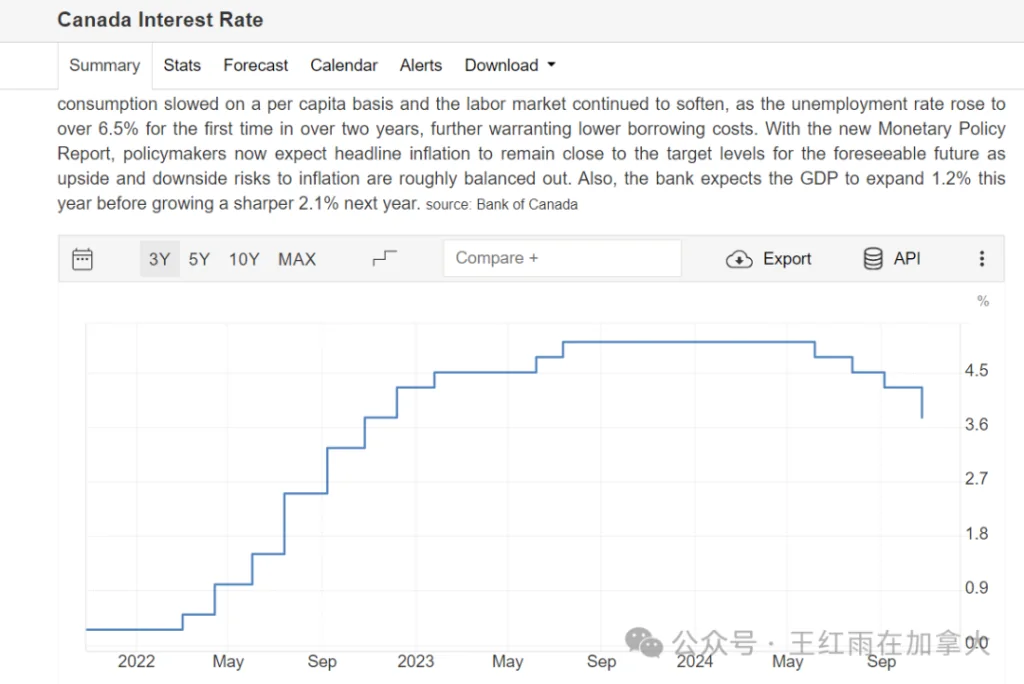
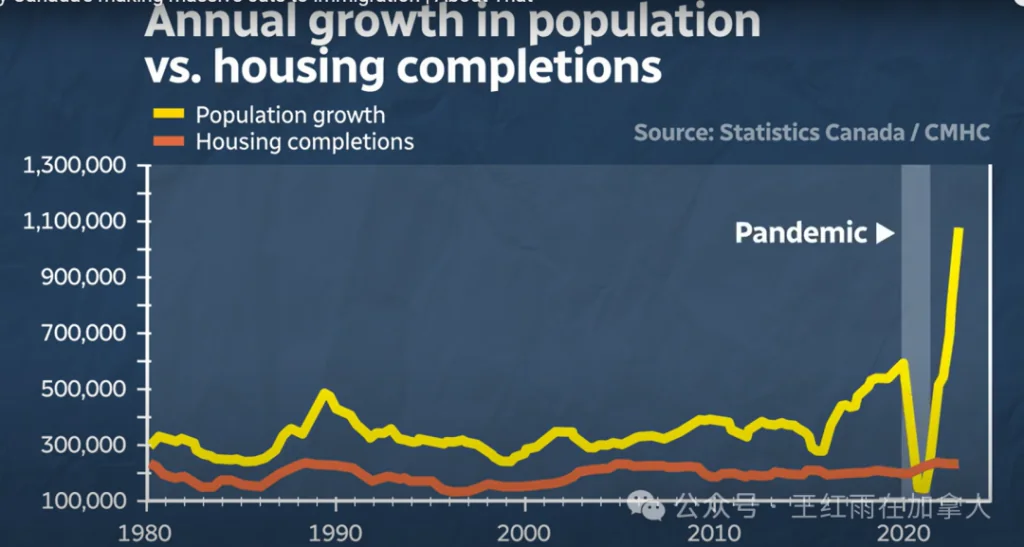
Current home prices and market temperatures do not yet reflect the extent of changes in population and interest rates over the past year.Economic factors change quickly and the market responds slowlyThe main reason is still the fear of buyers. Some netizens said that the past five years seem to have been pressed on the fast-forward button, condensing the ups and downs of 50 years: interest rates have gone up and down, housing prices have gone up and down, and real estate transaction volume has gone up and down. It is difficult to judge whether housing prices are getting back on track at this moment, and when market transaction volume will return to normal.
The first 3-5 days of taking out a loan to buy a houseYear is a dangerous period for family finances: if house prices fall sharply, although buyers will not suffer substantial losses, the liquidity of the property will be greatly reduced., if a family is forced to sell their house due to changes at this time, they may suffer actual losses. Risks and uncertainties are everywhere, but when your financial situation is at its weakest after buying a home, it is difficult to withstand various surprises. How to get through the dangerous period after buying a house requires careful thinking and careful preparation by first-time homebuyers, downsizing families, and real estate investors.
01First-time homebuyers can take advantage of low down payment policies to leave a buffer zone for their finances
"Self-owned house, buy at the highest price" is the general direction for first-time homebuyers, because there are many factors to consider when buying a home for the first time without experience. All resources need to be mobilized, careful preparation is required, and factors such as the growth of family size in the next 5 to 10 years must also be considered. You can buy a house without leaving any room, but you must leave enough buffer space financially. Take for example a first-time home buyer who buys a property worth RMB 650,000 as his or her own home, with a deposit of RMB 140,000, a contract interest rate of 4.5%, and a repayment period of 30 years. There are two options, A and B:
A: If the down payment ratio is 20%, which is 130,000 yuan, the loan amount is 520,000 yuan, the monthly payment is 2,622 yuan, and the financial buffer space is less than 10,000 yuan, then the ability to bear risks is very weak.
B: If the down payment ratio is 15%, which is 97,500, by paying mortgage default insurance, you can keep more cash in your hands and be better prepared for possible accidents. The loan amount is 552,500, the insurance rate for loan default is 2.8%, and the premium amount for loan default insurance is 15,470. After adding the loan amount, the total loan amount is 567,970, the monthly payment amount at this time is 2,846, and the cash in hand has increased to nearly 40,000.
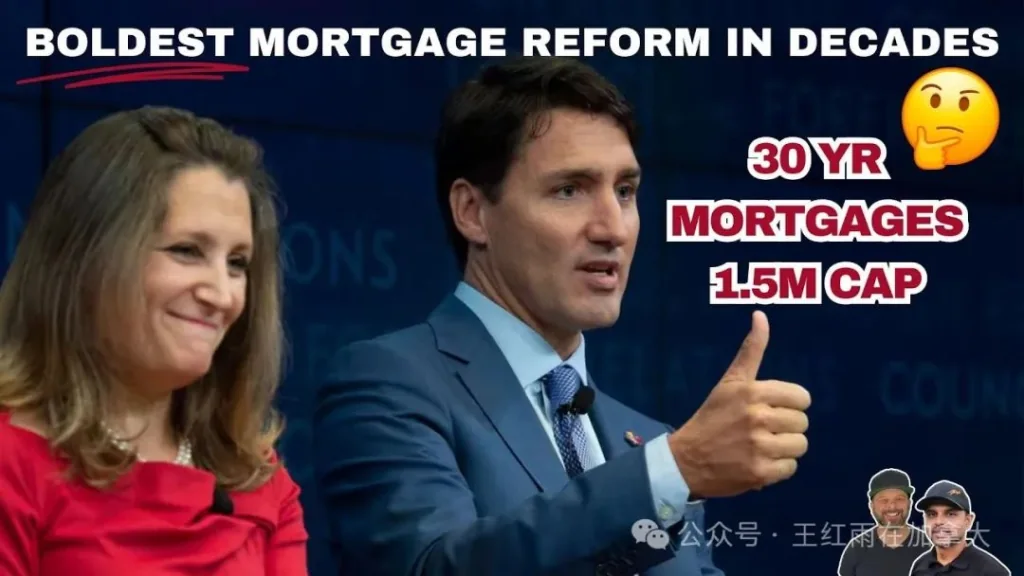
After December 15 this year, the loan policy for down payments less than 20% will be extended from the original maximum repayment period of 25 years to 30 years, and Plan B will be effective. The maximum house price allowed by the new policy is 1.5 million, which opens a door for first-time homebuyers who are struggling to keep up with the increase in house prices due to the increase in deposits. It gives first-time homebuyers two options, A and B. How to choose depends entirely on the buyer's assessment of risk.
02It is recommended that buyers who want to change their home should minimize the loan amount for their home.
When changing to a home, buyers have two options: 1. Sell the original home; 2. Add a mortgage to the original home. How to choose depends on the budget of the new owner's house. If the down payment is not enough to support the budget after adding the mortgage on the original owner's house, the original owner's house must be sold. Taking a family with an annual income of RMB 150,000 and a new house budget of RMB 1 million as an example. Families changing houses have two options, C and D:
C: After adding a mortgage to the original home, if the down payment is more than 250,000, you can keep the original home as an investment property. When you remortgage the original home, you need to borrow the maximum amount. The more money you take out to remortgage the original home, the less the loan amount you need for the new home. If the original home is rented out in the future, there will be tenants to help pay the mortgage loan, and at the same time, the psychological and financial pressure caused by borrowing the maximum loan for the new home will be avoided. When adopting Plan C, the most important thing is to remortgage on the original home before buying a new home. After you move into the new home, it will be too late to remortgage, and you may become a loan "vegetative" from now on. On this topic, I once gave a video speech titled"Henry Wang Real Estate Investment Seminar 2019Year 1month 12dayOffline activities in Toronto on the landlord website》, it is recommended that friends who are planning to change houses watch this video on YouTube to avoid making irreparable mistakes.
D: If the down payment cannot be raised by adding a mortgage to the original home, you can only sell the original home. When the sale and purchase are going on at the same time, the bank will need to see the sales contract before arranging a bridge loan. If the bridge loan is approved for an amount lower than the required amount, the purchase and sale transaction can only be arranged to be handed over on the same day, which requires an experienced lawyer to handle.
The financial arrangements during the process of changing houses are more complicated than buying a first-time home, and you need to consult multiple banks to find the best solution. A good loan arrangement can help families changing homes to increase the equity of an investment property in the process. Do not remortgage on your home to buy an investment property. Only remortgage on your original home when you want to change your home. See the YouTube video for the rationale."To balance our lifetime income we are forced to invest 4thCollection".
03Real estate investment is a niche investment
The ups and downs of the economic environment in the past five years have put real estate investors through huge challenges. After the big waves wash away the sand, we can clearly see thatReal estate investment is not an area where irrational investors can make profits.This year, a reader left a message saying that he bought a 500-square-foot sub-new apartment unit in downtown Toronto for 420,000 yuan, which shows the irrationality of the seller. Those who buy real estate irrationally will often sell it irrationally. In the investment field, such investors are called "leeks."
CMHC's latest report on the housing loan industry shows that investment housing loans accounted for 17% of new loans in the third quarter of 2023, an increase of 4% from the third quarter of 2019, when only 13% of new mortgage loans were for such properties. This number is similar to what I predicted before. Through various data collection and analysis, I believe that 16% of Canadian families own multiple houses, including owner-occupied houses and rental houses. Because of the loan threshold, real estate investment is far more difficult than stock investment and is not suitable for all families. If an investor is rejected by all five major commercial banks when applying for an investment house loan, it means that it is not suitable to buy an investment house. Unfortunately, when the real estate market was booming, some families, influenced by optimism, bypassed the stress test standards of big banks, obtained loans from Class B financial institutions and even the private loan market, and made irrational investments. Investors who irrationally sell their properties during market downturns mostly do so because they buy irrationally and are forced to sell when there is a cash outflow problem, not because they are affected by market fluctuations. Falling or stagnant house prices do not mean real losses for homeowners. Only families that sell their properties irrationally will suffer substantial losses.
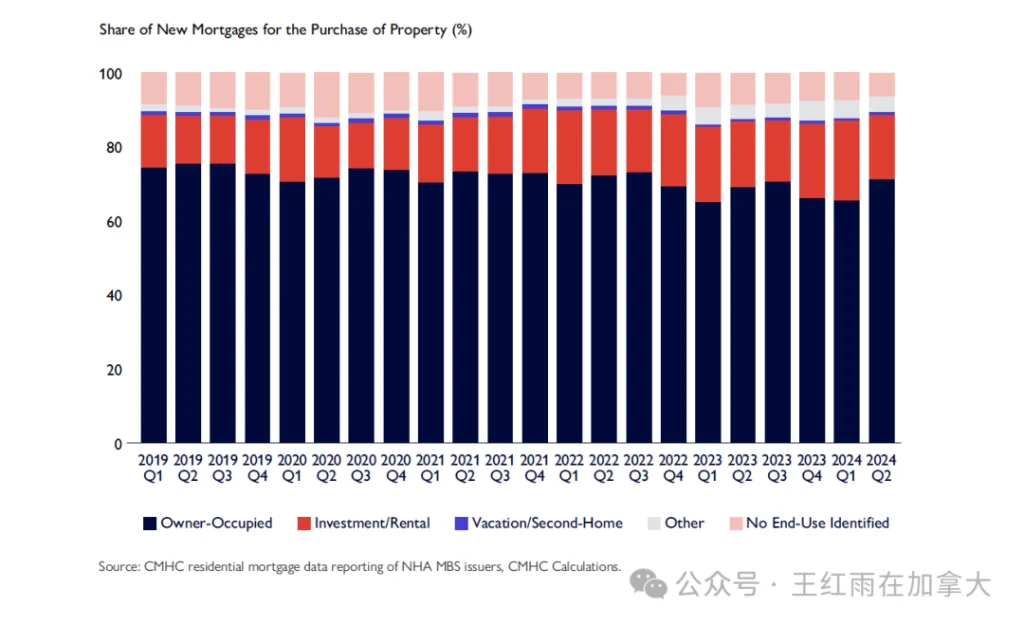
Real estate investment is a niche investment and is only suitable for less than 20% of households. The threshold encountered when entering real estate investment is a warning sign. Families that can cross the loan threshold can repeatedly cross the obstacles and purchase multiple investment houses, while families that cannot cross the threshold may not be able to buy a single house. It is a very dangerous attempt to obtain something out of the ordinary, unless it is backed by an unusually high net worth. Real estate investment is an investment field that embodies the "Matthew Effect" and "the losses are not enough but there is more to gain". The strong will always be strong and the winners will take all. However, attempts to change fate against the will of the gods often backfire.
Another self-deceptive way to bypass the mortgage threshold is to buy an off-the-plan property. After signing the contract, you hope that the house price will rise when the house is handed over, and you also hope that your borrowing ability will increase. This kind of wishful thinking investment method is too gambling in nature and is more likely to be self-defeating. The borrowing capacity when buying an off-the-plan property 5 years ago was insufficient, and it may be even worse today; the purchase price 5 years ago may also be much higher than today's market housing prices. These risks are emerging.
It is not suitable for real estate investment when the risk tolerance is insufficient. This is the prerequisite for real estate investment. Regarding how real estate investors can get through the dangerous period after buying a house, my suggestion is that if the five major banks do not approve investment housing loans, they should not rush into investing, whether it is an existing house or an off-plan house.
04Risks can be mitigated
According to Frank Knight's classification, risks are predictable and can be eliminated by purchasing insurance, while uncertainty exists objectively and cannot be resolved. Uncertainty refers to "black swan events". According to the research results of Nassim Nicholas Taleb, no one can predict and avoid uncertainty. The only way to reduce uncertainty is to retain enough redundancy. For example, having enough cash as a reserve after buying a house is called redundancy. There is uncertainty in the rise and fall of house prices, so you must set aside enough cash during the dangerous period after buying a house. Risks can be eliminated by buying insurance.
Why buy insurance? When to buy insurance? How much insurance should I buy? You can read past public account articles"How much insurance do we need to buy?"Generally speaking, when the possible range of the present value of your future wealth is negative 500,000 yuan to positive 3 million yuan, the reason for the negative value may be various major economic losses, such as a fire at home, high medical expenses incurred during treatment, etc.; and by purchasing insurance, the range of the present value of your future wealth may become positive 300,000 yuan to 2.8 million yuan. Although the maximum value becomes smaller because of the premium paid, the income is more certain. Buying insurance is a kind of expenditure, a cost incurred to obtain certain benefits.
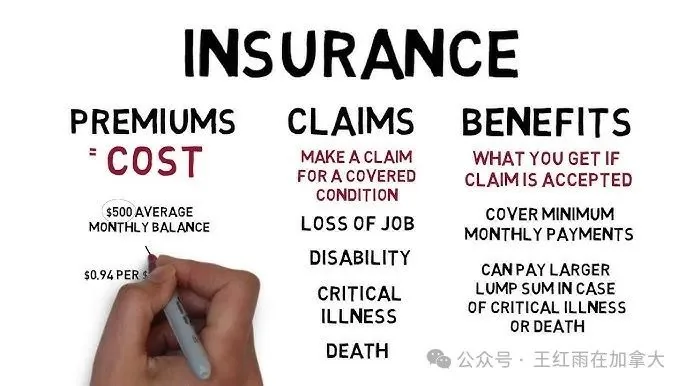
In Canada, the most frequent risk is unemployment. The probability of unemployment is much higher than accident, serious illness and disability. If you are buying a home for the first time, or if you have a large home loan, and one party in the family has a high proportion of household income, you can consider purchasing the "credit unemployment protection" job loss credit protection plan provided by the bank for the higher-income party. This type of insurance allows the insurance company to pay the monthly housing loan payment while receiving employment insurance EI.
Conclusion:
Canada conducts a census every five years. The 2011 census results show that the homeownership rate of Canadians was 69%; it dropped to 68% in 2016; and to 66.7% in 2021. As the population continues to increase, housing prices continue to rise, and the home ownership rate is getting lower and lower, or even accelerating the decline has formed a trend. Buying a house is an option that either advances or retreats. First-time homebuyers are finding that they cannot save for a down payment as fast as housing prices are rising; families looking to downsize are finding that the price of their target property is increasingly exceeding their budget. Flowers have to be cut off when they are in full bloom, and branches must be cut off when there are no more flowers. Families who buy or change a house will always face the choice of whether to start immediately or "wait a little longer". However, uncertainty follows them closely, and they will never wait for the day when "everything is calm". Families that are able to borrow money to buy or replace a house must face risks and uncertainties while realizing their housing dream. This is what all homeowners have experienced. Living in Chang'an is not easy. All living beings suffer. If you don't suffer the hardship of buying a house, you will have to suffer the hardship of renting a house. When can a house truly become your own asset? My personal experience is: Be fully prepared and get through the dangerous period after buying a house. Only when you find that the loan balance is less than 65% of the house price can you truly feel that you have passed the difficult moment and the house is yours. I wish all families who are constantly striving for self-improvement to live happily in every building and be as stable as a mountain despite wind and rain.