Today, with high interest rates and high housing prices, many people are eagerly hoping that the bank regulatory authorities can relax their mortgage policies so that more people can afford housing. But things went counterproductive. On January 12, 2023, OSFI, the Canadian financial institution regulatory authority, suddenly announced that it would further tighten mortgage policies, and immediately issued a questionnaire to solicit opinions from all parties. It seems that it will be implemented soon. I immigrated to Canada in 2008. In the past 15 years, I have never experienced any loosening of mortgage policies. Every adjustment in mortgage policies has been in the same direction - tightening, and this time is no exception. The tightening of mortgage policies again this year will make it even worse for families who plan to buy a house, and they will be further away from their dream of buying a house. Especially for those who "wait a little longer", what they are waiting for is a basin of cold water plus snow and frost. The reason why financial regulatory authorities tighten policies every time is to prevent financial risks, but it is obvious that the bad debt rate of bank mortgage loans is very low. In the past 15 years, the bad debt rate has been at a level of a few thousandths and has not changed.Tightening mortgage loans has only one purpose: to reduce the demand for housing by limiting borrowing capacity when there are too many people and few houses.
In 2023, bank regulatory authorities once again counter-intuitively tighten mortgage lending, which forces us to reflect on why Canada's mortgage policy always tightens one-sidedly but never relaxes. I collected information on changes in mortgage policies over the past 15 years and tried to discover the trends in policy changes. What criteria do Canadian banking regulators want commercial banks to use to select qualified mortgage borrowers? From the applicants who were rejected by the banks, I seem to have found the answer:Banks reject applicants who contribute less than what is required in the social contract and, under the supervision of supervisory authorities, continue to raise the bar for selection.After reading Rousseau's "The Social Contract", I feel more deeply that the amount of real estate wealth is closely related to the amount of social contribution.

01 Recalling the past, the turbulent years are thick
To explain, Canada's housing loan policy is a dual-track system. The mortgage policy with a down payment of less than 20% is formulated by CMHC; the mortgage policy with a down payment of no less than 20% is formulated by OSFI. The two agencies that formulate mortgage policy are both affiliated with the Department of Finance of Canada. In 2012, OSFI, the Canadian financial regulatory agency, promulgated a unified national mortgage policy for the first time, numbered B20, as a guide for commercial banks to approve mortgage loans with a down payment of no less than 20%. Since then, this guideline has been revised from time to time. The mortgage policy formulated by CMHC, with a down payment of less than 20%, has always been a reference for commercial banks to approve loans, because if commercial banks want to securitize mortgage assets and sell mortgages to CMHC, CMHC's acquisition standards have a corresponding guiding role in commercial banks' loan approval. For example, CMHC requires borrowers' debt repayment ability TDSR/GDSR indicators to reach below 44%/39%. Although the B20 document issued by OSFI does not clearly stipulate this, commercial banks will consider this debt repayment indicator when approving loans.
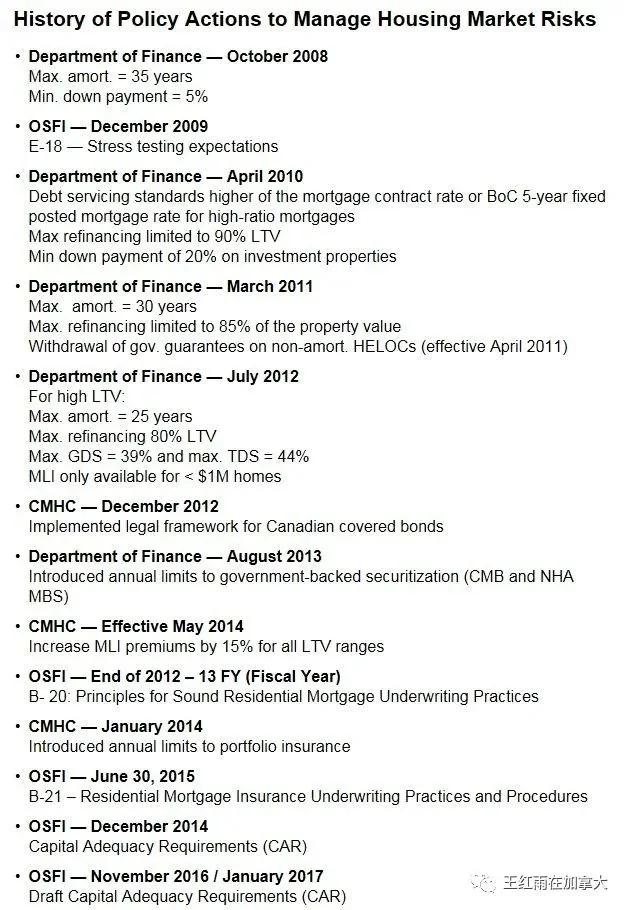
In July 2008, the Ministry of Finance decided that for mortgages with a down payment of less than 20% and requiring CMHC loan default insurance, the repayment period was reduced from 40 years to 35 years. Commercial banks followed this requirement and reduced the maximum repayment period of mortgages with a down payment of no less than 20% to 35 years. After the continuous interest rate hikes in 2022, the monthly payments of floating rate loans of some banks remained unchanged, but the repayment period was automatically extended. Many borrowers' repayment period was extended to more than 30 years, or even to 50 years. Everyone was surprised. In fact, before 2008, everyone’s mortgage loan generally had a repayment period of 40 years. Artificially shortening the repayment period increases the monthly payment, making it more affordable for fewer people, thereby reducing the demand for homes and loans.
February 17, 2010 On the same day, the Minister of Finance announced that for borrowers with a down payment of less than 20%, the approval standards for CMHC loan default insurance have been revised as follows: l. When a borrower applies for a mortgage loan with a term of less than and equal to 5 years, whether it is a floating interest rate or a fixed interest rate loan, the bank needs to use the 5-year fixed interest rate when calculating the borrower's repayment ability. The listed interest rate is used to calculate the solvency. Previously, the interest rate chosen by the borrower was used as the test standard for evaluating the solvency; 2. For additional mortgages and refinance, the maximum limit is reduced from 95% of the loan-to-price ratio (LTV) to 90%; 3. For non-owner-occupied investment houses, the minimum down payment ratio is 20% of the house price. The new policy takes effect on April 21, 2010.Since then, and to this day, the down payment ratio for investment properties has always been the lowest.20%。
On January 17, 2011, the Minister of Finance announced that for borrowers with a down payment of less than 20%, the approval standards for CMHC loan default insurance were revised as follows: 1. The maximum repayment period is shortened from the original 35 years to 30 years; 2. For additional mortgages, refinance, the ratio of the maximum loan amount to the house price is reduced from 90% to 85%; 3. For borrowers with a down payment of less than 20%, CMHC will no longer insure applications for home equity HELOCs. The new policy takes effect on April 18, 2011. Commercial banks followed CMHC's policy adjustments and shortened the repayment period of mortgages with a down payment of no less than 20% from 35 years to 30 years.
2012 7 In March, the Ministry of Finance once again revised the Canadian housing loan policy. For borrowers with a down payment of less than 20%, the approval standards for CMHC loan default insurance were revised as follows: 1. For additional mortgages, the maximum loan amount for refinance was reduced from 85% to 80% of the house price, which remains unchanged to this day; 2. The maximum repayment period was reduced from 30 years to 25 years; 3. The maximum GDSR ratio was reduced to 39%, and the maximum TDSR ratio was reduced to 44%; 4. The down payment is less than 20%, and the price of the owner-occupied house cannot be higher than 1 million.Commercial banks did not followCMHC has shortened the maximum repayment period from 30 years to 25 years. Therefore, the current situation is that if the down payment is less than 20%, the maximum repayment period is 25 years, and if the down payment is not less than 20%, the maximum repayment period is 30 years.
In 2012, the banking regulatory authority OSFI formulated unified guidelines B20 for commercial banks to approve mortgage business. And inspect the implementation of commercial banks every year.
In 2015, OSFI revised the B20 guidance, and the new document was named B21.
Effective February 15, 2016, CMHC has revised its established policy. Original policy: For loans with house prices below 1 million, the minimum down payment is 5%; new policy: 10% down payment for the portion above 500,000, and 5% down payment for the portion below 500,000. For example, for a 700,000 house, 500,000 x 5% = 25,000, 200,000 x 10% = 20,000, the total down payment is 45,000, and the minimum down payment ratio is 6.428%.
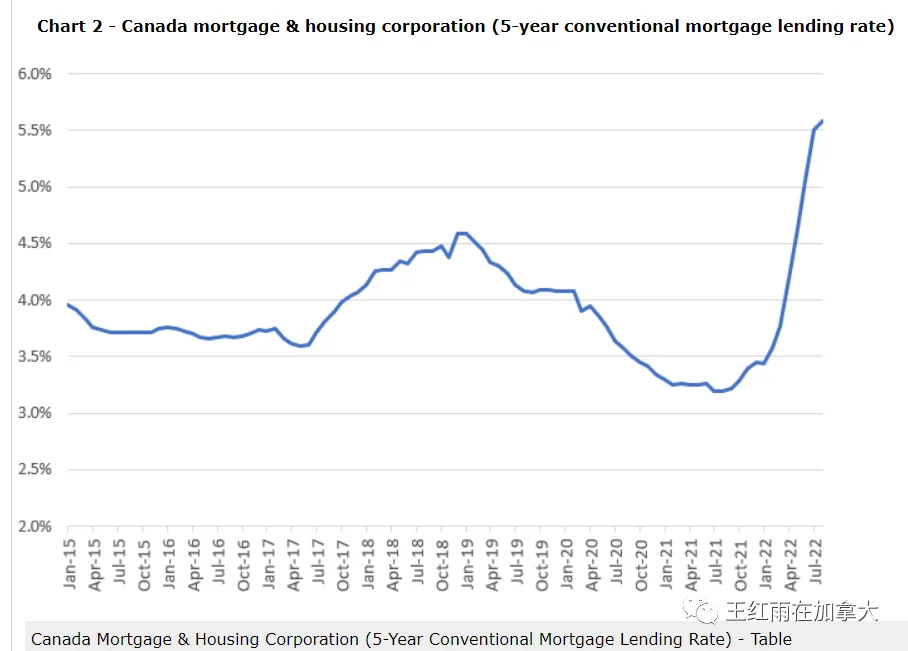
Starting from October 17, 2016, CMHC stipulates that for applicants with a down payment of less than 20%, the stress test interest rate will always use the V80691335 interest rate announced by the Bank of Canada to calculate their solvency, and there will no longer be any exceptions in any form. Prior to this, if a borrower applied for a 5-year fixed interest rate, the discounted interest rate could be used as the stress test interest rate. After that, the discounted interest rate could no longer be used for the stress test. This change has a huge impact on borrowing capacity.
On October 17, 2017, the banking regulatory authority OSFI announced the revision of B20, following the CMHC policy a year ago, requiring commercial banks to use the V80691335 interest rate as the stress test interest rate, or the actual contract interest rate + 2% as the stress test interest rate when approving mortgage loans with a down payment of no less than 20%, whichever is higher. At that time, the V80691335 interest rate was 4.89%. The new policy takes effect on January 1, 2018. Before and after the implementation of the New Deal, housing loan borrowing capacity dropped by about 15%. Earlier that year, in April 2017, Ontario introduced the NRST, a foreign real estate speculator tax, and the housing market was already experiencing a rapid adjustment. OSFI's new regulations have once again made the already sluggish market worse.
Starting in September 2017, the Bank of Canada began to follow the Federal Reserve in raising interest rates. Because the level of the stress test interest rate is related to the above-mentioned stress test pricing mechanism, from September 2017 to the end of 2018, when the central bank continued to raise interest rates, the stress test interest rate increased, which has been reducing the borrowing ability of applicants. Therefore, OSFI has not tightened its mortgage policy before 2020. Until May 20, 2021, OSFI once again announced changes to the stress test interest rate, changing the V80691335 interest rate to 5.25%, whichever is higher than the actual interest rate + 2%. As the stress test interest rate, the policy has been implemented to this day.
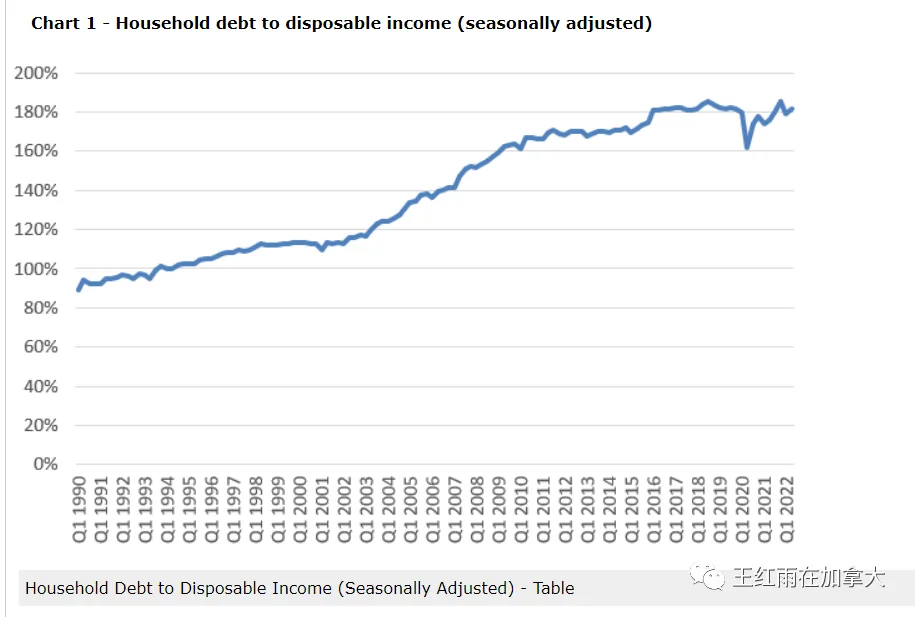
From a comprehensive description of the facts, it can be concluded that the mortgage policy is getting tighter and the mortgage threshold is getting higher and higher. During this period, banks did not lend money in an orderly manner, and the bad debt rate did not change significantly. Changes in mortgage policies show that Canada's mortgage policies have been changing from conservative to extremely conservative. Even so, commercial banks can still select the best from many loan applications and find "over-qualified" borrowers. By eliminating more marginal borrower applicants, the demand for housing is suppressed and the excessive rise in housing prices is restrained. If you feel that the suppression of housing prices is not enough, it doesn’t matter. We will continue to tighten mortgage policies and continue to eliminate marginal borrowers. The 2023 version of the New Deal is already coming.
02 What changes may there be in the new mortgage policy?
The good old days are gone forever. Next, OSFI will conduct detailed management of mortgage loans issued by banks. The B20 formulated in 2012 only required banks to issue loans in accordance with certain principles and did not interfere specifically. However, in October 2017, OSFI made unified regulations on stress test interest rates. Now, OSFI feels that the discretion given to banks is too great, because many banks have given many exceptions or policy exemptions to mortgage applicants. In the environment of high interest rates and high housing prices, OSFI feels that it is necessary to limit the discretion of banks in order to make loan approval policies more stringent and more standardized. OSFI's approach is to send a questionnaire to banks to inquire about the current use of discretionary powers, and to ask banks about the possible impact if OSFI takes back these discretionary powers. The deadline for this questionnaire is April 14, 2023. After that, OSFI will decide how to modify B20.
The questionnaire issued to banks is public, so we can analyze the general direction of OSFI policy modifications from the content of the questionnaire.
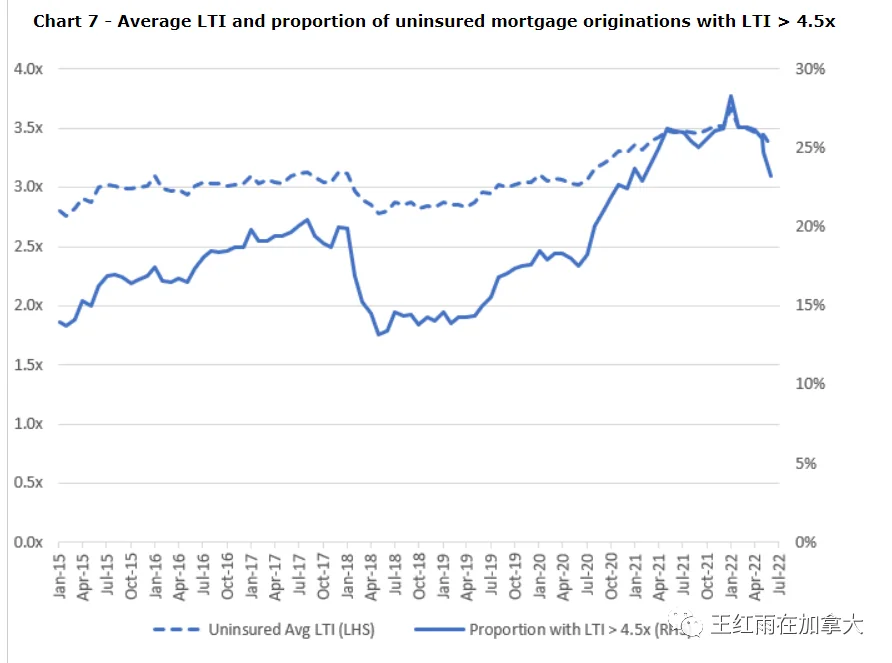
First, OSFI intends to introduce a new debt-to-income ratio, LTI, loan to income. Simply put, banks must report to the regulatory authorities every quarter or month the proportion of loans that exceed 4.5 times or 3.5 times annual income. The new policy may stipulate a cap. For example, every quarter/month, the total number of loans issued by banks that exceed 4.5/3.5 times annual income cannot exceed 10%, or 20%, or 25% of the total number of loans. This proportion is determined by OSFI. As for how banks control this ratio, banks need to submit corresponding policy modification documents for review for OSFI supervision. Previously, there was no such requirement, this is a new requirement. OSFI publicly clarified that it is not that borrowers cannot borrow more than 4.5/3.5 times the loan amount, but that the proportion of this "high multiple" loan in the total loan volume of commercial banks will be limited. As for whether to evaluate this indicator every quarter or every month, it actually doesn't matter. Whether 4.5 times is set as a "high multiple" or 3.5 times is set as a high ratio will only be known after OSFI's new policy is released. Whether to limit the proportion of "high multiple" loans to 10%, 20%, or 25% will only be known after the new policy is announced.
Secondly, tighten the flexibility of debt service ratio TDSR/GDSR. CMHC’s policy requires that for loan applicants with a down payment of less than 20%, the debt-to-income ratio of the target property must not exceed 39%; the debt-to-income ratio of the whole family, TDSR, must not exceed 44%, and is strictly enforced. The B20 policy does not strictly require these two debt repayment ratios. Therefore, when banks approve mortgage applications with a down payment of no less than 20%, they often exceed this ratio based on the actual situation of the applicant. When the reporter interviewed Peter, the head of OSFI, he asked him whether banks would be required to strictly implement the 39/44 ratio requirement in the future. Peter responded tactfully that we have already sent a questionnaire to commercial banks on this issue. Let’s first listen to what commercial banks think. In addition, regarding the issue of the maximum repayment period, commercial banks currently decide on their own. The maximum repayment period is 30 years. There is no explicit provision in B20. The maximum repayment period stipulated by CMHC is 25 years. OSFI will clearly stipulate in the soon-to-be-revised B20 the maximum repayment period for a mortgage with a down payment of not less than 20%.
The third is a more dangerous revision direction, that is, whether to extend the stress test interest rate to existing debt. Currently, stress testing is only applied to targeted loans and does not affect existing debt. For example, if you already have four properties ABCD and four loans, and now you want to apply for a loan on property E, that is, the fifth loan, then the stress test interest rate will only apply to the debt generated by property E, and the debt of property ABCD will be considered based on the actual monthly payment of the debt. In its questionnaire, OSFI asked commercial banks whether it would be appropriate to apply stress test rates to all five properties.
After reading through the OSFI announcement and questionnaire, I can only understand it to the above level. The questionnaire covers a lot of content, and there are many dangerous possibilities for policy changes. I cannot translate and analyze them one by one. It is strongly recommended that readers who are preparing to buy a house also read this questionnaire. If they feel that they are at risk of being unable to get a loan after the tightening of mortgage policies, they need to take timely action. When B20 was revised in the past, OSFI announced the revision plan and formally implemented it after public discussion. However, the original plan has not been modified after soliciting opinions, which means that OSFI does not listen to public opinions. This time, the public discussion only provides the direction of modification, but does not provide the content of the plan. It seems to be more friendly. In fact, as before, whether you answer or not, or what the answer is, will not prevent 0SFI from modifying the policy according to its own wishes. When OSFI modifies a mortgage, it always does it resolutely and never sloppily.
This revision by OSFI is a policy change that refines supervision. The main purpose is to take back the discretionary power of commercial banks when approving housing loans. In addition to the questionnaire, OSFI has clarified several directions to be tightened and refined in its announcement to revise the mortgage policy. These contents are not open for discussion. For example, a clear and consistent definition of “income”, for the purpose of calculating LTI, OSFI will clearly define what “income” is when implementing the new debt-to-income ratio. We all know that over the past few years, and even now, there have been banks that have played with the concept of “revenue.” There is a bank that counts the applicant’s capital gains from selling a house last year as this year’s income; another bank counts the applicant’s cousin’s overseas income as the applicant’s income, and the overseas cousin’s name does not need to be written on the property. The intervention and refinement of the regulatory authorities are very necessary in some aspects, otherwise the number of overseas cousins will overflow; applicants who have no income but sold their houses last year may be able to apply for a 2 million loan this year. A society needs a minimum of fairness and justice. A family that works hard and files taxes honestly can only borrow a loan of 300,000 yuan according to strict loan conditions. A family that does not pay taxes in Canada can get a loan of 1 million yuan based on the cousin's overseas income. This is too unfair. Over the past 10 years, changes in mortgage policies have become increasingly more just and equitable. Before 2017, new immigrants were required to pay 35% down and get loans without looking at their income, which angered local Canadians. However, it was not until November 2018 that the last bank that did not look at income for new immigrants stopped this "amnesty" practice. Sooner or later, the "amnesty" program has been gradually eliminated in the past 15 years. When I first started working in mortgage loans,Each bank has a stated income "amnesty" program for self-employed people, that is, self-employed people can say how much they earn. This program is now extinct. My own judgment on past changes in housing loan policies and future housing loan policies is as follows:Because there are more people and fewer houses, the mortgage policy will continue to be tightened. Financial regulatory authorities are using supervision to replace the self-discipline of commercial banks, restricting and requiring banks to issue mortgage loans more fairly and more prudently. The mortgage policy is increasingly conducive to families who contribute to the social contract, and reduces the possibility of obtaining mortgage loans for families who are demanding in the social contract.

03 What is a social contract?
"A social contract is a unanimous agreement reached by all members of a certain society on the basic principles of social action. Unlike a legal contract, a social contract depends to a large extent on the binding force of traditional customs." - Baidu Encyclopedia.
The content of the social contract may vary from region to region, period and concept, but it usually includes the following aspects: personal and property rights, fair treatment, public responsibilities, social responsibilities, etc. Canada's social contract includes, in addition to the above, multiculturalism and public services.
Rousseau said in "The Social Contract", "I imagine that mankind has reached such a situation that it can no longer survive and develop solely by natural forces. This primitive state cannot be maintained unless it is gathered to form a social force to maintain survival and development." "From the natural state to the social state, human beings have undergone a most eye-catching change; in their behavior, justice has replaced instinct, and their behavior has been endowed with unprecedented morality."

Social contract, English is social contract, few people mention this word in the Chinese context. As a loan person, I shouldn't think about such in-depth issues, but I can't do it without thinking.Because the changing trend of housing loan policies is to increasingly benefit those who contribute more than they take in the social contract.Let me give you a few examples and you will understand why I go so far. It is difficult for people who work cash jobs and do not pay taxes to apply for a mortgage; for those who have Canadian resident status and make a fortune in the United States or China but do not file taxes in Canada, it is difficult to obtain a mortgage; for a couple, one is a Canadian resident and the other is a non-tax resident of Canada. The latter remits money to the former to support his life in Canada, and the former enjoys publicly funded medical care in Canada. It is difficult for people with free education to obtain a mortgage; for self-employed people with a gross income of 70,000 a year, expenses of 65,000, and taxable income of 5,000, it is difficult to obtain a mortgage, because banks only recognize taxable income; for retired people, whose main income is social pensions, it is difficult to obtain a mortgage; for new immigrants who do not have a stable job, it is difficult to obtain a mortgage. All these households with housing loan difficulties have the same characteristics - in the social contract, they demand more and contribute less. It’s not that I want to evaluate the contributions of various people;Mortgage policy has its own social contract of rewards and punishments, rewarding those who contribute more to society. Some people feel that they have paid a lot of taxes but still have difficulty getting loans. That may be another problem - their debt management ability. If the owner-occupied debt is very large, it will be difficult to obtain an investment home loan. I have been writing articles for the past five years, hoping to help such families improve their debt management capabilities and transform their contributions to society into their own real estate wealth. For households that demand more than they contribute in the social contract, commercial banks are increasingly powerless and can only cede the mortgage market to shadow banks or private mortgage institutions that are not regulated by OSFI. After OSFI publicly stated that it would continue to tighten housing loans, there were immediately voices saying that private loans were going to become popular again because so many uncompleted properties have not yet been settled, the mortgage policy is tight, and the interest rates are high. It is difficult to transfer uncompleted property contracts privately, leaving few options for real estate speculators who have undelivered futures.
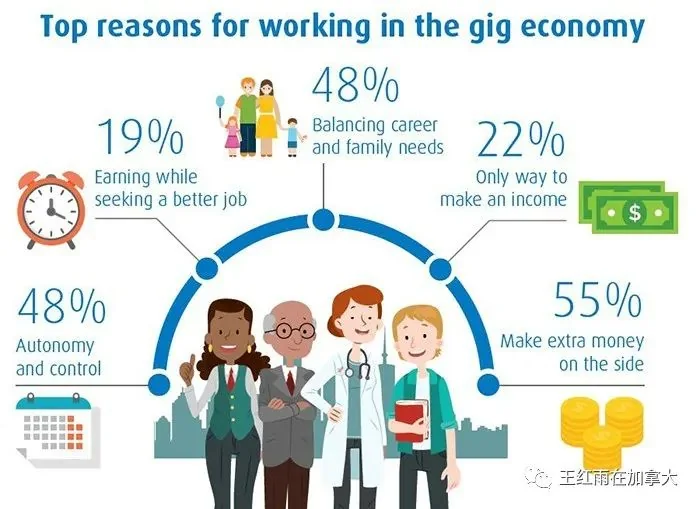
In the social contract perspective, the state should ensure social fairness and justice and maintain the implementation of the social contract. Therefore, we have seen that under the supervision and supervision of regulatory authorities, mortgage policies are gradually tilted in favor of families who work hard and pay taxes honestly. There is a certain relationship between mortgage borrowing capacity and the social contract. Social contract theory believes that people in society should jointly manage society and protect public interests through fair social contracts. Therefore, in terms of home loan borrowing, if the borrower's financial situation is not good and cannot repay on time, then the social contract perspective believes that restrictions should be imposed on the borrower to ensure the financial stability of society. Contrary to the efforts of the banking regulatory authorities, some people in Canada, including some Chinese families, are working in the opposite direction, trying their best to break away from the responsibilities of the social contract and strive in the direction of asking for more and contributing less. After the epidemic, many people who have tasted the benefits of cash jobs are no longer willing to pay taxes on their wages; the development of digital technology has made it easier to work from home, and more people choose to do "gig jobs" through crowdsourcing with the convenience of the Internet. They decide how much tax they pay on their income; the sharing economy is booming with the help of Uber and Airbnb. People who earn income from renting out or subletting sofas in their spare time can also control how much tax they pay. Canada gives self-employed people and people who work part-time jobs a lot of discretion to decide how much tax they pay. This relaxed environment gives families who want to break away from the social contract a lot of room for self-determination, so I see that this desire to break away from the obligations of the social contract is getting stronger and stronger. At the same time, banks' mortgage approval policies are working towards strengthening and consolidating the social contract relationship. The bank's discretionary power exercises the power to reward and punish social contributions. For families who contribute little and demand more in the social contract, they will not be granted mortgages, or the approved mortgage amounts will be very low. The public has the discretion to participate in the social contract, and banks also have their own discretion. The starting point is fair, so the end point is also fair:Families that choose to contribute less and demand more in the social contract have correspondingly reduced opportunities to obtain mortgage loans from banks, and the possibility of accumulating real estate wealth is greatly reduced.
The principle of commercial banks in mortgage loan approval is to maintain the traditional social contract relationship of the industrial era. In the industrial era, industrialized production and the increase in labor demand led to the organization and urbanization of the labor force, making the social contract closer and clearer. In the information age, the development of information technology and globalization has led to an increase in labor mobility, making the labor force's requirements for social contracts more complex and diverse. The gig economy and cash economy may have an impact on the social contract by potentially changing the nature of work and employment. In the gig economy, individuals may work short-term, project-based jobs rather than traditional full-time jobs, resulting in a lack of job security and benefits. Cash transactions will challenge the traditional financial system and the role of governments in regulating it. The impact of the sharing economy on the social contract is a complex and controversial topic. Some people believe that the sharing economy can provide more opportunities and convenience, creating opportunities for economic growth and employment. Others believe that the sharing economy may lead to the reduction of traditional job opportunities, and its economic model may not be conducive to the maintenance of the social contract. The digital economy, gig economy, cash economy, and sharing economy are splitting and weakening the social contract relationship established by the traditional industrial economy. However, commercial banks are strengthening and gathering the social contract relationship of the industrial era through the mortgage approval system. These two forces that weaken and strengthen the social contract relationship are widening the wealth gap: families that have adapted to the traditional industrial era contract relationship have better conditions to obtain real estate wealth, and the essence of the sharing economy is shared assets. Uber shares cars, and Airbnb shares real estate. Therefore, families that follow traditional social contract relationships still have a huge advantage when the old and new social contract relationships conflict. At least under the conditions of the sharing economy, if they have the conditions to own more properties, they can have an absolute advantage in sharing properties.

Conclusion:
Don’t shoot the messenger, I’m just analyzing and conveying the home loan approval principles of commercial banks, and I don’t intend to offend people who have difficulty getting loans. I cannot change the trend of housing loan policies getting tighter and tighter. I can only try my best to analyze the changing trends of housing loan policies and the driving factors behind them.
During the Spring Festival, we visited friends’ houses and talked about children’s education. We all thought it was important for children to know the phrase social contract from an early age, so that the next generation could understand as early as possible why public schools do not have to pay tuition fees and there are free breakfasts. These “free” benefits are the benefits given to us by the existing social contract.Everyone who participates in the social contract, sooner or later, more or less, has the obligation to transfer some of his rights and wealth.Canada's multiculturalism and public services have helped first-generation immigrants like us settle in Canada. Second-generation immigrants must know how to be grateful and repay society. The first generation of new immigrants should set an example for the next generation and strive to contribute to society within their ability. Not only are commercial banks exercising the power to reward and punish traditional social contract relationships, but other defenders of traditional social contract relationships are also doing the same. For example, when the Immigration Bureau accepts applications for reunion immigration and work visa transfer immigration status, it also looks at the contributions made by the guarantor and the applicant to Canadian society.
Over the past 15 years, mortgage policies have been tightening and mortgage approval standards have been improving. Therefore, mortgage quality has remained at a very high level. Banks and bank supervisory authorities are very clear that the rate of population growth can ensure that banks can still select applicants who meet the standards of mortgage policies even if they continue to improve their approval standards. This ensures that banks can still operate stably even as housing prices continue to rise and accumulated debts increase.The continuous improvement of loan approval standards has created a winner-take-all situation, and families who can afford mortgage loans have accumulated huge real estate wealth.Judging from the wealth changes of the Chinese community investment immigrant group and the skilled immigrant group in recent years, the skilled immigrant group has made a greater contribution to Canadian income tax revenue, so real estate wealth has grown faster. On the contrary, the investment immigrant group has lower real estate wealth growth because of its lower ability to obtain housing loans. By observing and summarizing the changes in mortgage policies, we have to think about Canada’s social contract issues. What is fairness and justice in Canada, how the wealth gap widens, how to correctly understand and adapt to Canada’s social contract relationships, and how to correctly educate the next generation. I hope that every reader can accumulate the wealth they deserve while contributing to Canadian society, and pass on Canada's good social contract spirit.
February 6, 2023