This question was given to me by a radio reporter. When the interest rate hikes stop and interest rate cuts begin, many people may have this question.
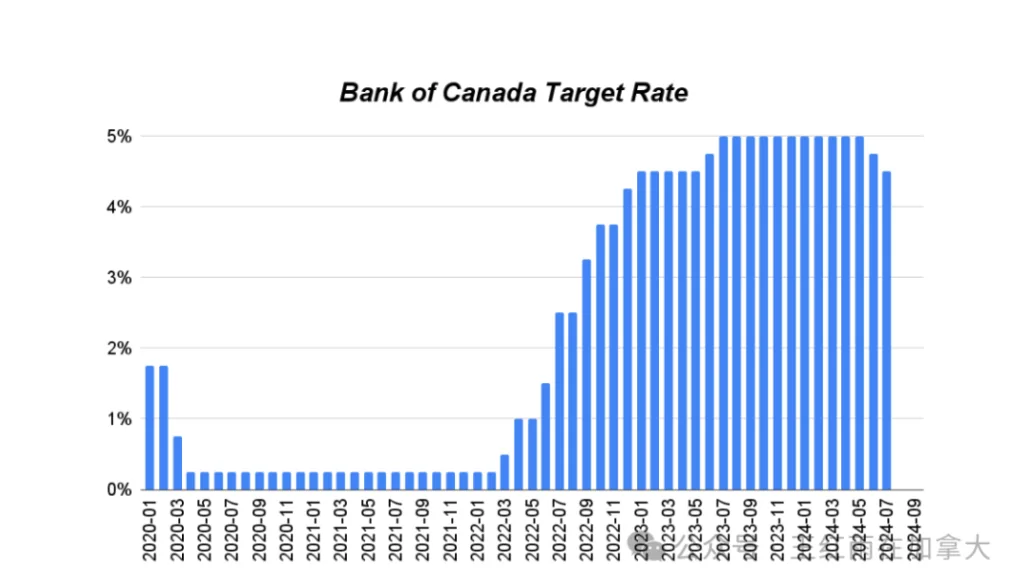
In the article on June 24th in the last issue, I believed that a further 0.25% interest rate cut on July 24th was a high probability event, and it turned out to be a hit. It is easy to accurately predict one month in advance and look back. However, after the 0.25% interest rate cut on June 5, few people dared to predict in public that there would be another 0.25% interest rate cut on July 24. The reason why I am so convinced is that I believe that the two interest rate hikes last year were wrong and have caused great damage to the Canadian economy. The Bank of Canada is eager to correct its mistakes, so it has cut interest rates continuously. Of course, in the last article, I only analyzed political pressure and did not focus on the impact of two wrong interest rate hikes on the Canadian economy. The biggest negative consequence of excessive interest rate hikes and overshoots is to sharply weaken the fragile job market. Real estate investment requires loan support, and whether the loan can be approved depends on income. Employment conditions have deteriorated, weakening households' borrowing capacity. At the same time, excessively high interest rates have forced many households to start deleveraging, or even focus on reducing debt, without having time to consider investment plans.Who is Canadian real estate investment suitable for? The answer is: for everyone. Qualified real estate investors are those who have low consumer debt and whose income can meet bank loan standards. There will be a period in everyone's life that is suitable for real estate investment.
The problem of income inequality has been abused in various fields. The view I accept is that of American economists Thomas Sowell and Professor Xue Zhaofeng, that is, when you say that the income of two people is unequal, you need to compare the income of the two people throughout their lives, not the income of the two people at a certain point in time. A person's income at the age of 25 and at the age of 52 is likely to be different. It makes no sense to compare the income of a 25-year-old young man with the income of a 52-year-old middle-aged and elderly person and think that the income of the two people is unequal. In the same way, we cannot say who is more suitable for real estate investment. We can only say what are the conditions suitable for real estate investment, and people who meet these conditions are suitable. There will always be times in everyone's life that are suitable for real estate investment. As Sowell's research shows, 50% of Americans will be in the top 10% in income at some point in their lives. What I have observed is that many people have unfortunately missed the period suitable for them to invest in real estate, and have since become house-haters, anticipating a fall, and treating housing prices as a pastime for the rest of their lives. Finding the time period suitable for real estate investment in the life cycle and the conditions that should be met are the topics we are going to discuss today. In addition, macroeconomic policies have a great impact on the job market, which in turn affects people's ability to invest in real estate. The analysis of the current employment situation in Canada is also the focus of this article.
01 Overview of the current employment situation in Canada
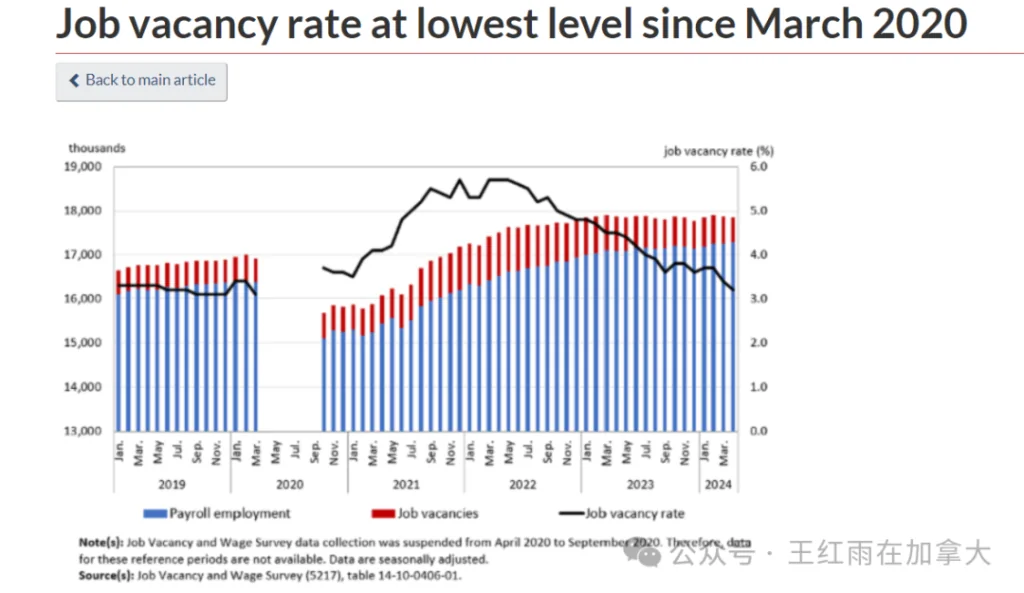
Recently, when the Federal Reserve was discussing the possibility of cutting interest rates, it frequently mentioned the professional term "Beveridge Curve". When a country's job market is booming, the job vacancy rate will rise and the unemployment rate will fall. The relationship between the job vacancy rate and the unemployment rate can be drawn as a curve to intuitively predict the unemployment rate from changes in the job vacancy rate. The cradle-to-grave welfare system in the United States was created by Franklin Roosevelt; shortly afterwards, the United Kingdom also developed a welfare system of its own, and the drafter of the British system was William Beveridge. The relationship between job vacancy rate and unemployment rate was also discovered by Beveridge, hence the name "Beveridge Curve". Beveridge was a British economist who was as famous as Hayek, Keynes, and Laski in the 1930s. He had a profound influence on the construction of the British economic system after the war. The Federal Reserve is paying close attention to changes in the Beveridge Curve to provide a basis for interest rate decisions. The historical experience is that when the job vacancy rate drops from a high point to 4.5%, the unemployment rate does not change much. After it falls below 4.5%, a small drop in the job vacancy rate will lead to a substantial increase in the unemployment rate. The current job vacancy rate in the United States is 4.6%, so the Federal Reserve is very nervous, fearing that a late cut in interest rates will lead to a significant increase in unemployment.
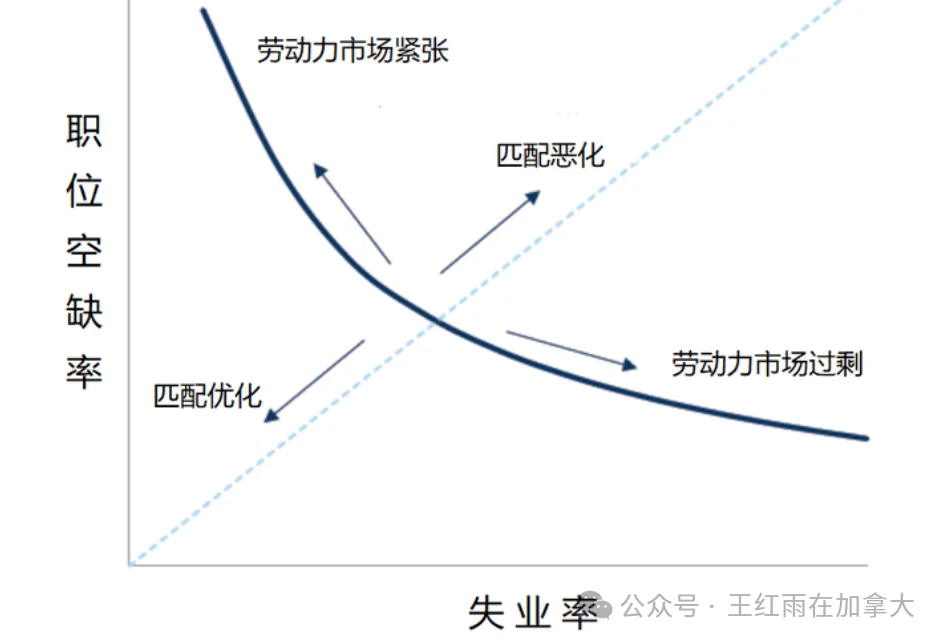
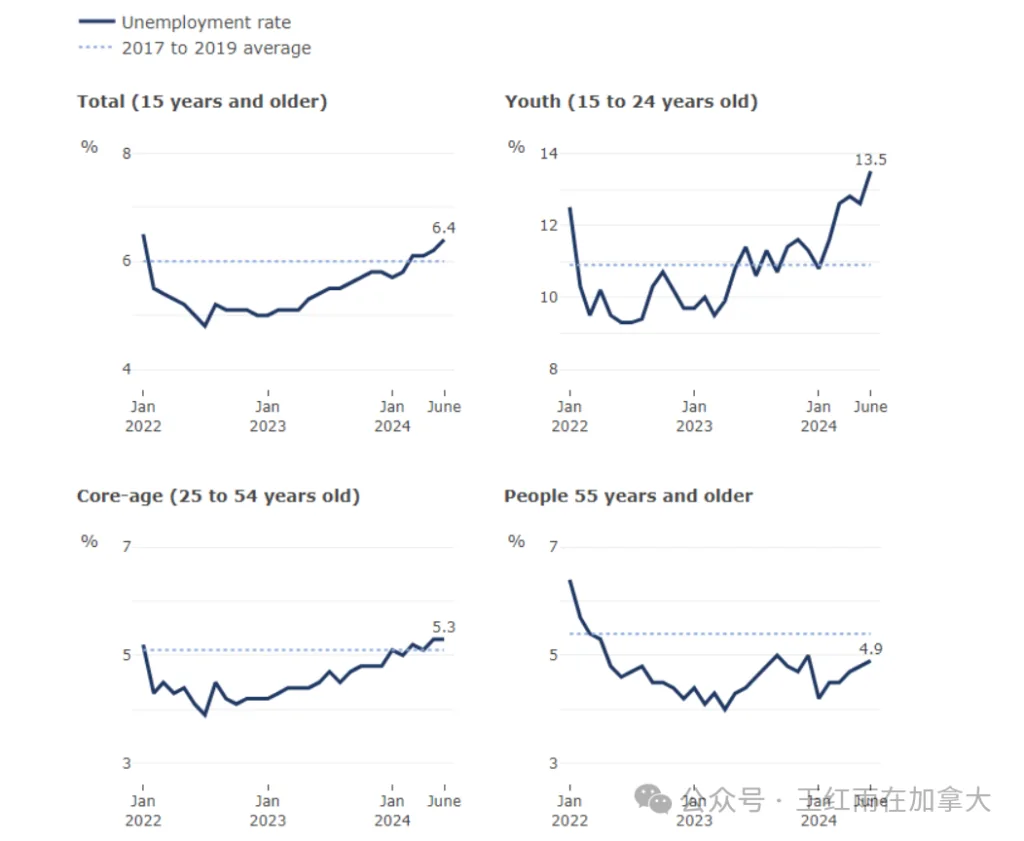
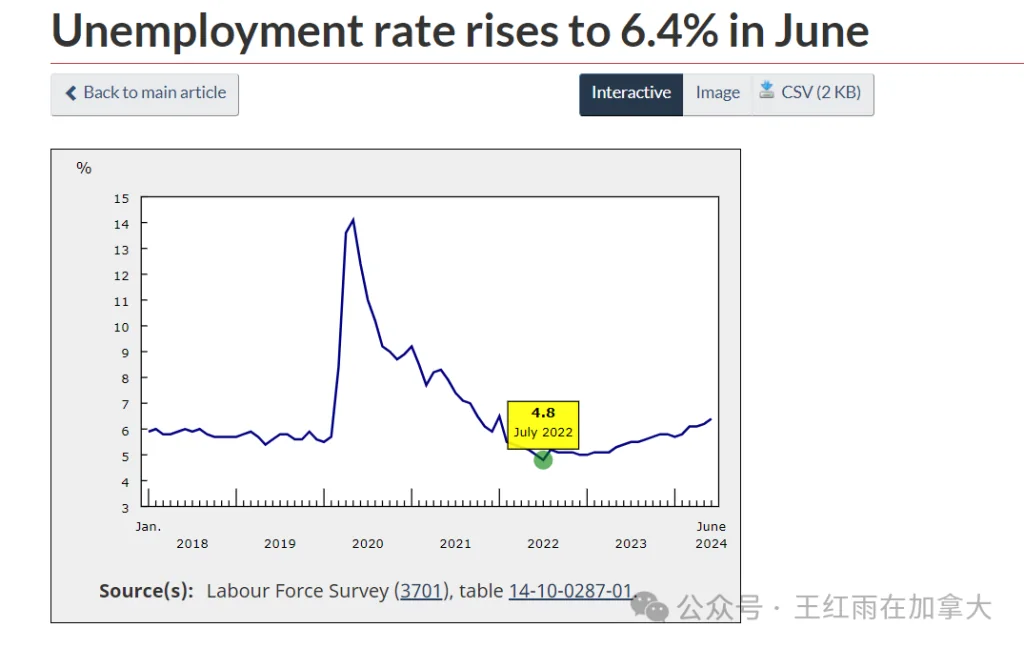
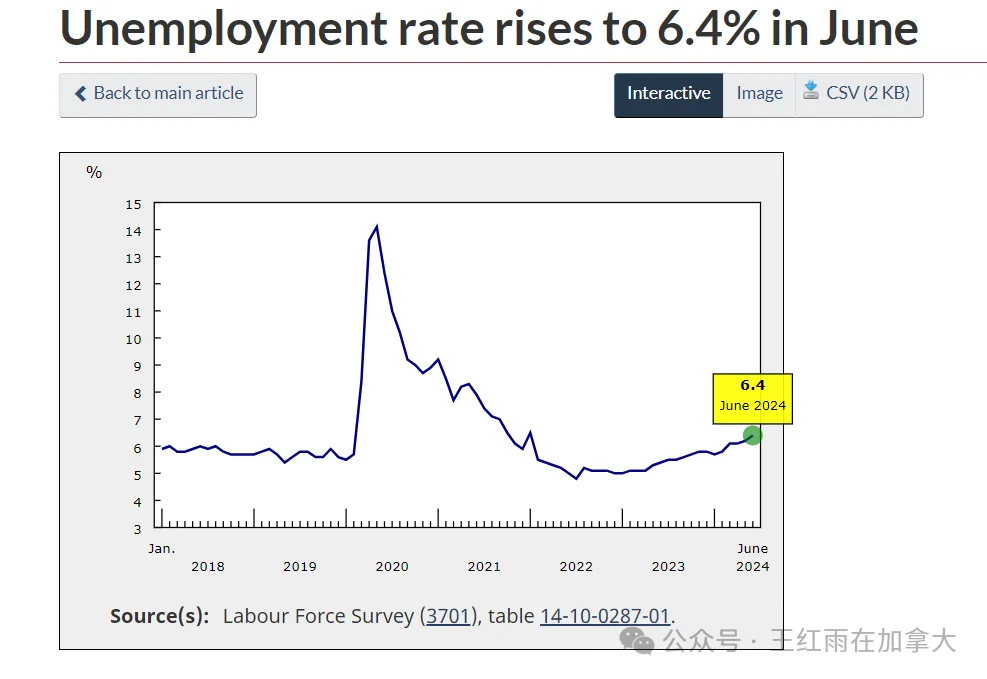
After the epidemic in Canada, the labor market became hot for a while. The highest job vacancy rate occurred in the second quarter of 2022, with the job vacancy rate as high as 5.6%. At this time, Canada's unemployment rate was also the lowest at 4.8%. Canada's job vacancy rate has fallen relatively quickly from its high point, reaching 4.5% in the third quarter of 2023, which is when the central bank raises interest rates for the tenth time. The last time the Bank of Canada raised interest rates was in July 2023, completely ignoring the warning of the 4.5% empirical value of the Beveridge Curve. Raising interest rates at this time will accelerate Canada's unemployment rate. Believe it or not, Canada's unemployment rate has rapidly increased to 6.4% in the past year, and the job vacancy rate has dropped to 3%. Stephen Poloz, the former governor of the Bank of Canada, described the central bank's responsibilities in his new book The Next Age of Uncertainty: The "home" of the central bank's policy is an unemployment rate of 5% to 6% and an inflation rate of 1% to 3%. Policy adjustments are always in the direction of "home." The current governor of the Bank of Canada is a man who cannot find a home.
The current unemployment rate is 6.4%, significantly higher than the central bank's policy target. The actual situation is worse than the numbers suggest. Self-employed people are not counted in the unemployment rate. Even if self-employed people have no income at all, they are not considered to be unemployed. That is, the 6.4% unemployment rate does not include self-employed people who have no income. This topic is not suitable to be discussed in depth, and everyone needs to think about it.
Worst of all is youth employment and unemployment. According to Statistics Canada employment data on July 25, the youth labor force participation rate is 54.8%, the lowest point since 1998; the unemployment rate is 13.5%, which is far ahead of the average unemployment rate.
In the job market, there is another unstoppable trend, which is gig work. That is, many people’s jobs are precarious and are not included in unemployment statistics. "Gig Economy" refers to this employment phenomenon: a person spends more time looking for a job than working hours over the course of a year, his income is long-term precarious, he has no sense of career belonging, no job security, and no job benefits, he has complete control over working hours, he is always on call, and it is difficult to accumulate professional experience. He is exhausted in life, and his living standard spirals downward. The more he struggles, the deeper he sinks. According to statistics in the United States, gig workers accounted for 10% of the labor force in 1990. In 2021, this proportion has reached as high as 30%. This is a terrible phenomenon. After the epidemic, many young people were very lucky and quickly found their place in the hot job market. But from last year to now, in the year of excessive interest rate hikes, the good days of young people have come to an end. Many people lost their jobs after graduation and immediately joined the army of gig workers. In addition, some self-employed people have not made psychological or material preparations for class decline, and have gradually slipped into a precarious state in the past year. This topic is not suitable for in-depth discussion.
On the TV financial channel, some professionals predicted that Canada will have a horrific unemployment rate of 8% by the end of 2025. I'm not that pessimistic, but I think it's still very possible that the unemployment rate will be above 7% by the end of next year.
02 Who is not suitable for real estate investment?
Simply put, real estate investment is not suitable for people with unstable income. In 2021, a self-employed person had an annual income of 300,000 yuan and wanted to apply for a loan to buy a house. However, his income in 2020 and 2019 was very low and he could not get a loan approval, so he signed a contract for a 1.2 million yuan off-the-plan property. Now he is facing the problem of handing over the house. At this time, his income is only 30,000 yuan, and the market price of the off-the-plan property has dropped to 1 million. This is a fictional scenario, please do not take it personally, but this situation is very representative.
To put it simply, people who cannot integrate into the social contract are not suitable for real estate investment. You are completely free to choose what kind of income you want in Canada, so there is no such thing as being underappreciated. You can freely show your ability and how much money you can earn.A job with security is not free, and a job with freedom is not guaranteed. Everything depends on your own choice., seemingly a very free environment, but cannot escape the constraints of the social contract. Jean-Jacques Rousseau, who wrote The Social Contract, famously said: "Man is born free, but everywhere he is in chains."A social contract is a set of rules that people need to abide by in order to live interdependent lives, including loan rules set by banks.
The loan rules formulated by banks are different in the identification of different types of income: Applicants who work for an employer must prove their income through pay stubs and employer letters. As long as they pass the probation period, their income will be recognized by the bank; self-employed people are different. Banks usually require that the applicant has the same nature of work and is supported by tax returns in the past two years. Income of the same nature in the past two years is recognized as income that can be used to support the loan. The income of self-employed people is unstable and the risk is greater for banks, so the requirements are stricter. The Canadian banking regulatory authorities do not require self-employed individuals to have a two-year history of income in the B20 uniform mortgage loan approval standards, but major commercial banks invariably have the same requirements. Canada's oldest bank has a history of 207 years, 50 years before the founding of Canada. Long-term experience has determined that banks are more stringent for self-employed people when setting income recognition standards. In my article "Analysis of Canadian Loan Policy Adjustment Direction and Social Contract" on February 6, 2023, I explained in detail the relationship between loan policy and social contract. I am trying to explain that I am not discriminating against self-employed people, I am just conveying the social contract attributes represented by bank loan policies. I have many self-employed clients among my own clients who have passed the more stringent income requirements. The modern financial industry offers many options to everyone. U.S. financial institutions provided mortgages to people without jobs, causing the subprime mortgage crisis. This lesson has heightened the vigilance of all banks. However, there are still many non-bank financial institutions that provide housing loans to applicants who do not meet bank loan standards. According to data provided by Landlord.com, in June 2024, 437 properties were auctioned by lending institutions in the Greater Toronto Area, of which 340 properties were auctioned by non-bank financial institutions, accounting for 77.8%; 97 properties were auctioned by large banks and mortgage default insurance companies, accounting for 22.2%. These figures illustrate from another aspect that the high standards of big banks ensure the steady development of the real estate market.Financing obtained by circumventing bank standards is too risky for both lenders and borrowers to be worth trying.
The "yoke" mentioned by Rousseau is translated into economic language as "paying taxes". In an interdependent society, everyone needs to contribute to society and prove their social existence by paying taxes. Office workers need to obtain long-term work contracts through employer selection, so banks are relatively lenient when reviewing income. Self-employed people decide their own taxable income, and banks' requirements will increase. Therefore, whether you are employed or self-employed, the "fetters" are actually the same, and banks look at taxable income. Many people born in the 1990s and 2000s are not willing to put on the shackles of the social contract, so it will be more difficult to get loans. The same goes for gig workers. But "shackles" are everywhere. Even if you don't apply for a mortgage, even if you rent a house, the landlord still needs to see your income record. The author of the book "Precarious" describes gig workers as "denizens", similar to new immigrants or non-residents with incomplete rights, who encounter obstacles in society and feel discriminated against anytime and anywhere.
To sum up, it is difficult for people with unstable incomes or unwillingness to accept the social contract to obtain mortgage loans; people with unstable incomes and unwillingness to accept the social contract are the least suitable for real estate investment. Practice has also proven that it is very dangerous to obtain a mortgage loan without exception. Not to mention the negative externalities it brings to the real estate market, it is also extremely harmful to the borrower's own financial security.
03 Who is Canadian real estate investment suitable for?
From the perspective of loan approval principles, it is increasingly difficult to obtain approval for investment housing loans: 1. You need to have a verifiable and stable income; 2. You need to have low consumer debt, including home loans, car loans, and student loans; 3. You have sufficient liquid assets, not only a down payment, but also the ability to withstand the negative cash flow of investment housing; 4. If your income is insufficient, you need to have high-net-worth financial assets to support you; 5. You have common sense, for example, you know what you are doing when signing a contract for an off-the-plan property.
Since I started working in housing loans in 2009,Seeing that loan approvals are becoming more and more stringent, the fundamental reason is not that credit risks are getting higher, but that housing supply continues to be tight., stricter loan approval conditions can eliminate more borrowers. At the same time, more and more people are choosing to work as part of the gig workforce, leaving more people ineligible for banks’ lending criteria. Canada conducts a census every five years, and the data from the declining home ownership rate can also prove that it is becoming increasingly difficult to buy a house. After the epidemic, the short-lived job market recovery was quickly brought back to its original state by high interest rates. More companies were unwilling to hire long-term employees and provide job security. Therefore, there will be more and more people in Canada with no income, no job, and no assets. In order to get a loan to buy a house, people must first secure a stable and verifiable income. People who voluntarily break away from the social contract will find that they are becoming "losers of power." The rights they lose include the right to apply for a mortgage.
The ratio of household debt to GDP in Canada is 160%, while the ratio of household debt to GDP in the United States is only 90%. Therefore, when the United States and Canada raise interest rates at the same time, Canadian households are under greater pressure. Since I wrote this public account in 2018, I have been recommending readers to take the initiative to deleverage their home loans. Before paying off their home loans, there is no need to invest in an RRSP retirement account. Instead, they should concentrate their time and resources and strive to pay off their home loans as soon as possible. Since the interest rate hike, many families have experienced firsthand why I suggest everyone do this. The advice to pay off your home loan faster comes not only from my own life experience, but also from the book Rich Dad Poor Dad. When his income was good, his poor dad would upgrade to a bigger house and increase his home debt. He would not pay off his home loan until he retired. 20 years ago, when I read "Rich Dad Poor Dad", I did not focus on how to become a rich dad, but carefully studied how to avoid becoming a poor dad.In Canada, if the owner-occupied housing debt exceeds the household income2Times, it's difficult to get an investment home loan.Families planning to invest in real estate need to take the initiative to reduce their home ownership debt.
Negative cash flow for investment properties is not a problem, on the contrary, it should be actively pursued by real estate investors. In Canada's first city, if you pay 20% down to buy an investment property, negative cash flow is unavoidable as long as it is not illegal sub-letting.Negative cash flow is the installment of the down payment.Only families with strong borrowing capacity can apply for loans with 20% down payment. Banks will only allow borrowers to pay their down payment in installments if they see that the borrower has the ability to withstand negative cash flow. It can also be said conversely that families that cannot support negative cash flow from investment properties are not suitable for real estate investment in big cities.

House prices are getting higher and higher, and interest rates remain high. Commercial banks currently generally use high-net-worth projects to supplement applicants' borrowing capacity, allowing property buyers to obtain more loans. For example, if the borrowing ability based on income is 350,000, if there is a high net worth of 150,000 in addition to the down payment, the bank can approve a loan of 500,000. If the income is very low, the high net worth requirement will be very high, for example, requiring the borrower to have a high net worth in addition to the down payment, which is higher than the loan application amount. High net worth projects are a supplement to insufficient income and are of little help to families with very low incomes.
Common sense is a must for real estate investors. The farmer uncle knows that if he signs a forward contract to sell grain now, he will need to produce grain next autumn to fulfill the forward contract. There are two types of forward contracts, one is "forward contract" and the other is "future contract future". Although there is a difference in words, the meanings are quite different. A forward contract is usually a contract that is difficult to transfer; while a futures contract is a contract that is very easy to transfer. In other words, a futures contract is a standardized contract whose purpose is to facilitate the purchase and sale of this contract. Farmers usually sign forward contracts, which are difficult to transfer. More than 99% of the time, they have to hand over the grain to fulfill the contract, rather than selling the contract itself to make a profit. Of course, there will be some uncles who, after signing forward contracts, did not go to the fields to sow seeds, but waited to transfer the contracts next year to make a profit. Buyers of off-the-plan properties sign a forward contract, not a futures contract. The farmer uncle who did not farm the land and waited for a high-price transfer contract had a completely unknown outcome, leaving himself with a completely out-of-control risk exposure, and even if he found that the situation was not good, he could not stop the loss. The author of the book "Stop Loss" said something resounding at the beginning - "Many people think they are investing, but they are actually speculating; many people think they are speculating, but they are actually gambling." This year's off-plan property market harvested a large number of farmers who did not work in the fields, showing the results of gambling that cannot be stopped to the world. The cost of a lack of common sense can run into hundreds of thousands.
The correct thing for self-employed people with an income of 300,000 in 2021 is to buy second-hand houses according to their ability after filing taxes in 2022, rather than excitedly signing a high-priced forward contract when their income is at its highest point.
04 Will real estate investment never return the same returns as before?
Many people have doubts about real estate investment. Some are qualified borrowers who dare not take out loans to invest because the prospects are unclear. Others have permanently missed the opportunity to get loans for investment and frequently express doubts about real estate investment. In fact, they are just jealous of real estate investors.
Since the interest rate hike, the financial pressure on real estate investors has increased significantly, and they have begun to doubt whether it is worthwhile to continue holding real estate. Some people who have lost confidence are listing their investment properties for sale. This reminds me of a scene in the movie "The Big Short": Before the outbreak of the subprime mortgage crisis, the default rate of mortgages corresponding to subprime bonds soared, but the bond ratings were not downgraded accordingly. Investors who shorted bonds suffered huge monthly losses. The two groups of short sellers began to doubt life in the face of pressure, so they went to a subprime bond investor conference in Las Vegas to see for themselves what kind of people were opposite to their opinions. After on-the-spot verification, they strengthened their views and continued to add positions and short more bonds instead of hastily cutting their losses and leaving the market. Finally, the subprime mortgage crisis finally broke out, and the short sellers won a big victory. When we are not sure whether we are right, we only need to look at the people who disagree with us. This is an important lesson I learned from this movie. When I’m not sure whether I want to hold onto a property long-term, I read the opposition online. If they have a valid point, I might sell the house. If I see a group of people venting their emotions, I’ll hold on.
In the past 30 years, housing prices in Greater Toronto have increased from 275,000 to 1.2 million, with an average annual increase of 4.78%. According to this increase, housing prices in 30 years should be 4.86 million. Many people don't believe their eyes, let alone that it can really rise so much, just like people 30 years ago didn't believe that housing prices could rise 4.3 times. Let’s analyze why housing prices can increase by 4.78% annually. In the past 30 years, Canada's currency issuance M2 has increased by 8.2% annually; in the past 30 years, Canada's GDP has increased by 2.2% annually; in the past 30 years, Canada's CPI inflation rate has increased by 2% annually. Let’s do a simple math problem: 8.2% currency increment, minus 2% inflation rate, minus 2.2% GDP growth rate, equals 4%. That is, in addition to flowing into economic growth and inflation, 4% of the excess money supply flows into asset prices. In the past 30 years, due to excessive currency issuance, the price of various assets in Canada has increased by an average of 4% per year. Canadians prefer real estate and will put more money into real estate. The Greater Toronto Area is the place where the population gathers the fastest. Therefore, housing prices increase by 4.78% per year, which is slightly higher than the average asset price increase rate of 4%. The CPI consumer price index does not include increases in asset prices, so,Due to the excessive issuance of a large amount of currency, the currency used to buy houses has depreciated at an alarming rate. It can also be understood that the rise in house prices is a phenomenon of currency depreciation and has little to do with people's average income levels.
After the interest rate hike, the yield on Canadian government bonds increased significantly, and the government needed to pay more interest on the debt. At the same time, the interest rate hike also caused huge losses to the central bank, which also required fiscal revenue to subsidize it. The unemployment rate has slipped out of the controllable range, and tax revenue will be reduced accordingly. At the same time, workers in the gig economy are precarious and have no time to fulfill their social responsibilities and pay taxes, which will inevitably increase the pension burden of the Canadian government. Faced with this situation, the government must either significantly increase tax rates or significantly increase currency issuance. Continuing to increase currency issuance has almost become the only option for the government. Housing prices will rise with the currency floods.
Knowing that the currency flood is about to flood, the best way is to buy more boats. Everyone has the opportunity to take out a loan to buy a boat. Whether you can seize it depends on how well you integrate into the social contract. Fewer and fewer households will be able to obtain investment housing loans, but these households will hold more and more properties. Properties will become increasingly concentrated among households with borrowing capacity, rather than evenly distributed to more households. It is inevitable that the landlord will be jealous.
Conclusion:
Every family is suitable for real estate investment, but there are not many qualified investors. Each family needs to make its own judgment and seize the opportunity. The income discrimination policies implemented by banks will not change. These policies are part of the social contract and will not be changed easily. The banks' experiment in lowering income standards proved disastrous in the United States and will not be repeated in Canada or the world. As the height of the hurdles increases, more families will be blocked. Families who are able to cross the railings will do so repeatedly, accumulating more real estate wealth and increasing the certainty for themselves and their future generations in this uncertain world. Real estate investment is an investment that is envied by others, and landlords must prepare themselves mentally. The conditions for loan investment include increasing income, reducing consumer debt, assuming social responsibility, and possessing common sense. These are all components of a good life and are worth fighting for for every family. Facing an increasingly uncertain future, controlling one's own destiny is a challenge that every family needs to face squarely. Lowering living standards is not a positive response. I wish every reader can rise to the challenge and become a real estate investor. Canadian real estate is like Noah’s Ark, and you deserve it.